Before a reader opens the book
An edition begins before its first page reaches a reader. Someone has to ask for it, someone has to support it, and people have to undertake the work of making it. In Derge, the writings of Jigme Lingpa reached print through just such a coming together.
Getse Mahāpaṇḍita left a catalogue that remembers the people behind the publication. A catalogue might seem an unlikely place to find a story. Yet here, before the lists of titles, it opens a window onto an act of preservation. The books did not arrive on their own.

The scholar who kept the record
Getse Mahāpaṇḍita Gyurme Tsewang Chokdrup lived from 1761 to 1829 and was associated with Katok, one of the great Nyingma monastic centres. His catalogue concerns Jigme Lingpa’s collected writings and belongs to their publication in Derge in or after 1802.
The title on a catalogue can hide its practical importance. To identify what is present, arrange it intelligibly and explain where it came from is to help later readers find their way. Getse’s work gives the edition a remembered setting as well as a list of contents.
The disciple’s request
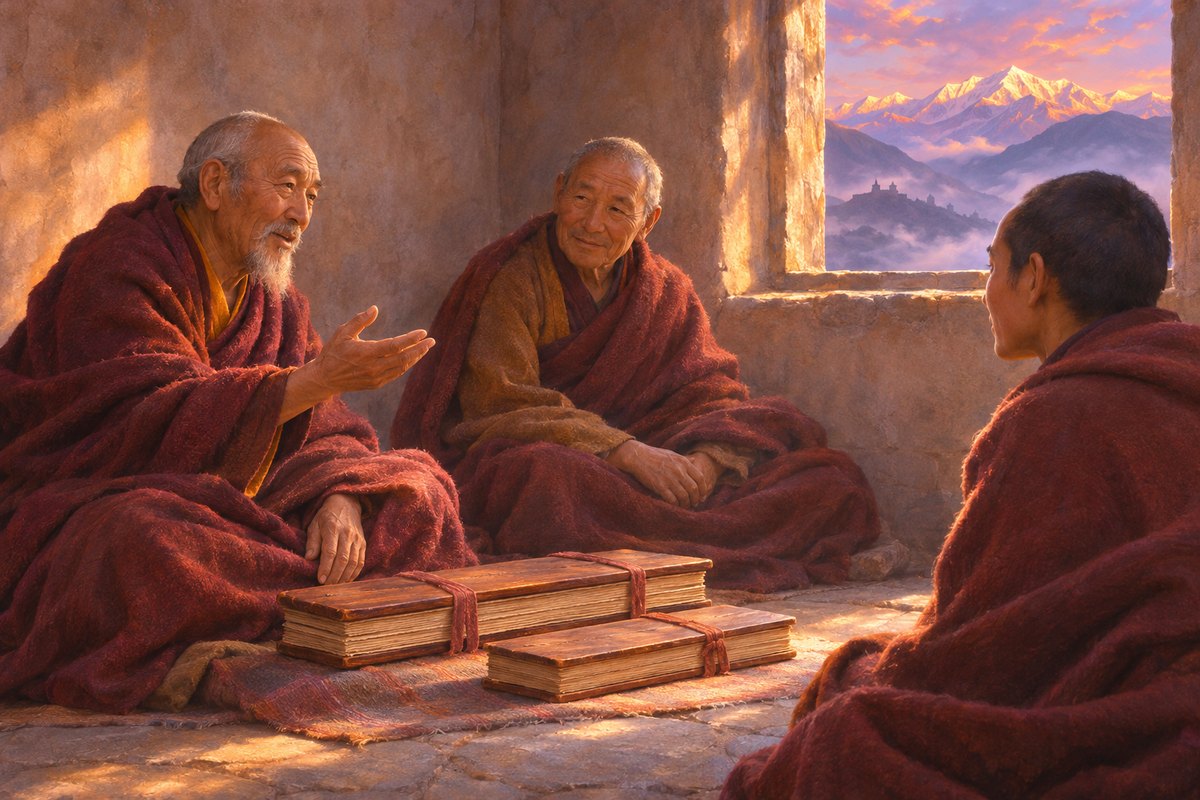
The catalogue names Jigme Trinle Özer, the First Dodrupchen, as the person who urged that his teacher’s writings be published. The relationship between teacher and disciple therefore stands behind an undertaking that would outlast their meetings.
A request does not yet make a book. But it can give a larger work its beginning. Someone has to recognize that teachings held in particular copies should remain available more widely. In this episode, devotion took the form of asking for the conditions that would let other people read.
The household that supported it
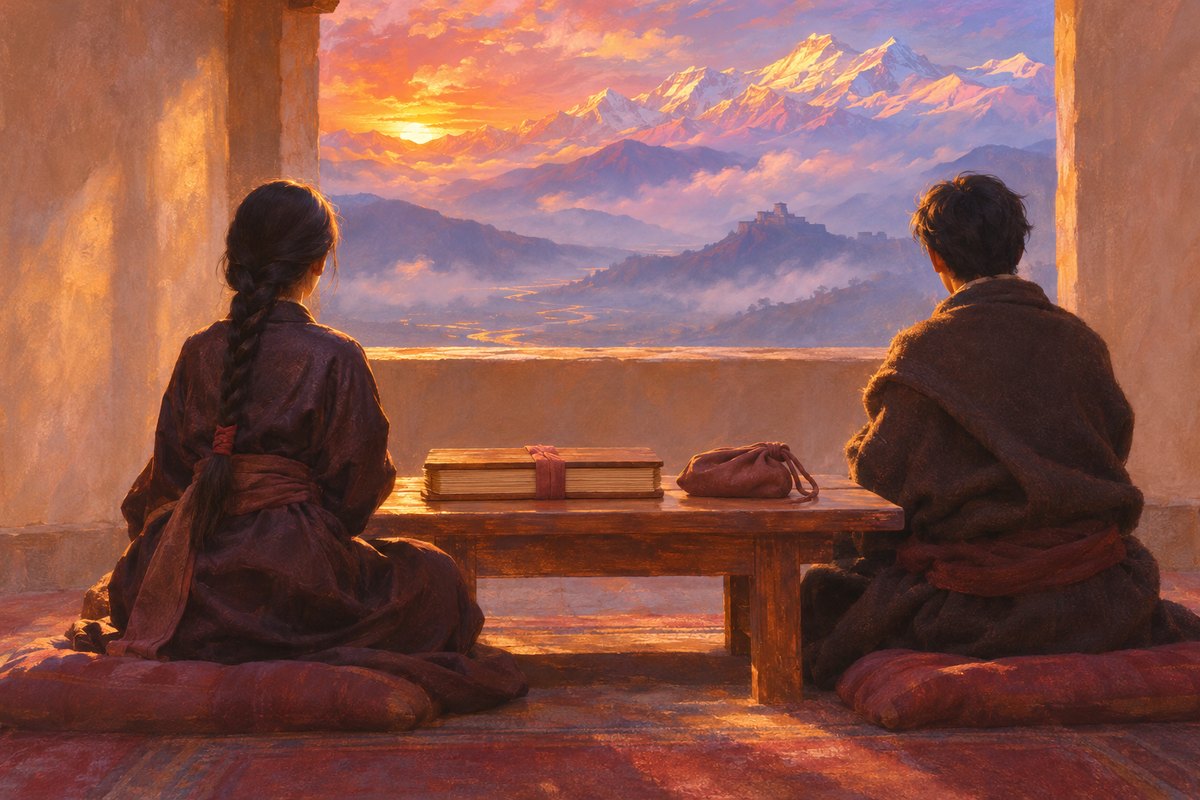
The account honours the royal patrons of Derge, including Queen Tsewang Lhamo and the royal household that agreed to support publication. Their support helped turn the disciple’s request into something that could be undertaken.
The picture of patrons beside a wrapped volume is deliberately modest. It does not claim to reconstruct a court audience or an exchange of particular objects. It makes visible a relationship often lost behind the finished book: people with resources chose to devote some of them to the preservation of teachings. The reader’s future page began partly in that decision.

The labour inside the gift
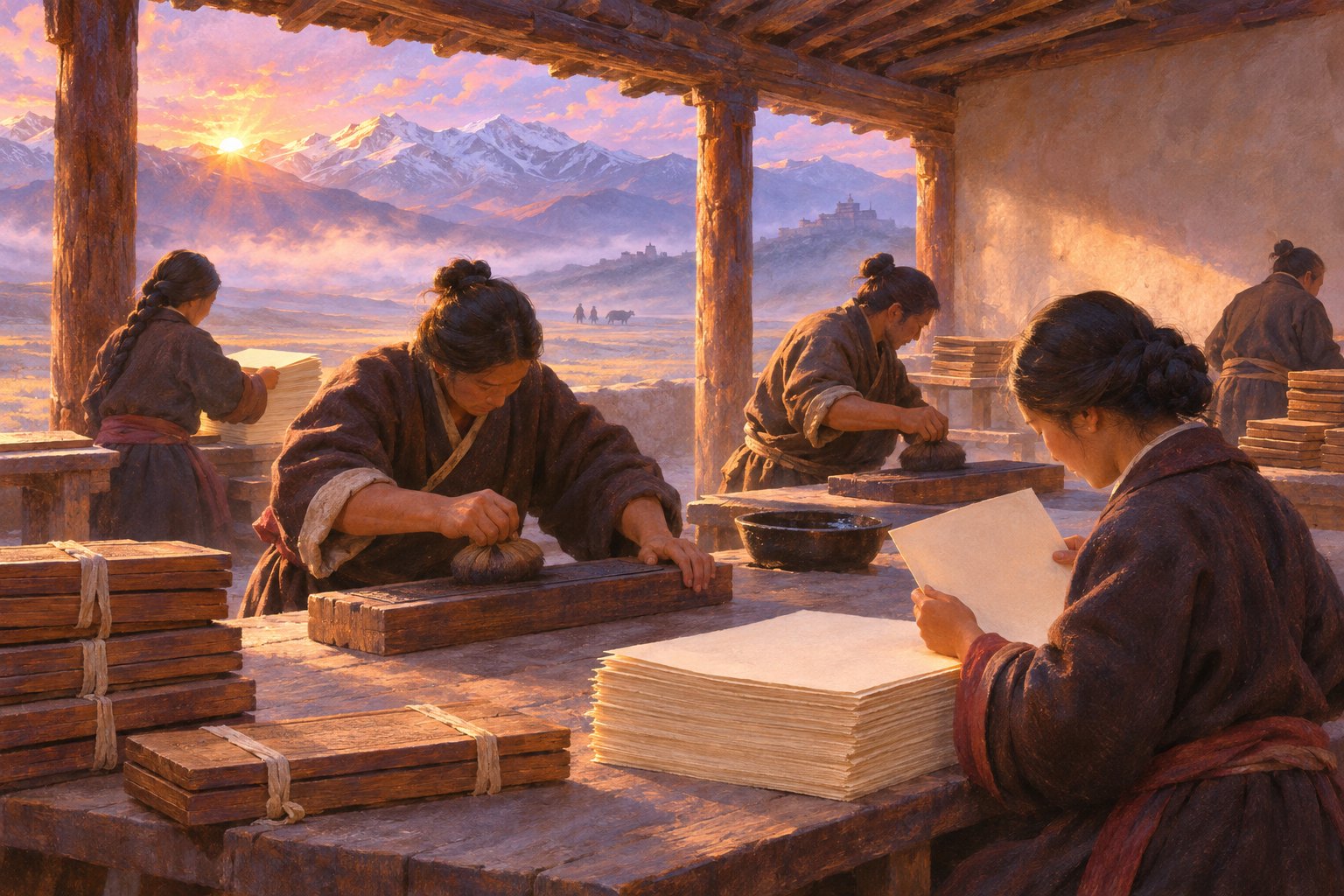
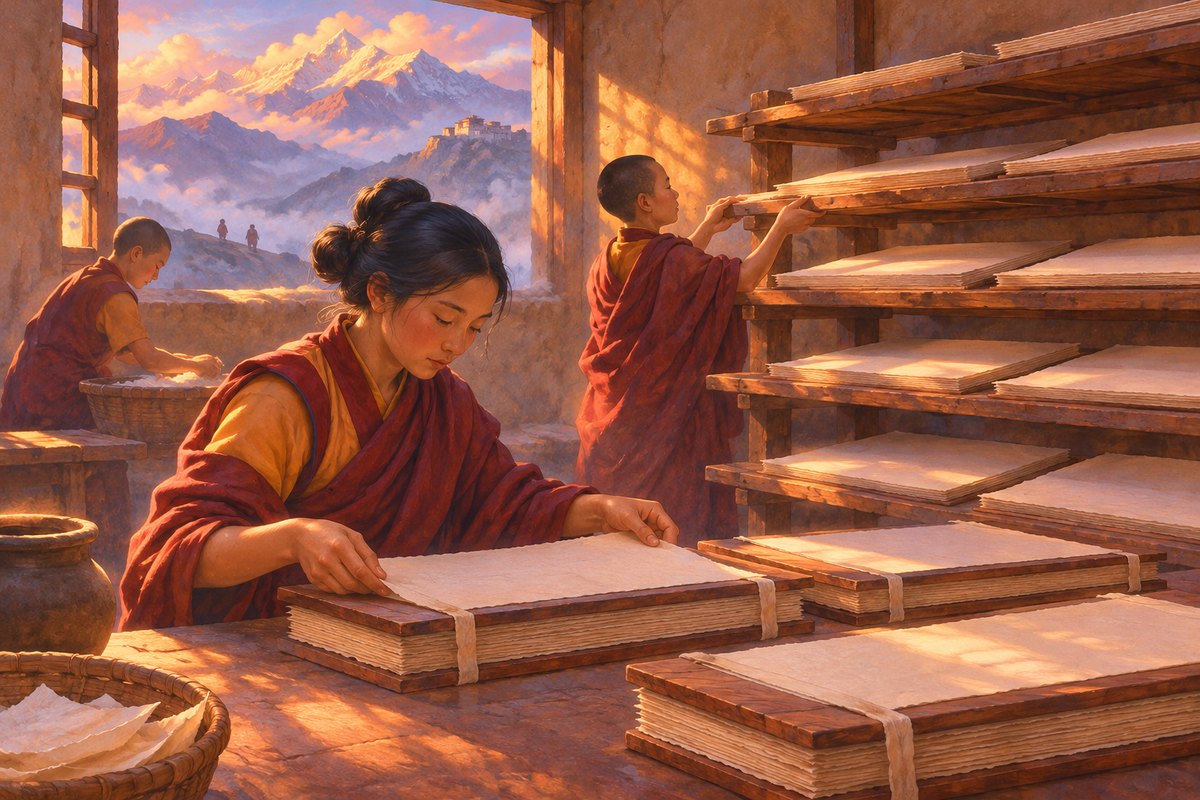
Traditional Tibetan woodblock printing required far more than providing paper. Dowdey’s account of Derge describes the preparation of page models, carving, checking and correction, followed by the work of printing. Each part depended on skill.
Those craft details give context to the earlier edition; they are not an eyewitness record of its workshop. In the illustrations, blocks are turned face-down or edge-on and sheets show their blank backs. No invented scripture is passed off as Jigme Lingpa’s writing. The objects stand for work that had to be done with care.
A mistake worth finding
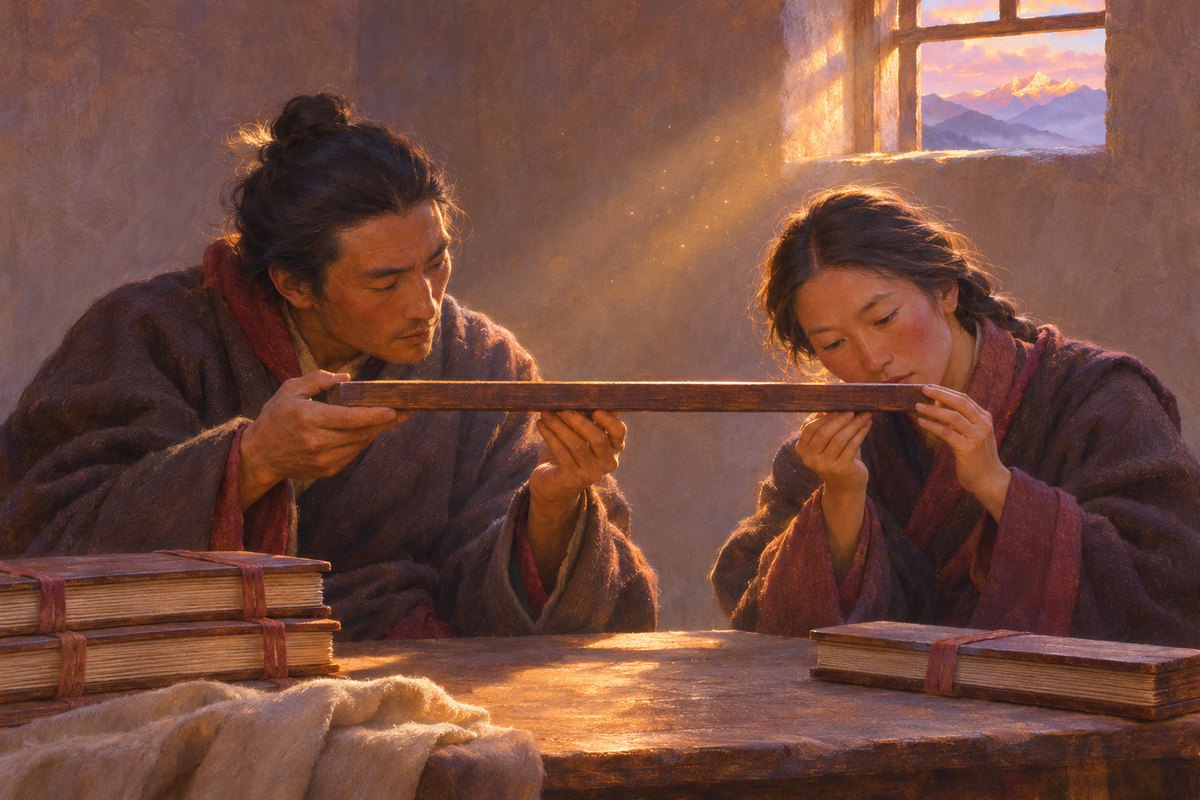
A printing block can produce many impressions. That makes a correction valuable before the same error travels into copy after copy. The documented process includes people who read for mistakes and craftspeople able to correct them.
This is a quieter form of service than a grand donation, but it belongs to the same chain. The person who notices an error may be helping someone who will read many years later. The illustration shows anonymous workers rather than named historical individuals. Their attention represents the care involved in making a reliable edition available.
Many hands, one edition
Paper, blocks, ink, handling and storage all have their place in the history of a printed book. The research film on Derge records stages from making paper to finishing and distributing the results. It lets a reader see how many kinds of work stand behind a volume.
The historical scene here remains an illustration. No particular worker’s day is invented as fact. Yet the larger point is grounded: publication was a shared undertaking. The names preserved in Getse’s account matter, and so do the unnamed craftspeople whose work made those intentions tangible.

What the catalogue does not include
The catalogue describes the collected writings while the Longchen Nyingtik revelation has its own separate catalogue. Keeping that boundary visible prevents a useful book from becoming a falsely complete container for everything associated with its author.
A careful record says what it covers. The two bundles in the painting symbolize that distinction; they do not reproduce an original arrangement. Such clarity is another way of looking after future readers. They should be able to discover where to look next rather than assume that what is absent never existed.

A copy can travel
Once an edition exists, copies can move beyond the place in which the work was done. People who never met the author or the patrons may receive a book and begin to read. The hillside travellers in the image stand for that possibility, rather than a documented delivery route.
The connection between an earlier request and a later reader can become almost invisible. Getse’s introductory account restores some of it. Behind a volume lie a teacher’s work, a disciple’s concern, a household’s support and the attention of people skilled in making books.
The place left for a reader
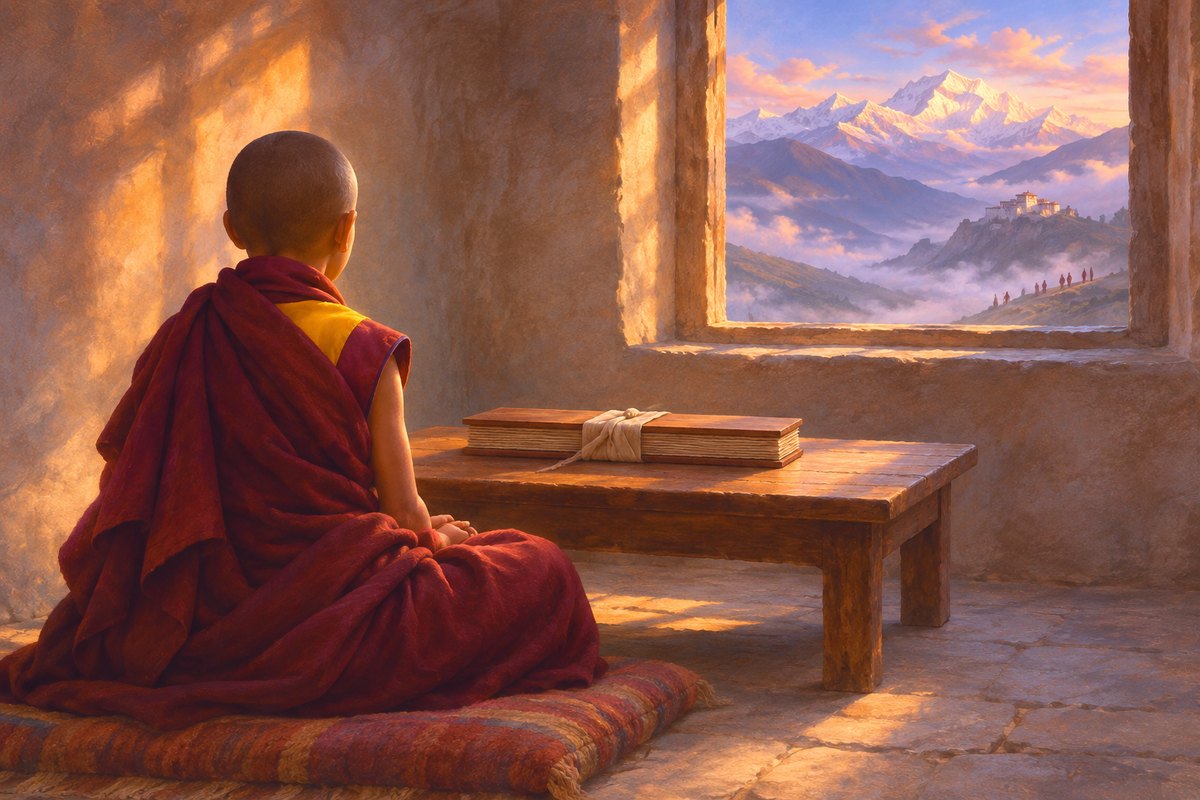
This is a Nyingma story about the public history of preserving texts, not an invitation to extract private practice instructions from a catalogue. Knowing that a volume exists is one beginning; understanding it can require sustained study and qualified guidance.
The Seven-Line Prayer expresses a wish to follow Guru Rinpoche. Here that wish can be considered through preserving what has been received and making room for those who come later. The connection is thematic. At the end of the story, the workshop gives way to a quieter room: a book is available, and another reader has arrived.
About the art
AI-painted scenes use anonymous period figures, not authenticated portraits or precise architectural reconstructions. Recent historical masters remain distant.
Workshops and object arrangements illustrate the publicly documented craft and lineage history. Printing surfaces and pages conceal script rather than invent sacred writing. No private practice or visionary sequence is shown.
Why this matters for practice
The wish to follow Guru Rinpoche in the Seven-Line Prayer is considered through learning, preservation and transmission. The connection is thematic; no historical recitation scene or outcome is invented.

If something in this story moved you, you might pause and recite the Seven-Line Prayer once.
Sources and further reading
- Lotsawa House — Catalogue of Jigme Lingpa’s Collected Works, Lotsawa House
- Lotsawa House — Getse Mahāpaṇḍita, Lotsawa House
- Rubin Museum — Derge Parkhang, Rubin Museum
- Rubin Museum — Inside the Derge Parkhang, Rubin Museum
This retelling is waiting to be read by a knowledgeable practitioner. Where the traditional accounts differ, the story says so; if you notice a mistake, please tell us through Share Your Story.