A hall growing old
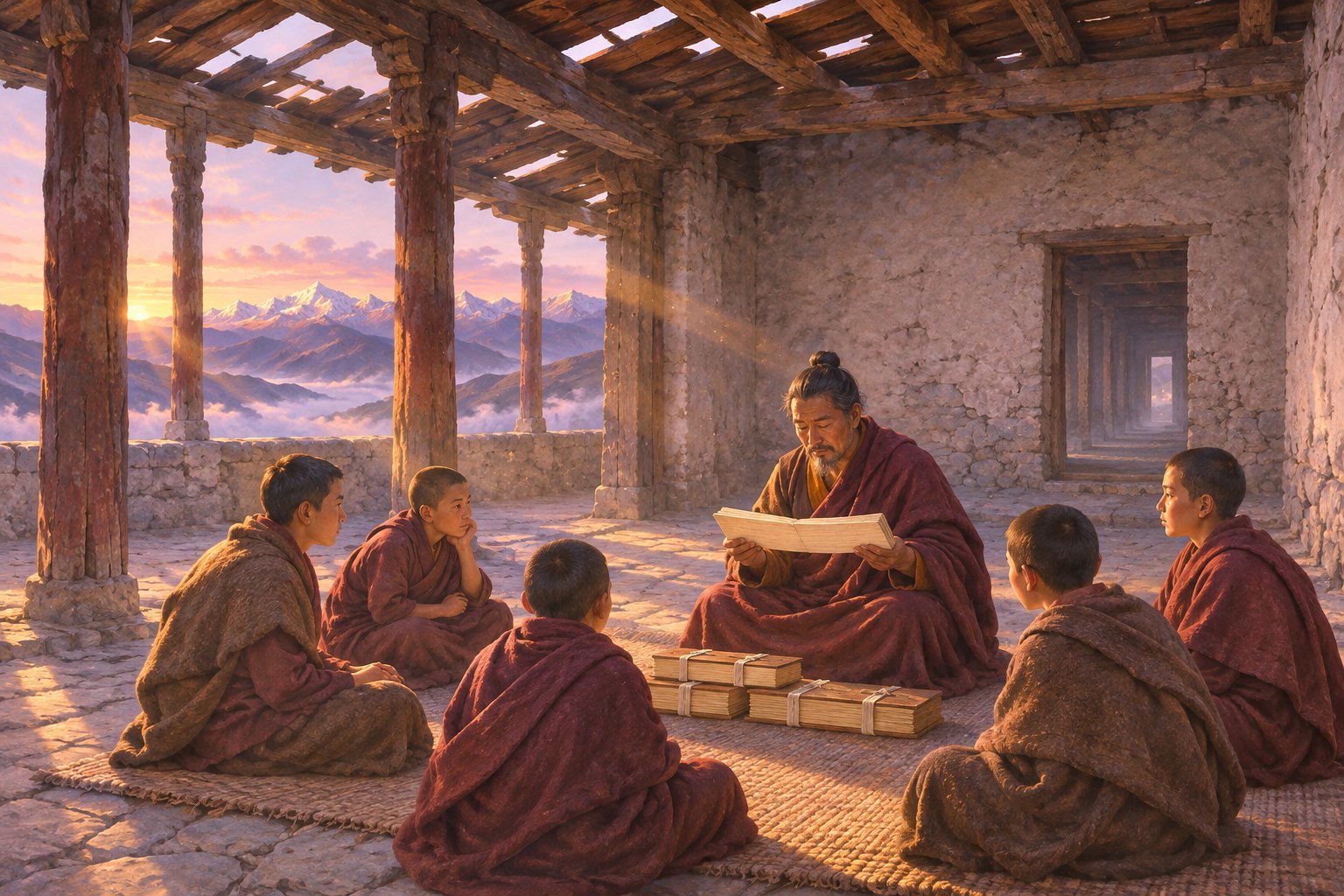
At Katok, an old prayer hall needed repair. The lineage account remembers repeated requests from the ruler of Derge before Longsal Nyingpo came to undertake the restoration. A teacher known for treasure revelations also had to concern himself with buildings that had grown worn.
This part of the story is easy to pass over. Yet a hall is where people gather. If it cannot shelter them, something in the life of a community becomes harder to continue.
The child from a farming family
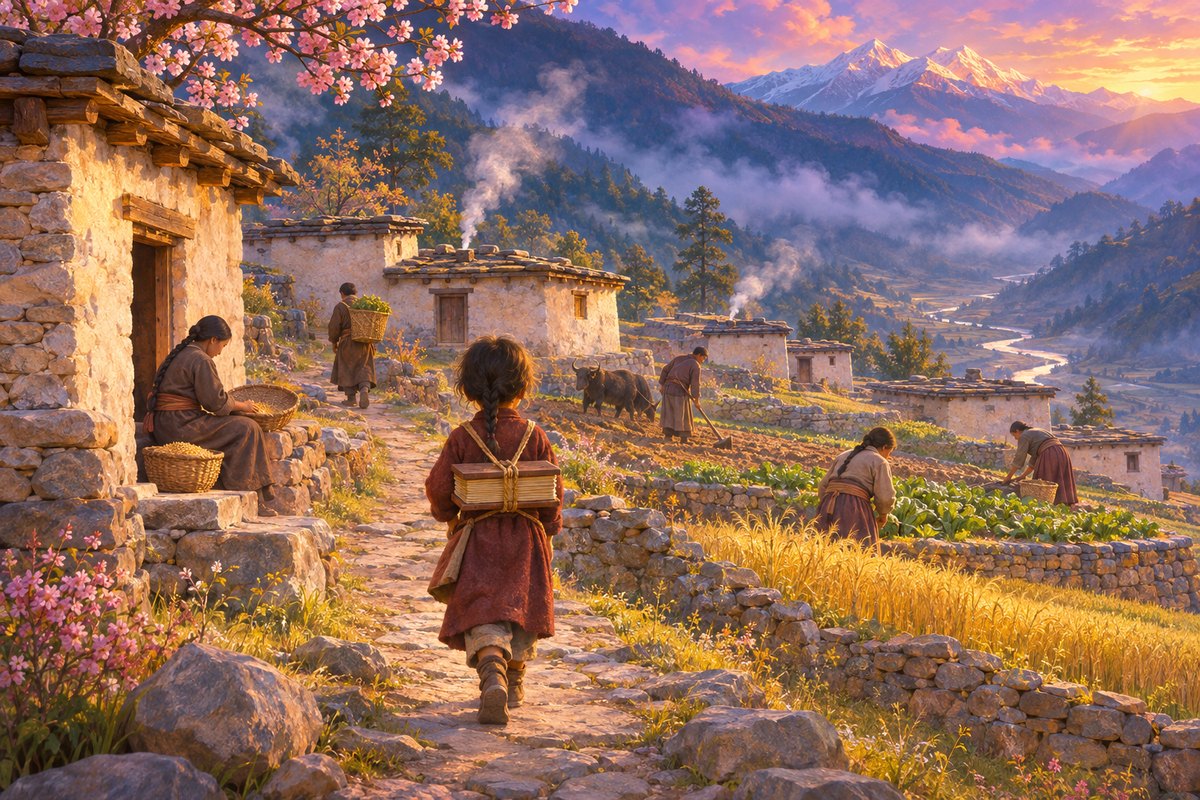
Longsal Nyingpo, also written Longsel Nyingpo, lived from 1625 to 1692. The biographical record places his birth near Kampo in southeastern Tibet and remembers his family as farmers. Before he became an important figure at Katok, he belonged to a household that needed his help.
A later title can make a beginning seem grander than it was. The remembered village places him among work, family and the ordinary demands that do not vanish simply because a child wishes to learn.
The few books at home
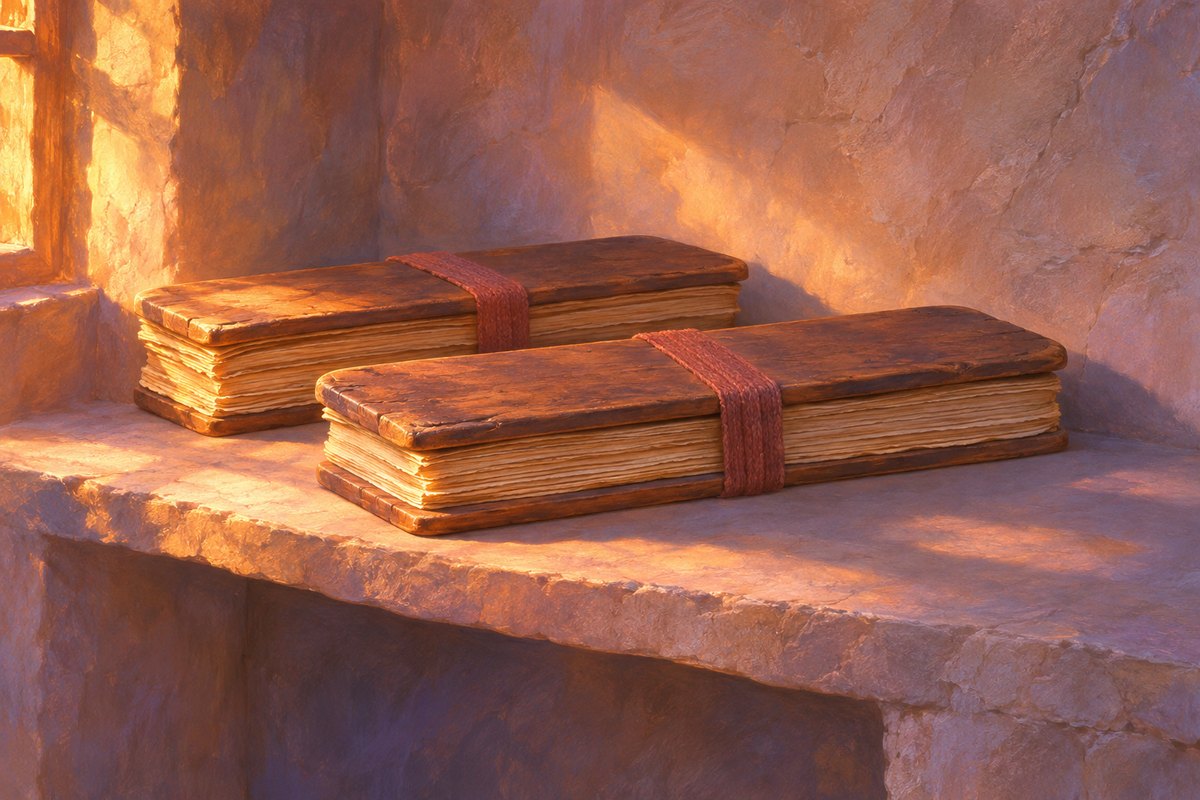
The indexed biography describes him reading the scriptures his grandfather possessed. His interest in learning and practice grew from that small beginning. There were books within reach, and a young person willing to return to them.
A great collection was not necessary for the first movement. Nor was early enthusiasm the whole path. The family books gave him a beginning from which to seek further guidance, beyond what the household itself could provide.
Leaving to receive
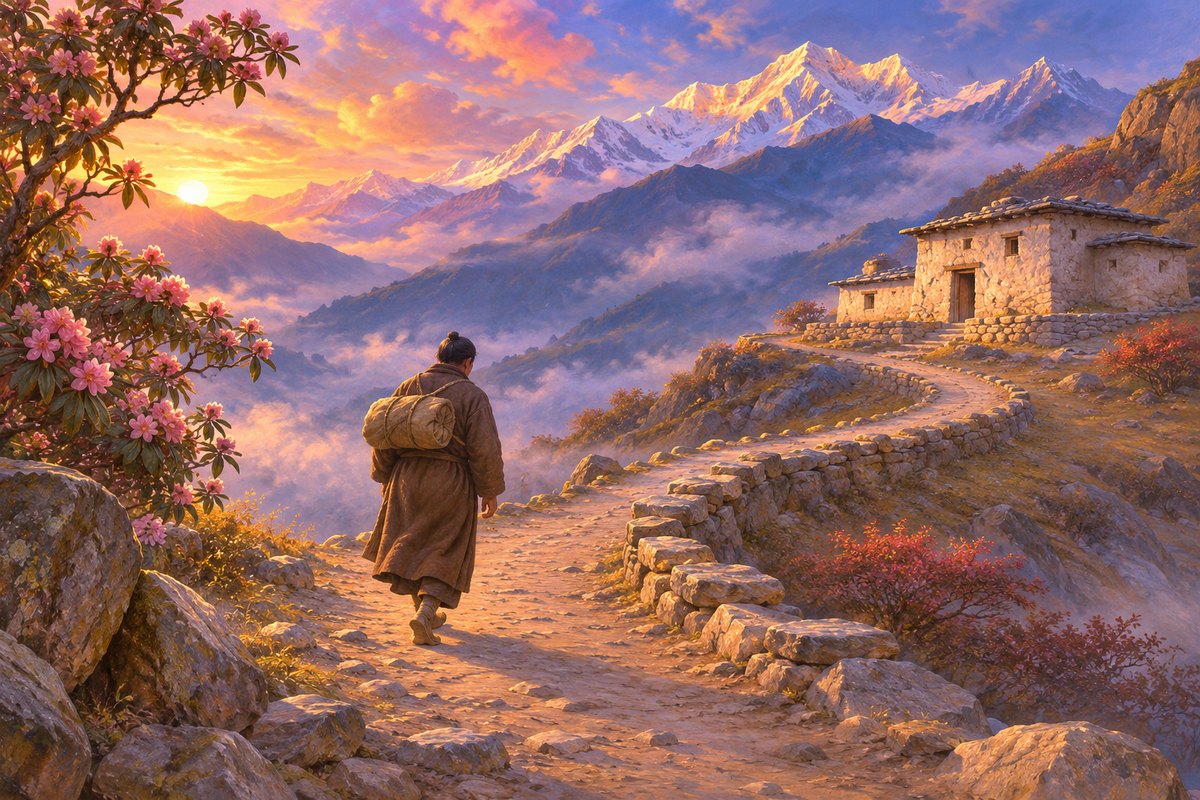
The Katok account remembers several teachers in his education and journeys. His learning carried him beyond the village and into relationships with people who could guide him. What became a distinct lineage did not begin as something he had made entirely for himself.
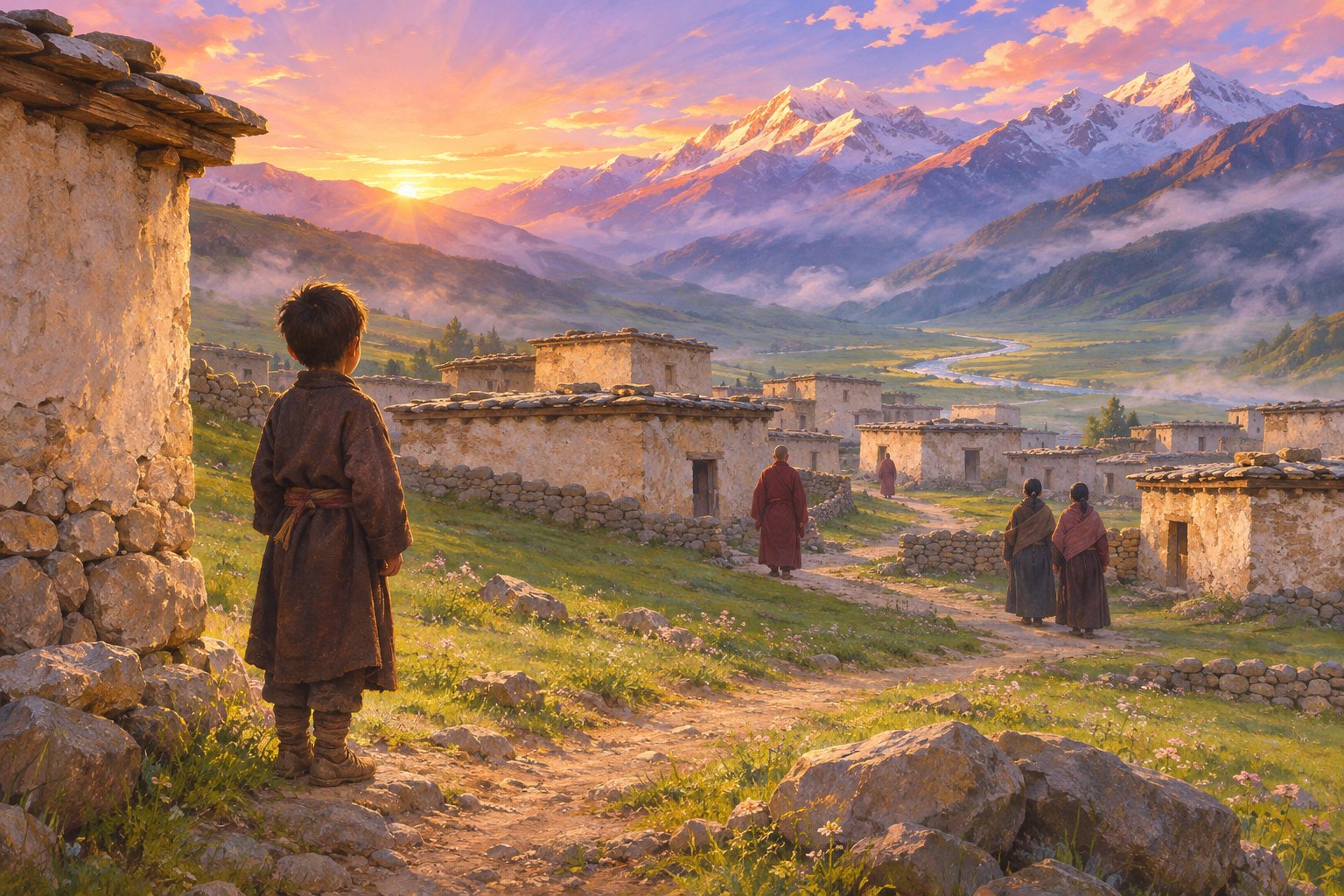
The traveller in the painting remains small in the country. A journey toward a teacher has that scale: one person crossing the distance that separates wanting to receive from actually arriving.
Years with Dudul Dorje
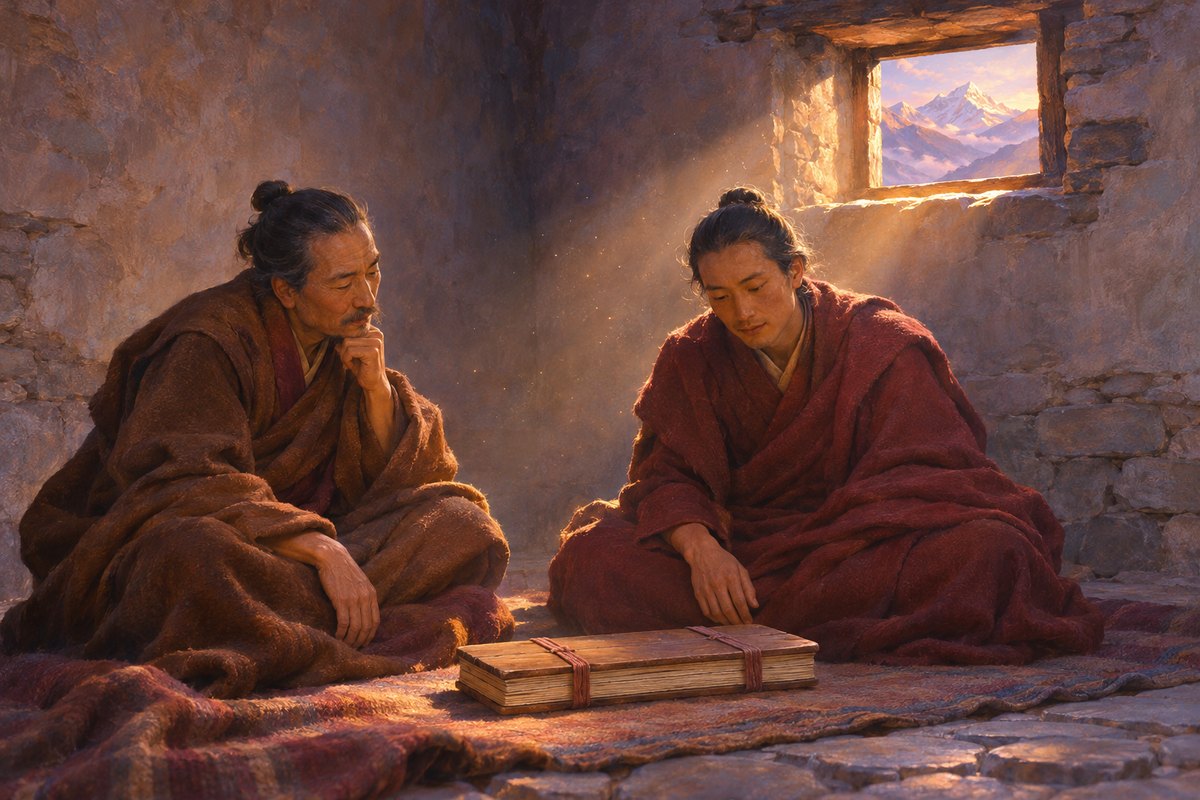
Dudul Dorje became an important teacher. The community biography places years of learning with him in Powo, in southern Tibet. Treasury of Lives likewise records the relationship between them. This is the seventeenth-century Nyingma treasure revealer Dudul Dorje, rather than the later Karmapa who shares his name.
The relationship would matter beyond their lifetimes. Through students, teachings associated with both masters became important within the Katok tradition. Receiving from a teacher gradually became a responsibility for what would continue.
The cliff retreat
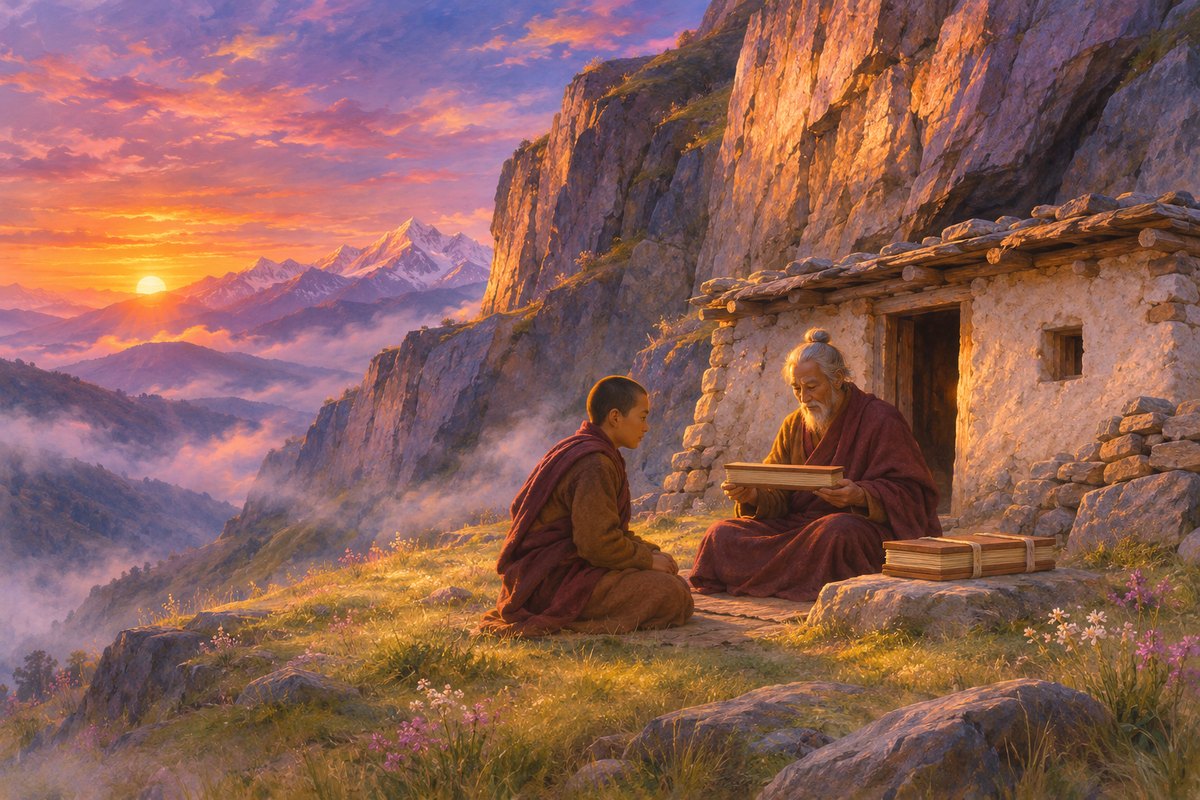
The lineage account also remembers a long period of practice at Chulung, a remote cliff retreat. The story moves from seeking instruction to remaining with what had been received. A path once crossed outward leads toward a dwelling in which to stay.
The shelter in the illustration is atmospheric. It makes no claim to show the exact place. Its smallness lets the reader keep the human scale of the account: years of a life were spent away from a large public gathering.
A treasure revealer
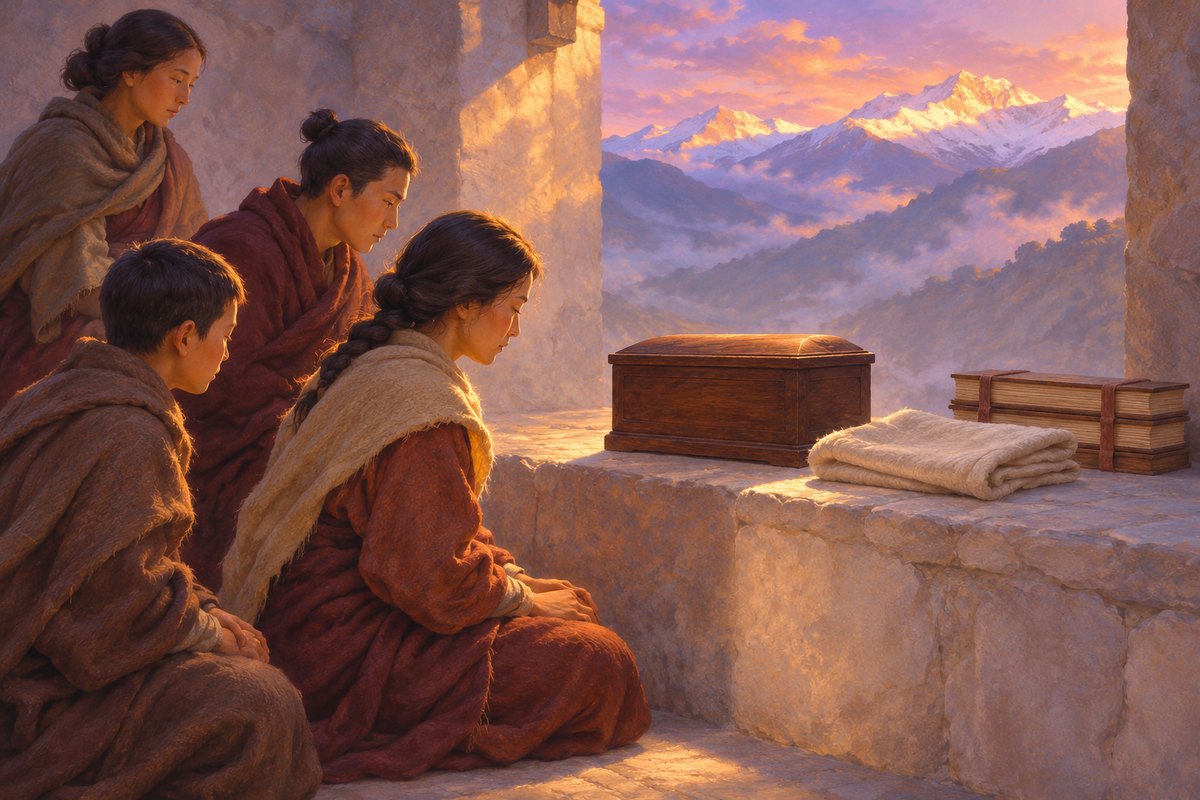
Longsal Nyingpo is remembered as a tertön, a revealer of treasures associated with Guru Rinpoche. His Longsal Dorje Nyingpo cycle continues in the public record of Nyingma texts. The sacred histories include revelations and extraordinary signs, understood within the devotional tradition.
The closed casket in the painting is symbolic. It does not reproduce a discovered object or claim to prove a revelation. Here the story follows the public outline of a life and the community that received its legacy.
The request to return
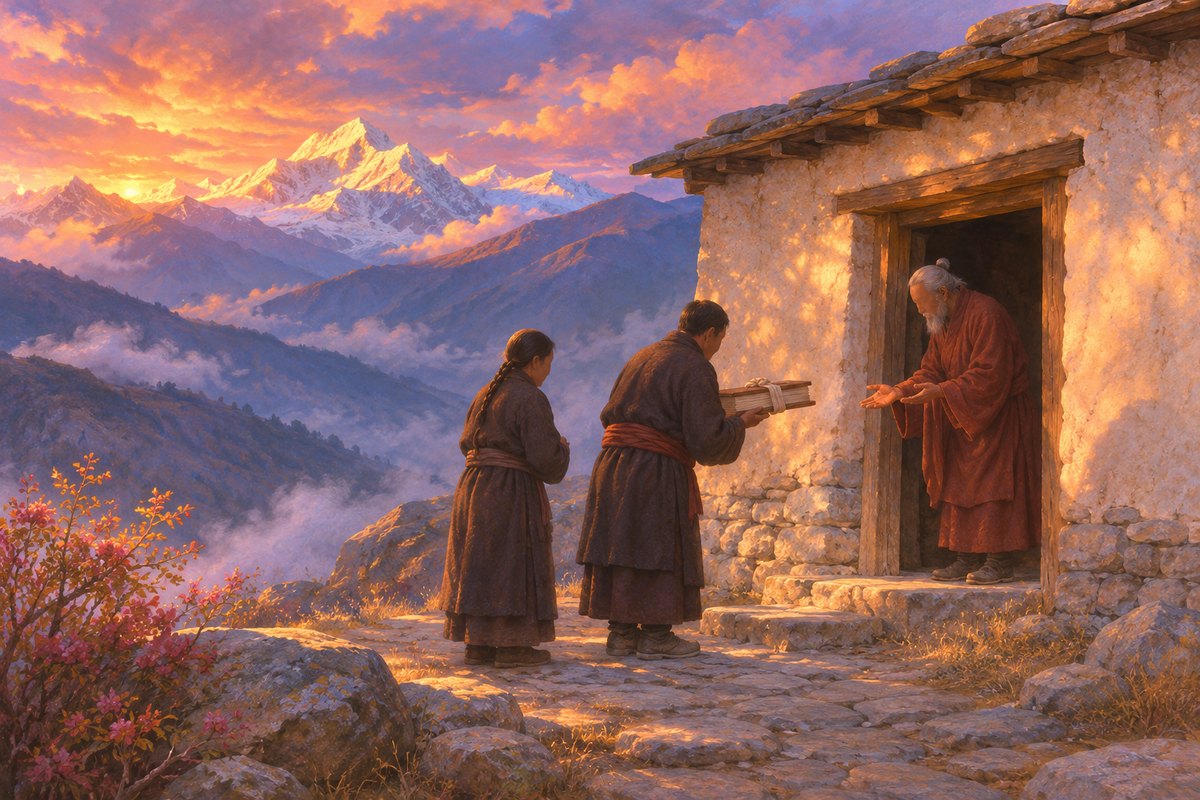
The Katok biography brings him back to an old institution through a practical request. There was restoration work to do. His answer placed the life of a retreat practitioner alongside the needs of an established community.
A building can make a claim on someone without words. Its worn condition says that what was made by earlier people now requires care from those who have inherited it. To preserve a tradition can include attending to the place in which it is heard.
Making room again
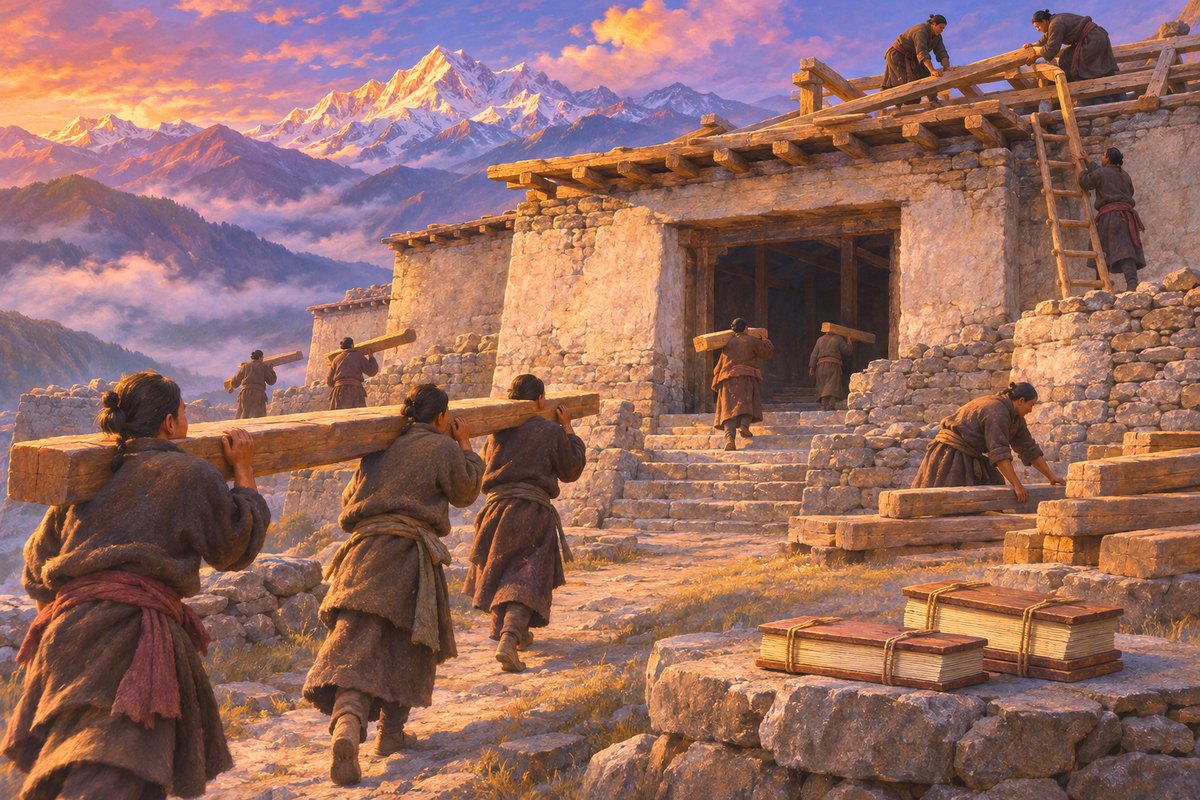
The account remembers the renovation of the main hall and other structures that needed repair. It also credits Longsal Nyingpo with establishing retreat centres in places he visited. Teaching and providing places for practice belonged to the same remembered activity.
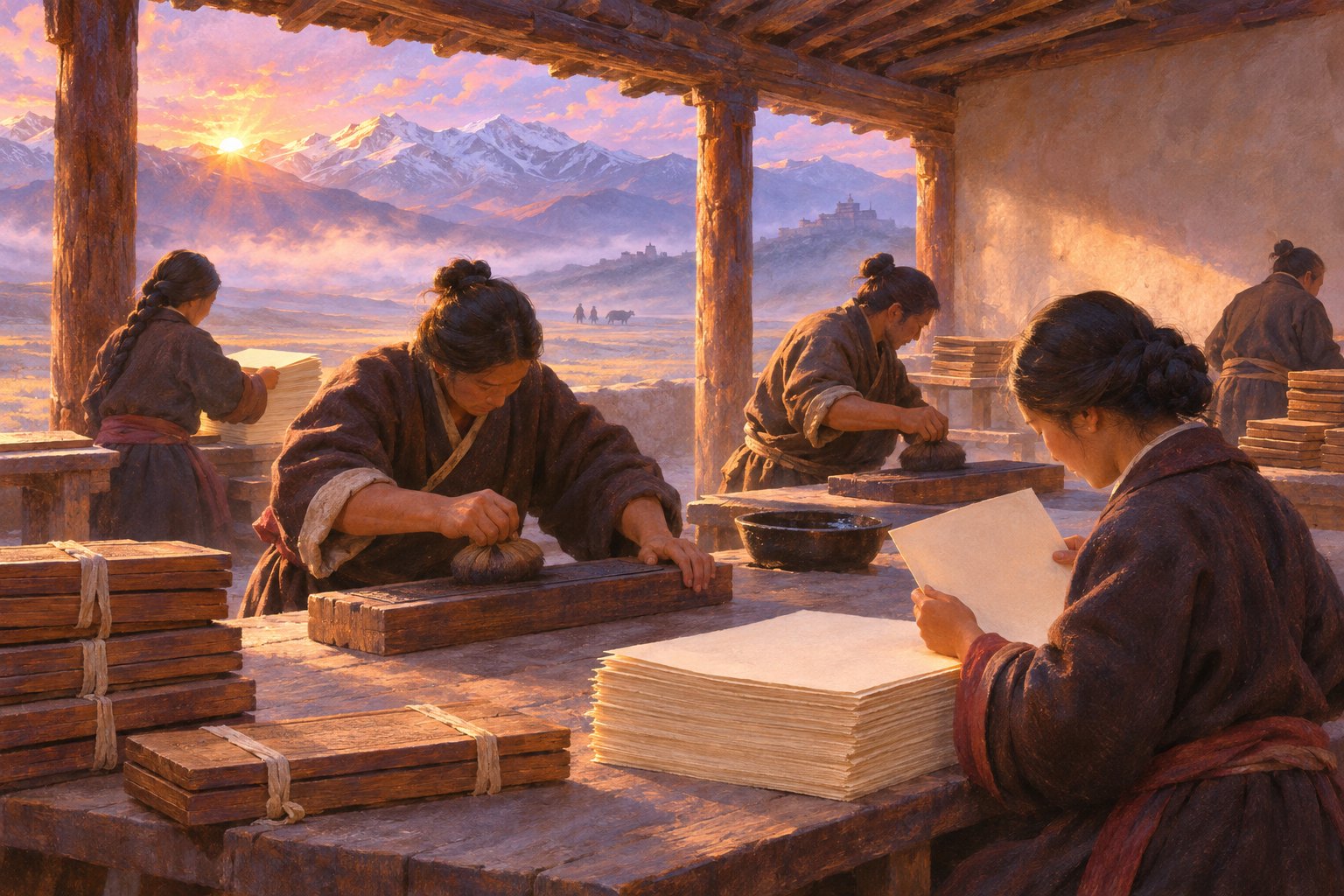
The timber and workers in the illustration are a reconstruction, not a surviving picture of the undertaking. They make its practical character visible. A place that shelters learning depends on people doing the work that allows others to gather there.
The open doorway
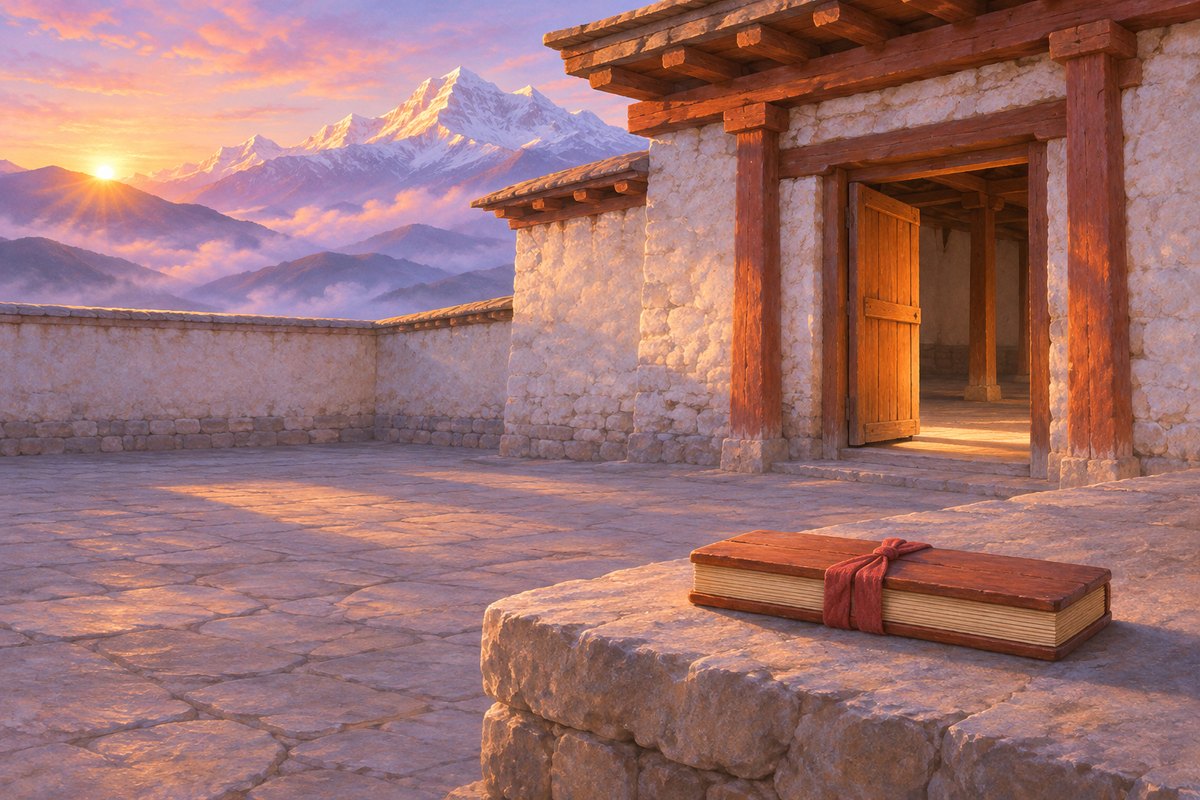
Longsal Nyingpo died in 1692. His legacy at Katok continued through teachings, students and the places associated with his activity. Beside the great title of treasure revealer, the old hall offers another way to remember him: someone who answered a need for repair.
The Seven-Line Prayer expresses the wish to follow Guru Rinpoche. This story connects that wish thematically with receiving, preserving and making room for others. No special recitation event is invented. The final doorway stands open for people whose names the earlier builders could not have known.
About the art
AI-painted illustrations use anonymous seventeenth-century figures and atmospheric buildings, not authenticated portraits or precise site reconstructions.
The old hall, repair work, routes and book arrangements illustrate the narrative. The closed treasure casket is symbolic; no revelation, sacred object or private ritual is reconstructed.
Why this matters for practice
The wish to follow Guru Rinpoche is considered through learning, preservation and providing places for others to practise. The connection is thematic; no historical recitation or promised outcome is invented.

If something in this story moved you, you might pause and recite the Seven-Line Prayer once.
Sources and further reading
- Kathok Nyingma Buddhist Centre — Longsal Nyingpo biography, Kathok Nyingma Buddhist Centre
- Treasury of Lives — Longsel Nyingpo, Treasury of Lives
- Lotsawa House — Longsal Nyingpo, Lotsawa House
- Treasury of Lives — Dudul Dorje, Treasury of Lives
This retelling is waiting to be read by a knowledgeable practitioner. Where the traditional accounts differ, the story says so; if you notice a mistake, please tell us through Share Your Story.