A princess who wanted something else
This story comes from far back, more than twelve centuries, and reaches us through the old life-stories of Guru Rinpoche, the “Precious Guru” Padmasambhava, and through a life-story of its own. It belongs to a woman named Mandarava. Tibetans call such a life-story a namtar, a telling of liberation.
The accounts say she was born a princess of Zahor, a kingdom in India, to King Vihardhara and Queen Mohauki, amid wonderful signs. Her name is the name of the coral tree, whose bright scarlet flowers are said to grow in the gardens of the gods.
Where Zahor lay is still discussed. Much scriptural evidence points to eastern India, toward today's Bihar and Bengal. Tibetan masters of the late eighteenth and early nineteenth centuries came to identify its famous lake with Rewalsar, in the green hills of Himachal Pradesh. Pilgrims honour both regions today.
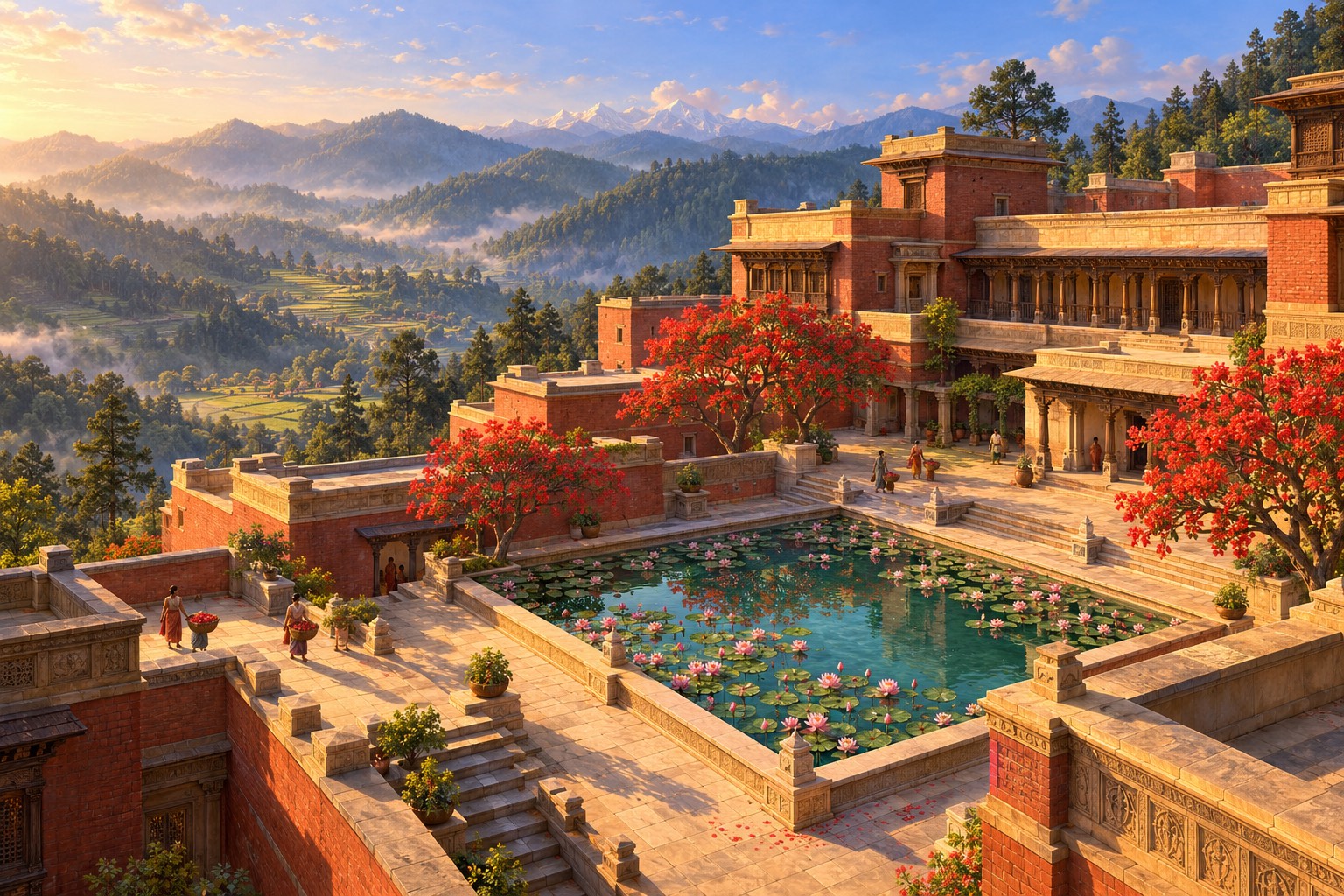
She grew up wanting for nothing. Yet the accounts say that as a girl she looked closely at birth, old age, sickness and death, and could not look away. The endless round of suffering that Buddhists call samsara held no charm for her.
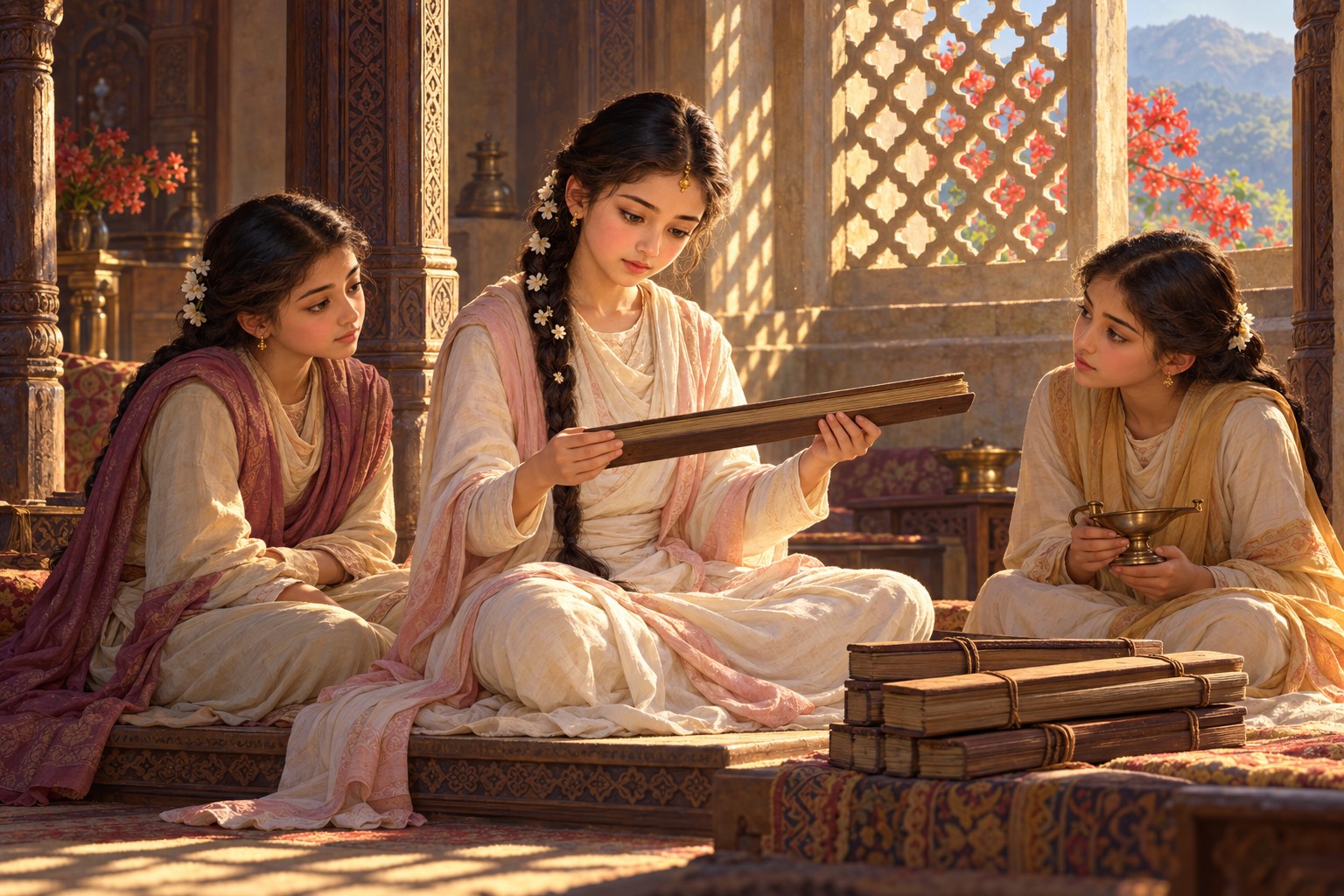
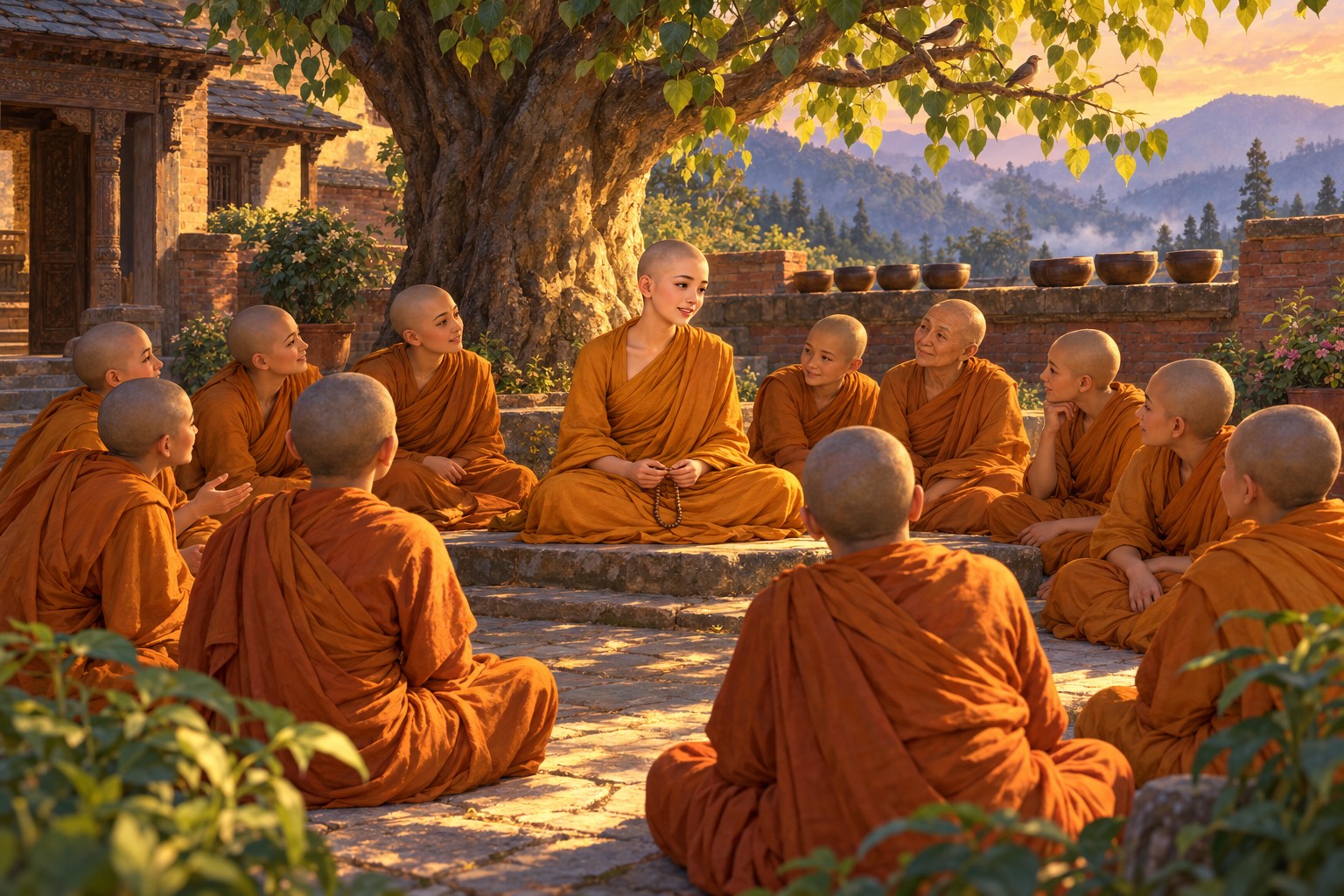
So she turned to study. In the telling followed by the Treasury of Lives, by the age of thirteen she had mastered languages, grammar, logic, poetry, medicine and astrology, and was counted the finest scholar in the land. One by one, the young women of the palace followed her into the Dharma, the teaching of the Buddha.
Suitors at the gate
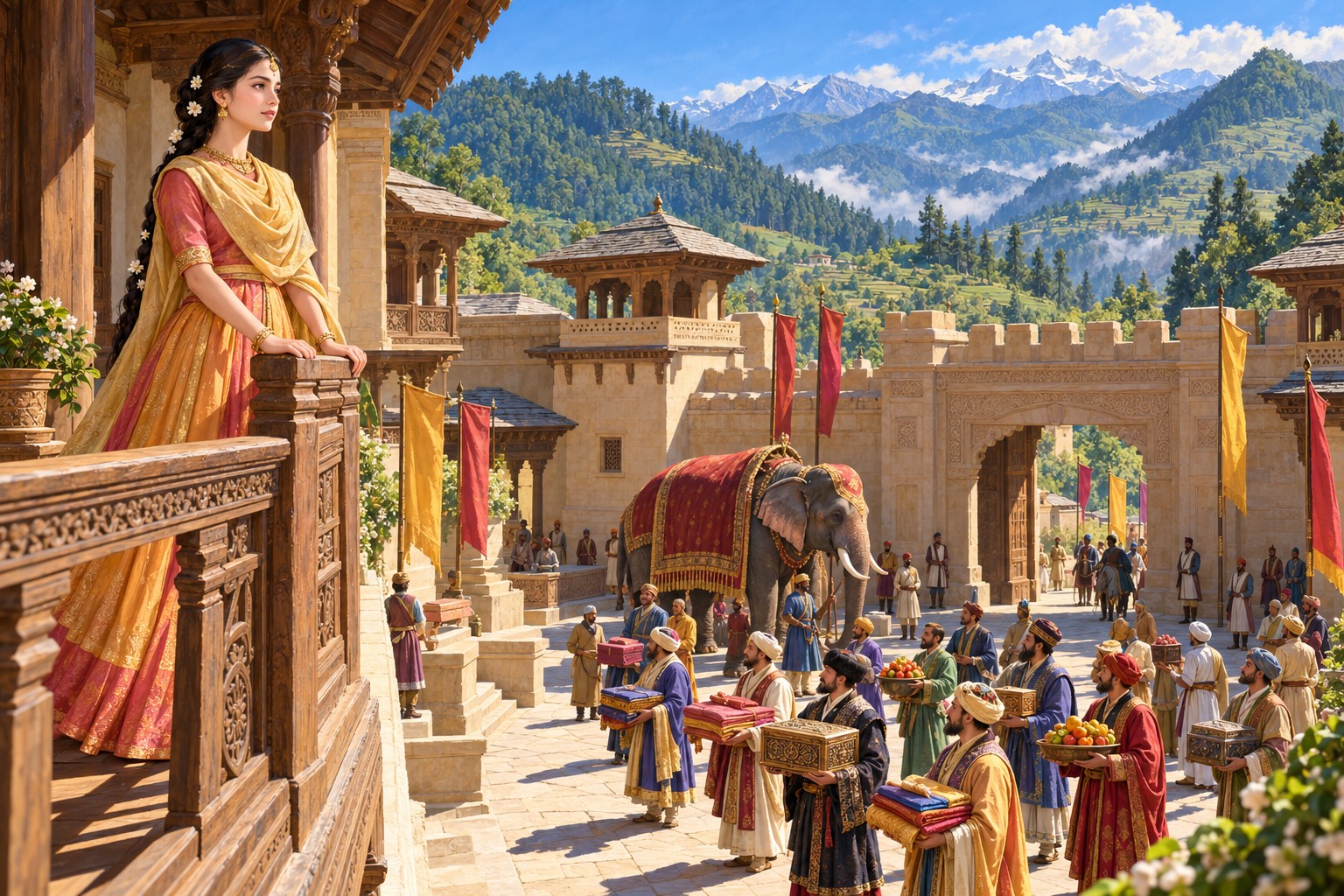
Word of her learning and her beauty travelled far. Kings from across India, and from China too, some say, sent envoys and gifts to ask for her hand. Her father wanted her to choose one of them.
She would not. She asked instead to become a nun, a woman who leaves household life behind to give herself wholly to practice. The accounts agree that her father refused for a long time, and some tell of her being confined in the palace before he gave way.
In the end he let her go. She received ordination, the formal vows of a Buddhist nun. Samten Lingpa's account, which Lotsawa House translates in part, names the great abbot Shantarakshita as the one who ordained her; another summary speaks only of a bodhisattva.
The king softened further. He sent hundreds of her companions to be ordained with her, and gave the community a guarded palace of their own, where they could study and practise in peace.
The teacher among the flowers
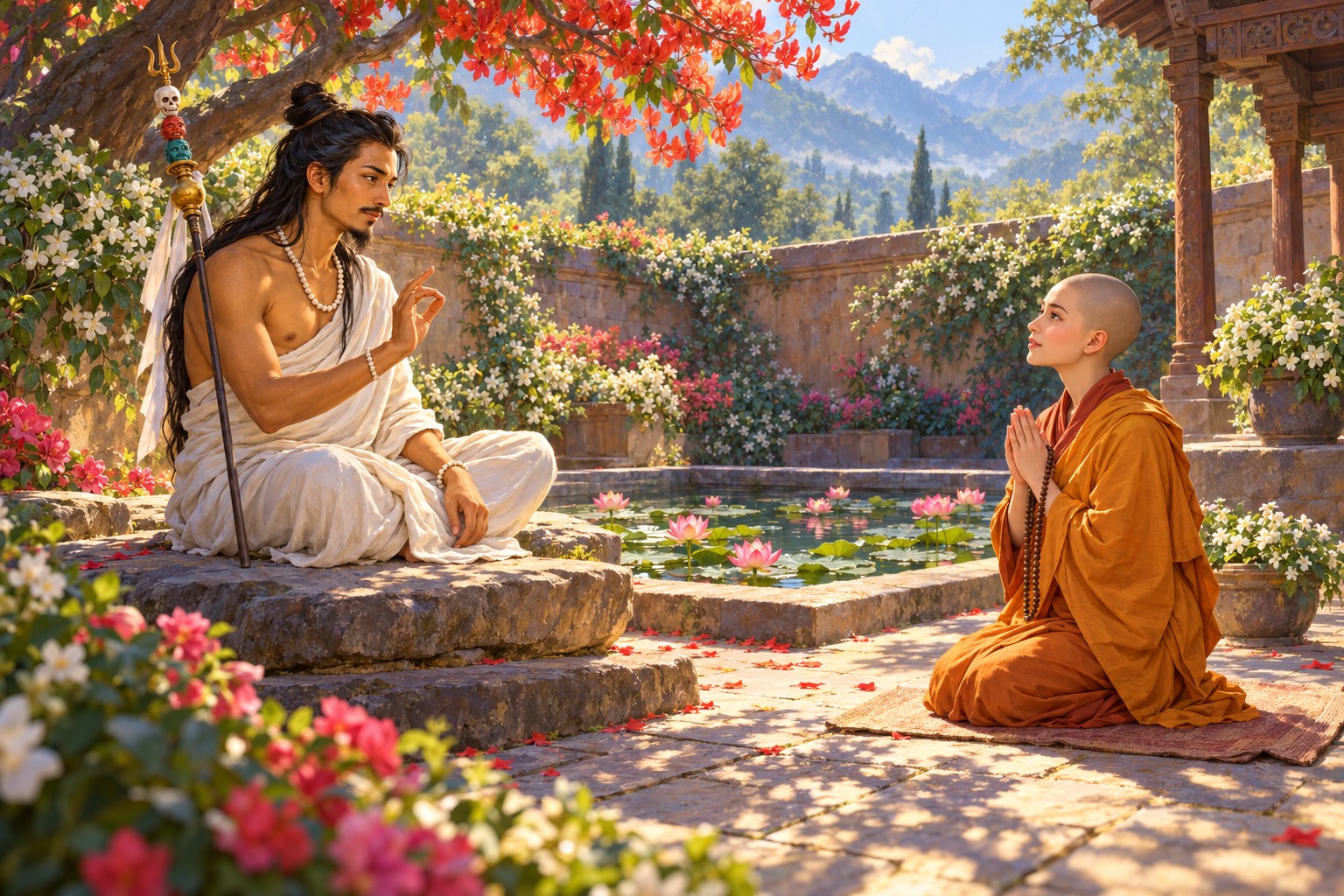
Here Guru Rinpoche enters her story: the master from Oddiyana whom the Seven-Line Prayer calls the Lotus-Born. The accounts say he saw that the princess was ready, came to the nuns' palace, and that she first met him among flowers.
She asked him for teaching, and he gave it, to her and to all the nuns with her. From then on she was his closest disciple. In time she also became his spiritual consort, a partner in practice. The tradition counts her among his five principal consorts and, with Yeshe Tsogyal of Tibet, as one of the two chief ones.
Yet her fame does not rest on that partnership alone. Her own life-story was revealed again and again by tertöns, the treasure-revealers whom the tradition says recover teachings hidden for later times, from the twelfth century on. It honours her as a dakini, a woman of awakened wisdom, whose deeds are worth telling for their own sake.
The king's anger
Then a cowherd saw a stranger, a wandering yogi, in the princess's palace, and the gossip spread. When it reached the king, his anger was terrible. His daughter had turned away every king in India, and now, it seemed to him, she had chosen a beggar from nowhere. Some accounts add that he feared for his royal line.
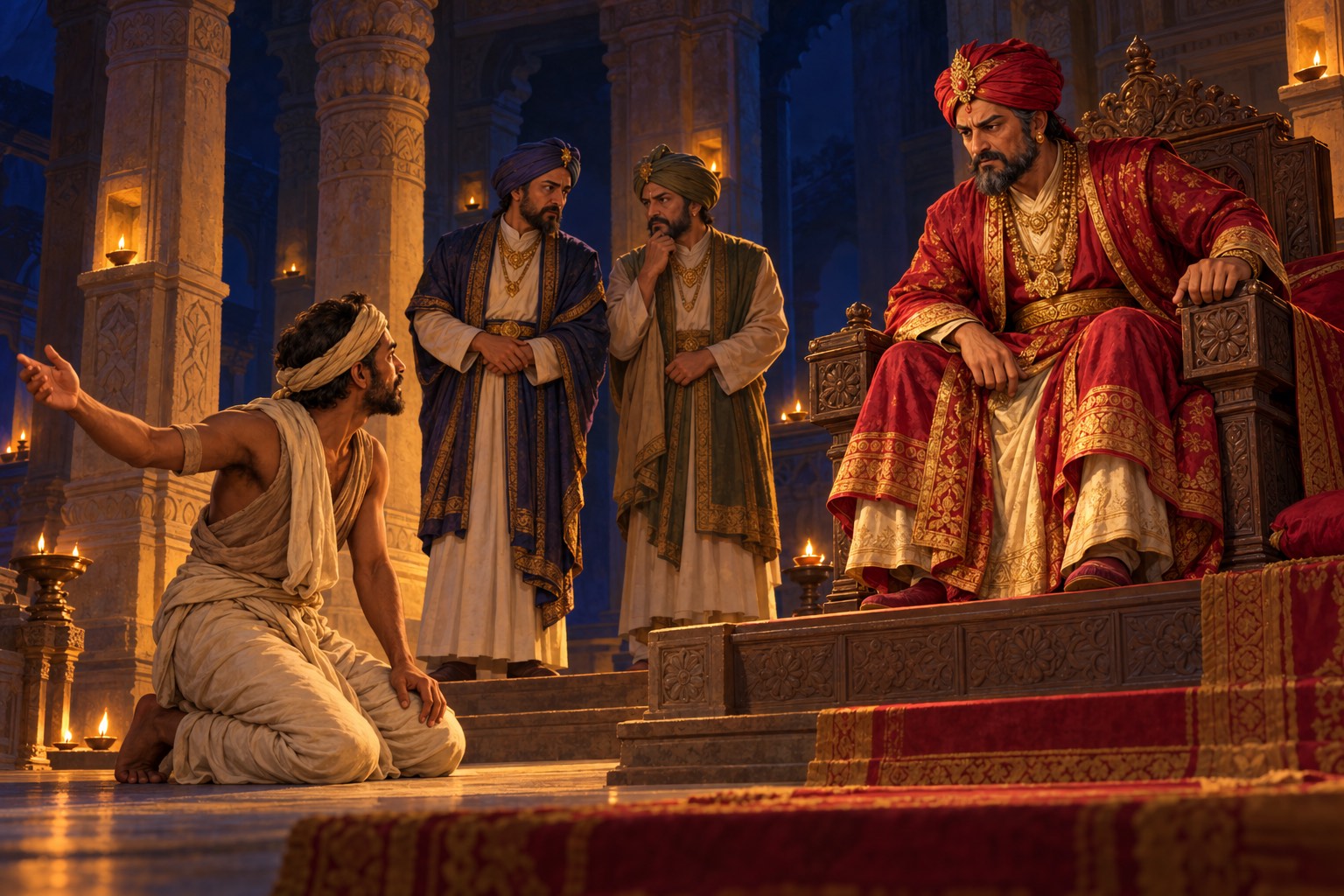
The accounts say he had Mandarava confined in a pit, and ordered that the master be burned. The old tellings are stark here, and we can let them be brief.
His men heaped a great pyre in a valley, soaked it in oil, and set it alight. Most accounts say Guru Rinpoche alone was placed upon it; a few say the princess was brought there too. The smoke, one telling says, did not clear for seven days.

The lake of the lotus
When the smoke at last lifted, the traditional accounts say, there was no fire and no ash. Where the pyre had stood lay a lake. On the water a great lotus had opened, and on the lotus sat the master, cool and unharmed, in a sphere of rainbow light.
The tellings differ on the water itself. The Treasury of Lives summary describes a lake of sesame oil ringed with fire, the lotus blooming at its centre; others speak simply of a fresh, cool lake. Either way, the tradition remembers it as Tsopema, the Lotus Lake.
The king saw, and his anger broke. The accounts say he recognised the master as a buddha in human form, confessed what he had done, and took refuge in the Dharma with his ministers and his people. He offered his kingdom, beginning, one account says, with his own royal garments, and he gave his daughter his blessing.

Painters remember one of those gifts in particular. Himalayan Art Resources records the tradition that the silk lotus hat Guru Rinpoche wears in his main form was a gift from the king of Zahor.
Mandarava was freed. The accounts say that the master and the princess taught throughout the land, and that Zahor, which had tried to burn him, became a place of practice.
The cave of long life
From Zahor, most accounts say, the two went to Maratika, a cave in the forested hills of what is now eastern Nepal. Its name is explained as the cave that brings death to an end. There they took up long-life practice, the meditations connected with Amitayus, the Buddha of Limitless Life.

The accounts say Amitayus appeared to them face to face, and that both attained what the tradition calls the level of a vidyadhara, a “holder of awareness”, with mastery over life. The Treasury of Lives explains this deathlessness as the unchanging realisation of the true nature of mind.
Here the sources differ on order. One widely read summary places the Maratika retreat before the fire at Zahor rather than after. This page follows the order of Mandarava's own life-story, but both are told with devotion.
To this day Mandarava is closely linked with long-life practice, and pilgrims still climb to Maratika, especially around Tibetan New Year. Such practices are received from a qualified teacher, not learned from a page like this one.
Queen of accomplishment
Her story does not end in the cave. The accounts tell of her travelling to distant lands, bringing even fierce and cruel peoples to the Dharma, and returning to teach in Zahor. One tradition says she appeared in Tibet, at the temple of Tramdruk, and exchanged verses of praise with Guru Rinpoche.
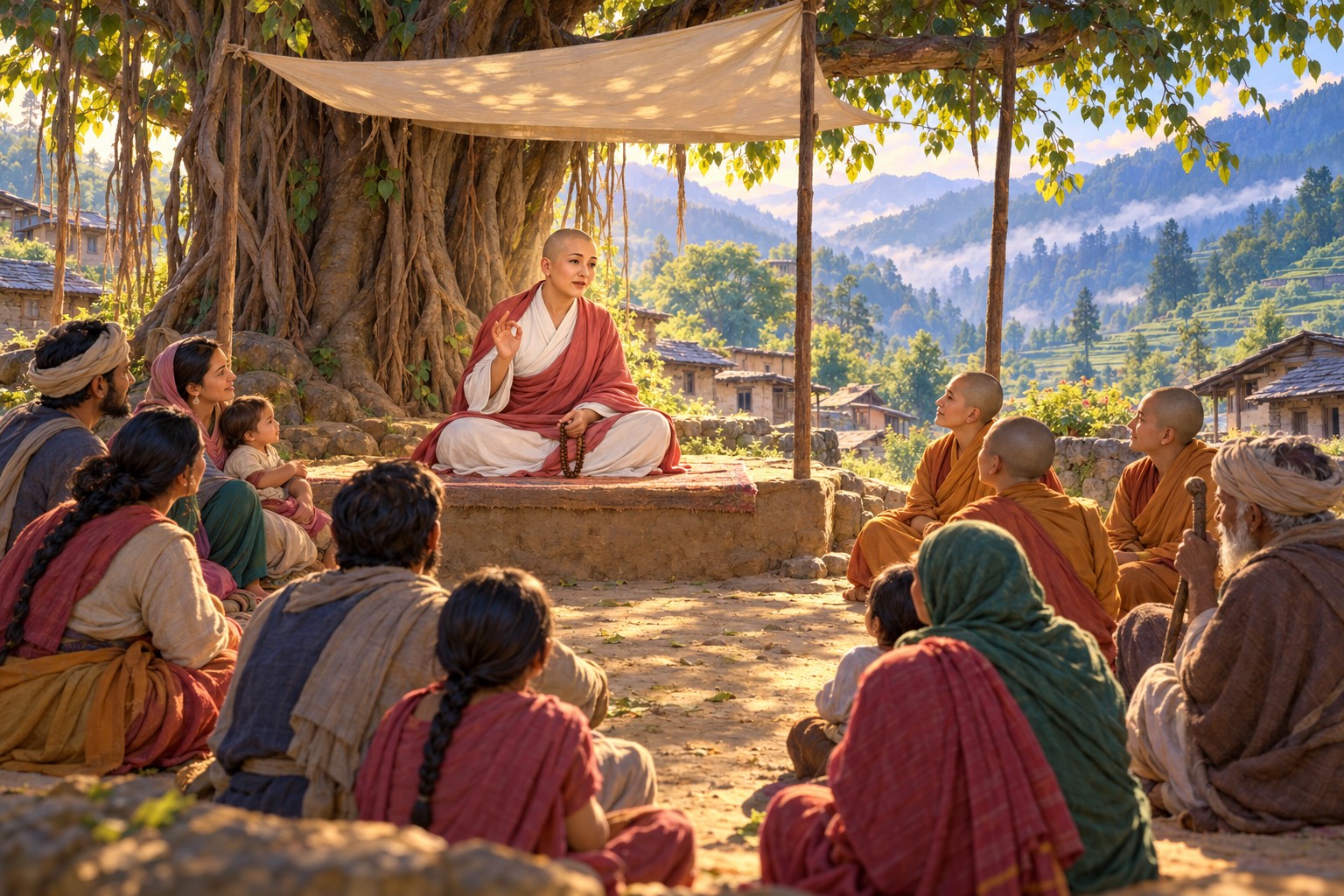
She came to be called Machik Drubpai Gyalmo, the “Singular Mother, Queen of Accomplishment”. At the end of her life, the traditions say, her body dissolved into light. Later teachers, among them the yogini Niguma, have been honoured as her emanations, her continuing appearances in the world.
In paintings she often stands at Guru Rinpoche's right, holding a long-life arrow hung with silk streamers and a mirror, and a vase of long life. She is one of the dakinis whom the fifth line of the Seven-Line Prayer remembers: the luminous company that surrounds him.
Tsopema lies today in a ring of green hills near the town of Rewalsar. Pilgrims walk around it past Nyingma and Kagyu monasteries, lighting butter lamps; the lake is dear to Hindus and Sikhs as well. Little islands of reeds drift on the water, and in caves above it are shrines to Guru Rinpoche and to Mandarava.

About the art
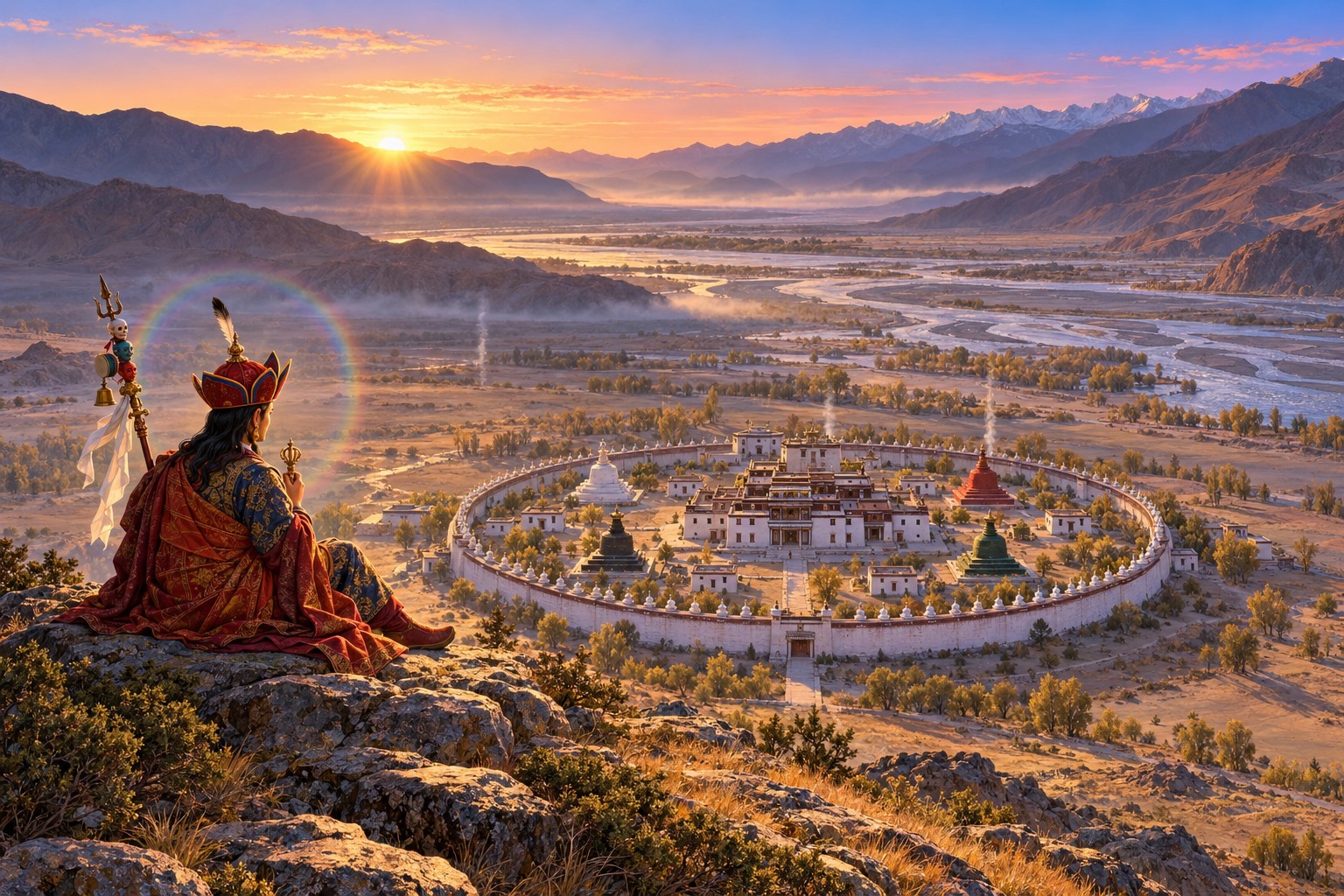
Guru Rinpoche appears in two forms on this page. In the garden he is a wandering yogi, as the story's rumour describes him. On the lake he is shown as painters most often show him: in his main form, seated on a lotus with sun and moon discs, a five-pronged vajra held at his heart for unshakeable awareness, a skull cup in his lap holding a small vase of long-life nectar, and a khatvanga, a trident staff, resting against his left shoulder. His lotus hat has a special place in this story: Himalayan Art Resources records the tradition that it was a gift from the king of Zahor. We have shown him in this form on the lake, as tradition paints it, even though in the story the gift comes a little later.
Mandarava is shown three ways: as a young princess of an eighth-century Indian court, as a shaven-headed nun in the ochre robes of early Indian Buddhist women, and as a mature teacher. In traditional paintings she usually stands at Guru Rinpoche's right, often in lighter garments than Yeshe Tsogyal, a hint at India's warmer climate. Her usual emblems are a long-life arrow hung with silk streamers and a mirror, and a vase of long life, reminders of her bond with long-life practice. Artists do not all follow the same pattern.
The coral tree with scarlet flowers that blooms around the palace gives Mandarava her name. The fire itself is never shown: the tradition remembers the pyre for what it became. The butter lamps at Tsopema today are the offerings pilgrims light around the lake. As everywhere on this site, the images contain no Tibetan script or mantras; real texts are set as type on the page.
Why this matters for practice
The fifth line of the Seven-Line Prayer remembers Guru Rinpoche surrounded by dakas and dakinis, and Mandarava is one of the brightest of that company: a woman who held to her own heart against a king's will. When we recite the prayer, we can remember that this retinue is made of real devotion and real practice, not decoration. Her story also suggests what the tradition says a fire of anger may become when it meets awakened presence: not a pyre but a lake.

If something in this story moved you, a princess who would not be talked out of her own heart, or a fire remembered as becoming water, you might pause and recite the Seven-Line Prayer once, and think of the company of dakinis around the Lotus-Born, with Mandarava among them.
Sources and further reading
- Mandāravā (biography by Sarah Jacoby, 2007), The Treasury of Lives (archived snapshot)
- Mandarava, Rigpa Wiki (archived snapshot)
- Tso Pema, Rigpa Wiki (archived snapshot)
- Mandarava, Rangjung Yeshe Wiki (archived snapshot)
- A Prayer Recounting the Lives and Liberation of the Exalted Ḍākinī Mandāravā (Samten Lingpa, tr. Stefan Mang and Kaleb Yaniger), Lotsawa House
- Mandāravā (texts and praises), Lotsawa House
- Padmasambhava (Main Form), item 8253, Himalayan Art Resources
- Teacher: Mandarava & Yeshe Tsogyal Comparison, Himalayan Art Resources
- Zahor (Tso Pema), Nekhor
- Maratika, Nekhor
- Rewalsar Lake, Wikipedia
- The Lives and Liberation of Princess Mandarava, tr. Lama Chonam and Sangye Khandro (Wisdom Publications, 1998), Book (consulted via the summaries above)
This retelling is waiting to be read by a knowledgeable practitioner. Where the traditional accounts differ, the story says so; if you notice a mistake, please tell us through Share Your Story.