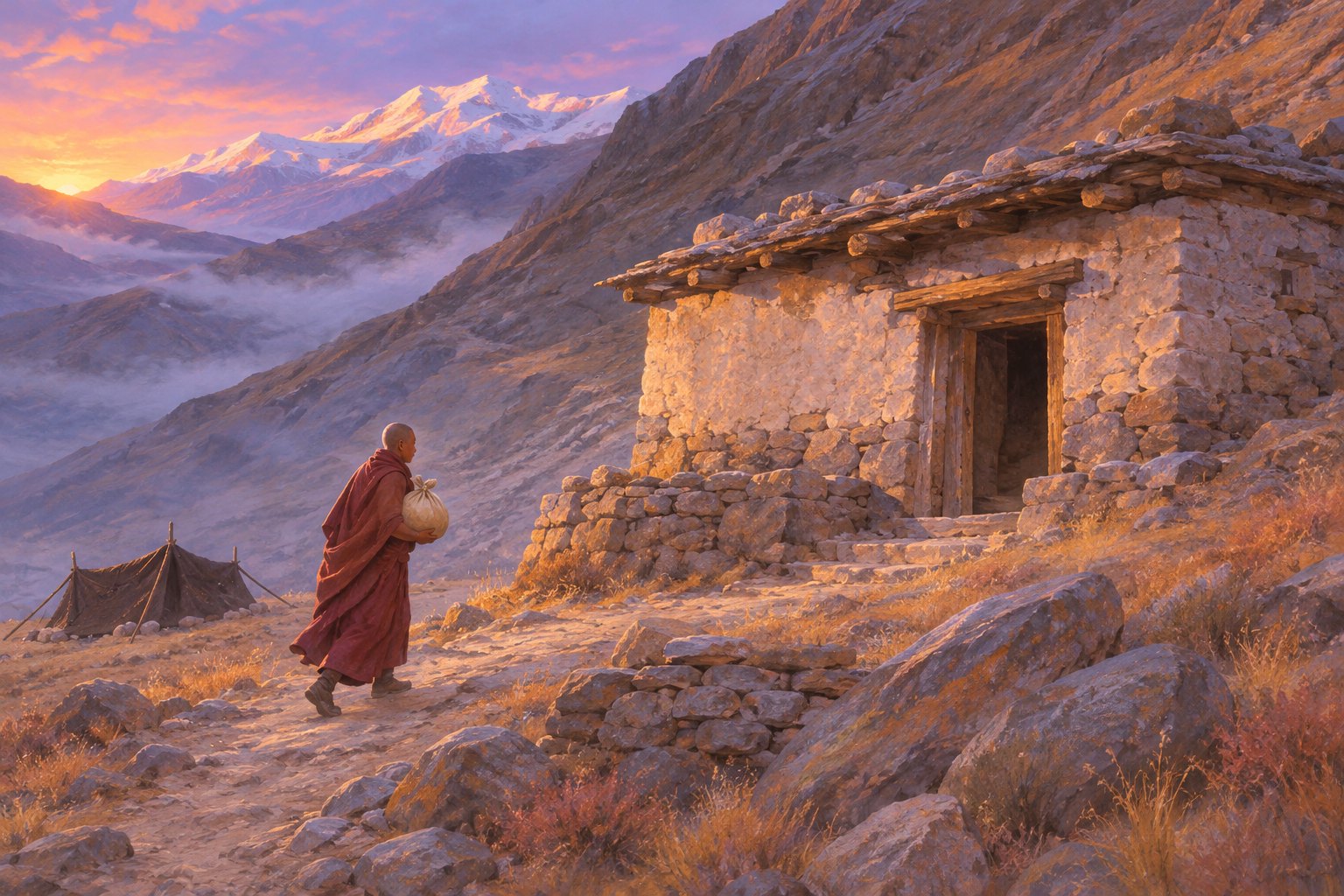
A volume, opened again
In the highlands of Drak, a young practitioner returned again and again to the same volume. Longchenpa’s account says that Melong Dorje read it about a hundred times in his sixteenth year. Later tradition identifies the book as the Eight Thousand Lines of the Perfection of Wisdom.
The number is easy to hear and difficult to imagine. One reading ends, but the book is not put away as something finished. The young reader begins again. Before the journeys and the students, the story gives us this patient movement: coming back to words that have already passed before the eyes.
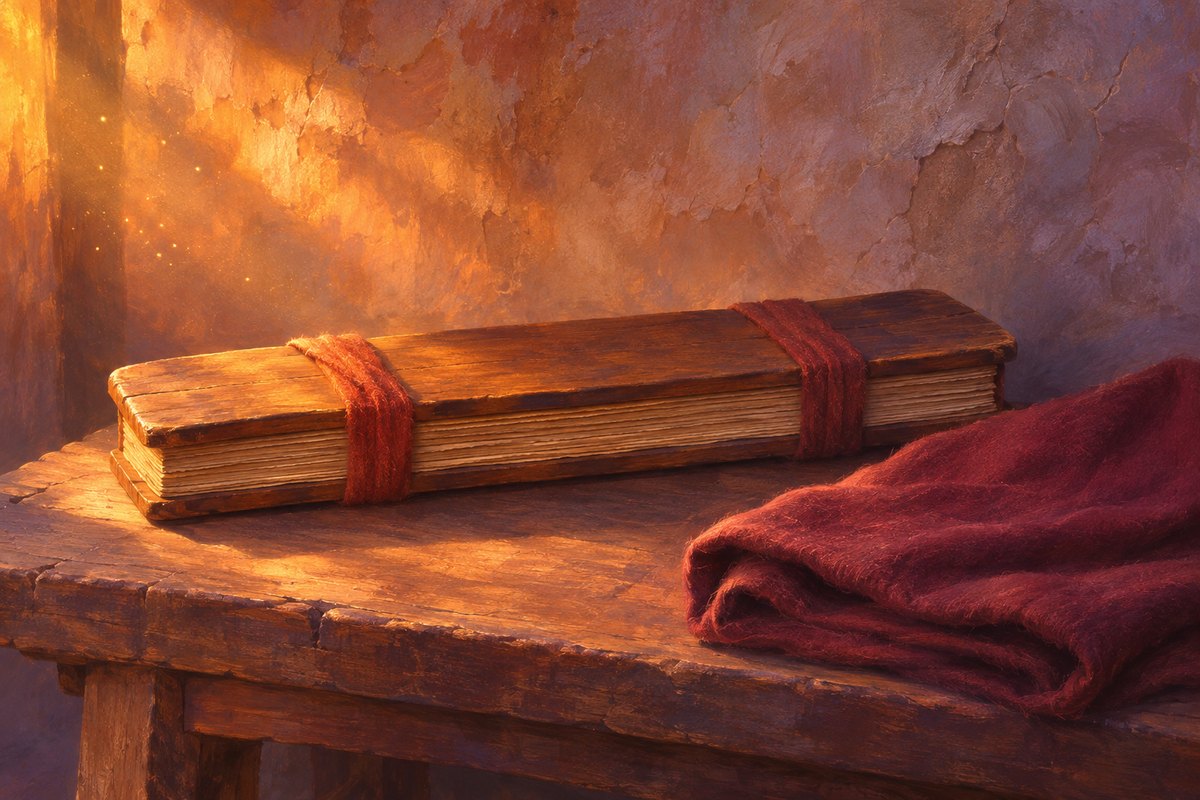
The child from Drak
Melong Dorje is remembered as living from 1243 to 1303. His father was the yogin Samyé, his mother Barma. Both early histories place his home in the upper reaches of Drak. He entered monastic life while still a child.
A high valley can seem a remote beginning for someone whose name would travel through generations of Nyingma practitioners. Yet a lineage begins with particular people in particular places. The later title Drupchen, great adept, must not make us forget the child who had to grow, receive guidance, and learn what it meant to continue.
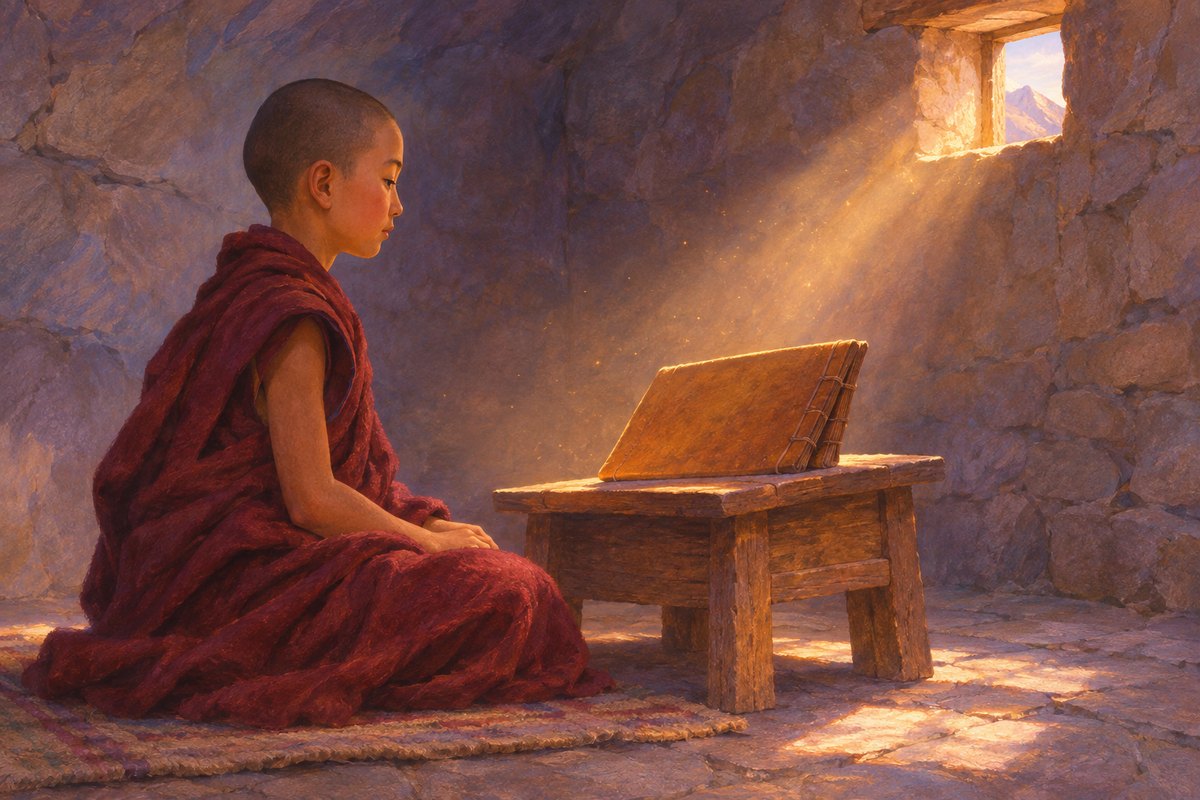
The hundred readings
The early sources do not describe this episode in exactly the same way. The Blue Annals speaks instead of a repeated ritual gathering. Its translator points out that Longchenpa’s earlier account speaks of a volume. This telling follows that earlier reading account while leaving the difference visible.
The difference need not be made into an argument between certainty and doubt. Both texts preserve the memory of sustained application in youth. What cannot be settled should not be smoothed into a detail that looks exact merely because it has been retold many times. The book remains the centre of this story because that is the form the earlier witness gives us.
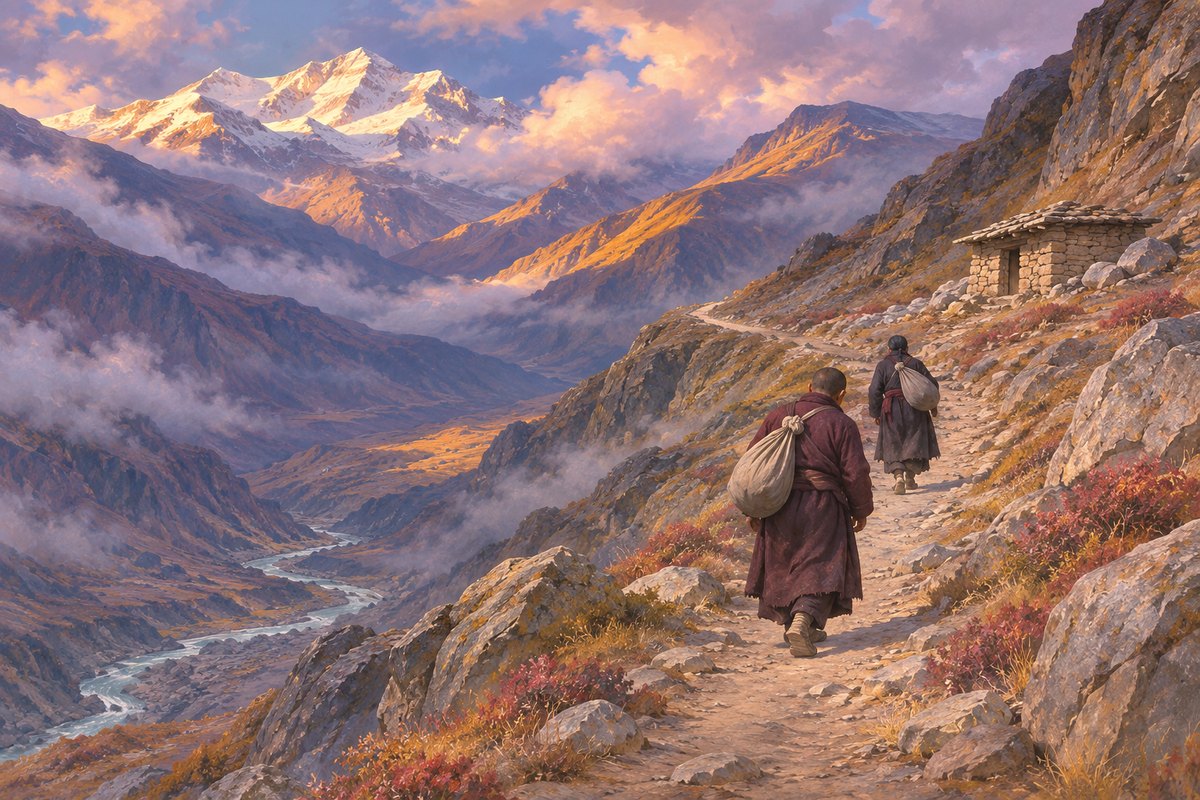
Leaving one place for another
The lineage narrative published by Chagdud Gonpa remembers his fondness for reciting the Perfection of Wisdom and his later wandering among sacred places. Food and lodging did not determine his destination. The account presents him as someone willing to endure difficulty in the course of his search.
This is no recommendation to neglect ordinary needs. In the remembered life, the journeys were directed toward learning and practice. The distance between one teacher and another could not be removed by wanting to arrive. He had to travel it. The small figures in the landscape paintings give room to that human scale.
Many teachers
The Blue Annals describes him serving numerous teachers and practising at places including Kharchu. It also records the Heart-Essence teachings received from Sangyé Önpo. Heart-Essence, or Nyingtik, names a family of transmissions within the Great Perfection tradition of the Nyingma school.
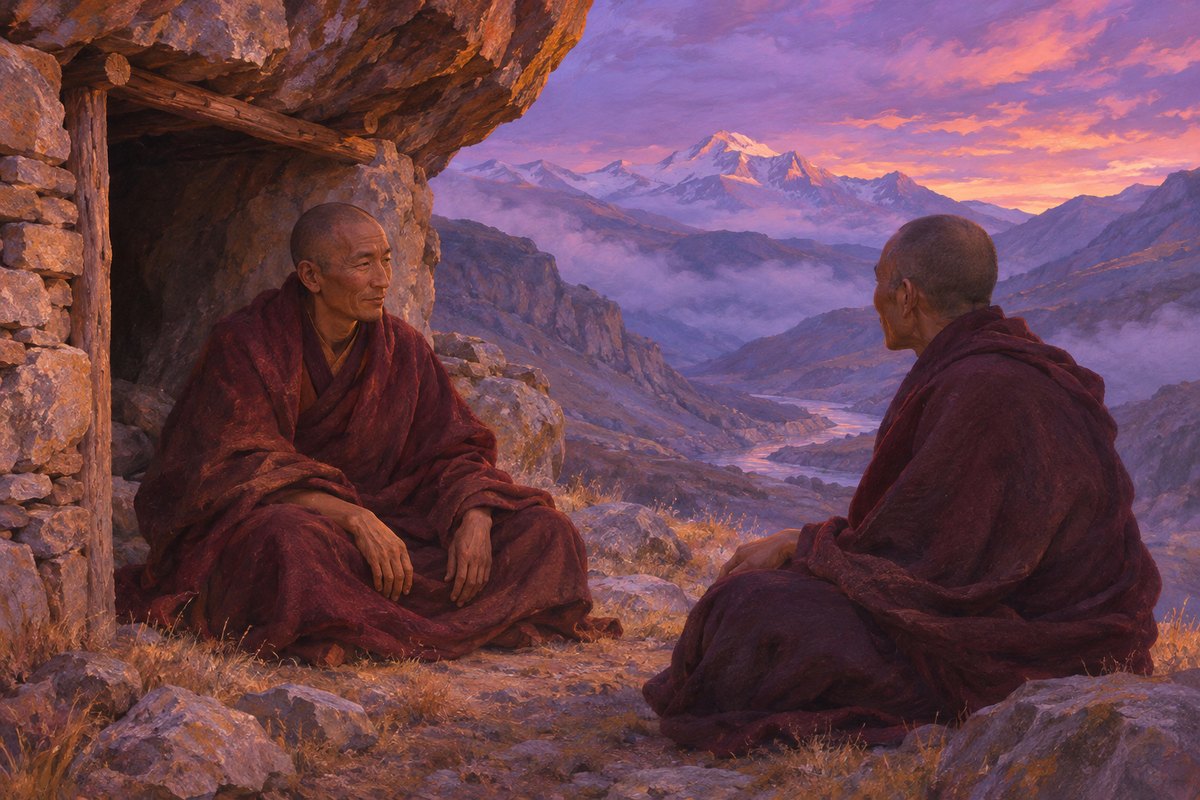
Receiving from many teachers does not make every teaching interchangeable. The story remembers relationships and particular transmissions. The distant traveller in one image becomes the listener in the next. To follow a path is also to be willing to sit down before someone else and receive what one does not yet know.
Hardship and patience
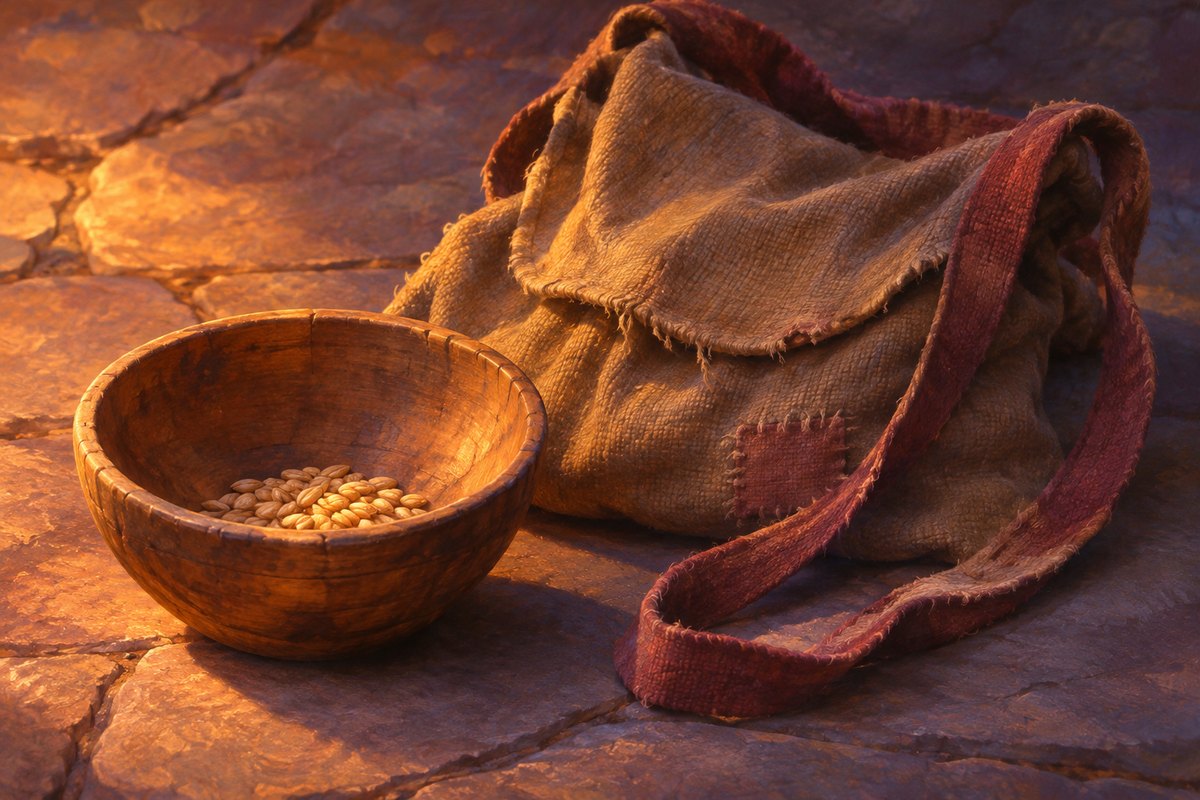
Longchenpa’s biography recalls severe austerity and very little food. Such details belong to the particular life being remembered. Their force is not that a reader should reproduce deprivation, but that the master later honoured by others had himself known difficulty.
The little bowl of barley in the illustration is a way of slowing down at that point. A long list of attainments can carry us past the material life too quickly. The person who travelled still needed food and shelter. Keeping that ordinary fact in view lets the story remain human even when the traditional account speaks of extraordinary realization.
Dreams in the account
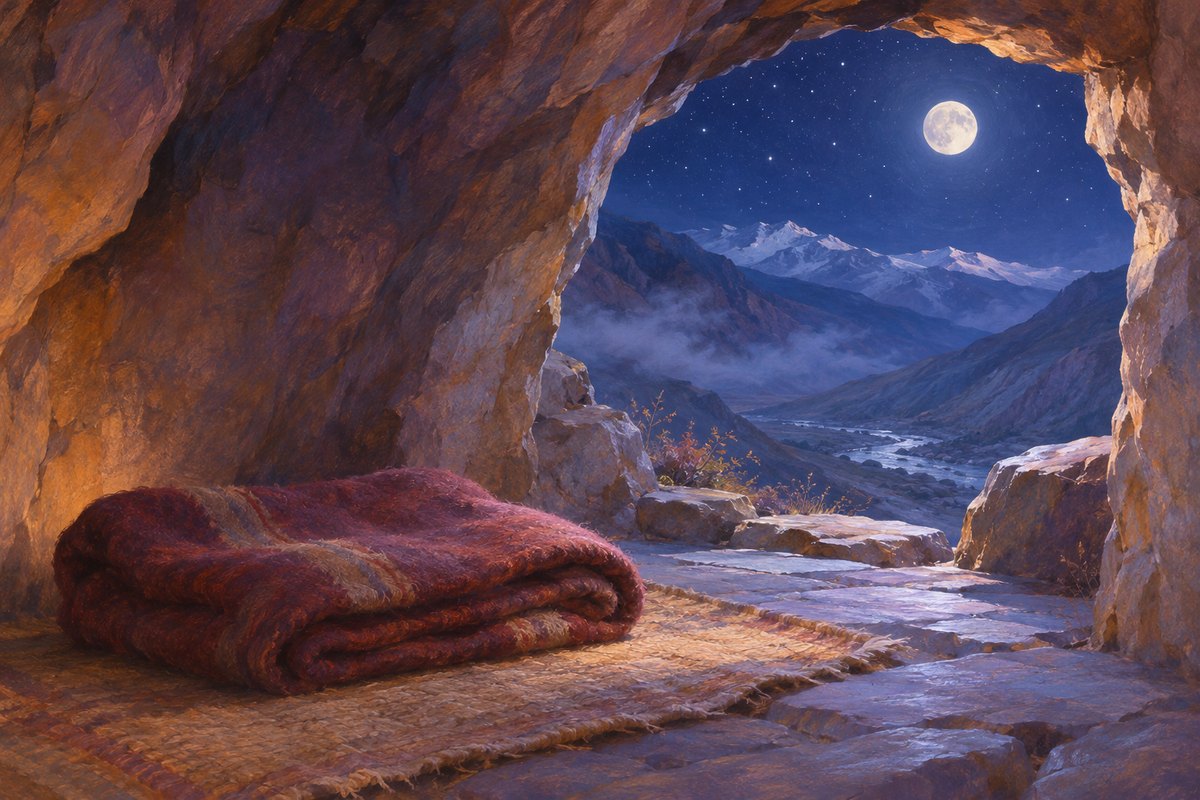
The histories also preserve Melong Dorje’s testimony about dreams and visions, including encounters with lineage masters. These are reported as the tradition remembers them. Even their details vary: a vision lasting six days in Longchenpa’s account lasts sixty in the Blue Annals.
The night image here leaves the cave empty beneath the stars. It stands beside the testimony without pretending to reproduce an experience for which an illustration could offer proof. The dream accounts matter within the devotional history; they do not become a promise that another person will have the same experience by repeating an outward action.
The traveller becomes a teacher
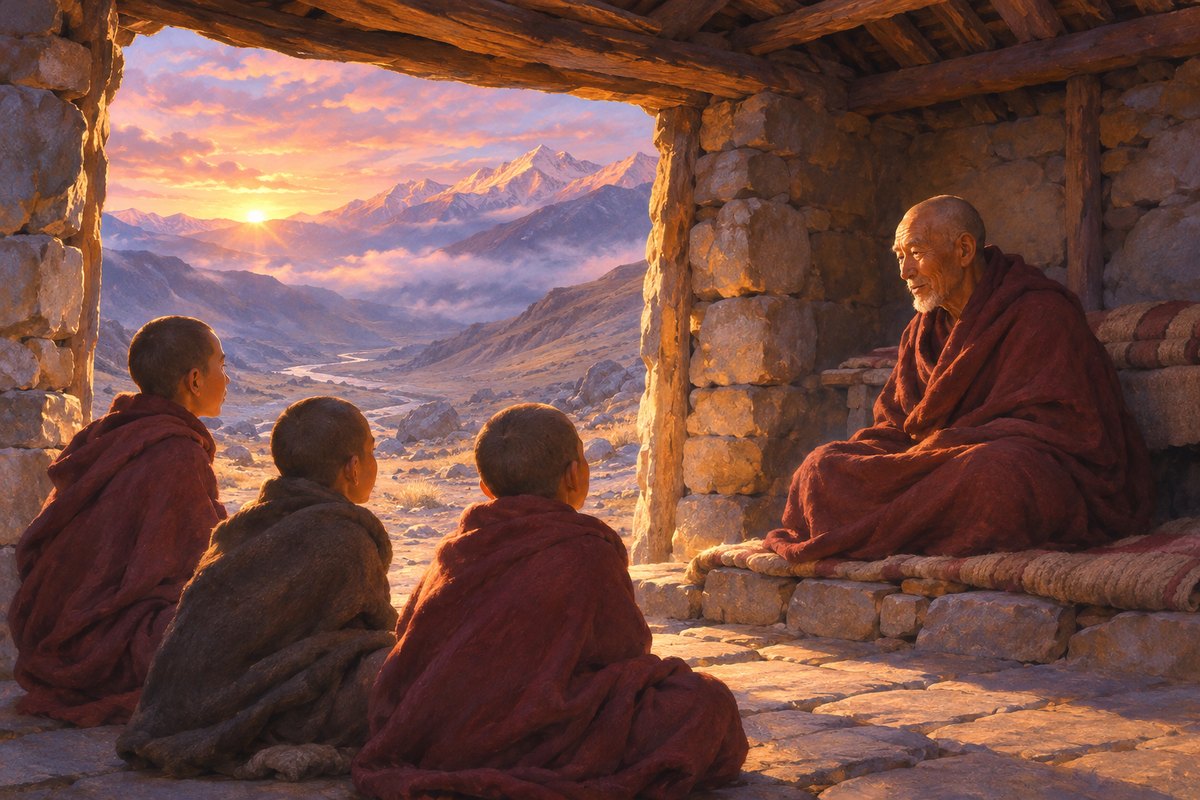
Over time, the one who had sought instruction became a source of it. The lineage remembers Melong Dorje guiding students at southern Tibetan retreat places. His best-known connection for later Nyingma readers is with Kumāradza, the teacher of Longchenpa.
That relationship draws the story back to the book with which it began. A person once willing to receive now has something to entrust. The transmission is not complete merely because the teacher possesses it. Someone must come, listen, practise, and eventually carry it onward. The modest gathering at the shelter illustrates that exchange without claiming to document a particular lesson.
The prayers of a student
Both the Blue Annals and the lineage narrative recount that a student, Lobpön Kunga, prayed for Melong Dorje to remain when his life was expected to end. They attribute his longer life to those prayers and remember his passing at sixty-one.
This is a traditional account, not a guarantee that prayer can fix a date or prevent loss. What is immediately recognizable is the student’s wish that the teacher stay. The relationship that made learning possible had become precious enough that separation was hard to contemplate. Devotion in the story is not only a grand word; it includes that wish for more time.

The book and the road
Melong Dorje’s life ended, but the Heart-Essence continued through Kumāradza and onward to Longchenpa. The lineage’s memory keeps both the great adept and the young reader: someone who travelled widely, and someone who returned to a volume again.
The Seven-Line Prayer asks Guru Rinpoche for blessing and expresses the wish to follow. Here, following can be considered through patience, receiving guidance, and returning without assuming that familiarity is understanding. This is the connection offered by the story, not a new instruction attributed to Melong Dorje. The road goes onward, and the book can still be opened.
About the art
These AI-painted storybook scenes use anonymous period figures, not authenticated portraits. Rooms, routes and object arrangements are atmospheric reconstructions rather than records of exact historical appearances.
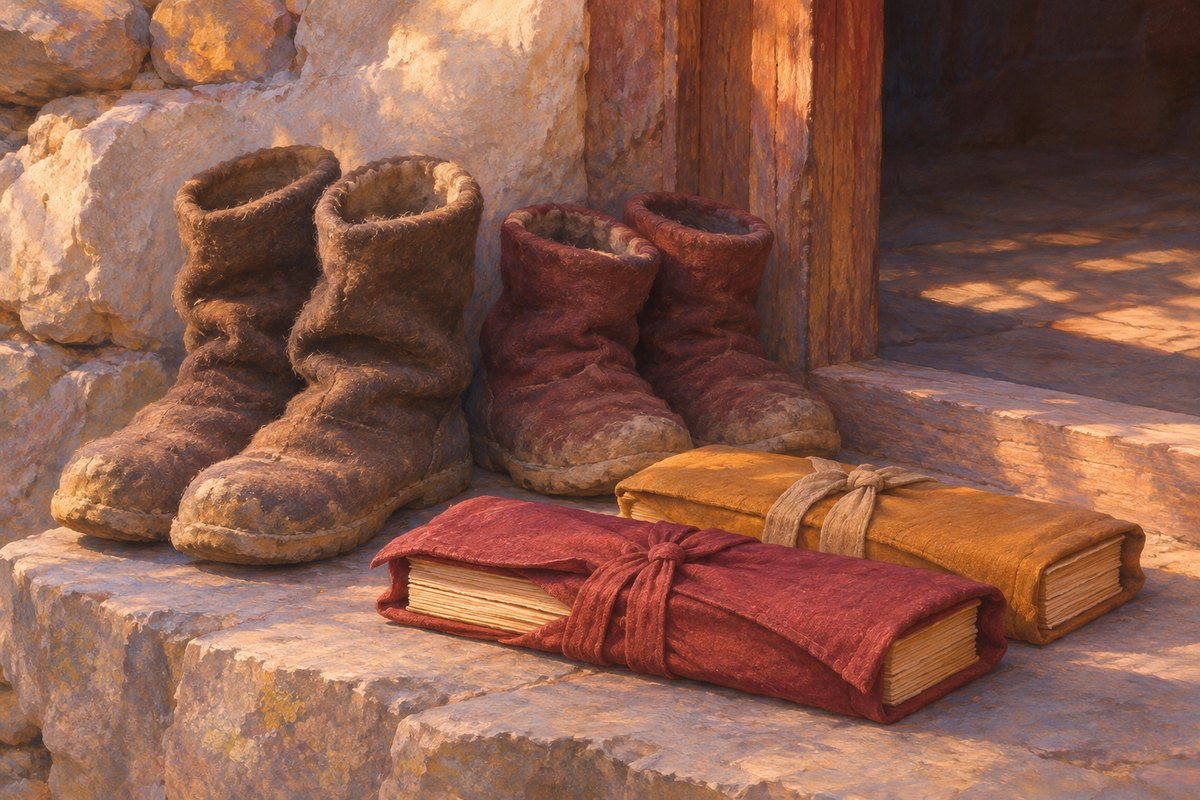
Tibetan books are shown as flat pecha bundles with wooden boards and cloth covers. Generated writing is omitted. Empty cushions, a travelling bundle, flowers and night scenes are symbolic where the caption says so; no private ritual or visionary sequence is reconstructed.
Why this matters for practice
The sixth line of the Seven-Line Prayer expresses the wish to follow Guru Rinpoche. This story offers a Nyingma setting in which to consider learning, devotion and the care taken with a teacher’s words. The connection is thematic and carries no promise of outcomes. For personal guidance beyond recitation, the Find a Teacher page is a starting point.

If something in this story moved you, you might pause and recite the Seven-Line Prayer once.
Sources and further reading
- Biography of Melong Dorje, from The Jewel Rosary History, Lotsawa House
- Biography of Melong Dorje, from The Blue Annals, Lotsawa House
- Lineage Holders of Inherent Truth, Chagdud Gonpa Foundation
- Melong Dorje Series, Lotsawa House
- Seven-Line Prayer, Lotsawa House
This retelling is waiting to be read by a knowledgeable practitioner. Where the traditional accounts differ, the story says so; if you notice a mistake, please tell us through Share Your Story.