The child from Kham
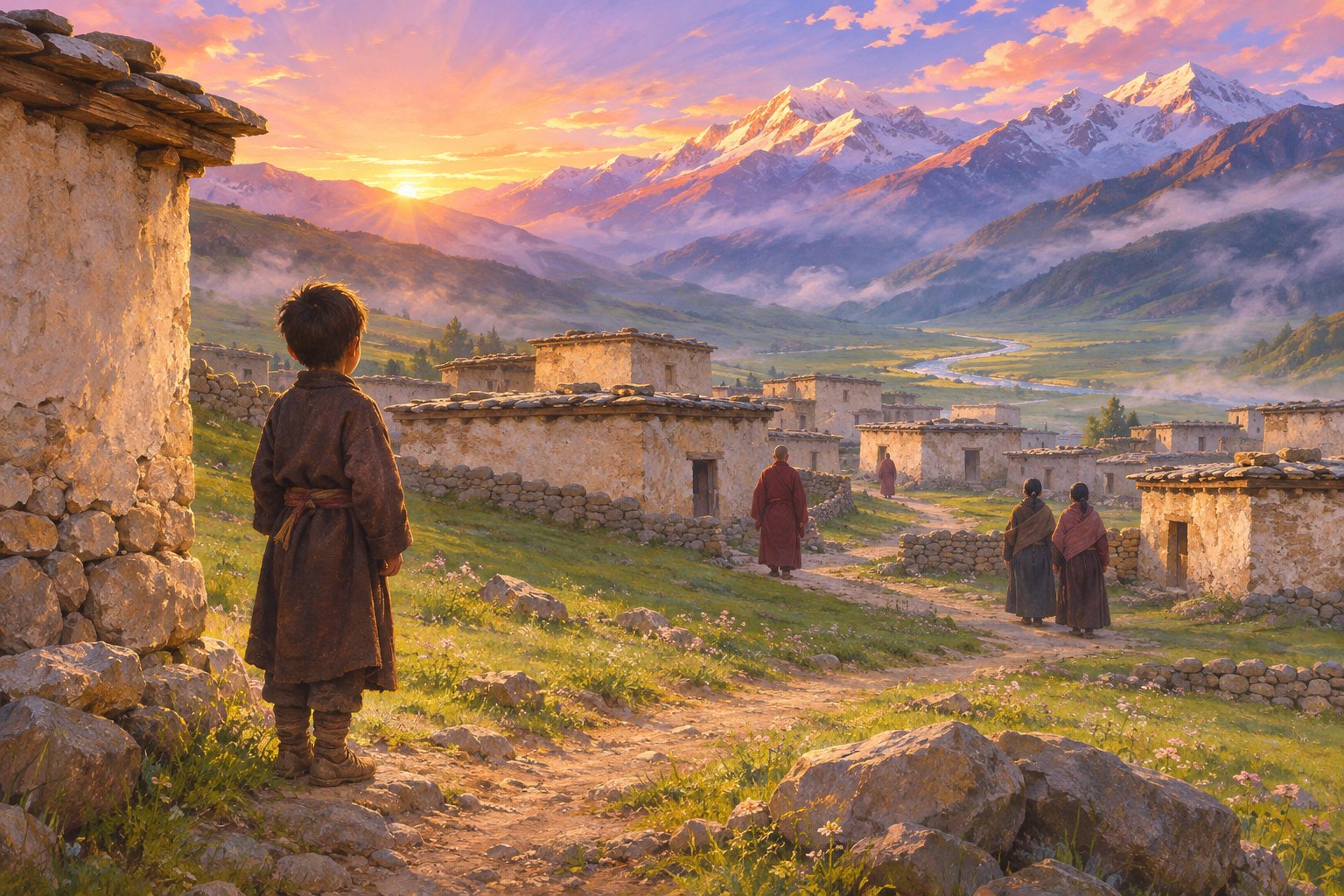
Mingyur Dorje was born in Kham in 1645. He would die in 1667, leaving a body of teachings remembered as Namchö, the Sky Teachings. Between those dates stands a childhood inseparable from the attention of an older teacher.
This is the seventeenth-century treasure revealer, not one of the later teachers who share the name Mingyur. The distinction matters because a familiar name can carry a reader into the wrong life. Here the story begins with a boy, a mountain region and the relationships through which his short life would reach later generations.
Meeting Karma Chakme
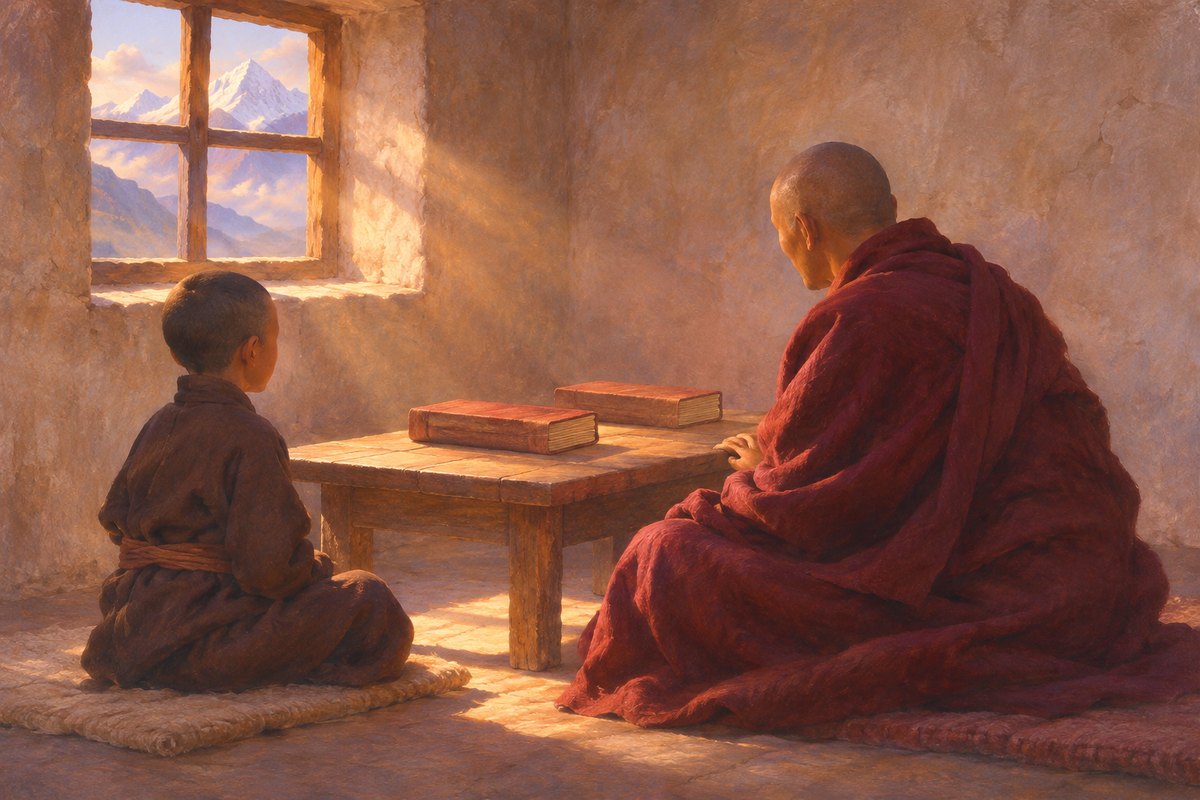
While still a child, he came under the guidance of Karma Chakme, whose name is also written Karma Chagmed. The lineage accounts remember an exceptional young practitioner. They also remember a teacher willing to undertake the work of caring for him.
The meeting is easy to picture only in grand terms: the accomplished master recognizing the gifted child. Yet the relationship had to continue after that first recognition. The boy would need instruction, a place to stay and the attention that makes a child’s learning possible. Recognition began responsibilities; it did not complete them.
The bowl and the blanket
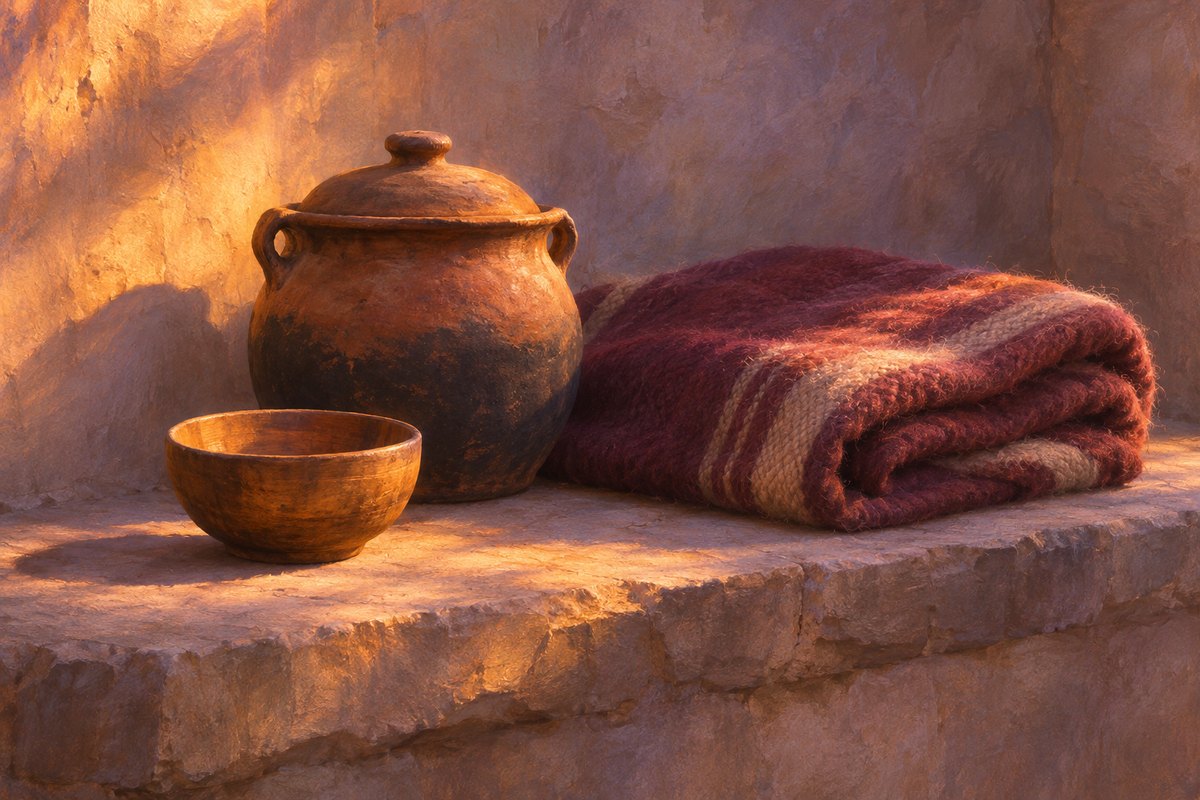
The biographical account of Karma Chakme includes his work as cook, tutor and nurse for the young revealer. This is one of the clearest human details in the story. A revered teacher attended to needs that can disappear behind a list of spiritual accomplishments.
The bowl, pot and folded blanket in the painting are illustrative objects. They stand for the care the biography actually names. Before a later reader reaches the thirteen volumes, there is food to prepare and someone to look after. A lineage depends on that kind of attention as well as on the names recorded in its histories.

A child still learning
Namdroling’s biography describes his education in religious subjects and practical skills. The young revealer was not presented merely as someone whose unusual experiences made learning unnecessary. Training and guidance remained part of his life.
There is a useful patience in allowing the story to pause here. A remarkable reputation can cause childhood to vanish from a biography. The painted scene of learning restores its scale without inventing a particular lesson. The teacher and the student occupy the same small room. Whatever the tradition would later receive still passed through a person who was growing.
The retreat room
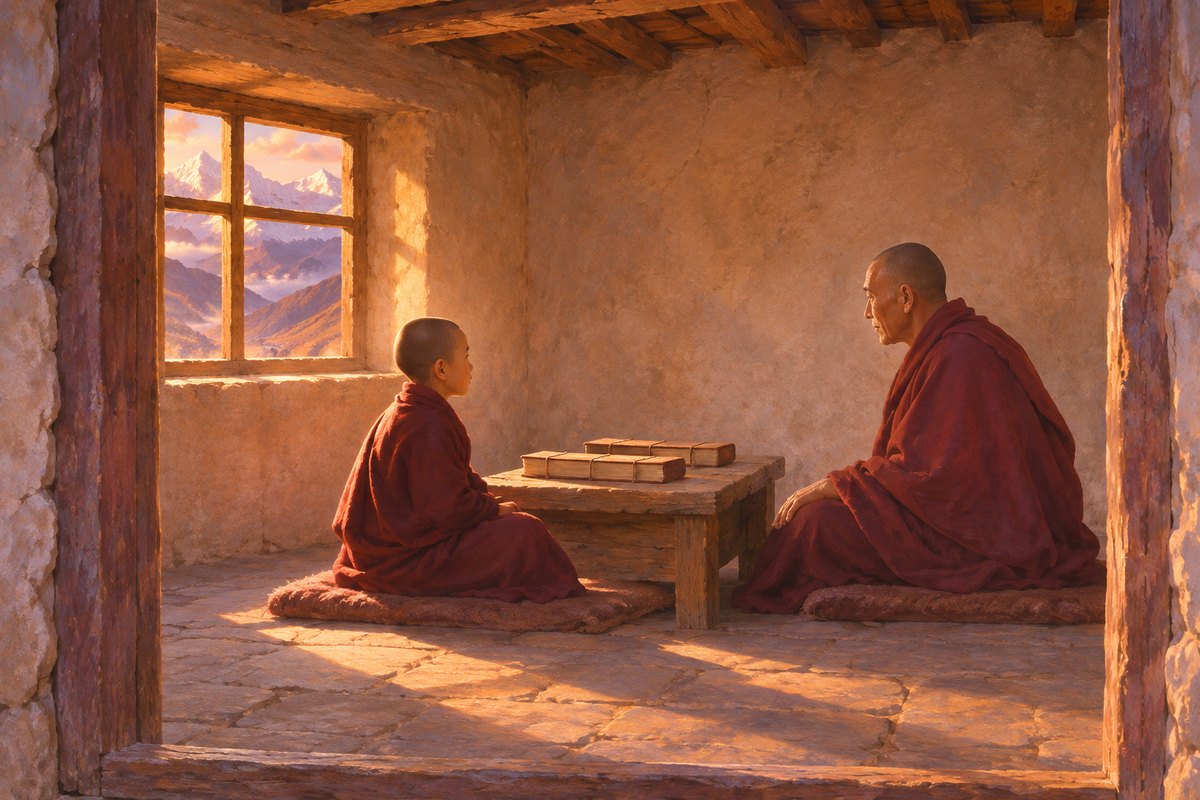
The accounts place a period of retreat early in his relationship with Karma Chakme. Much of the Namchö revelation is associated with his youth. The room in the illustration remains plain, with a book and an opening toward the sky.
The story describes the public history of the lineage rather than giving a method for reproducing its experiences. A reader does not need a reconstructed private practice to understand the importance of the relationship: the young practitioner was accompanied by an experienced teacher who could receive, record and help preserve what emerged.

Why the teachings are called sky
Namchö is commonly rendered as Sky Teachings or Space Teachings. The tradition remembers revelations received through visionary encounters, including encounters with Guru Rinpoche and other awakened figures. These are claims of the lineage’s sacred history and are presented as such.
The illustration shows open sky rather than pretending to document a vision. The term treasure in the Nyingma tradition can refer to teachings revealed in ways other than opening a physical chest. Here the remembered revelation would eventually take the tangible form of written volumes, copied and handed onward.
Words put down
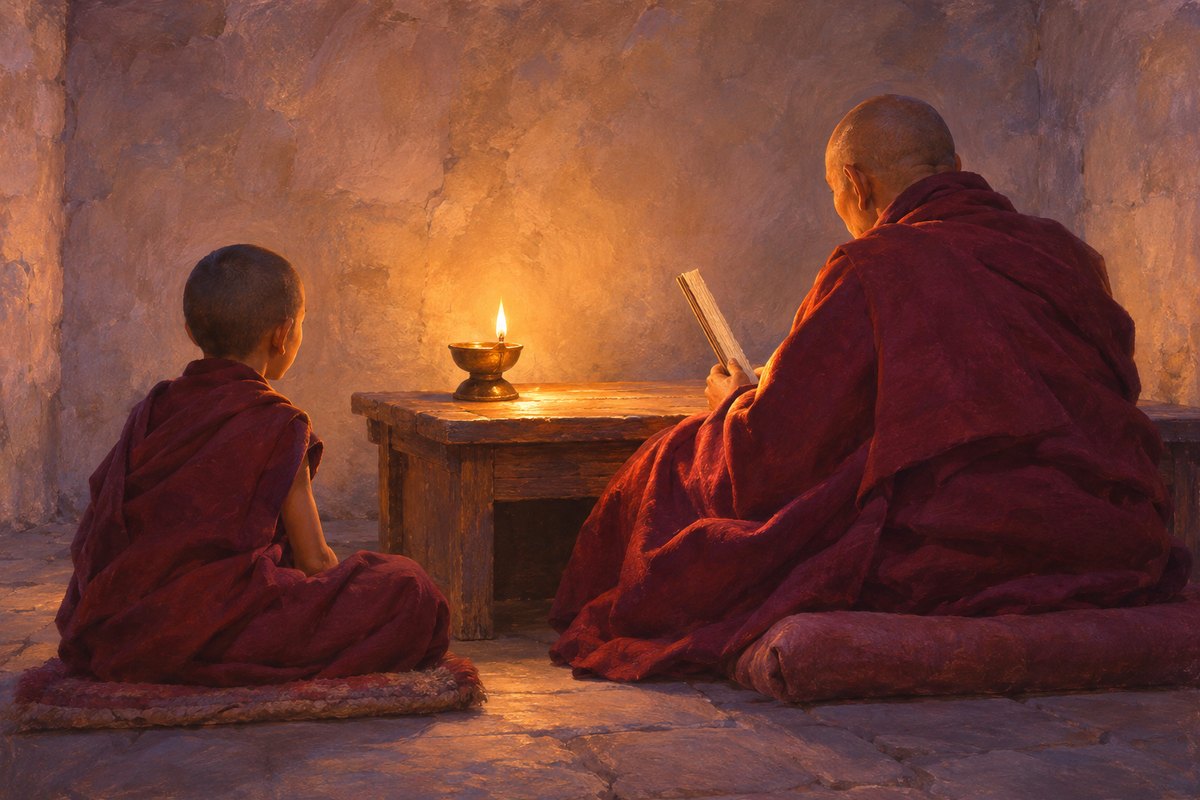
Karma Chakme helped record the teachings. The young revealer and the older scholar therefore appear together again, now beside the materials through which a spoken account could become a durable text.
To write something down is a particular service. Memory can falter; a listener can die; a transmission can remain available to only those in the room. A manuscript does not remove the need for qualified teaching, but it gives later people something to preserve. In the painting the pages carry no invented legible script. The historical point is the recording, not a fabricated facsimile.
Thirteen volumes
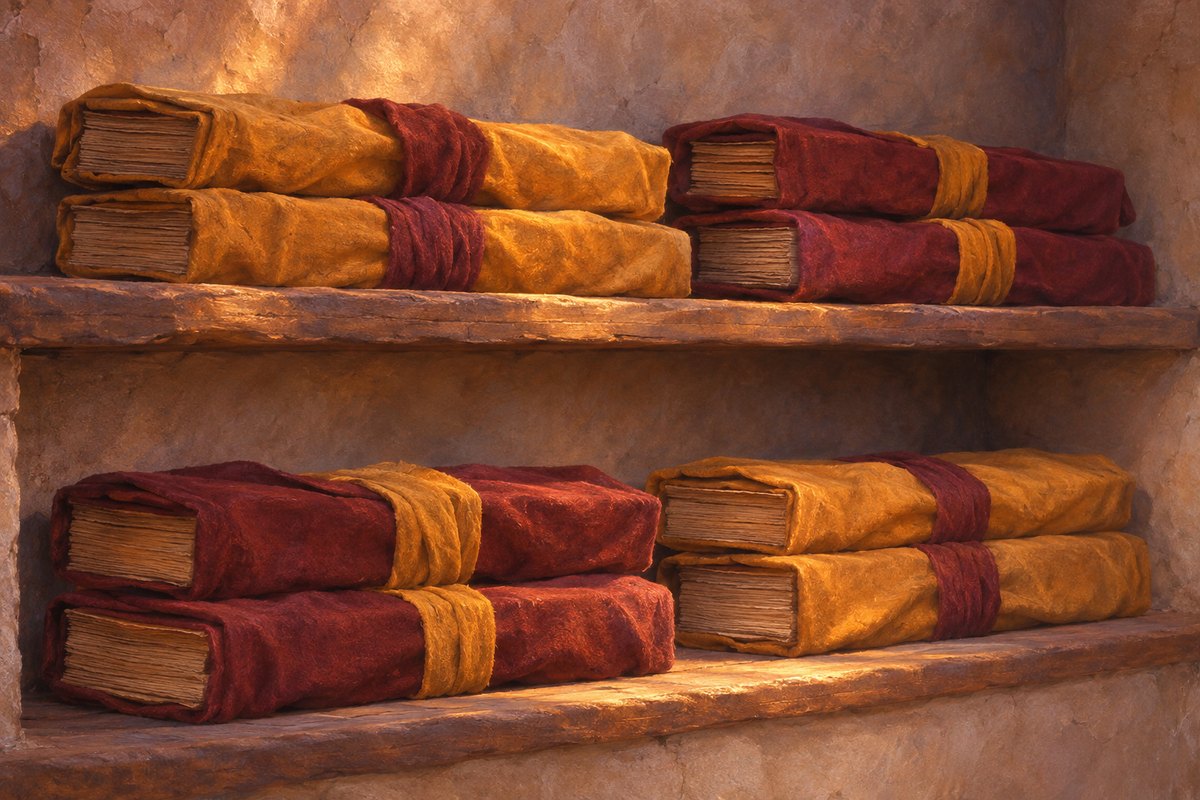
The Namchö collection came to fill thirteen volumes. That number supplies a different measure of this short life: not a promise about attainment, but the extent of the textual legacy the lineage received.
The bundles in the illustration are symbolic pecha volumes, with flat pages, boards and cloth covers. They are not presented as the original manuscripts. Their weight helps bring the story back to ordinary custody. Books need somewhere to be kept and someone prepared to carry them. A revelation remembered by a tradition also has a history of preservation.
Into the Palyul lineage
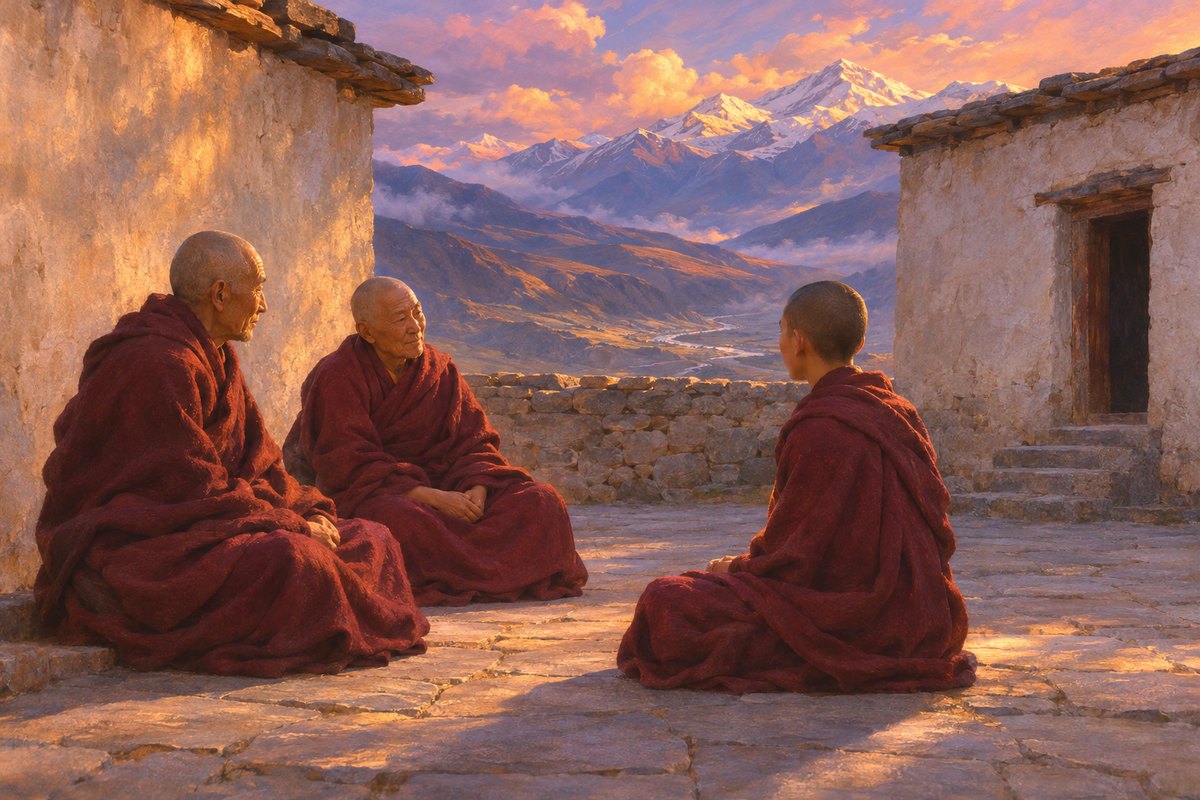
Kunzang Sherab became a principal recipient, and the Namchö teachings became central to the Palyul tradition of the Nyingma school. The story continues through teachers and communities after the revealer’s own life has ended.
The figures approaching with wrapped books represent that onward movement. No exact ceremonial scene is claimed. What matters is the relationship between receiving and responsibility. Those who came later did not meet the boy in Kham. They met a living tradition in which people had taken care to transmit what they had received.
The room after his life
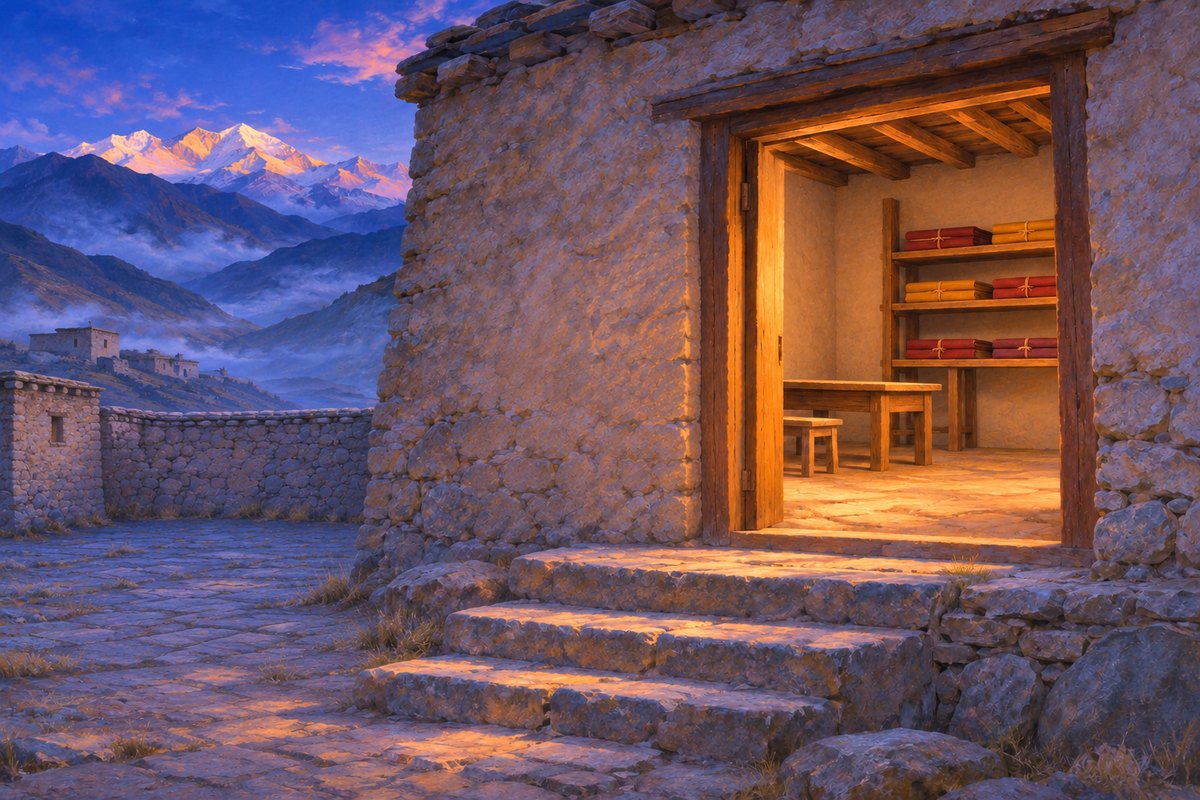
Mingyur Dorje died in 1667. Accounts that call him twenty-three use Tibetan age reckoning; the dates alone are enough here. The brief span should not obscure either the young person at its centre or the practical kindness of the teacher beside him.
The Seven-Line Prayer’s wish to follow Guru Rinpoche connects thematically with this history of guidance and transmission. This telling does not claim a special recitation episode or offer a promise of visionary experience. It ends beside an ordinary room and a collection of books: traces of a short life carried forward by the care of others.
About the art
AI-painted illustrations use anonymous figures and atmospheric settings, not authenticated portraits or exact architectural reconstructions. Recent historical figures remain distant silhouettes.
Objects and landscapes illustrate the narrative. The white dream bridge is symbolic; no visionary deity appearance or private practice sequence is reconstructed. Pecha volumes carry no invented legible scripture.
Why this matters for practice
The Seven-Line Prayer expresses the wish to follow Guru Rinpoche. This Nyingma lineage story offers a setting for considering guidance, gratitude and transmission. The connection is thematic, not an invented recitation episode.

If something in this story moved you, you might pause and recite the Seven-Line Prayer once.
Sources and further reading
- Namdroling — Tertön Mingyur Dorje, Namdroling
- Dolpo Tulku — Dharma lineage, Dolpo Tulku
- Treasury of Lives — Karma Chakme, Treasury of Lives
- Treasury of Lives — Namchö Mingyur Dorje, Treasury of Lives
This retelling is waiting to be read by a knowledgeable practitioner. Where the traditional accounts differ, the story says so; if you notice a mistake, please tell us through Share Your Story.