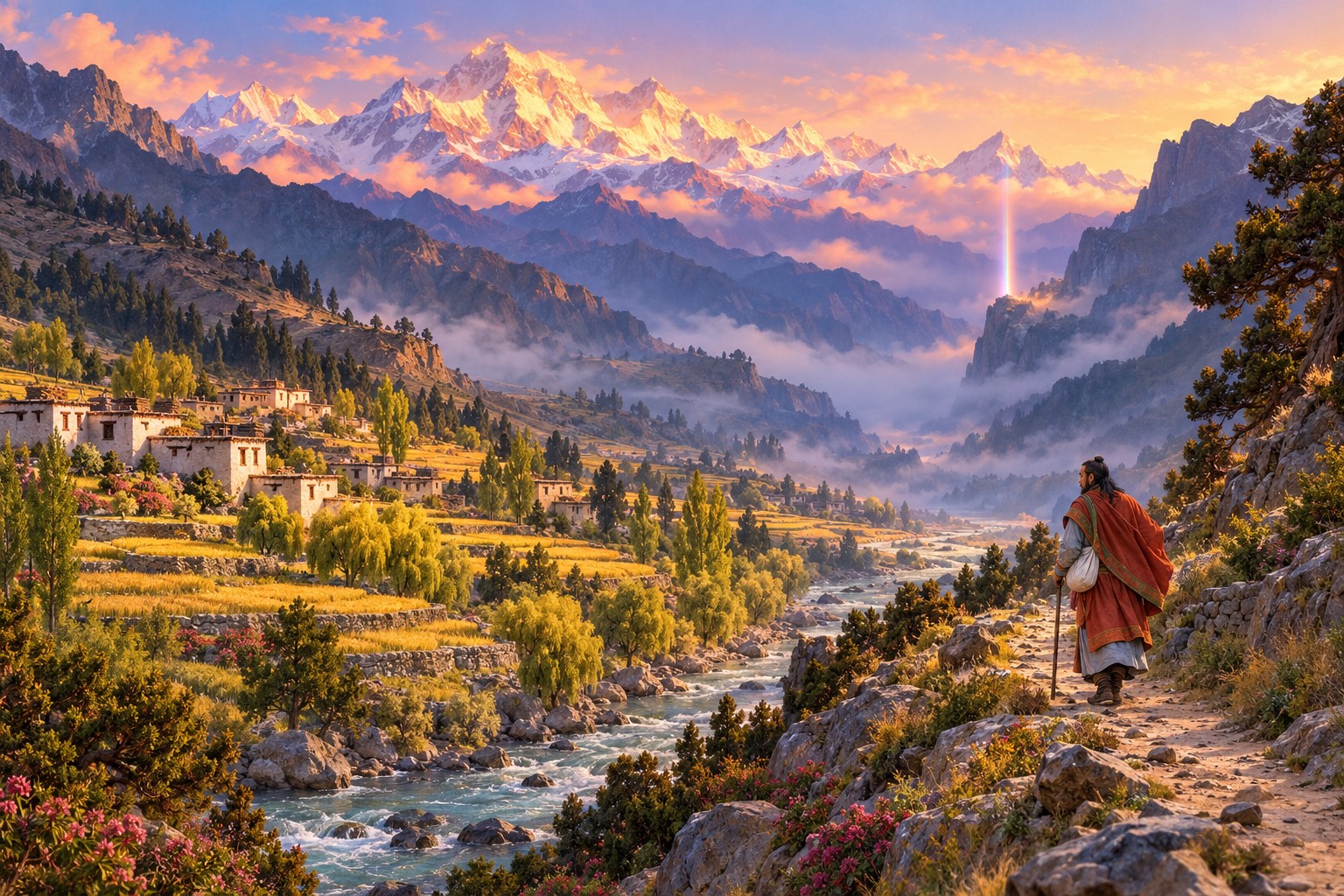
In eastern Tibet in the nineteenth century, you might have passed the most respected teacher of his day on a mountain path and never known it. He walked. He wore an old sheepskin coat. He carried a teapot, a bowl and one book.
His name was Patrul Rinpoche (1808–1887). Rinpoche, "precious one," is a title of respect for a teacher. This is the story of how a man who owned almost nothing became a teacher to nomads and scholars alike, and of the thread that ties his life to the Seven-Line Prayer.
Born in a nomad's tent
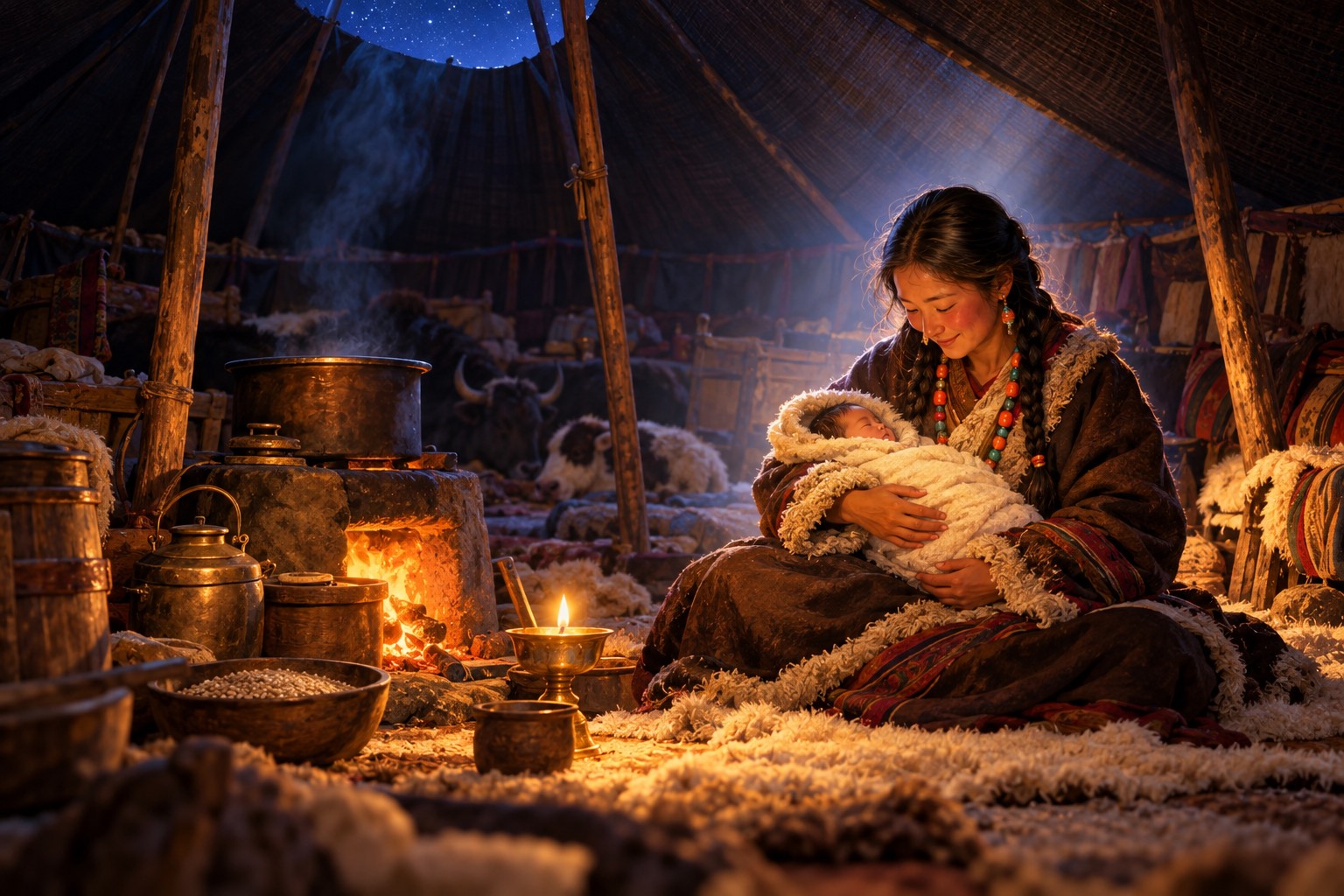
He was born in 1808 in Dzachukha, the high grassland along the Dza river in Kham, the eastern part of Tibet. His family were nomads. His father was Gyatok Lhawang and his mother was Dolma.
The stories collected in Matthieu Ricard's Enlightened Vagabond say that on the day he was born, the family tent filled with white light, and that within days the baby was murmuring the mantra of Avalokiteshvara, the buddha of compassion. His mother, the stories add, kept these signs to herself.
The child was recognized as a tulku, the rebirth of an earlier master: in his case, Palge Samten Phuntsok, a lama of the same region. The name Patrul is short for "Palge Tulku." The First Dodrupchen, a great disciple of Jigme Lingpa, confirmed the choice and named him Orgyen Jigme Chökyi Wangpo.
Orgyen is the Tibetan name for Oddiyana, the land of Guru Rinpoche's birth, the very place the first line of the Seven-Line Prayer names. The boy carried it in his name from the start.
The hermit who taught him
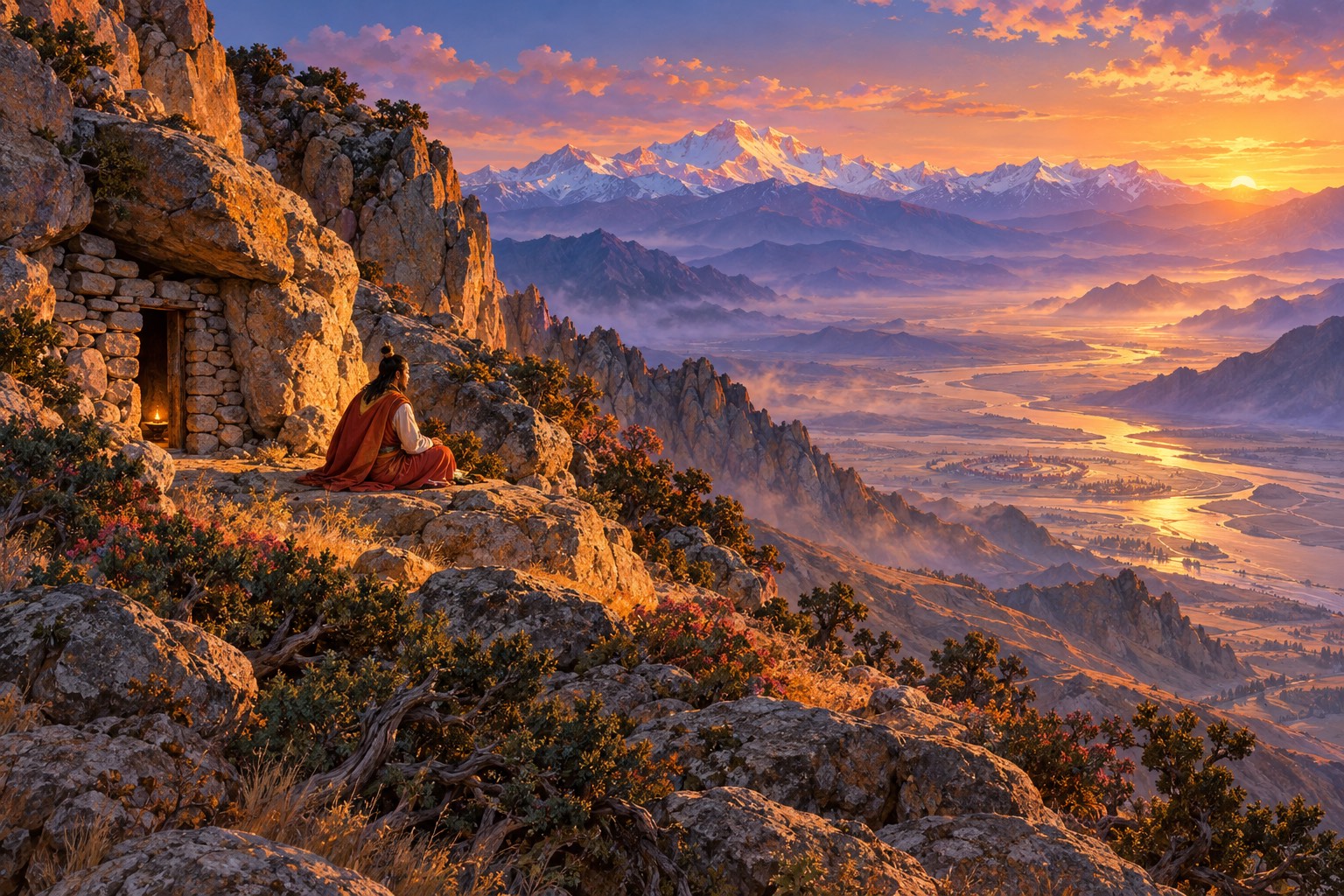
His most important teacher was Jigme Gyalwe Nyugu, a heart disciple of Jigme Lingpa. For about twenty years this old hermit lived in the Trama valley of upper Dzachukha, sometimes in caves and sometimes, Rigpa Wiki says, simply under a rock ledge or in the open, living on wild plants.
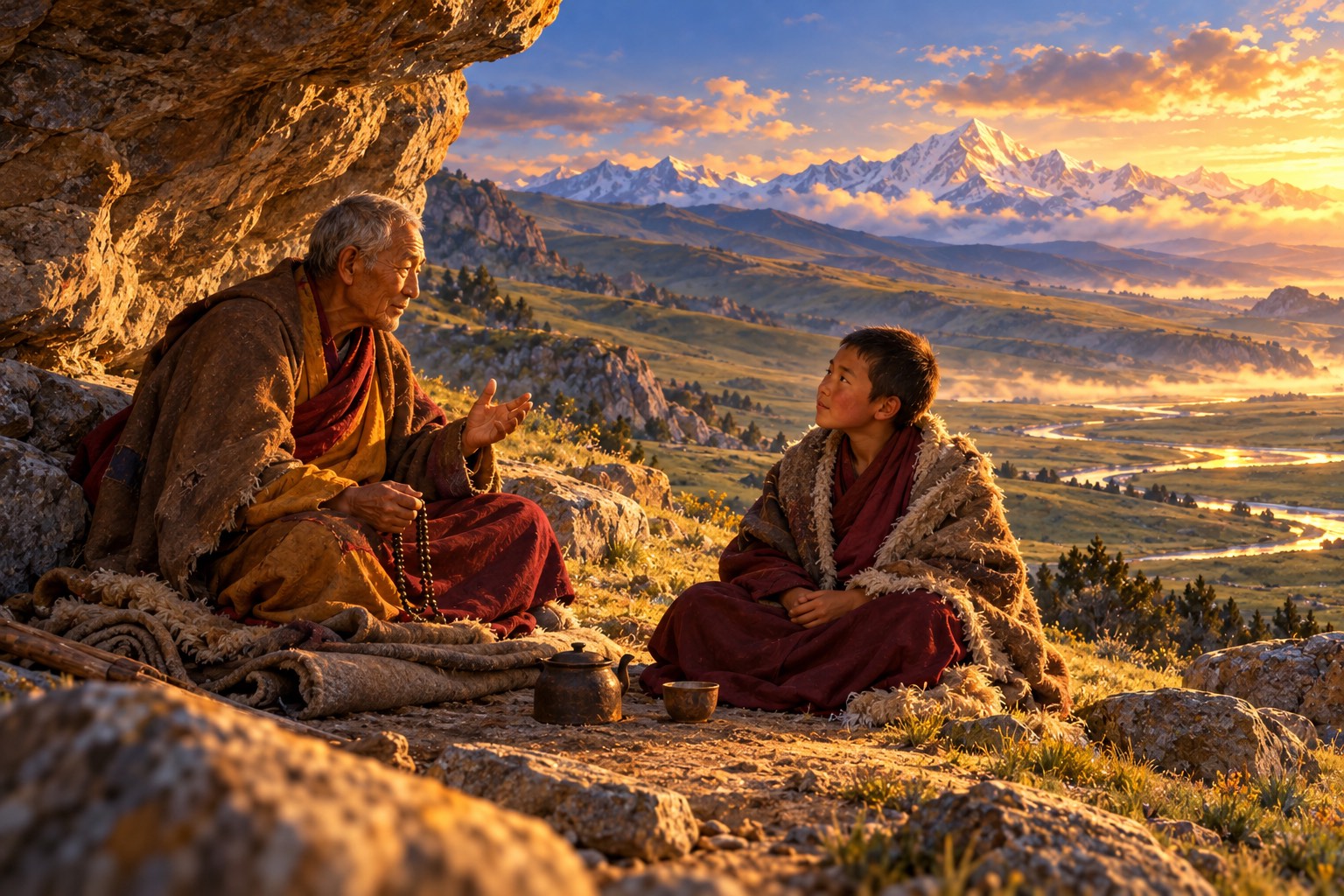
From him Patrul received the ngöndro, the preliminary practices that lay the ground for all later practice, from the Longchen Nyingtik, "Heart Essence of the Vast Expanse," the cycle of teachings revealed by Jigme Lingpa. Patrul heard his teacher explain them not once but twenty-five times.
Rigpa Wiki adds that he completed the whole practice just as many times. Its note counts among these the repetitions of the Seven-Line Prayer.
One small story from those years shows the man he would become. As a youth he travelled through Golok, the wild nomad lands to the north, with Jigme Gyalwe Nyugu and the First Dodrupchen. A nomad family whose mother had just died asked them to perform the prayers for her.
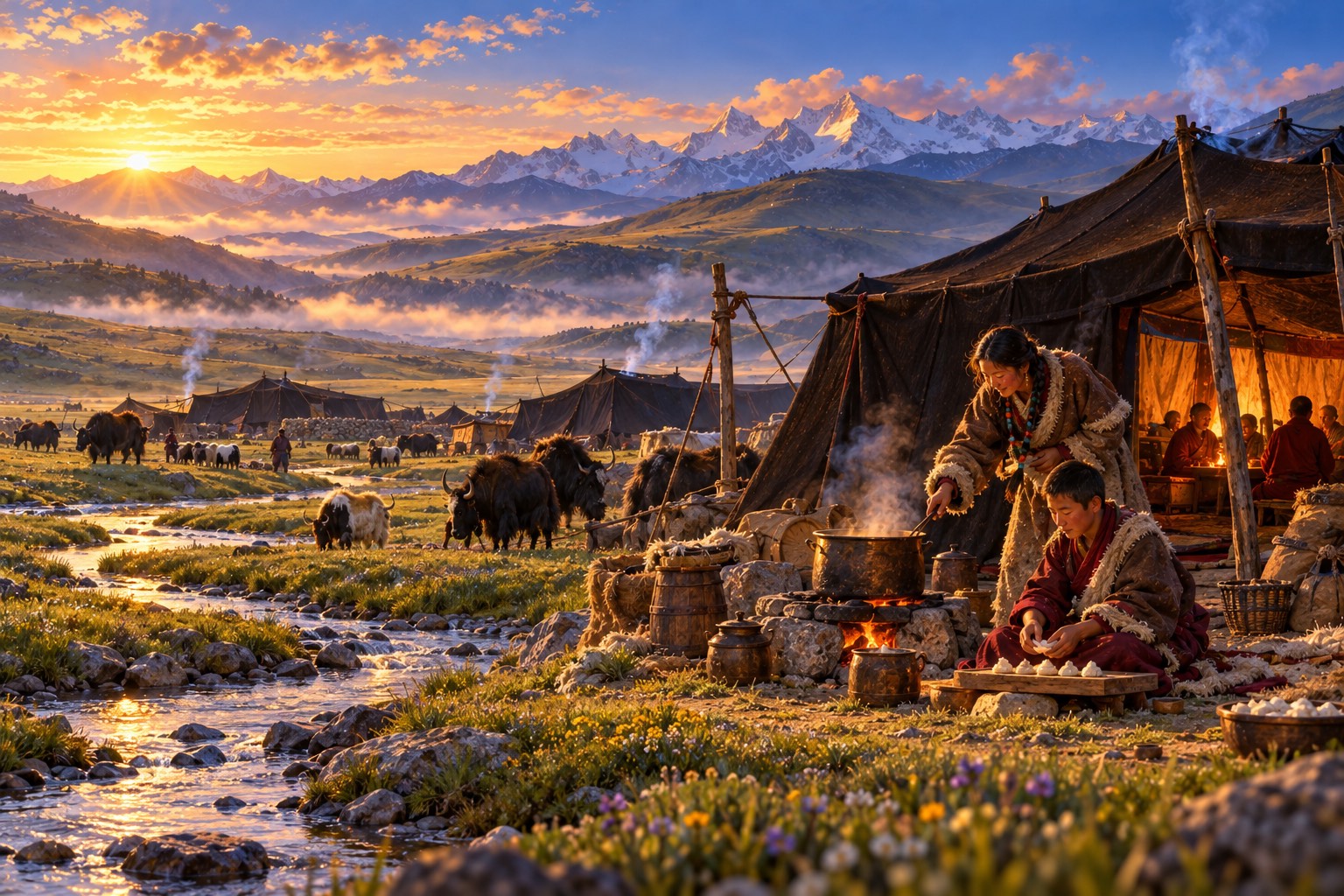
While the two old lamas prayed inside the tent, young Patrul worked outside preparing the offerings. The daughter of the family kept calling him "little monk" and asking him to mind the fire and the milk. When the family asked for the visitors' names the next morning, Patrul named his two famous teachers. For himself he gave only a childhood nickname: just a kid.
The family offered three fine horses. The lamas declined and asked for a little tea and roasted barley flour, tsampa, instead.
Giving it all away
Around the age of twenty, Patrul closed the Palge residence, settled its affairs and gave up the wealth and position that came with his title. He took the vows of a novice monk and kept them carefully. But, Ricard's account says, he dressed as a layman, in a white felt coat or a sheepskin, and set out on foot.
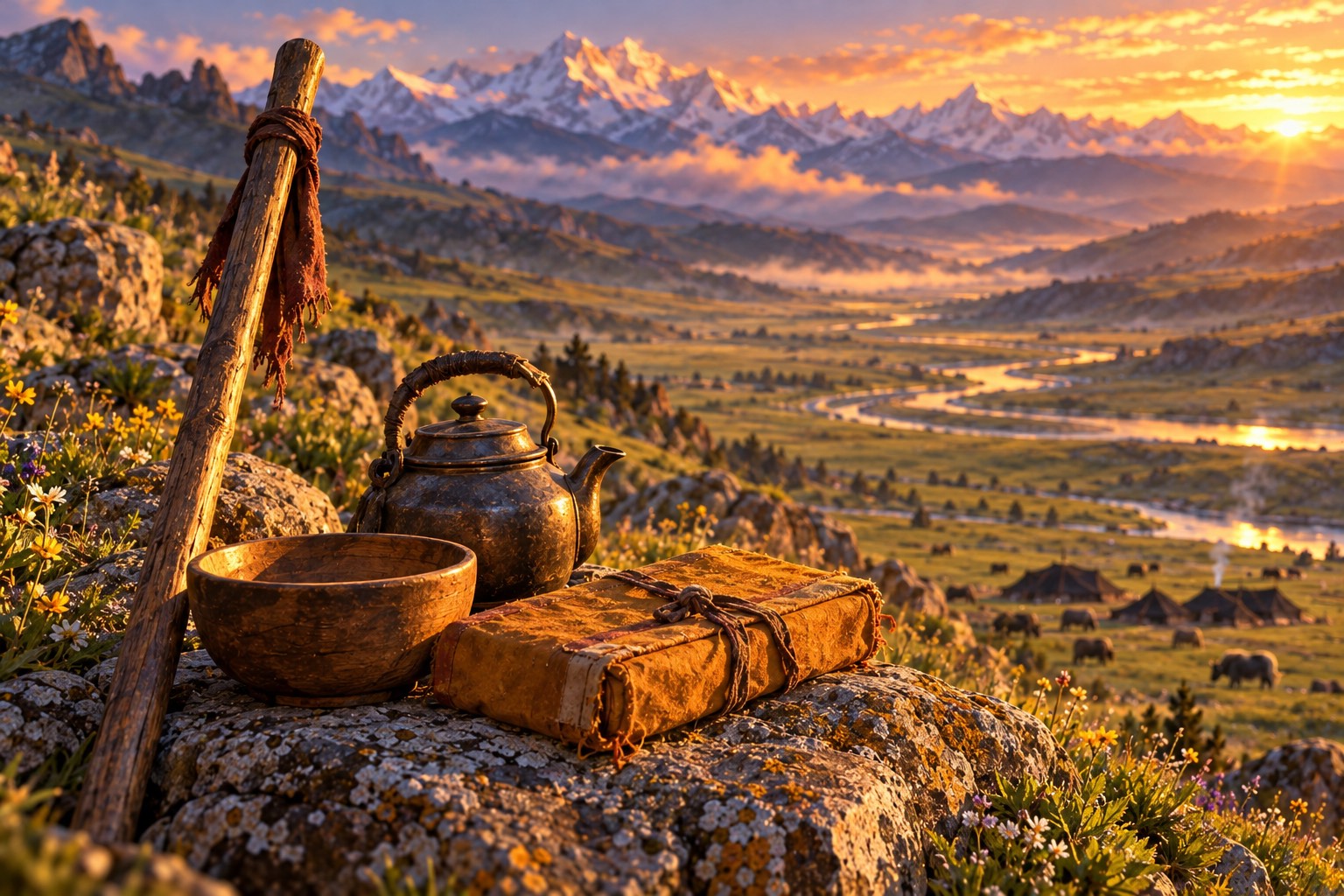
From then on he had no fixed home. He carried a begging bowl, a pot for tea and a copy of The Way of the Bodhisattva, the Indian master Shantideva's guide to living for the sake of others. In one of his own verses, as Ricard translates it, he wrote: "The lowest seat is the abode of great masters of the past."
"Old Dog"
Another of his teachers was Do Khyentse Yeshe Dorje, a wild and unpredictable yogi. The story is often told that Do Khyentse, smelling of barley beer, threw Patrul to the ground, called him an old dog and stalked off.
Patrul had been quietly judging him. In the tradition's telling, he suddenly understood that the rough treatment was itself a teaching. He sat down and rested in the open, clear nature of his own mind. Ever after he signed some of his writings "Old Dog."
A cave above Dzogchen
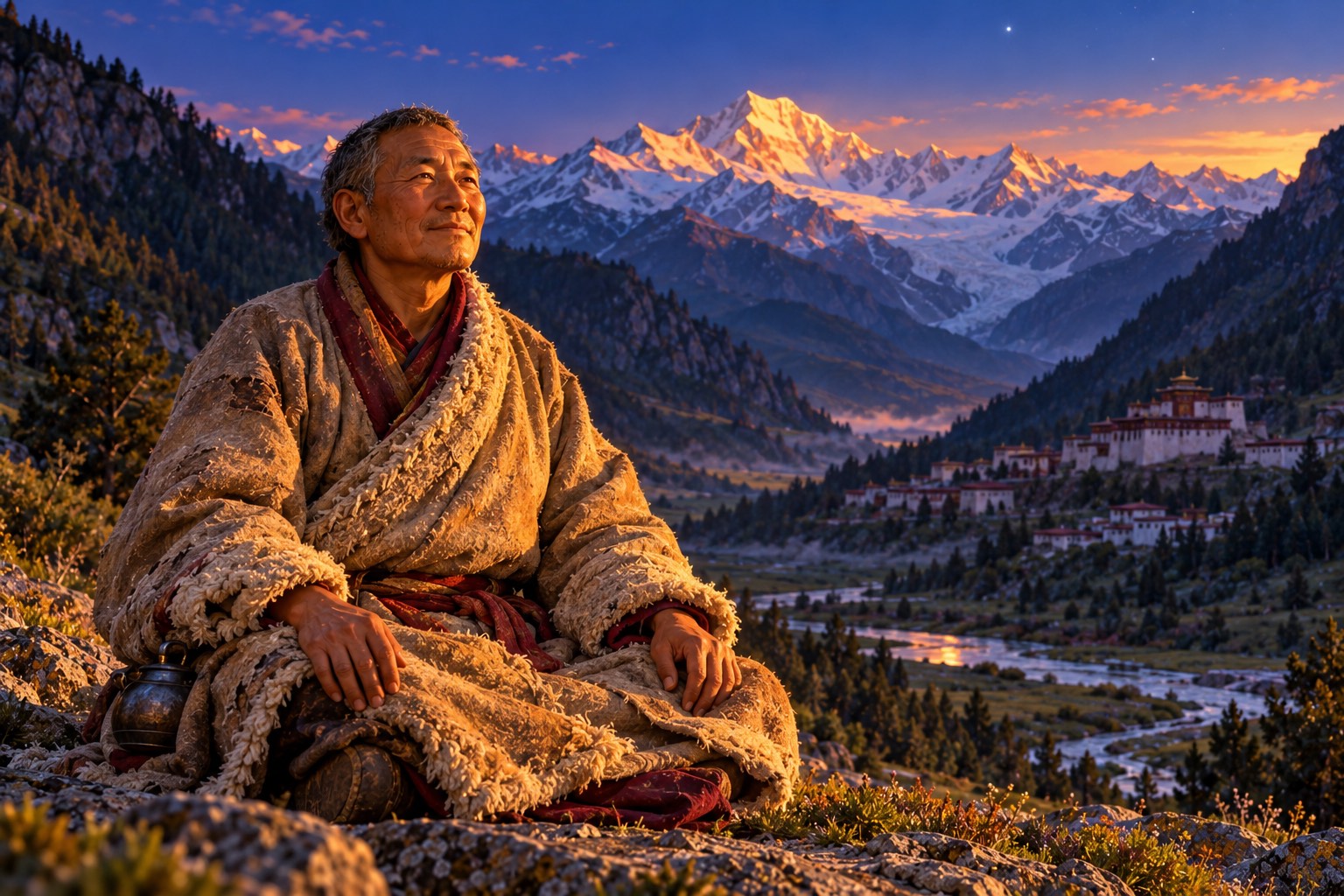
For long periods Patrul stayed in the hermitages above Dzogchen Monastery in Kham, one of the great monasteries of the Nyingma school. In a small rock shelter called the Yamantaka cave, he wrote down what Jigme Gyalwe Nyugu had taught him.
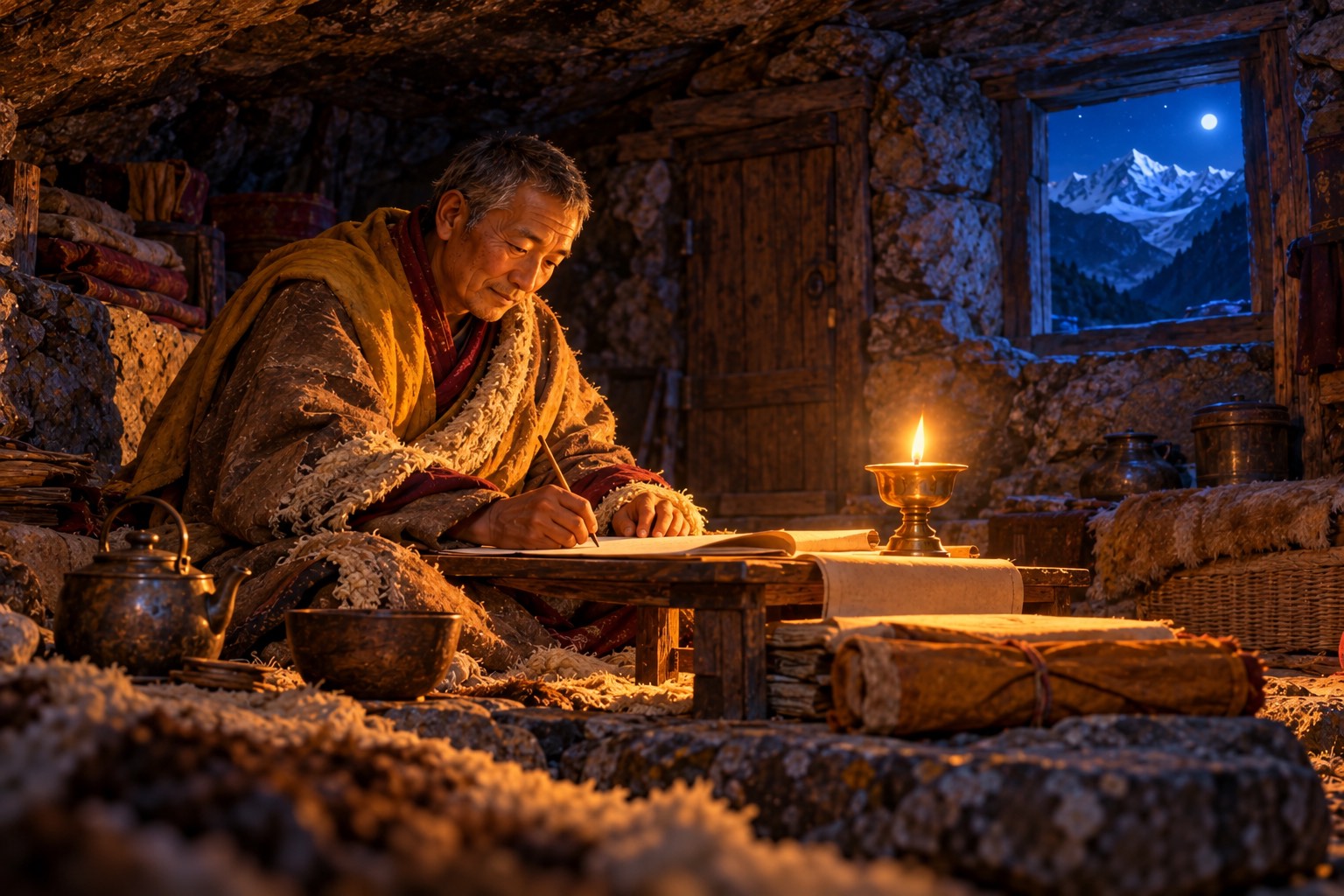
The result was Kunzang Lamé Shelung, known in English as The Words of My Perfect Teacher. It is a guide to the Longchen Nyingtik preliminaries, written in plain, lively Tibetan and full of stories and everyday examples. It is studied today in all four schools of Tibetan Buddhism.
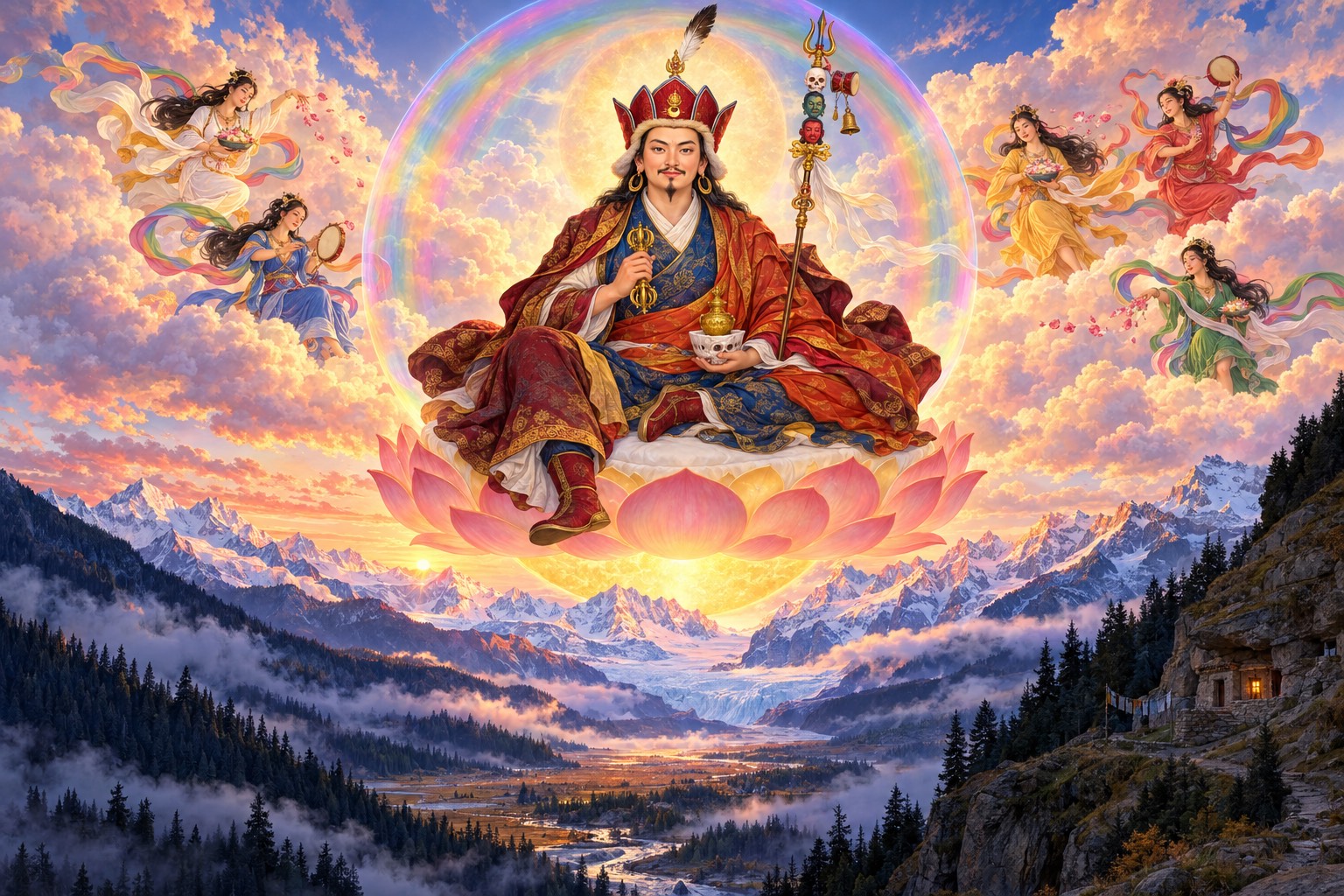
The preliminaries it explains culminate in guru yoga, a practice of opening one's heart to the teacher, understood as one with Guru Rinpoche. In this practice, as Patrul's own short guide to it shows, the Seven-Line Prayer is recited to call on Guru Rinpoche. The full practice is for a qualified teacher to give. The prayer itself is open to anyone.
Teacher in the open field
Patrul became famous above all for teaching The Way of the Bodhisattva, again and again, to monks at Dzogchen's college and to nomads in their camps. Rigpa Wiki records that when he taught it for several years near Dzogchen, golden flowers with thirty to fifty petals bloomed in great numbers, and people called them "Bodhicharyavatara flowers," after the text's Sanskrit name.
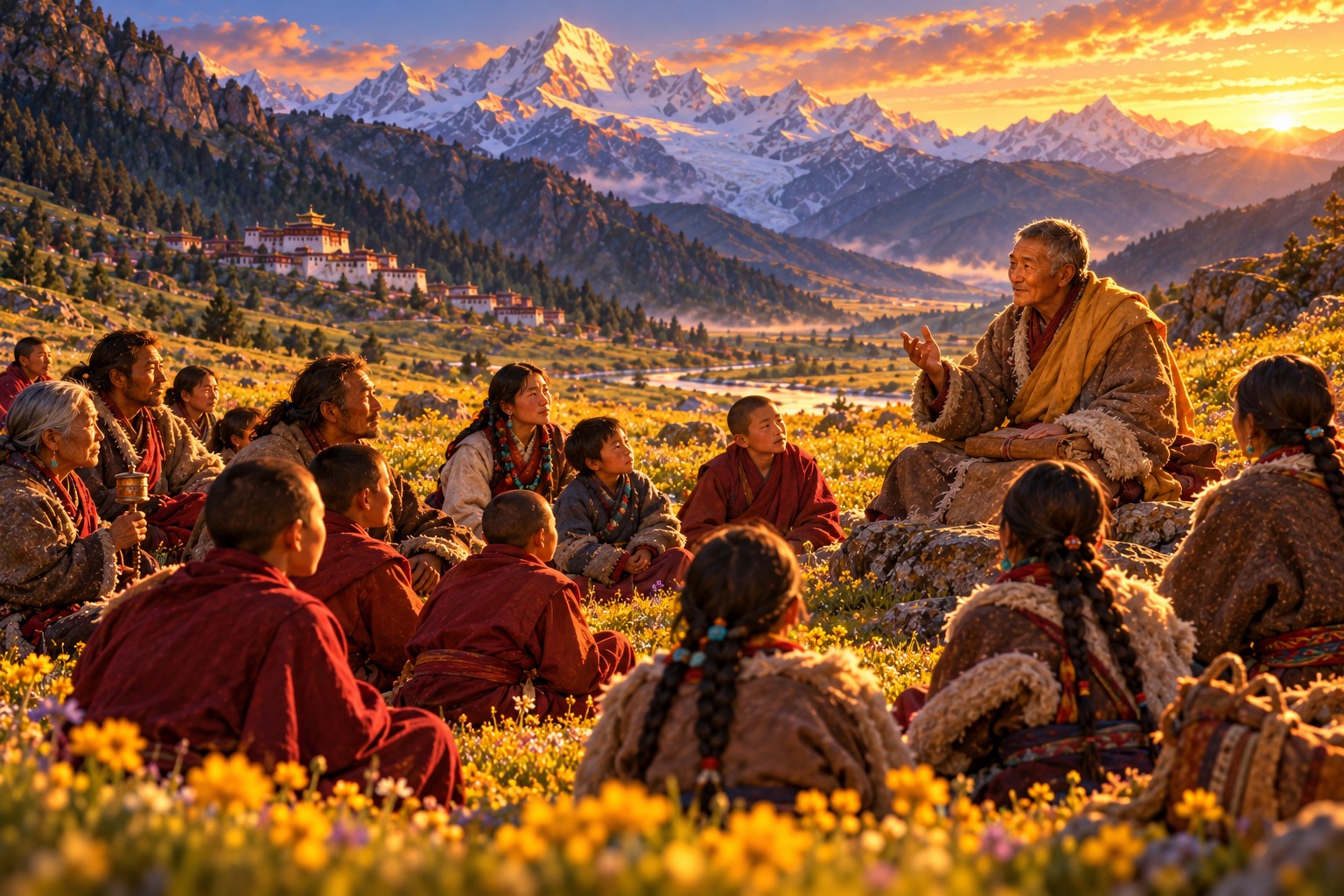
He taught monks of the other schools as well, and in the nomad lands he taught people to recite the mani mantra. Treasury of Lives says he is credited with curbing banditry and hunting there, and the custom of offering meat to visiting lamas.
Among his many students was a young monk named Mipham. Treasury of Lives says Patrul spent five days teaching him the ninth chapter of The Way of the Bodhisattva, on wisdom, and that Mipham later credited those days for his own famous commentary on it. Mipham would also write White Lotus, the best-known explanation of the Seven-Line Prayer.
The pilgrim and the chamber pot
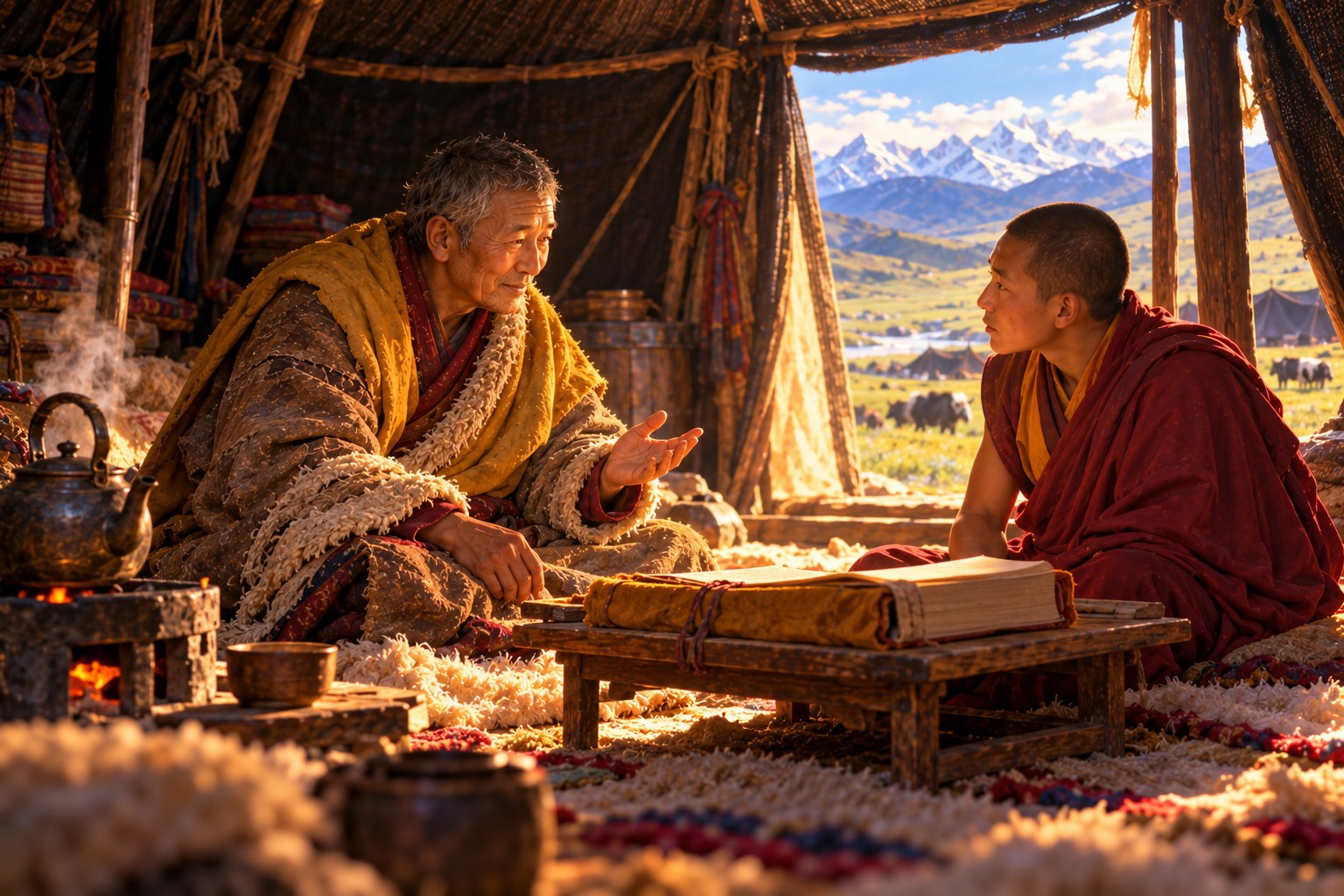
The Dalai Lama tells a story of Patrul's humility. Once, worn out by crowds, Patrul slipped away dressed as an ordinary pilgrim and stayed with a nomad family. The woman of the tent had him read texts for her and do chores in return for his keep, including emptying her chamber pot.
While he was out doing it, a group of his well-dressed monk students arrived looking for their teacher. When the woman heard them describe him, she realized who her helper was. It is said she was so embarrassed that she ran away.
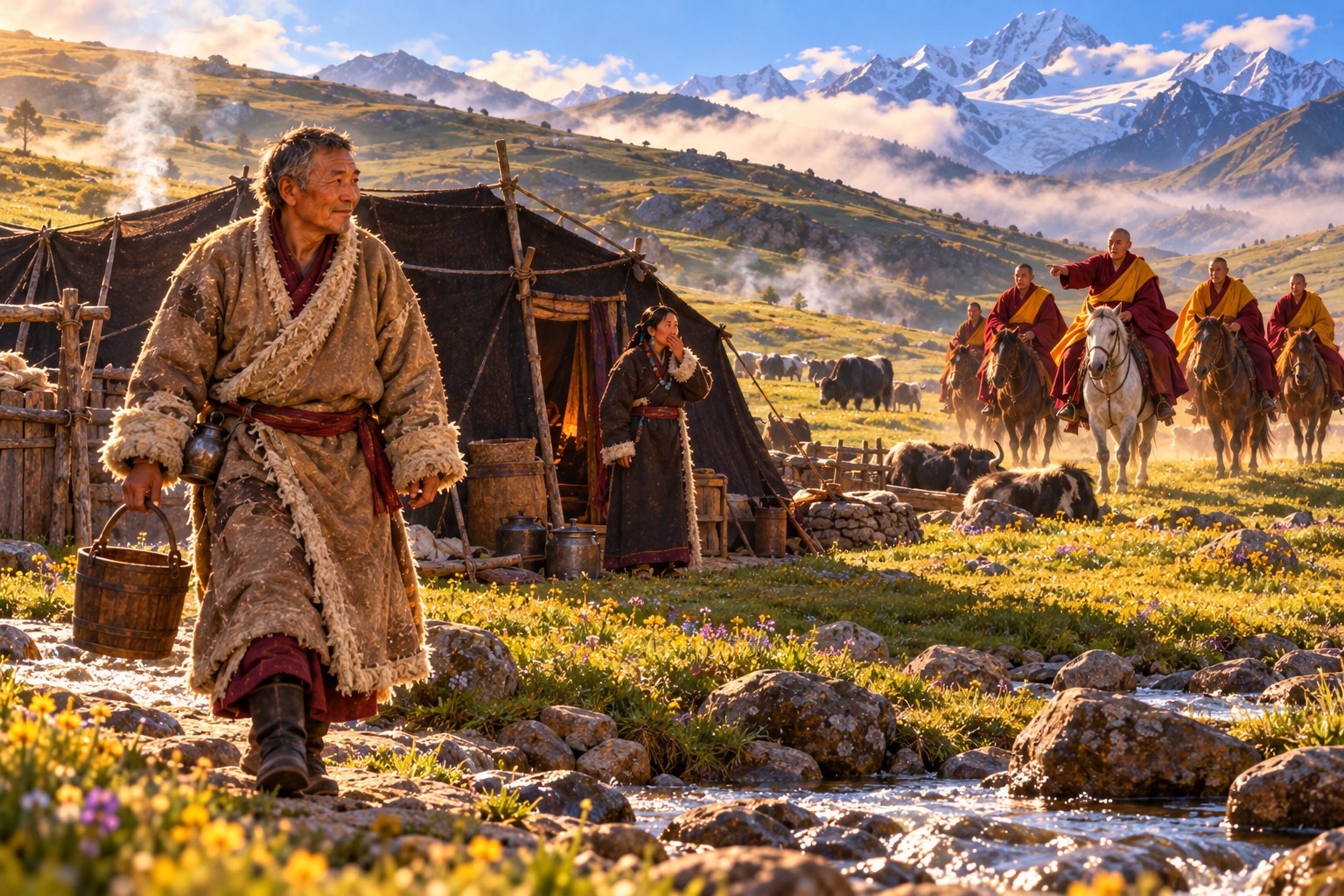
Ricard writes that when people offered him gold or silver, Patrul often left it lying on the ground. In later years he began to accept offerings, giving them to beggars or using them for statues, butter lamps and mani walls.
The wall of mani stones
On a wide plain in Dzachukha, near Dzagyal Monastery, where Jigme Gyalwe Nyugu had made his seat, stands a long wall of stones carved with the mani mantra, built by the first Palge Lama. Ricard's account says it held more than a hundred thousand stones; Treasury of Lives speaks of the mantra carved ten thousand times. Either way, it was a great labour of devotion.
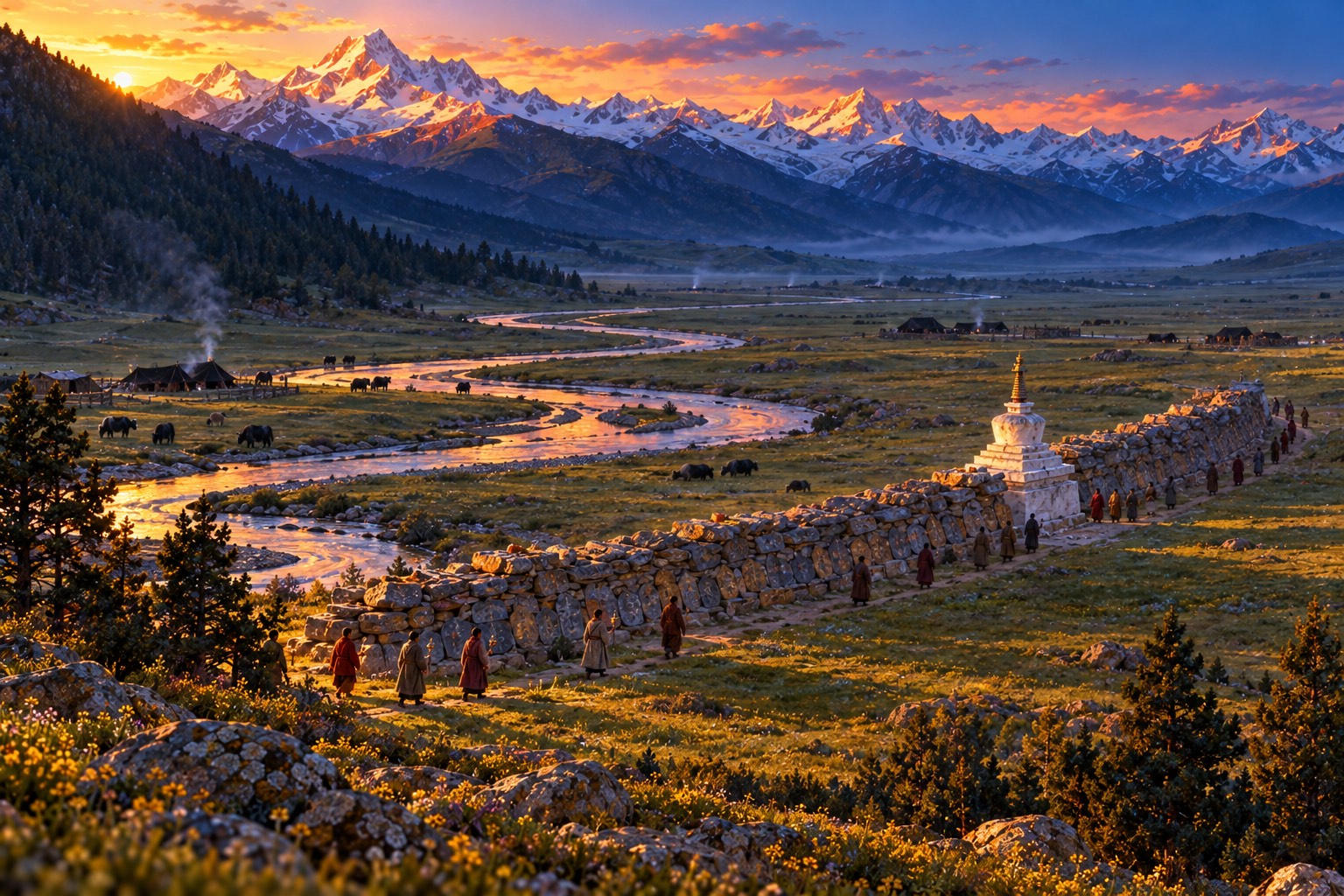
Patrul repaired the wall and made it larger, and it became known as the Patrul Dobum. Pilgrims still walk around it with prayer wheels. It was pulled down during the Cultural Revolution and rebuilt by local people from the 1980s onward, stone by stone.
Leaving nothing behind
Patrul spent much of his later life around Dzagyal. He died in 1887, on the eighteenth day of the fourth Tibetan month, with his doctor and two attendants beside him.
Ricard lists what he left: two books, including The Way of the Bodhisattva, a begging bowl, a yellow shawl in a red pouch, a prayer wheel, a walking stick and a little pot for tea. Other accounts give a slightly different list, but they agree it was almost nothing.
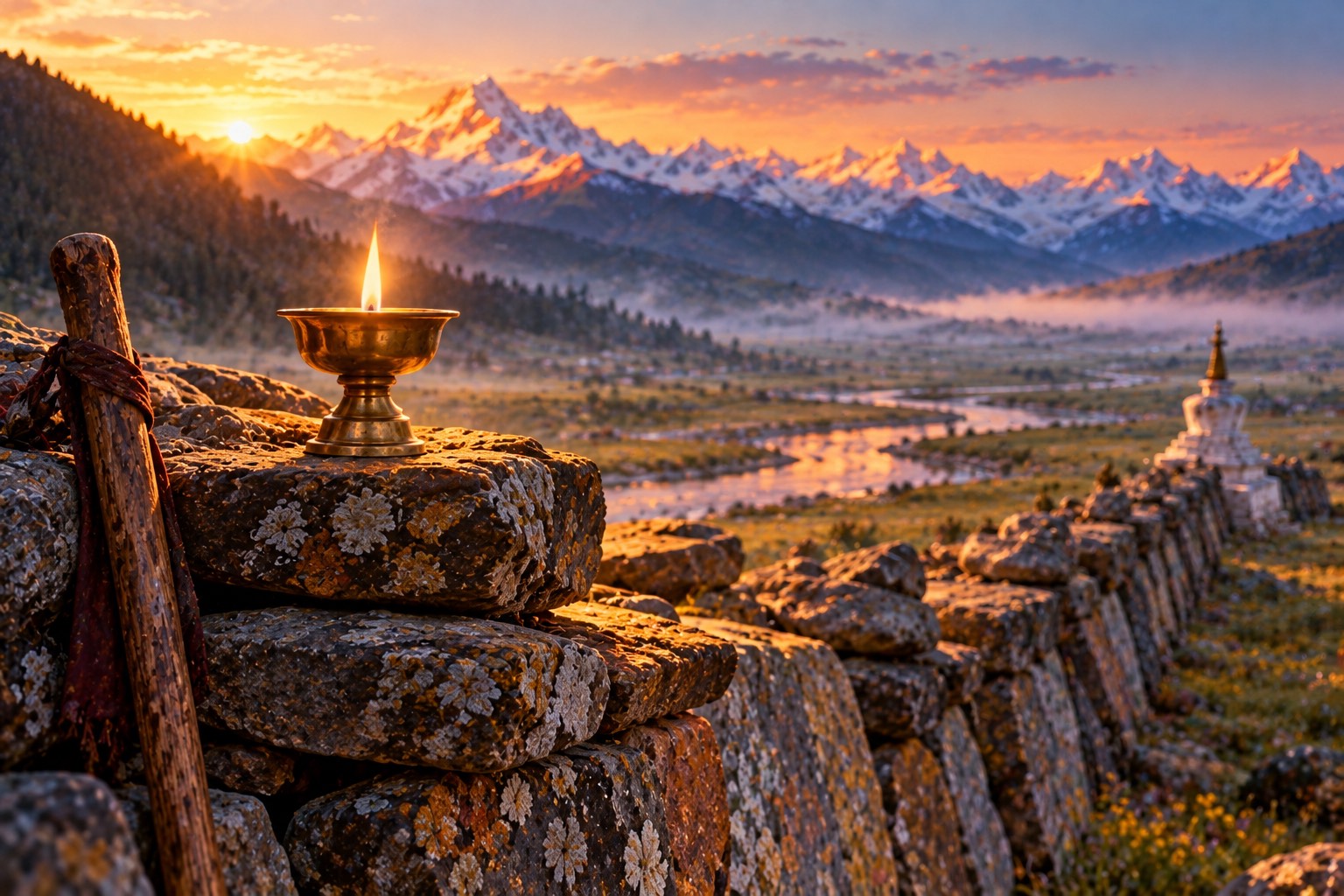
Yet his teachings run through nearly every Nyingma lineage today, and the preliminary practices his book explains, with the Seven-Line Prayer recited in their guru yoga, are still practised widely.
About the art
Patrul Rinpoche is shown as the stories describe him on the road: an ordinary-looking man in a worn sheepskin coat, with close-cropped hair, a walking staff, a small teapot and a book wrapped in cloth. Matthieu Ricard's account says he kept a novice monk's vows but dressed as a layman. His face follows the Shechen Monastery mural on Lotsawa House and a small statue photographed for Rigpa Wiki, both of which show a broad, round, kindly face. He wears no hat and has no halo, because his story is about being unremarkable to look at.
In portraits Patrul wears monastic red and saffron. The faded yellow shawl he wears while teaching here recalls the yellow shawl listed among his few belongings at his death. The often-reproduced photograph said to be of Patrul shows his later incarnation, Patrul Namkha Jikmé, so it was not used.
Jigme Gyalwe Nyugu wears faded, patched robes and an old felt cloak and sits under a rock overhang, as the hermit is described as living. His gentle face follows a painted portrait on Rigpa Wiki.
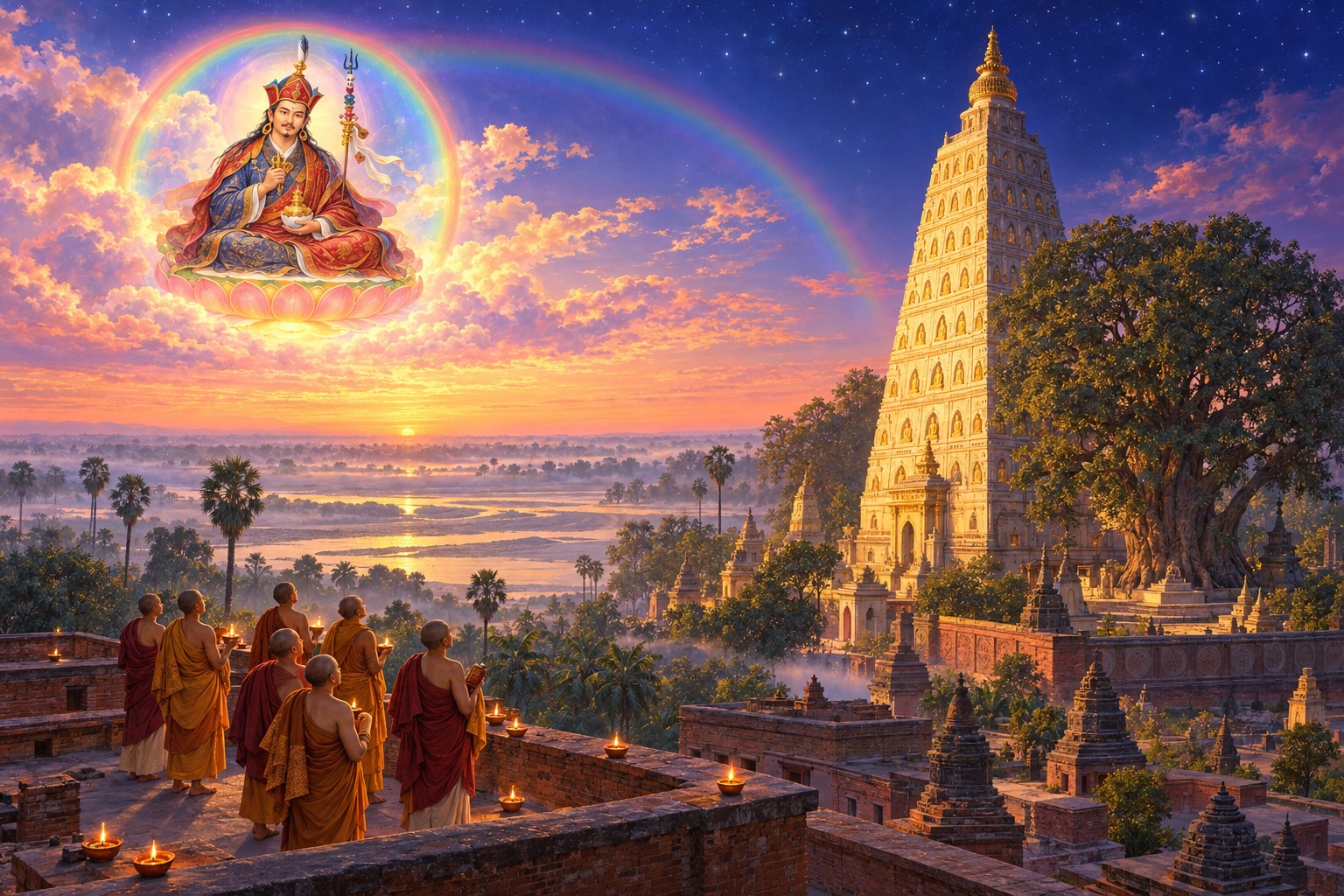
Guru Rinpoche appears once, in his main form. He wears the lotus hat with a half-vajra and a vulture feather, holds a five-pronged vajra at his heart and a skull cup with a long-life vase in his lap, and has the khatvanga staff resting against his left shoulder. He sits on a lotus inside a rainbow sphere. The image shows the one the Seven-Line Prayer calls on, not a recorded vision of Patrul's.
The mani wall is drawn smaller than it is today, with one white stupa, because the long line of large stupas was added only in recent decades. Its carved stones are shown only as worn texture. Mani stones carry the mantra of compassion, but the site never puts script or mantras into its pictures.
Why this matters for practice
Patrul Rinpoche carried the land of Guru Rinpoche's birth in his own name and spent his life following in the footsteps of his teachers, which is what the sixth line of the Seven-Line Prayer asks of us. His book still guides people into the practice in which the prayer is recited to call on Guru Rinpoche, and his life shows that what the prayer needs is sincerity, not wealth or status. One recitation, said with an open heart, is a small step on the path he walked.

If something in this story moved you, you might pause tonight and recite the prayer once, simply, the way Patrul lived: no throne, no gold, just the seven lines and an open heart.
Sources and further reading
- Patrul Orgyen Jigme Chokyi Wangpo, by Joshua Schapiro (2010), Treasury of Lives (Internet Archive snapshot, December 2014)
- Patrul Rinpoche, Rigpa Wiki (Internet Archive snapshot, April 2026)
- The Words of My Perfect Teacher, Rigpa Wiki (Internet Archive snapshot, January 2026)
- Jikmé Gyalwé Nyugu, Rigpa Wiki (Internet Archive snapshot, 2025)
- Dzogchen Monastery; Dzagyal Monastery; Dzachukha, Rigpa Wiki (Internet Archive snapshots)
- Seven Line Prayer, Rigpa Wiki (Internet Archive snapshot)
- Patrul Rinpoche Series (author page), Lotsawa House
- A Brief Guide to the Stages of Visualization for the Ngöndro, by Patrul Rinpoche, Lotsawa House
- Enlightened Vagabond: The Life and Teachings of Patrul Rinpoche, by Matthieu Ricard (Shambhala, 2017), Rangjung Yeshe Wiki (excerpted chapters, Internet Archive snapshots, 2023)
- An Ordinary Pilgrim (excerpt from the Dalai Lama, Lighting the Way), Spirituality & Practice (Internet Archive snapshot, 2024)
- Treasury of Lives: Patrul Rinpoche, by Alexander Gardner (2012), Tricycle (Internet Archive snapshot, 2024)
- Teacher (Lama): Do Kyentse Yeshe Dorje, item 300, Himalayan Art Resources
This retelling is waiting to be read by a knowledgeable practitioner. Where the traditional accounts differ, the story says so; if you notice a mistake, please tell us through Share Your Story.