The college and the hermitage
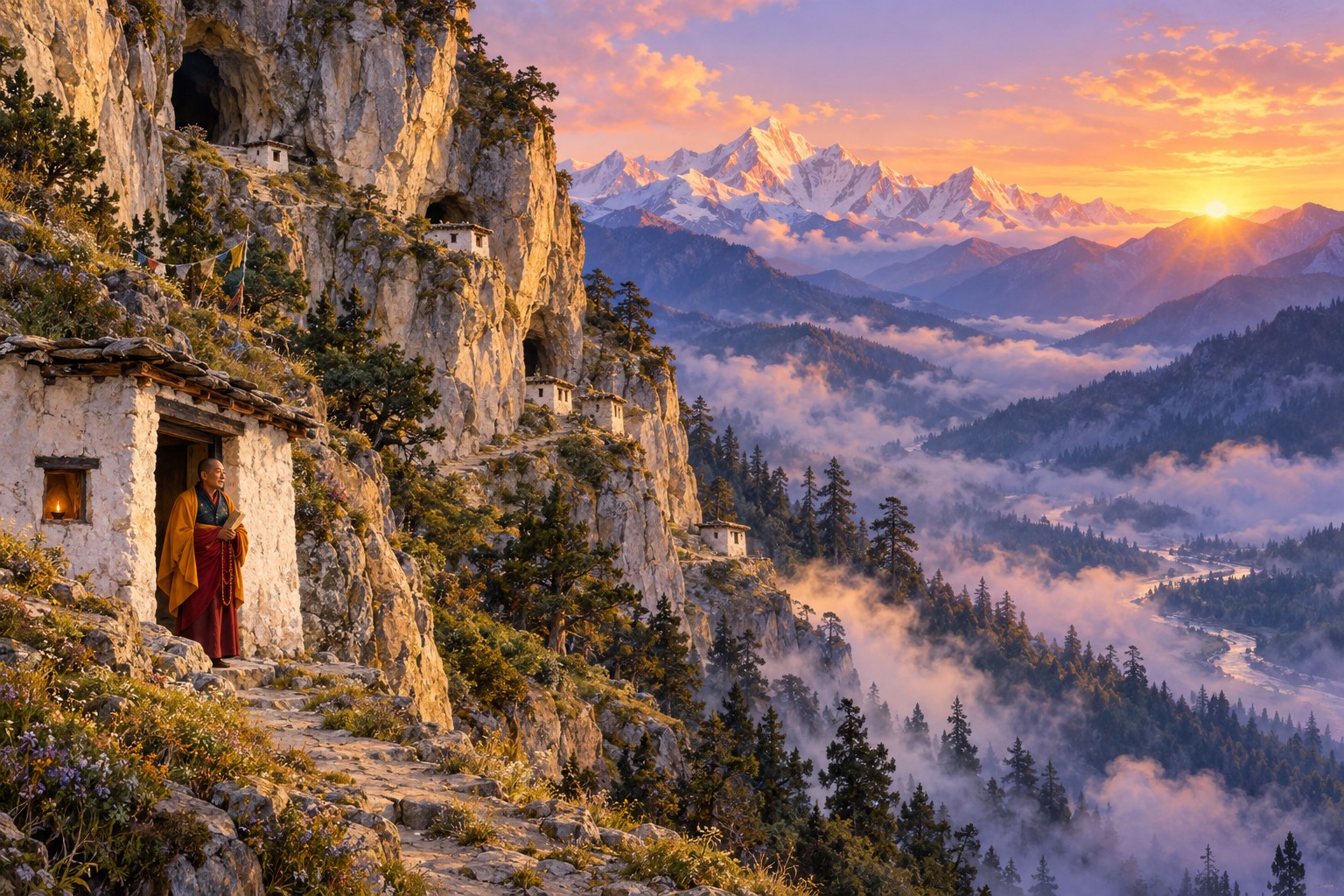
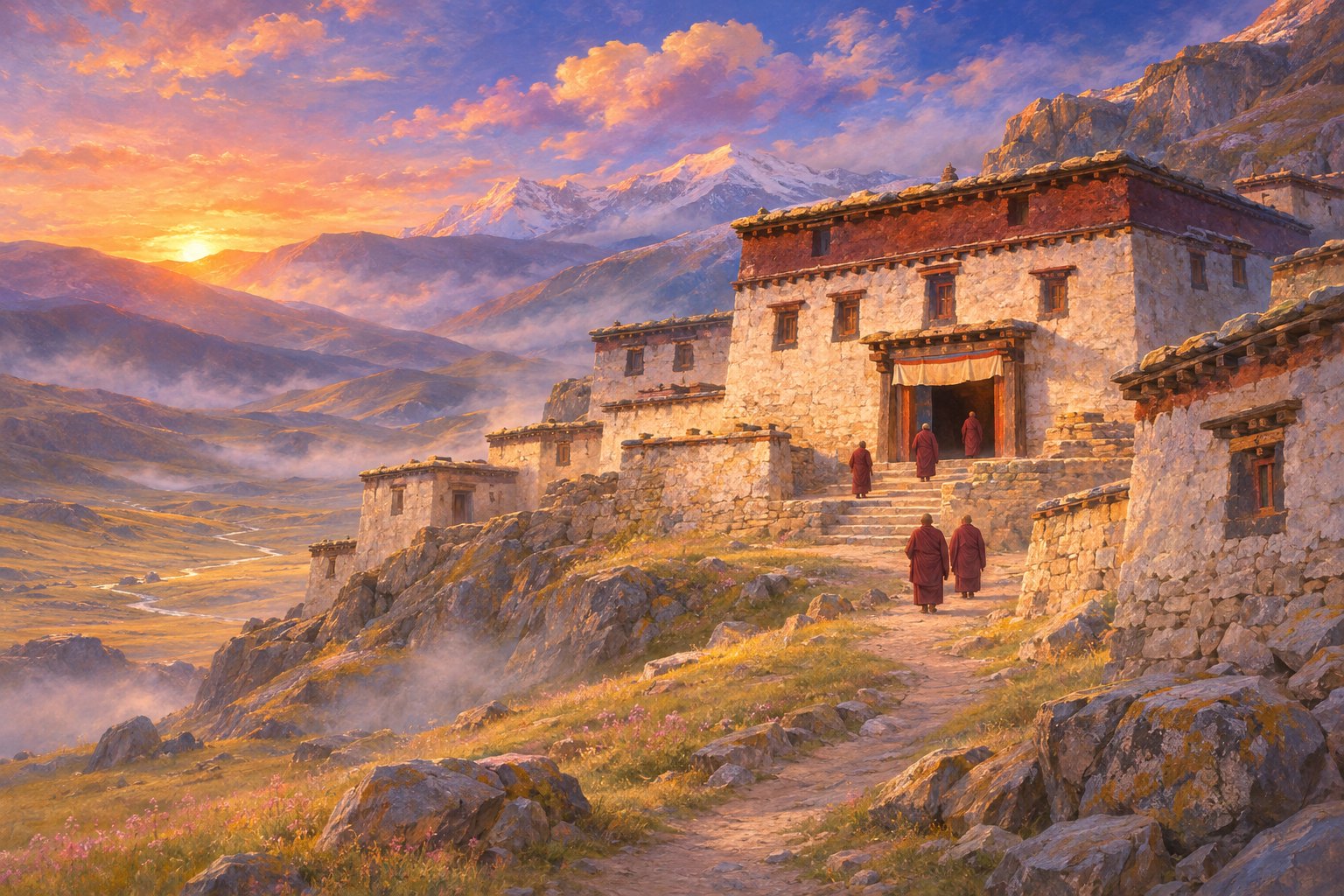
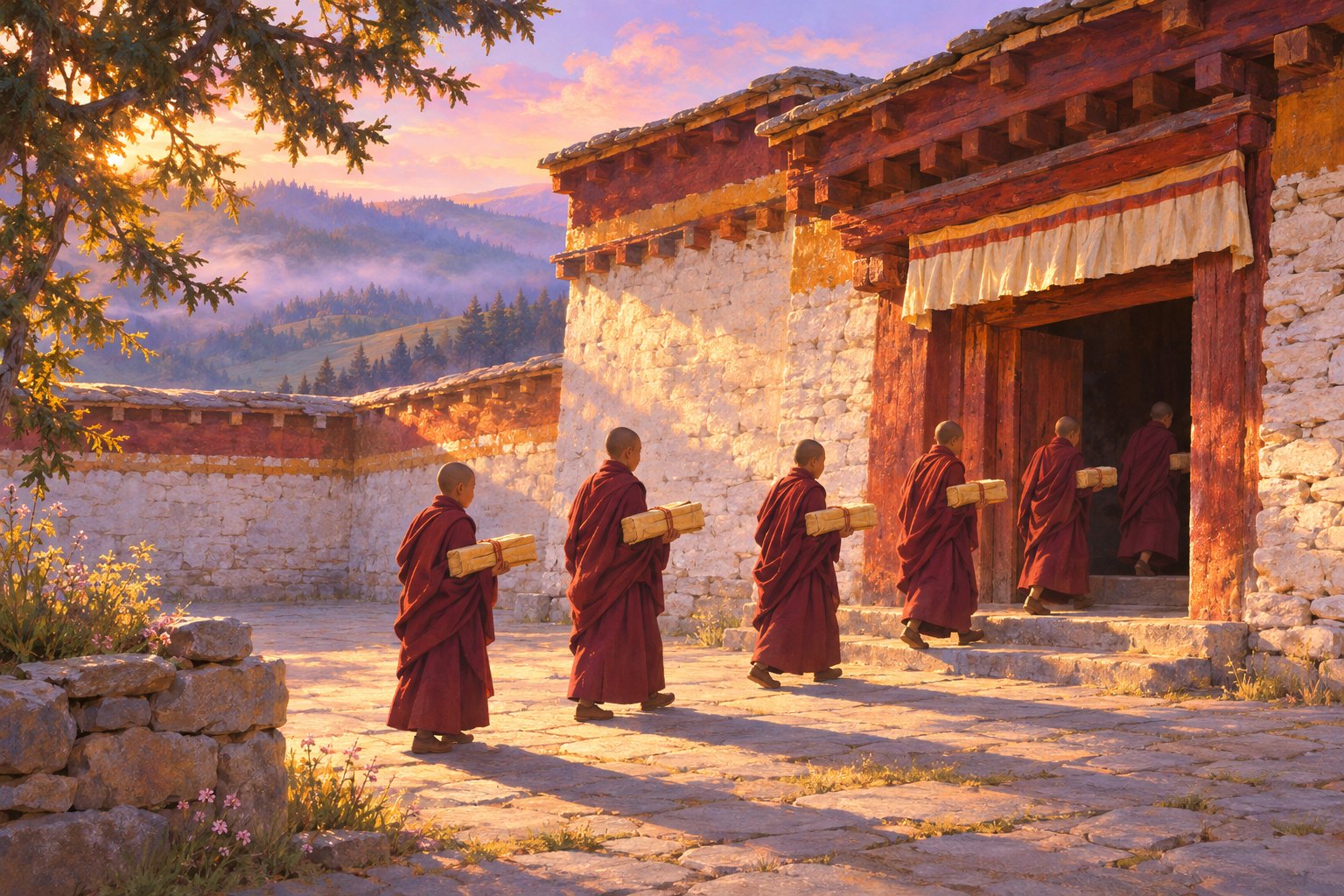
Pema Vajra’s life is remembered through two teaching places. One is the great college of Śrī Siṃha at Dzogchen Monastery. The other is his later seat at Peme Thang, the Lotus Plain. A busy centre of learning and a nearby hermitage might look like opposite destinations. In his biography, both are places where students came.
The story begins with that continuity. Leaving a college did not mean that the work of teaching had finished. A different doorway could open onto the same responsibility: receiving the people who wished to learn and helping the teachings continue beyond the person who held them.
Before the teaching seat
Wangchen Dargye’s biography places his upbringing in Rudam, eastern Tibet, and names teachers including the Fourth Dzogchen Rinpoche, Jigme Gyalwé Nyugu, and Gyalsé Shenpen Thayé. Before he became a source of learning for others, he received an extensive education himself.
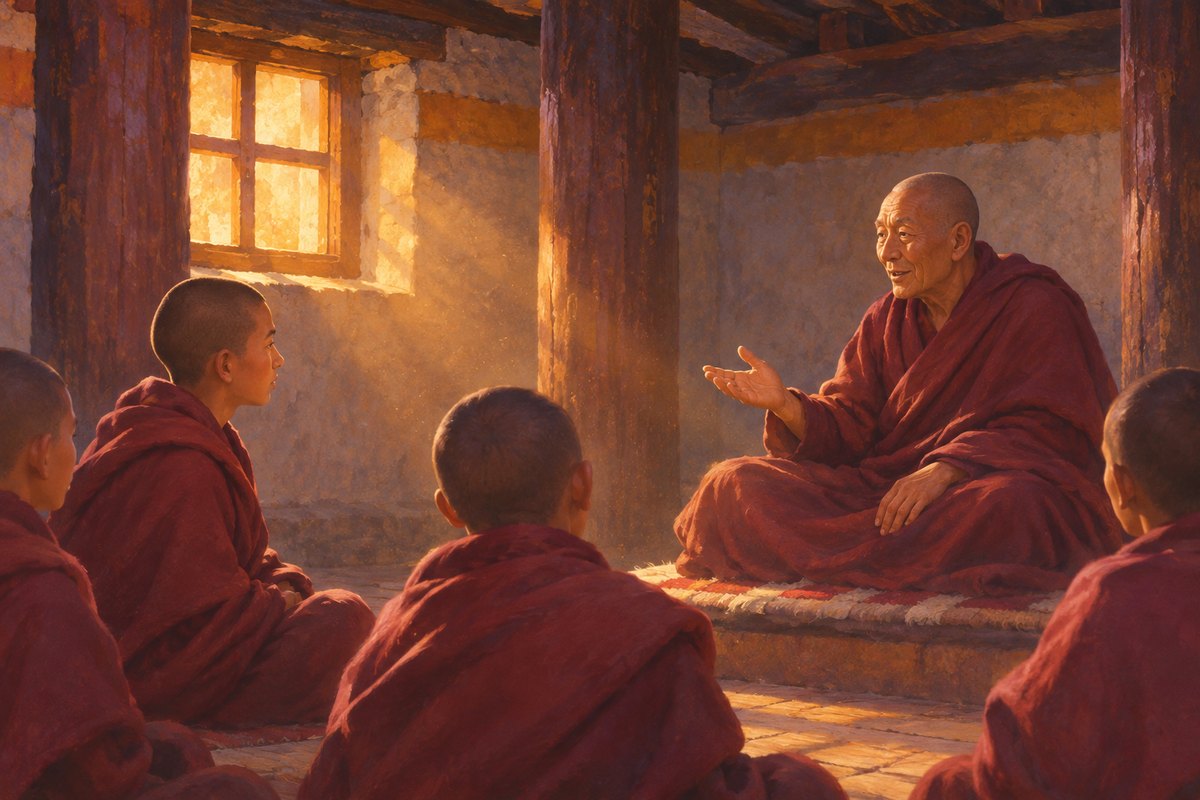
The title khenpo identifies an accomplished monastic teacher; it can also carry the responsibility of an abbot. It is easy to picture the title and forget the student underneath it. The opening images keep both in view. The young listener and the later teacher belong to one life, though no particular childhood lesson has been staged as an authenticated event.
What a date can tell us
The translator’s introduction to his Overview of the Three Turnings notes that a biography published in 2001 clarified his dates: he was born sometime before 1807 and died in 1884. The uncertainty at the beginning is worth retaining. A familiar approximate date need not become a precise birthday merely because a story would read more neatly.
The same introduction observes how much remains unknown about his years of teaching. We have a clear outline and a body of writings, but not a daily journal. That leaves room for careful attention to what survives, rather than for filling the gaps with conversations no one recorded.
The teacher’s students
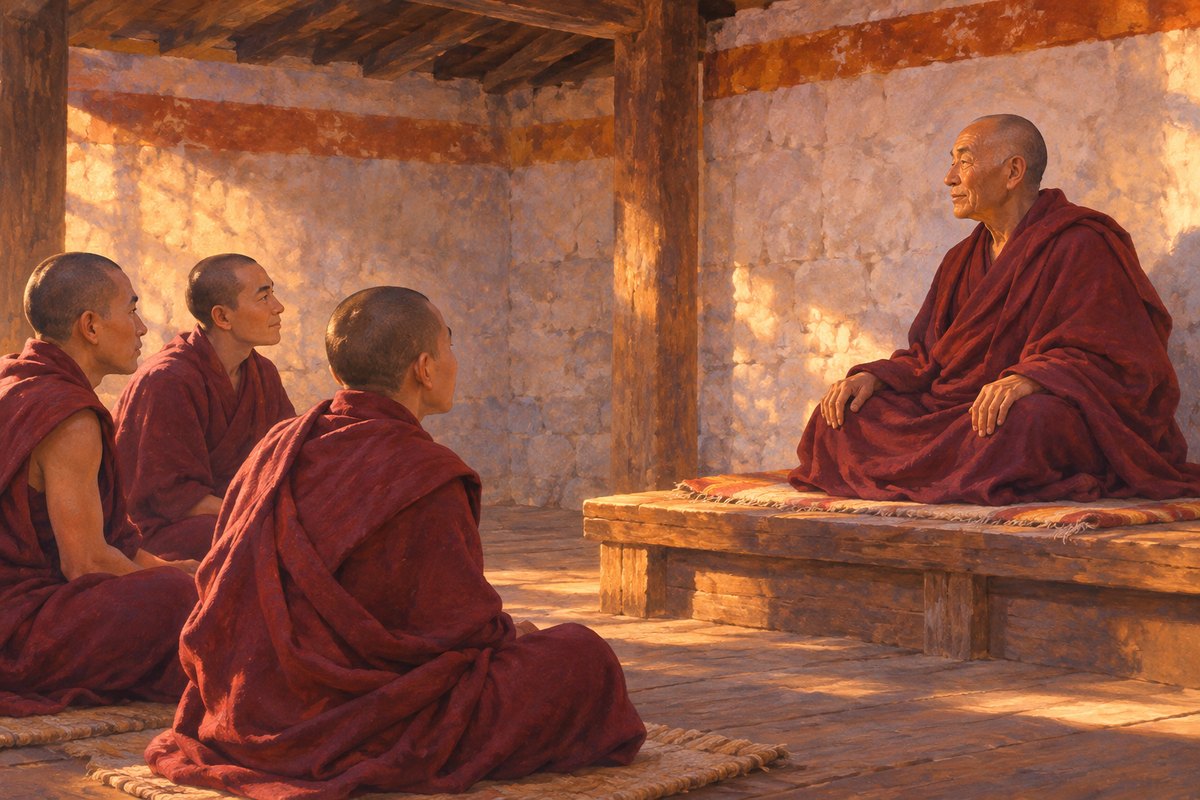
At Śrī Siṃha, the biography remembers him as a senior khenpo. His students included Mipham and Orgyen Tendzin Norbu, names that became important in later Nyingma learning. The account gives us teaching relationships rather than a single dramatic lesson at which everything changed.
A reader can still feel the scale of that work. One explanation may be heard by someone who later explains it again, in another room and another generation. The teacher cannot know every future listener. The story’s image of a small classroom stands for that open horizon; the number and arrangement of the painted listeners are illustrative.
The Lotus Plain
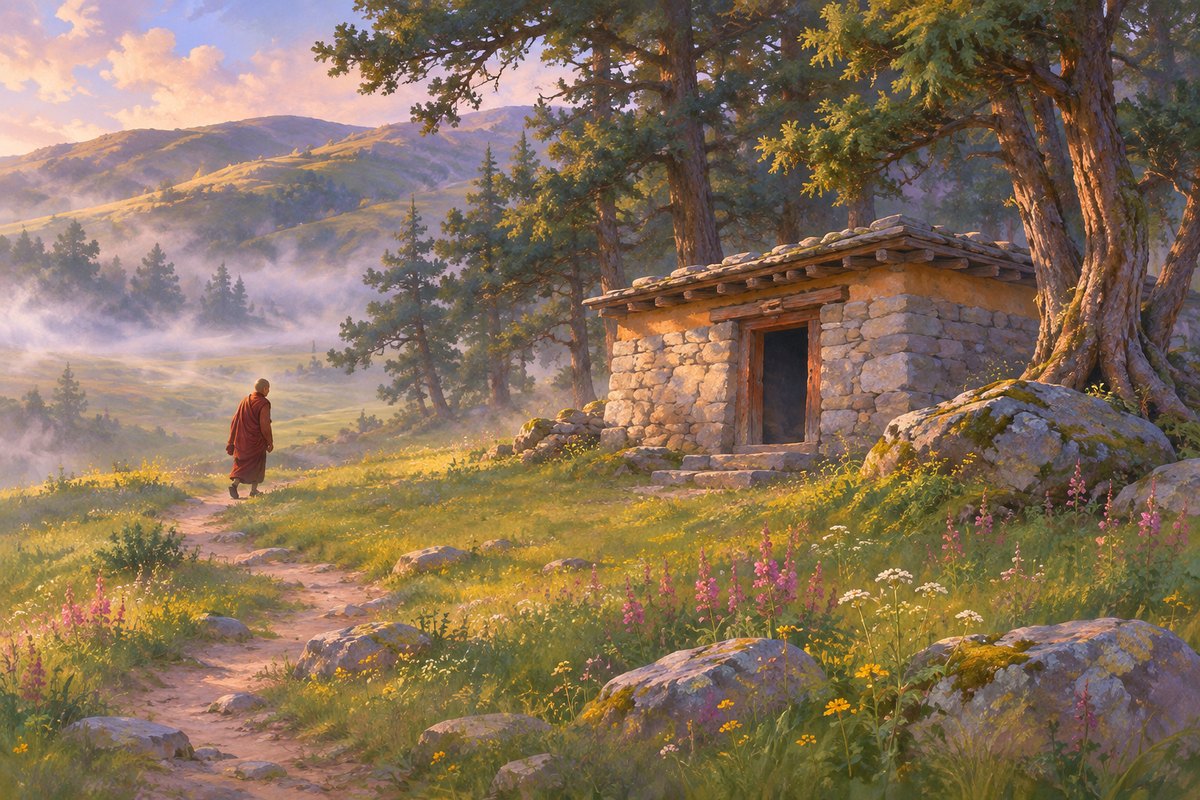
Later he established his seat at Peme Thang. Lotsawa House renders the place-name Lotus Plain and describes it as a nearby hermitage. Wangchen Dargye remembers students gathering there from many directions. The change from college to hermitage did not make him inaccessible to the teachers of his time.
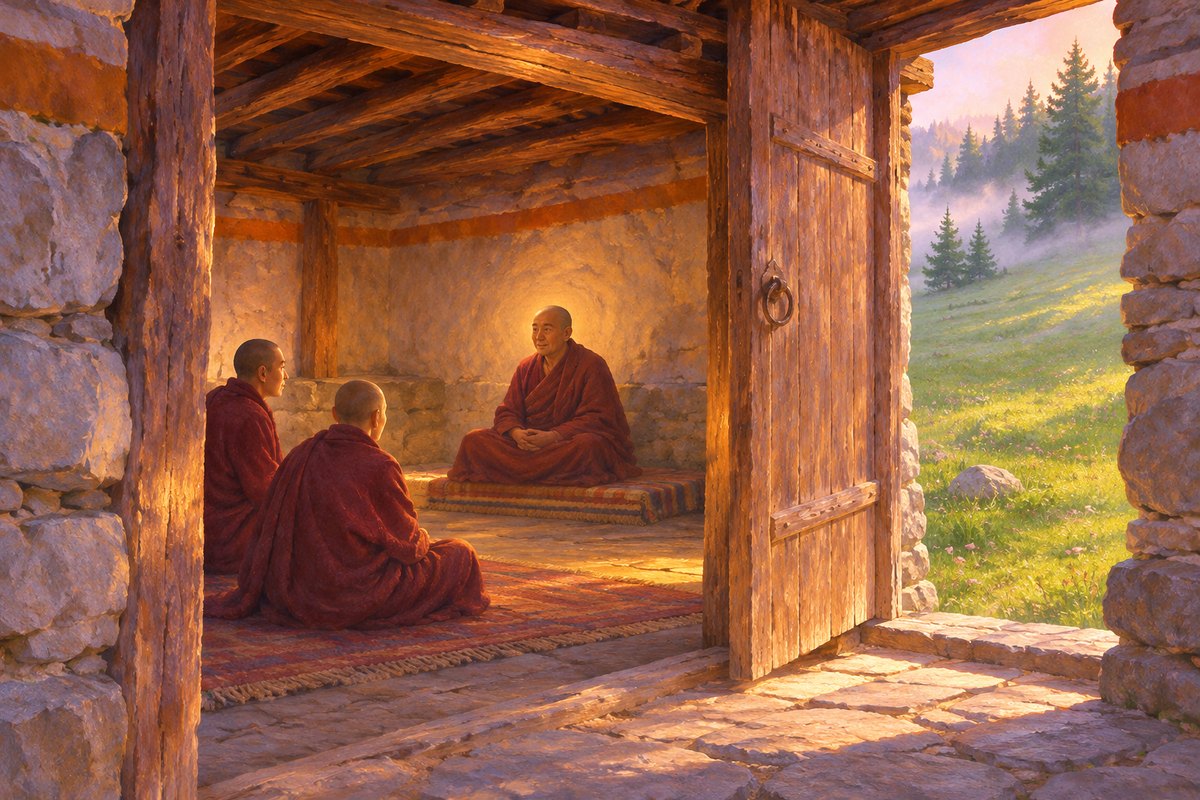
A place-name gives a story a resting point. The Lotus Plain can be held in the mind without turning it into an imaginary palace. Here the paintings use a modest dwelling and an upland meadow. Its architecture is a reconstruction for the story, not a claim to have recovered the exact appearance of Pema Vajra’s house.
People who would carry it onward
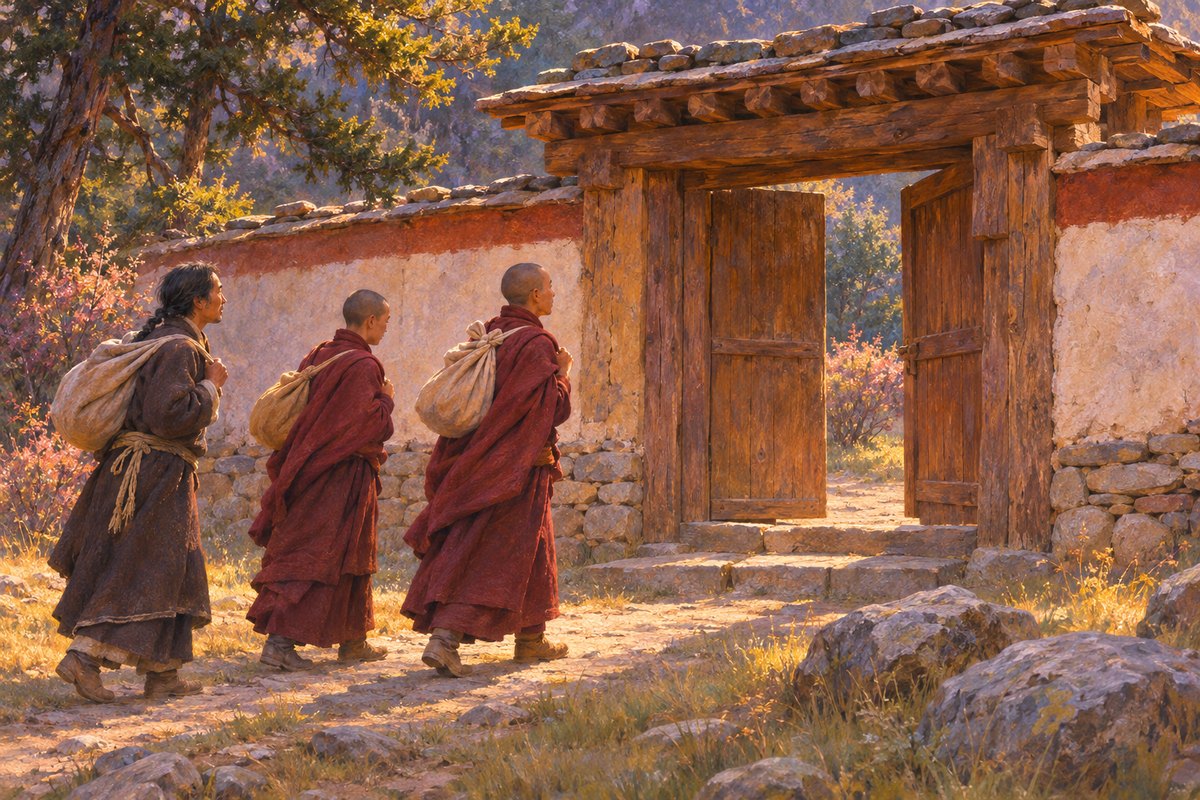
The biography names masters including Jamyang Khyentse Wangpo and the Third Dodrupchen among those who received from him. His importance is visible in those onward relationships. A person whose own name is less familiar to a new reader can stand close to the sources of teachings that reader already knows.
For this telling, that is a reason to pause at the teacher’s door. History is not made only of the figures who appear most often on a modern bookshelf. Between one celebrated name and another are people whose care, knowledge, and availability helped make the later story possible. Pema Vajra belongs among them.
Books with a purpose
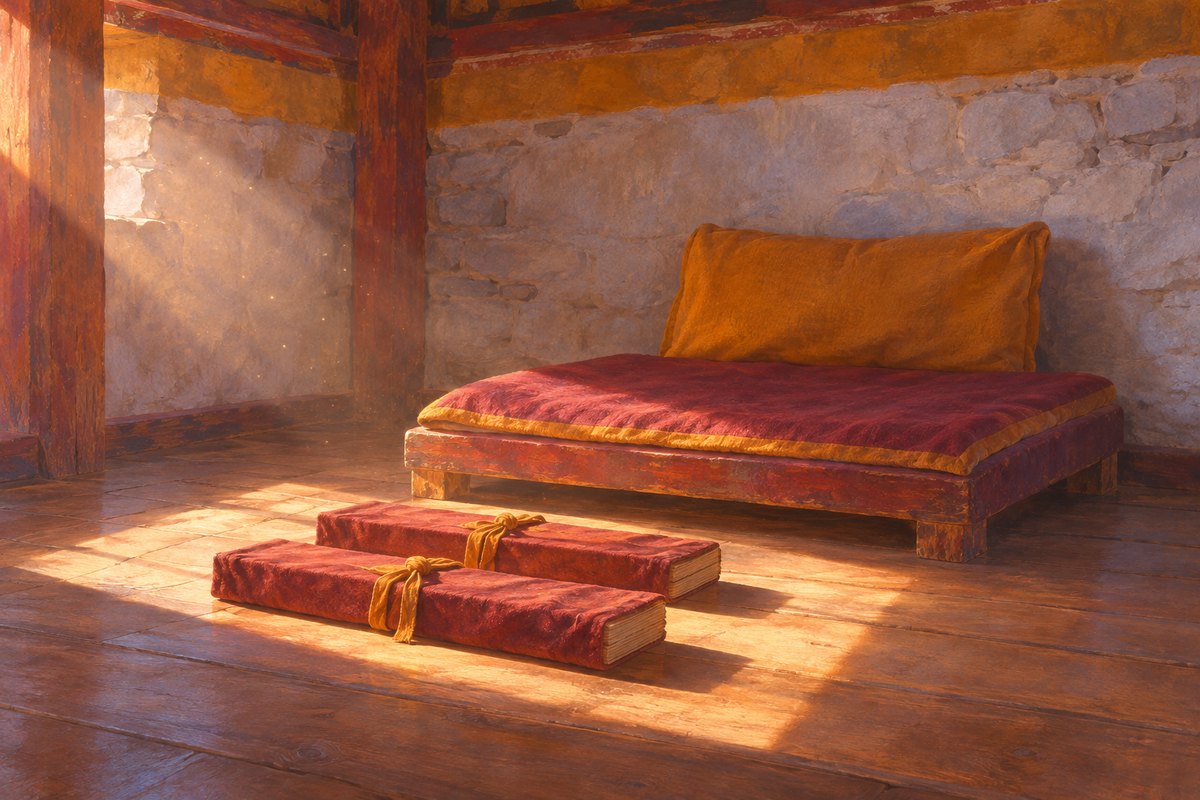
His surviving writings include scholarship, advice, letters, and replies to questions. In the introduction to the Three Turnings overview, Adam Pearcey draws attention to the practical concern running through the learning. The question is how Buddhist understanding enters a person’s life, rather than how many categories can be arranged on a page.
That concern gives a reader a way to approach an unfamiliar author. We need not begin by mastering the whole catalogue. It is enough to notice the relationship between explaining and helping. A scholar can be exact about difficult distinctions and still care about the person who must live after the book is closed.
A prayer small enough to carry
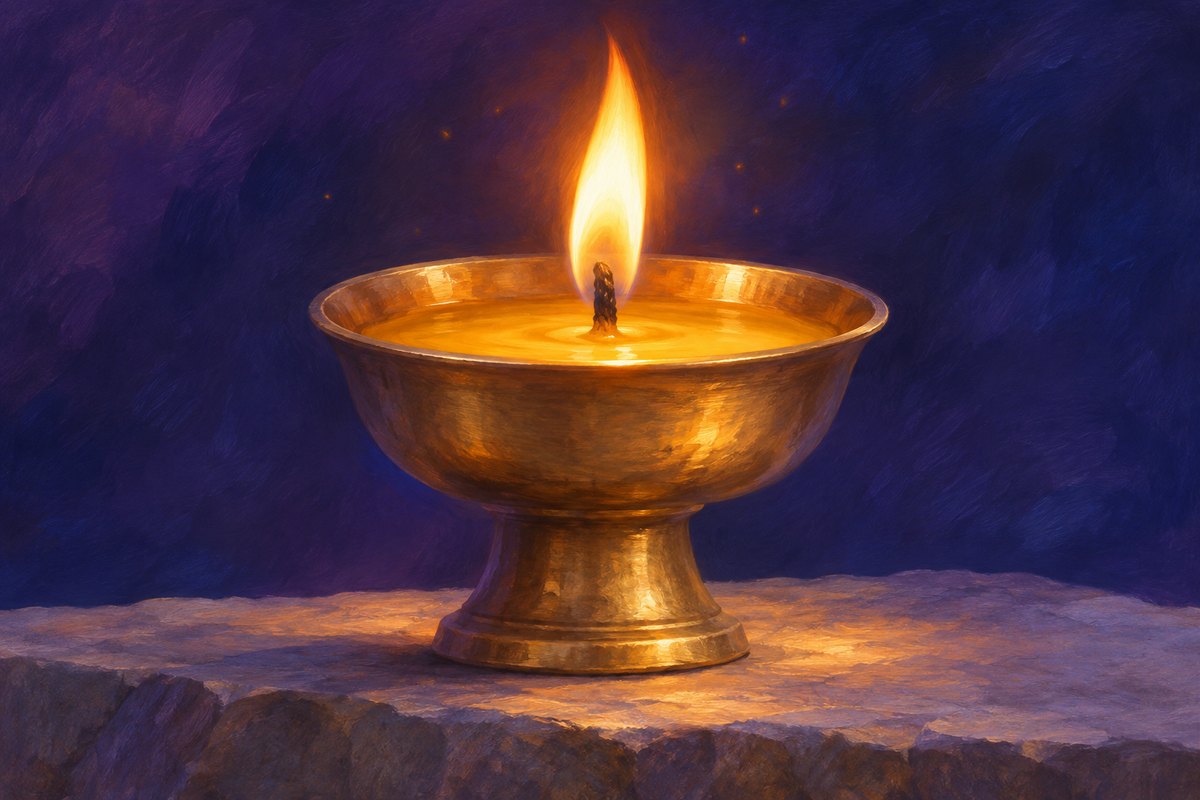
Among the works published under his name is a brief light-offering prayer. Its aspiration reaches beyond the person making the offering to all beings, asking that ignorance give way to wisdom. The lamp is small; the concern expressed through it is wide.
That prayer offers a different scale on which to meet the teacher of great scholars. A reader may not be ready for an extensive commentary, but can understand the generosity of wishing that others see more clearly too. The image shows an ordinary lamp, without turning its flame into a promise that trouble will disappear. The full prayer is linked below rather than reproduced.
The books that were not all kept
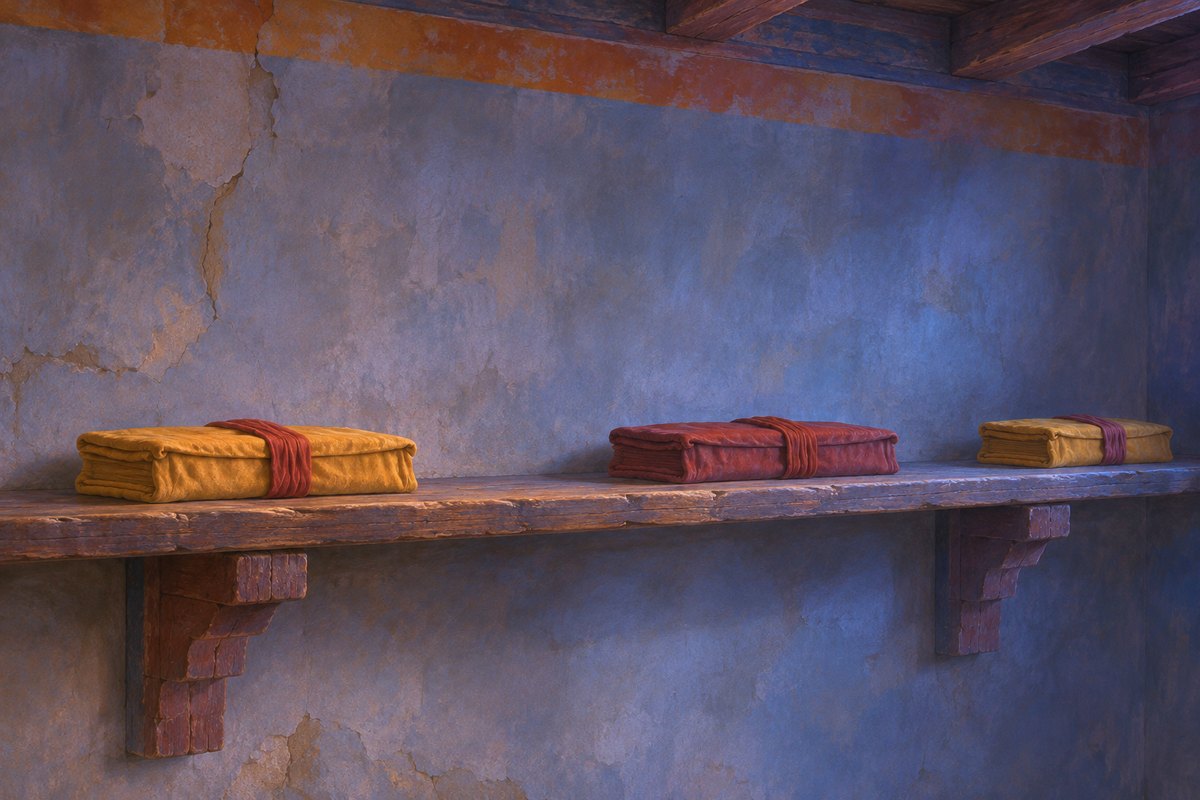
Wangchen Dargye records that Pema Vajra composed more than six volumes and that much was lost. The account associates that loss with printing blocks not being carved promptly and with later destruction. It is a reminder that a text’s survival requires more than its having once been written.
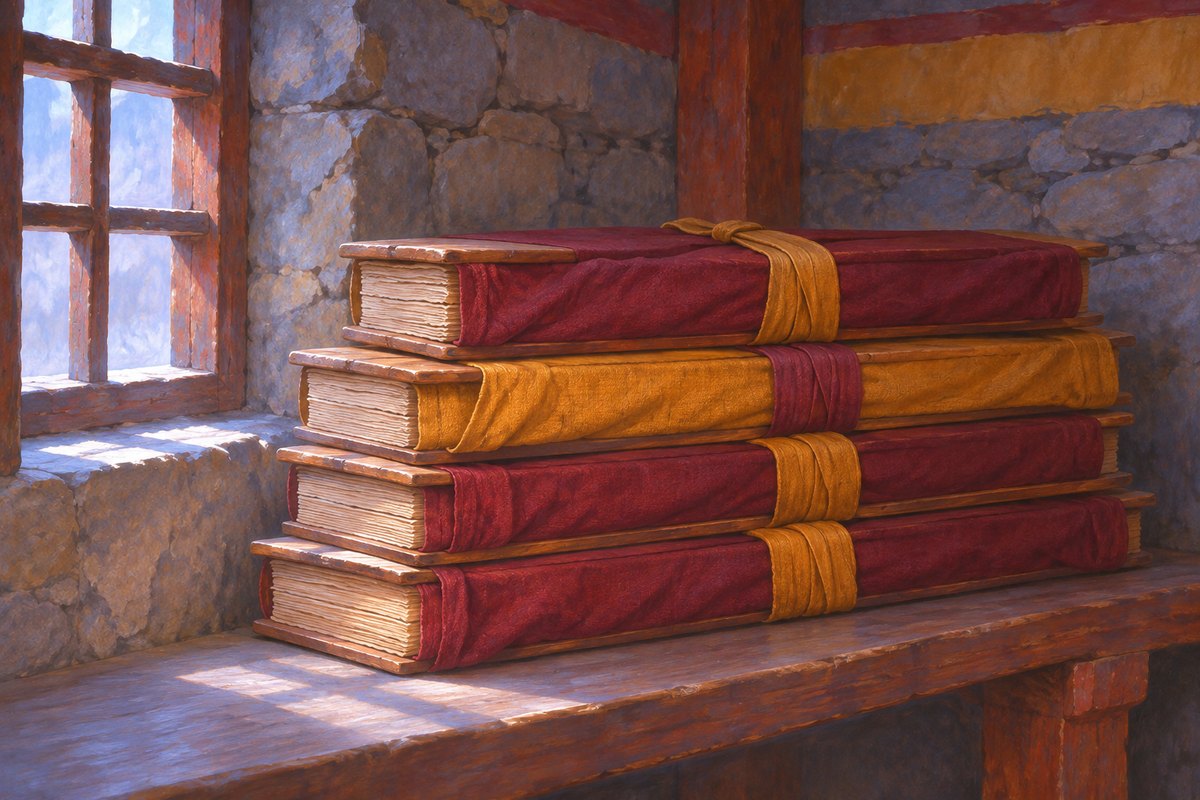
The spaces between the books on the illustrated shelf are symbolic. We cannot use them to count precisely what survives in every present collection. They invite a quieter recognition: what reaches a later reader has passed through material vulnerabilities as well as human care. A teaching life can be large even when the surviving shelf is small.
An open doorway
Pema Vajra died in 1884. His story continues through the people he taught and the writings that remain available. The college and the Lotus Plain now belong to a remembered geography, but the relationship between receiving, practising, and passing onward is still understandable.
The sixth line of the Seven-Line Prayer voices a wish to follow Guru Rinpoche. This story connects that wish with the patience of teachers and the gratitude of those who receive from them. It does not invent a private recitation in Pema Vajra’s room. It leaves us instead with the doorway: someone came to learn, someone made room, and what was received could be carried further.
About the art
These AI-painted illustrations show anonymous period figures, not authenticated portraits. Architecture, workrooms, and arrangements of objects are atmospheric reconstructions; their exact historical appearance is not claimed.
Books are represented as long, flat Tibetan pecha bundles, covered by wooden boards and cloth. Writing is omitted from the images. The pictures illustrate the source-based account and its clearly symbolic details; they do not supply evidence for unrecorded scenes.
Why this matters for practice
The sixth line of the Seven-Line Prayer expresses the wish to follow Guru Rinpoche. This Nyingma lineage story invites reflection on receiving teachings with care and helping them reach others. It offers no promise of outcomes and no substitute for personal guidance; the Find a Teacher page can help readers begin looking for that guidance.

If something in this story moved you, you might pause and recite the Seven-Line Prayer once.
Sources and further reading
- The Life of Khenpo Pema Vajra, Lotsawa House
- Overview of the Three Turnings, Lotsawa House
- Brief Light Offering Prayer, Lotsawa House
- Khenpo Pema Vajra Series, Lotsawa House
- Seven-Line Prayer, Lotsawa House
This retelling is waiting to be read by a knowledgeable practitioner. Where the traditional accounts differ, the story says so; if you notice a mistake, please tell us through Share Your Story.