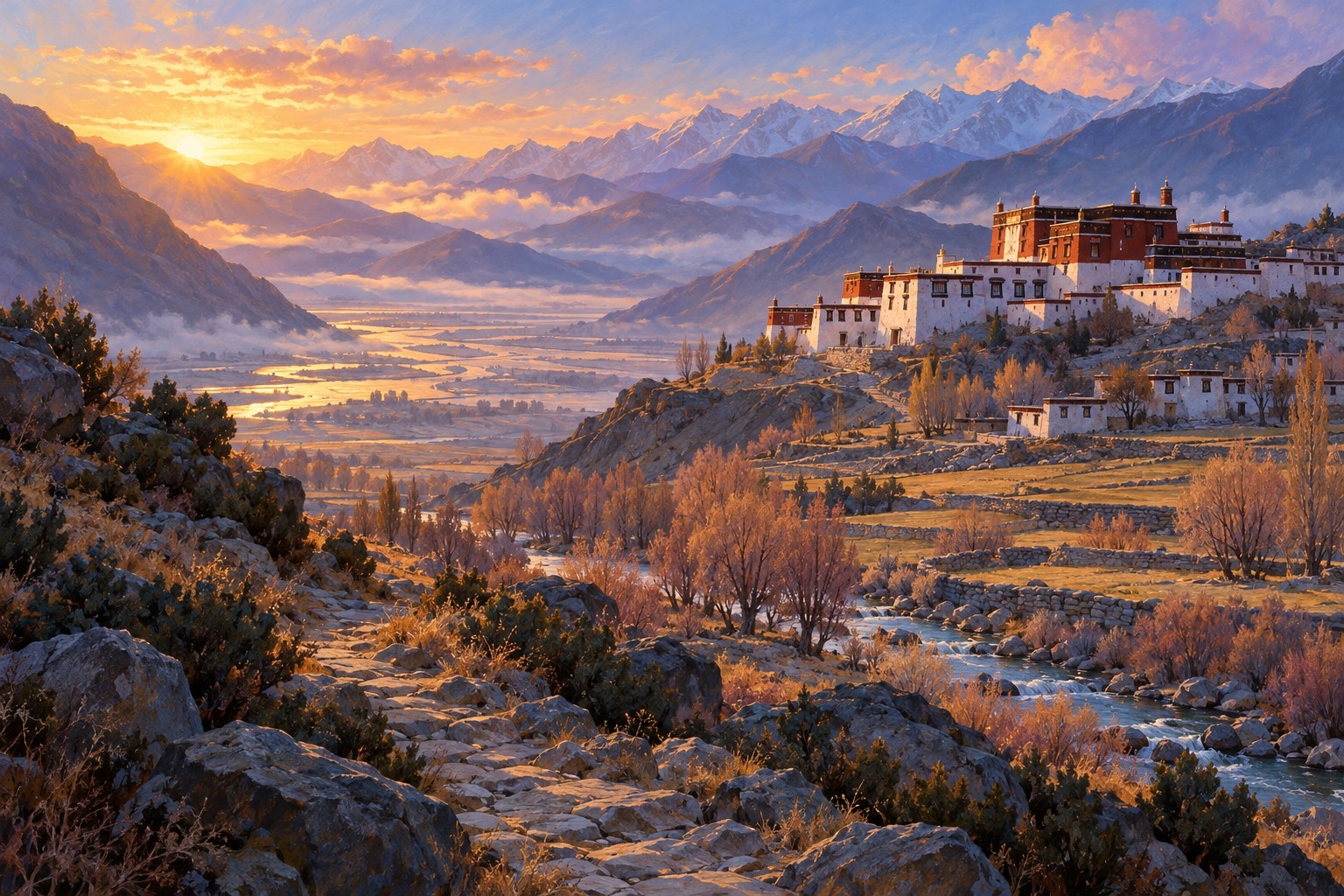
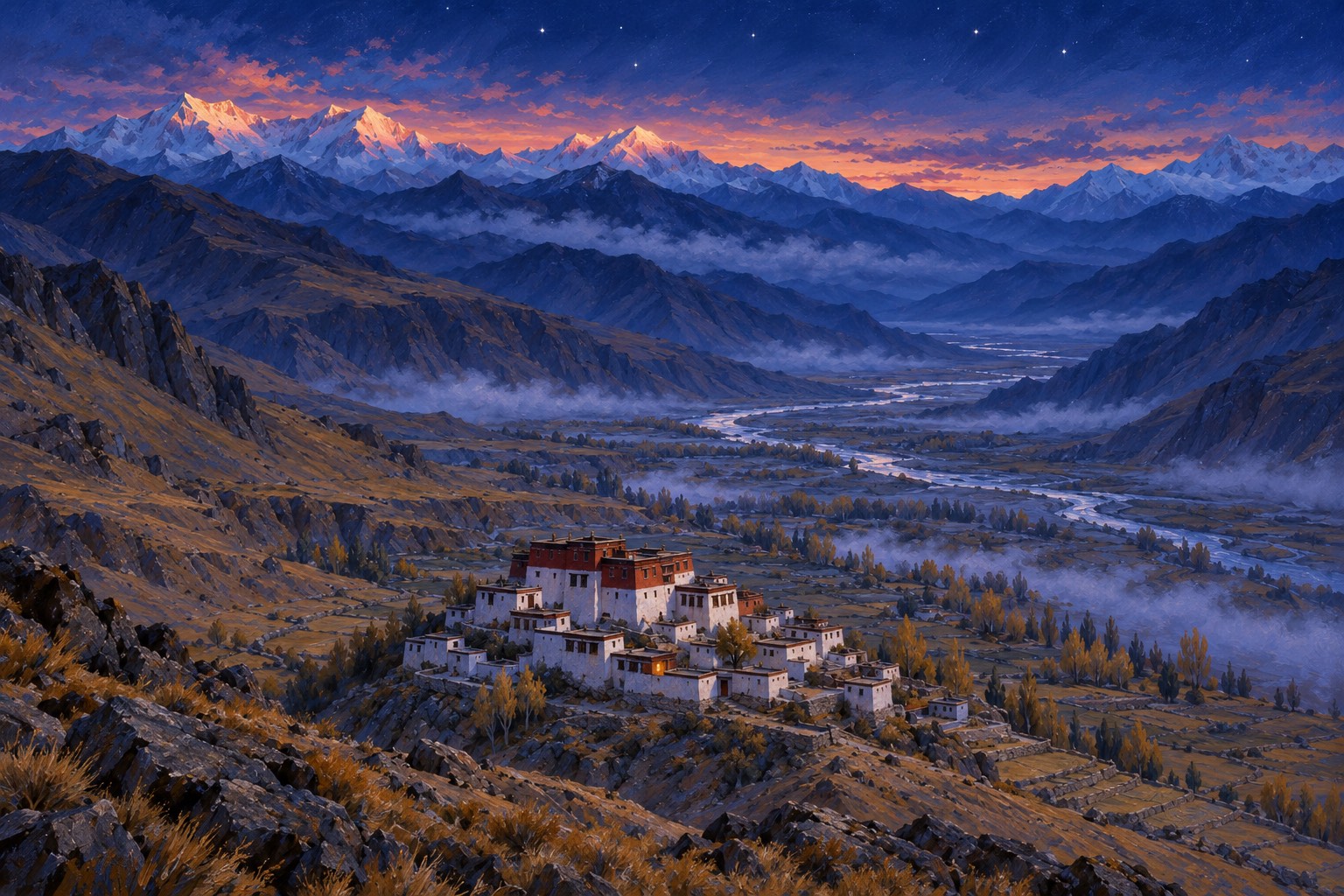
On the south side of the great Tsangpo river in central Tibet, a dry side valley climbs gently toward the mountains. Near its head stands a monastery that, its own history says, was placed so that you only see it when you are almost there. Its founder meant it as a reminder of how a true practitioner should live: quietly.
The monastery is Mindrolling. The name means something like "island of ripening and liberation," and in English it is often shortened to "Island of Liberation." Its founder was a treasure revealer called Terdak Lingpa, and this is his story.
A family of keepers
Terdak Lingpa's personal name was Gyurme Dorje. He was born in 1646, and both Mindrolling's history and Rigpa Wiki place his birth on the tenth day of the second lunar month. The tenth day of every month is the day Tibetans keep for Guru Rinpoche, the eighth-century master to whom the Seven-Line Prayer is addressed. Mindrolling's account says rainbows and other good signs marked his birth.
He came from the Nyö, an old family of Nyingma teachers. His father, Sangdak Trinlé Lhundrup, was a married lay master who, Mindrolling says, studied with more than thirty teachers. The tradition counts him as a rebirth of Nubchen Sangye Yeshe, one of Guru Rinpoche's close disciples. His mother, Yangchen Drölma, came from a noble family. The scholar Alison Melnick Dyer notes that she ran the finances of the family seat, Dargyé Chöding.
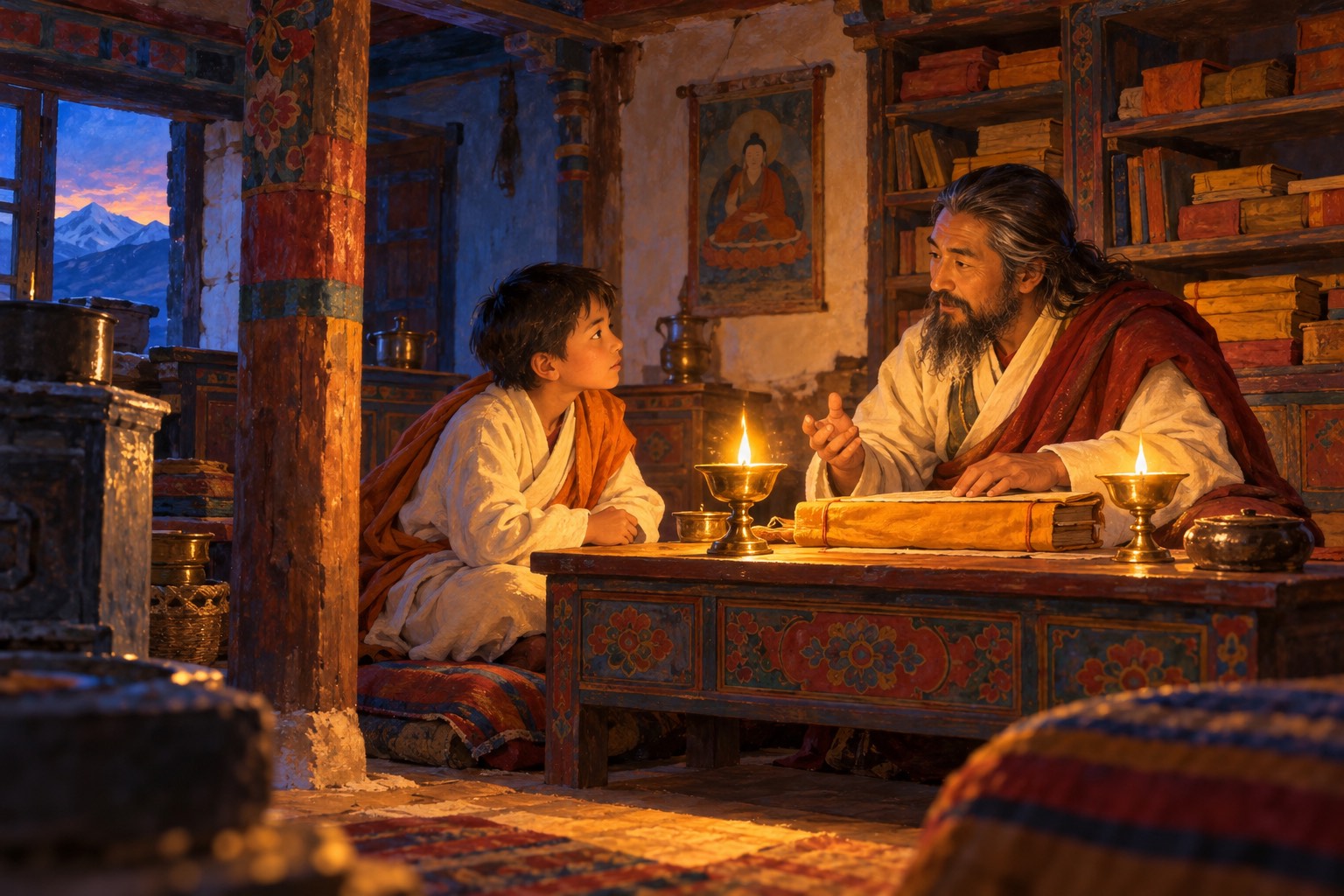
What the father had gathered, he passed on to his son. Trinlé Lhundrup died in 1662, when the boy was about sixteen.
Treasures in the rock
Terdak Lingpa was a tertön, a treasure revealer. The Nyingma tradition holds that Guru Rinpoche and his disciple Yeshe Tsogyal hid teachings in the land and in the minds of disciples, to be found centuries later by destined people.
Mindrolling's history lists four great revelations. The first came in the summer of 1663 at Yamalung, a hermitage in the mountains of central Tibet. It was a cycle called the Rigdzin Tukthik, the heart practice of the awareness-holders. A second followed at Sheldrak in 1667.
In 1676, the year Mindrolling was founded, he revealed a cycle of Guru Rinpoche in a fierce, protective form at Okar Drak, together with a practice of Vajrasattva, the buddha of purification, that is still called the Minling Dorsem. In 1680, the accounts say, he brought out a cycle devoted to Avalokiteshvara, the buddha of compassion, in public, before onlookers, at a place called Shawuk Tago.
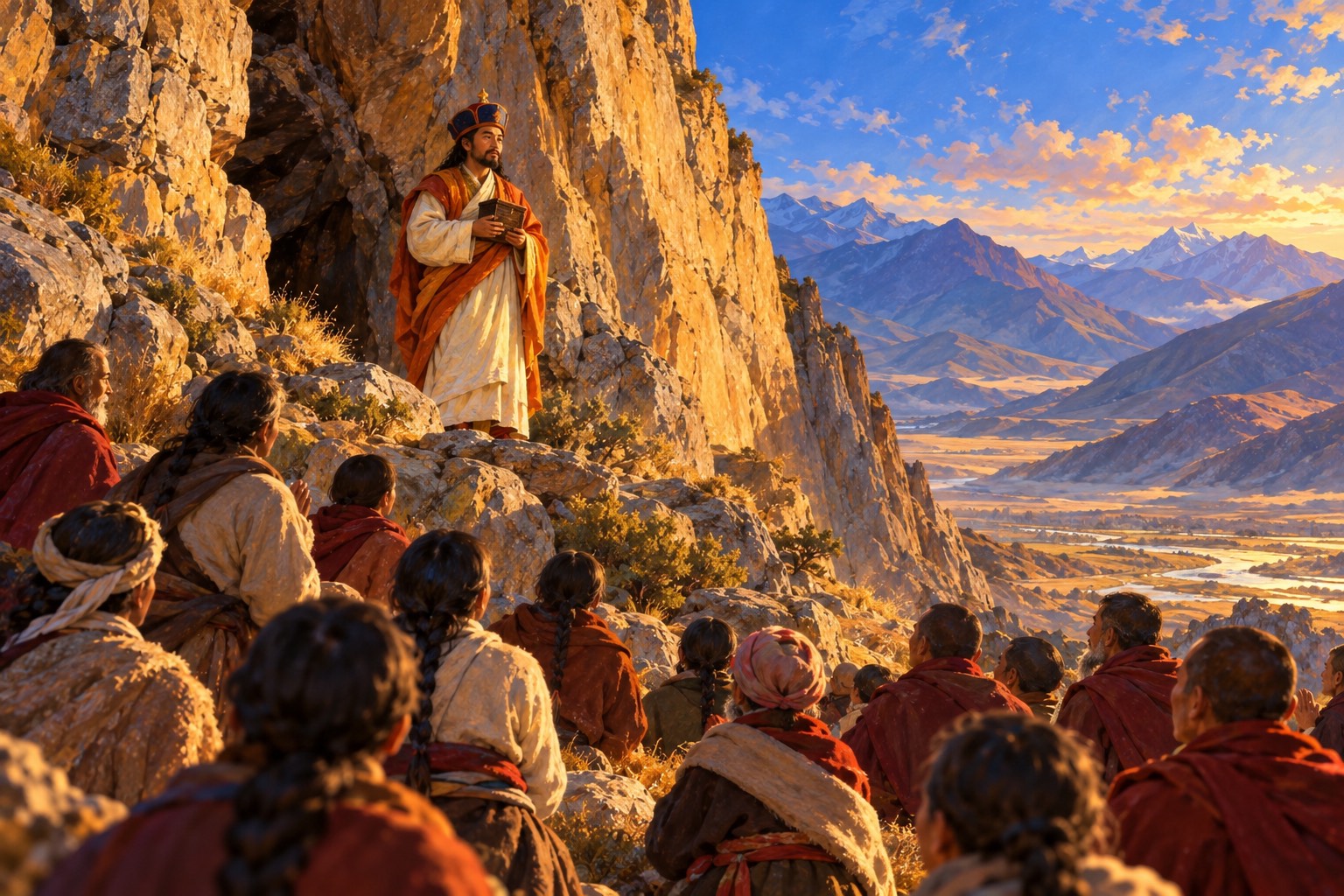
Mindrolling gives his ages at these four moments as eighteen, twenty-two, thirty-one and thirty-five. Counted the Western way, each is a year less. His life stories add that in visions he received teachings from Guru Rinpoche, Yeshe Tsogyal, the great Dzogchen master Longchenpa and others.
The Great Fifth
In those years Tibet was governed by the Fifth Dalai Lama, Ngawang Lobzang Gyatso (1617–1682), often called the Great Fifth. He was head of the Gelug school, but he came from a Nyingma family and kept those ties all his life.
He and Terdak Lingpa were close, and the teaching went both ways. Mindrolling remembers the Dalai Lama as the foremost of Terdak Lingpa's disciples. Treasury of Lives lists the Dalai Lama among Terdak Lingpa's teachers, and notes that the Dalai Lama passed his own visionary revelations on to him. Both can be true: in Tibet, a teacher and a student often changed places.
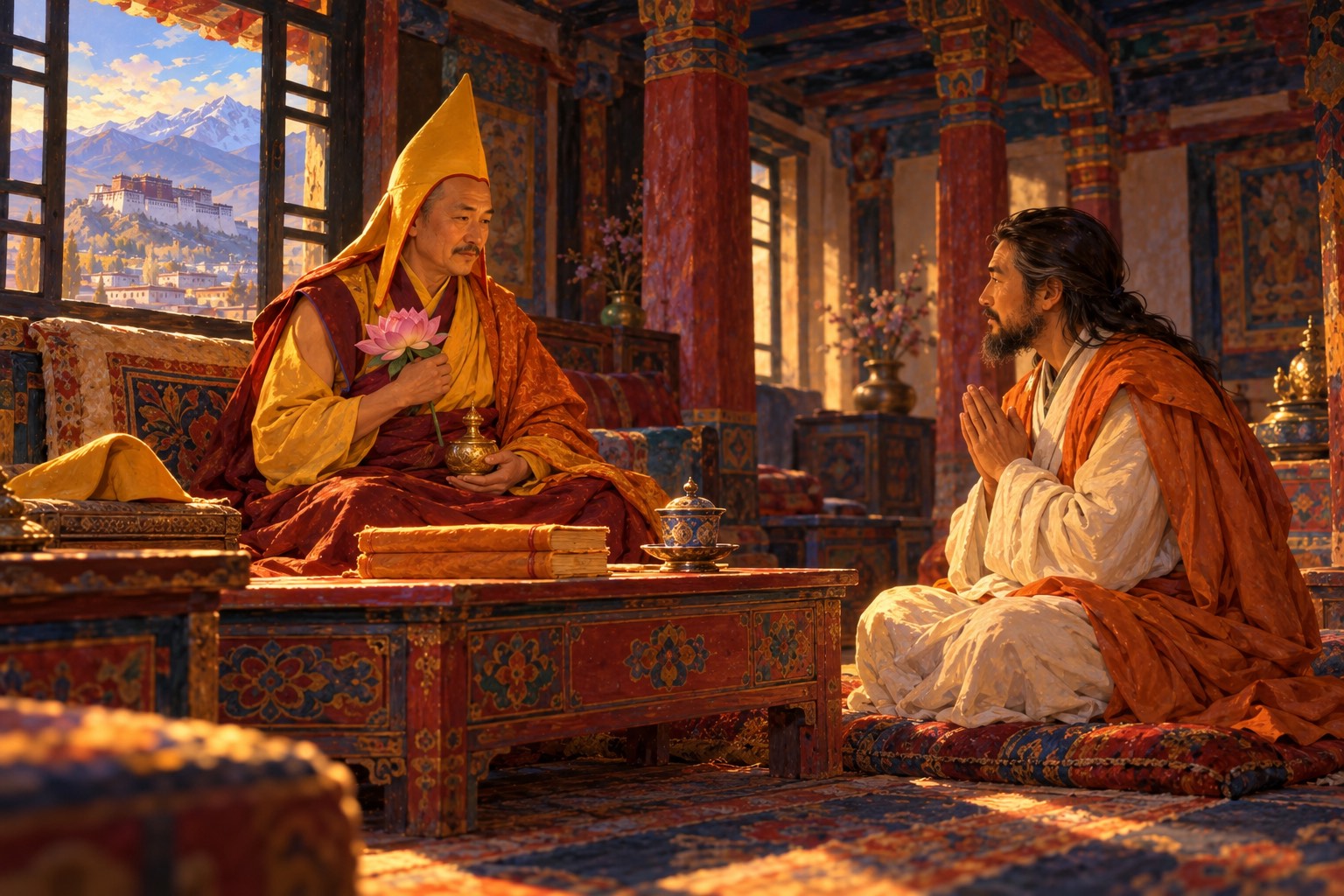
The Dalai Lama gave Terdak Lingpa's younger brother his novice vows at fifteen and full ordination at twenty. Treasury of Lives says he also sponsored the new monastery, and that he once consulted Terdak Lingpa when judging whether another treasure revealer's finds were genuine.
When the Dalai Lama died in 1682, his regent kept the death secret for years while the government carried on in his name. Melnick Dyer notes that Terdak Lingpa was among the few who kept that secret, a sign of how much he was trusted.
An island of ripening and liberation
In 1676 the two brothers founded Mindrolling in the Drachi valley. Tibetan teachers often pair two words: empowerment is said to "ripen" a student, and instruction to "liberate." The name promised a place where both would be given.
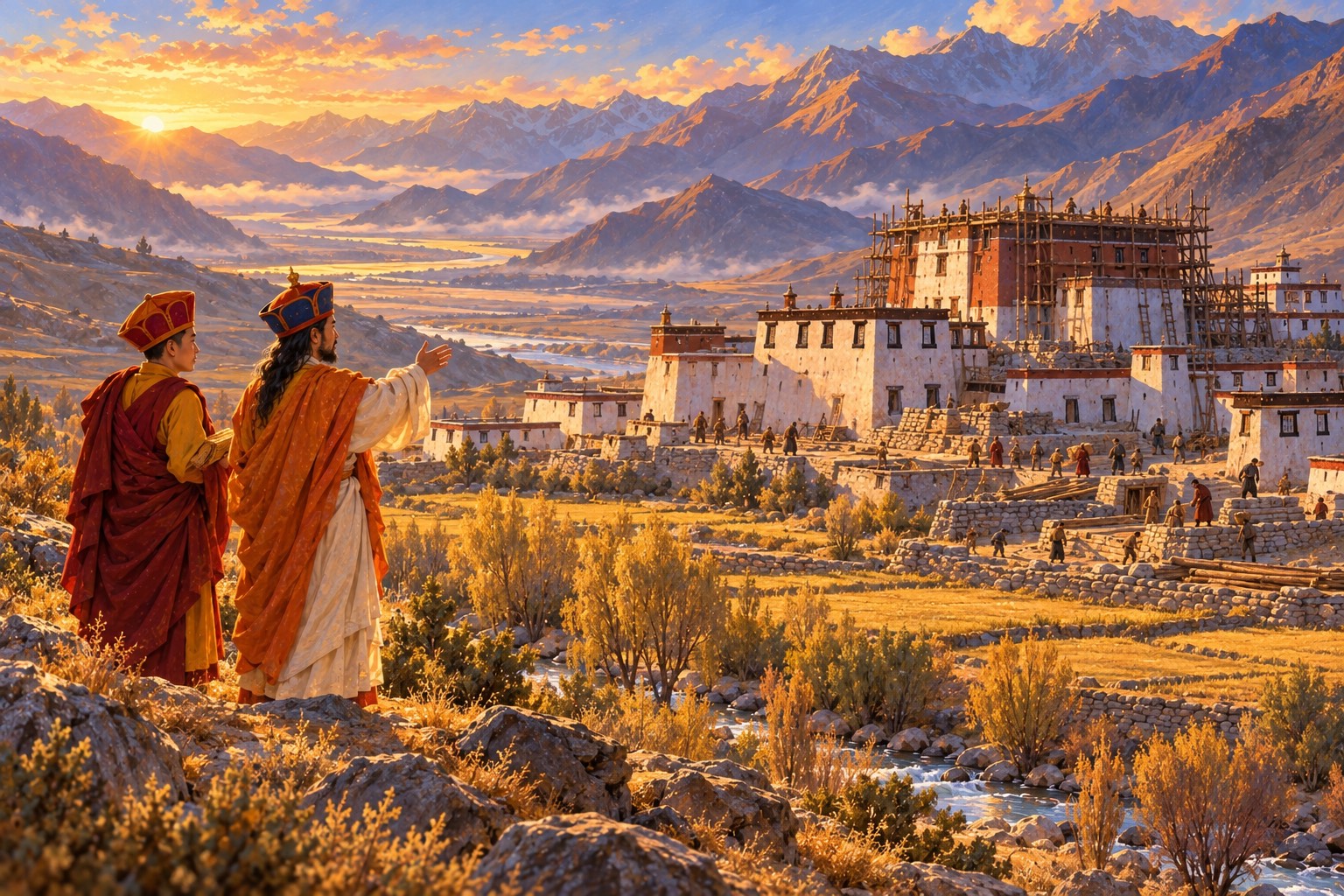
Terdak Lingpa, a married lay master with seven children, became its first head, the trichen or throne-holder, and the leadership passed down his family. His brother served as an early khenchen, the senior monk who keeps the monastic vows. Mindrolling has kept this pairing of a lay throne-holder and a monk abbot ever since.
His rules were unusual. The community was never to grow so large that teachers could not give each monk real attention; Mindrolling says it never held more than three hundred monks, at a time when some monasteries held thousands. It was to be a reference for Nyingma ritual, sacred dance and the drawing of mandalas. Young nobles came from Lhasa to study there, and Melnick Dyer notes that the brothers opened public rituals to lay people as well as monks.
Two brothers and a library of voices
Lochen Dharmashri, born in 1654, was eight years younger. Lochen means "great translator," a title of honour for a scholar. Mindrolling says he mastered ritual, astrology, grammar, poetry, monastic discipline and the whole range of Nyingma tantras. From the age of forty-eight to sixty-four, it says, he taught one great tantra, the Guhyagarbha, without a break.
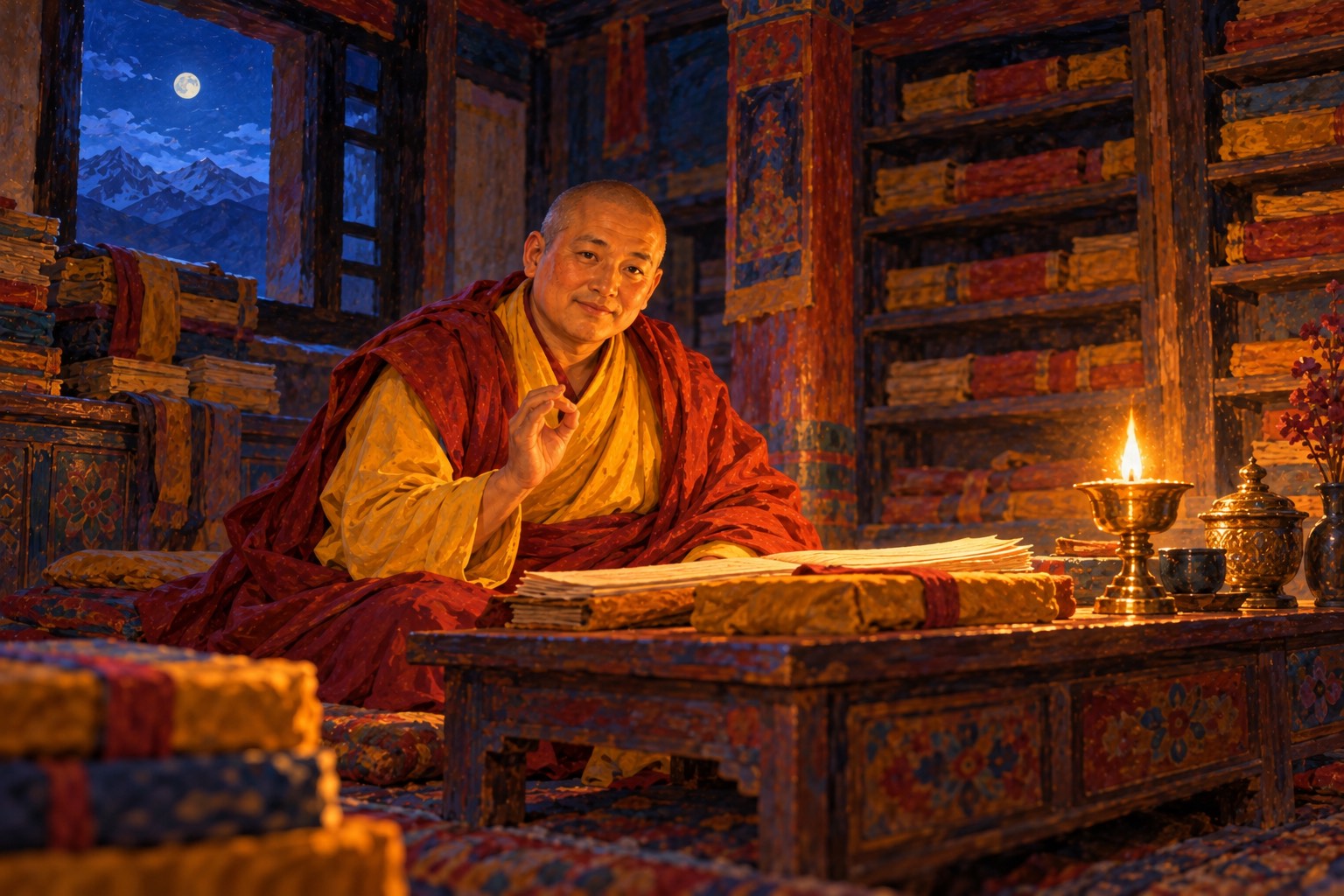
Together the brothers took on a vast task. The Nyingma school has two great streams of teaching. One is terma, the treasures. The other is kama, "the spoken word": teachings handed from teacher to student in an unbroken line since Guru Rinpoche's time.
By the seventeenth century the kama had come down in two main lines, one in central Tibet and one in Kham, in the east. Rigpa Wiki says Terdak Lingpa brought them together. Mindrolling describes the brothers seeking out the holders of many lineages, receiving a vast number of transmissions together, and gathering teachings that were close to being lost.
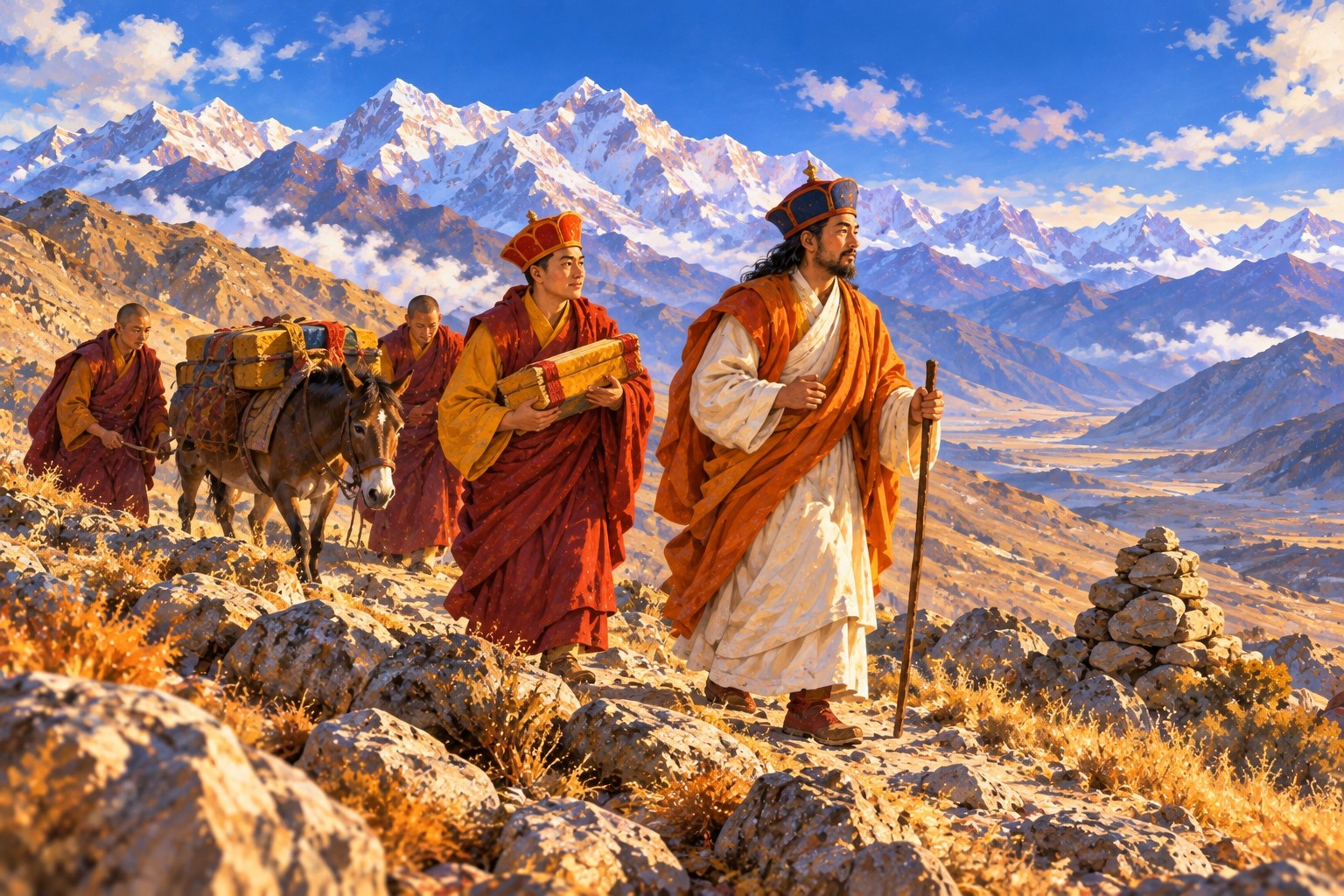
They also compiled a great collection of treasure teachings called the Döjo Bumzang, "the Wish-Granting Vase." Rigpa Wiki calls it a forerunner of the Rinchen Terdzö, the vast Treasury of Precious Treasures gathered in the nineteenth century. The kama they collected was later expanded, and in the twentieth century Dudjom Rinpoche published it in some forty volumes.
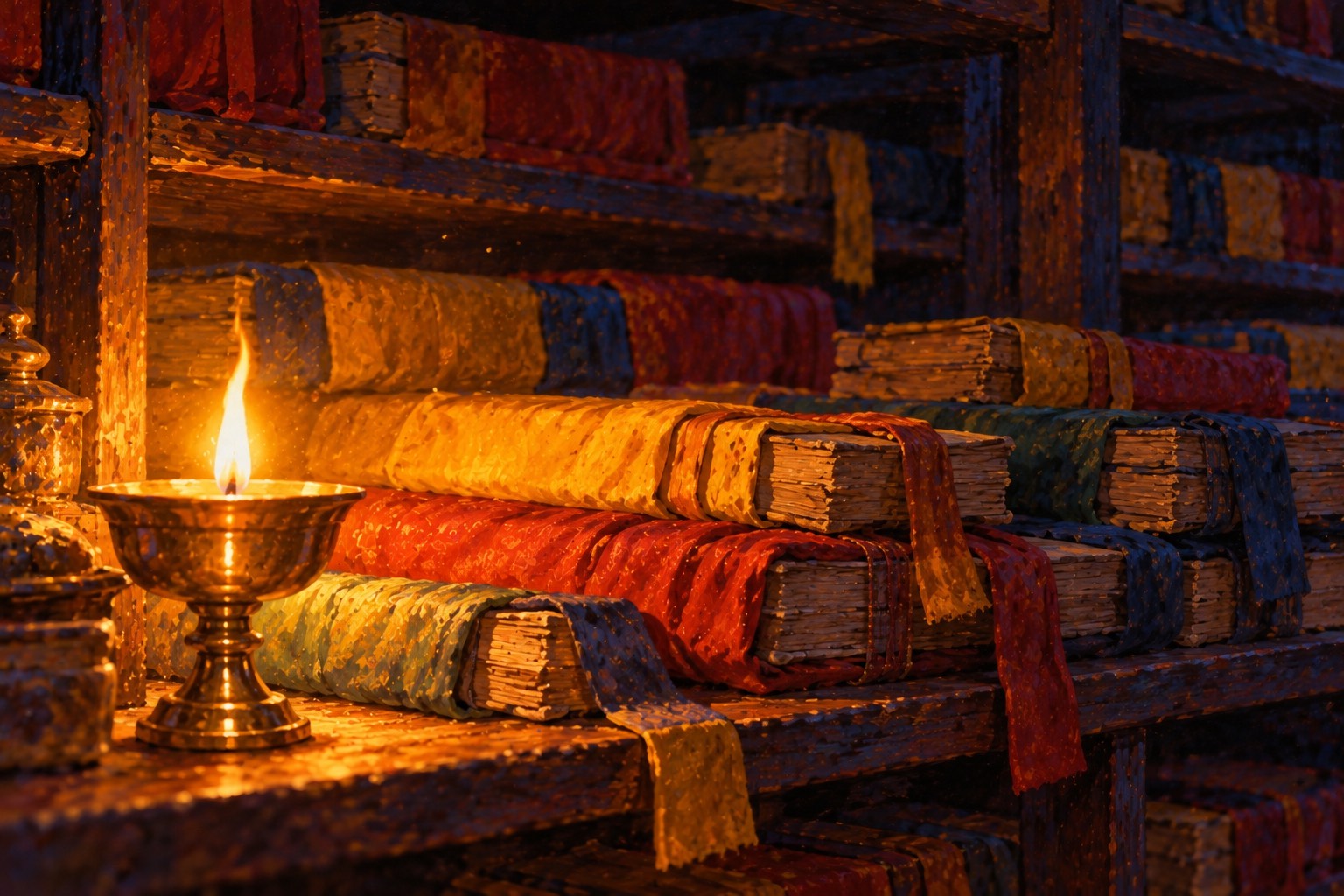
Lochen's own writings fill twenty volumes by Rigpa Wiki's count and twenty-four by Mindrolling's. He also wrote down the life stories of his brother and of their mother.
The tenth day
Among the older treasures the brothers cared for was the Lama Sangdü, "the Secret Embodiment of the Guru," revealed by Guru Chöwang in the thirteenth century. It is the treasure cycle that contains the Seven-Line Prayer.
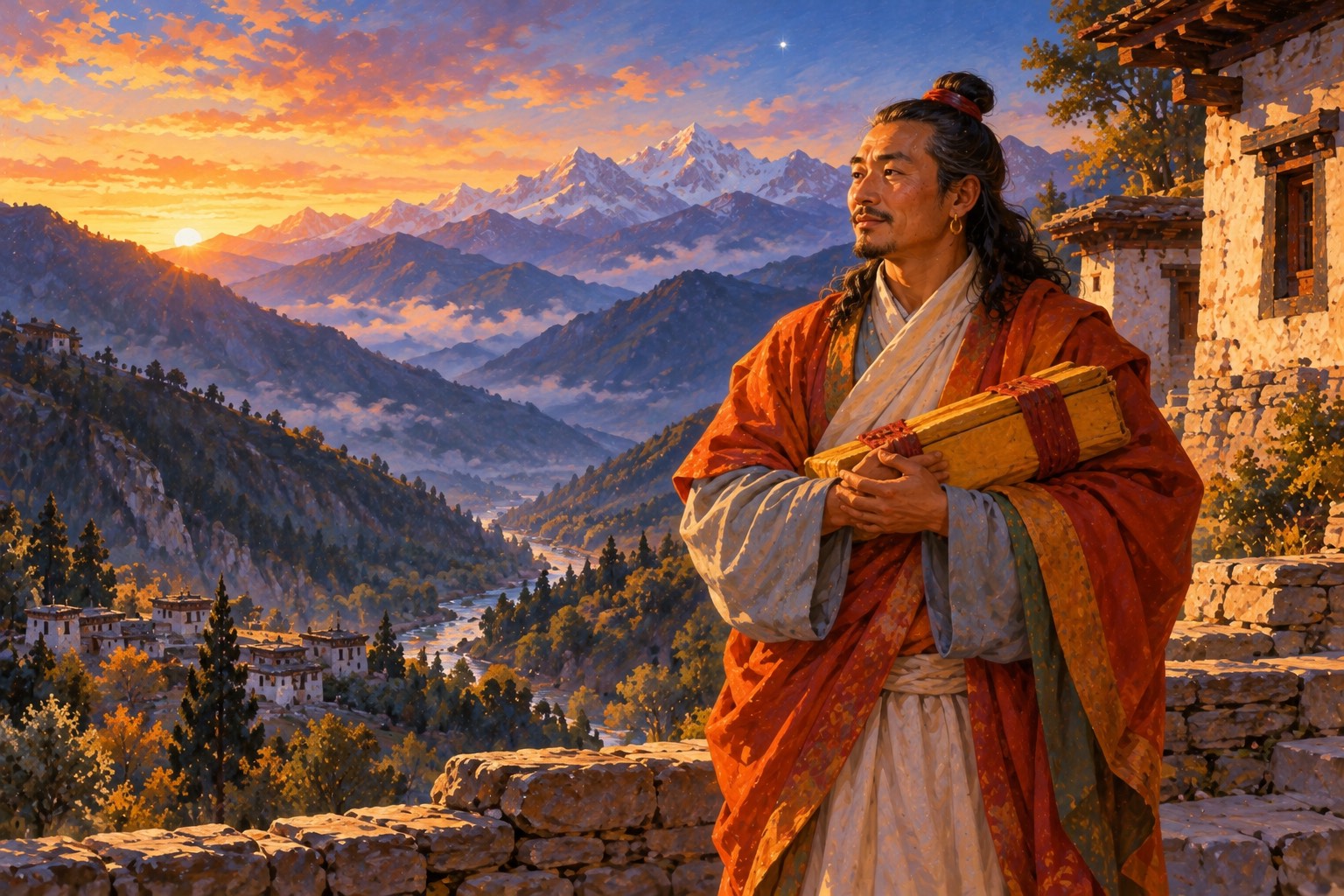
Terdak Lingpa arranged a ritual manual for it called The Brilliant Essence. Its closing note, translated on Lotsawa House, says he compiled it at Mindrolling on a tenth day, while the custom of a great offering on that day was being established there, with two monks writing it down for him. From then on, the monastery would gather on the tenth day of the lunar month to offer this practice to Guru Rinpoche.
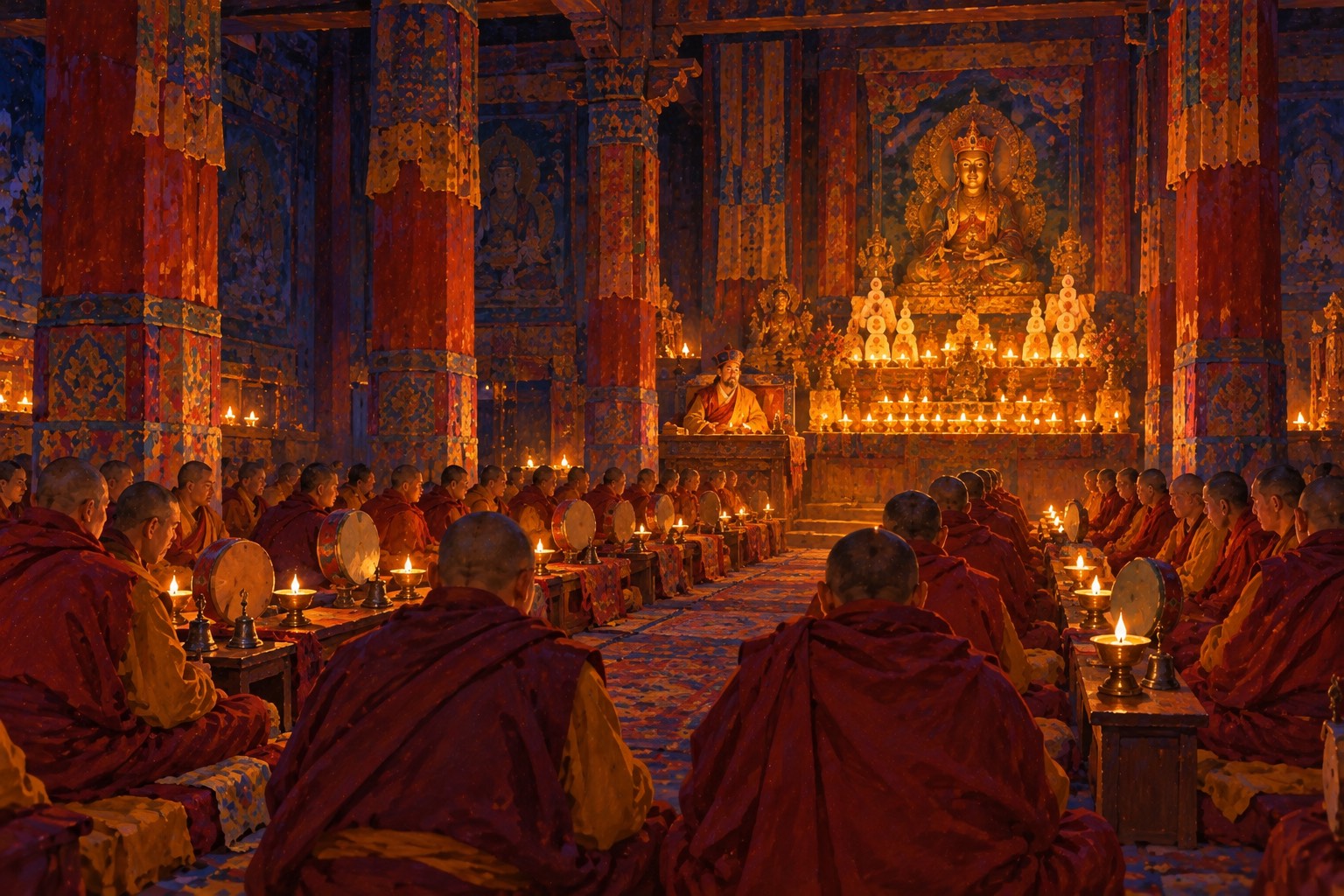
Rigpa Wiki notes that the Lama Sangdü was the main guru practice in the brothers' Döjo Bumzang, and later in the Rinchen Terdzö. Today it is practised in all the schools of Tibetan Buddhism, especially on the tenth day.
The full ritual belongs with a teacher, who gives it to students who have received its empowerment; if you feel drawn to it, a qualified teacher is the place to begin. But at its heart are seven short lines that anyone may say. Guru Chöwang's teaching on the prayer asks only that they be said with a sincere heart, again and again.

Seven steps east
Terdak Lingpa died in 1714, at sixty-seven. Melnick Dyer, reading his daughter's biography, says he died after an illness. Mindrolling's account remembers his last morning in its own way. He said he must walk seven steps toward the east, did so, sat down cross-legged and spoke his last testament. Then, it says, he told those around him that the dakinis had come to escort him, and he passed away seated in meditation.
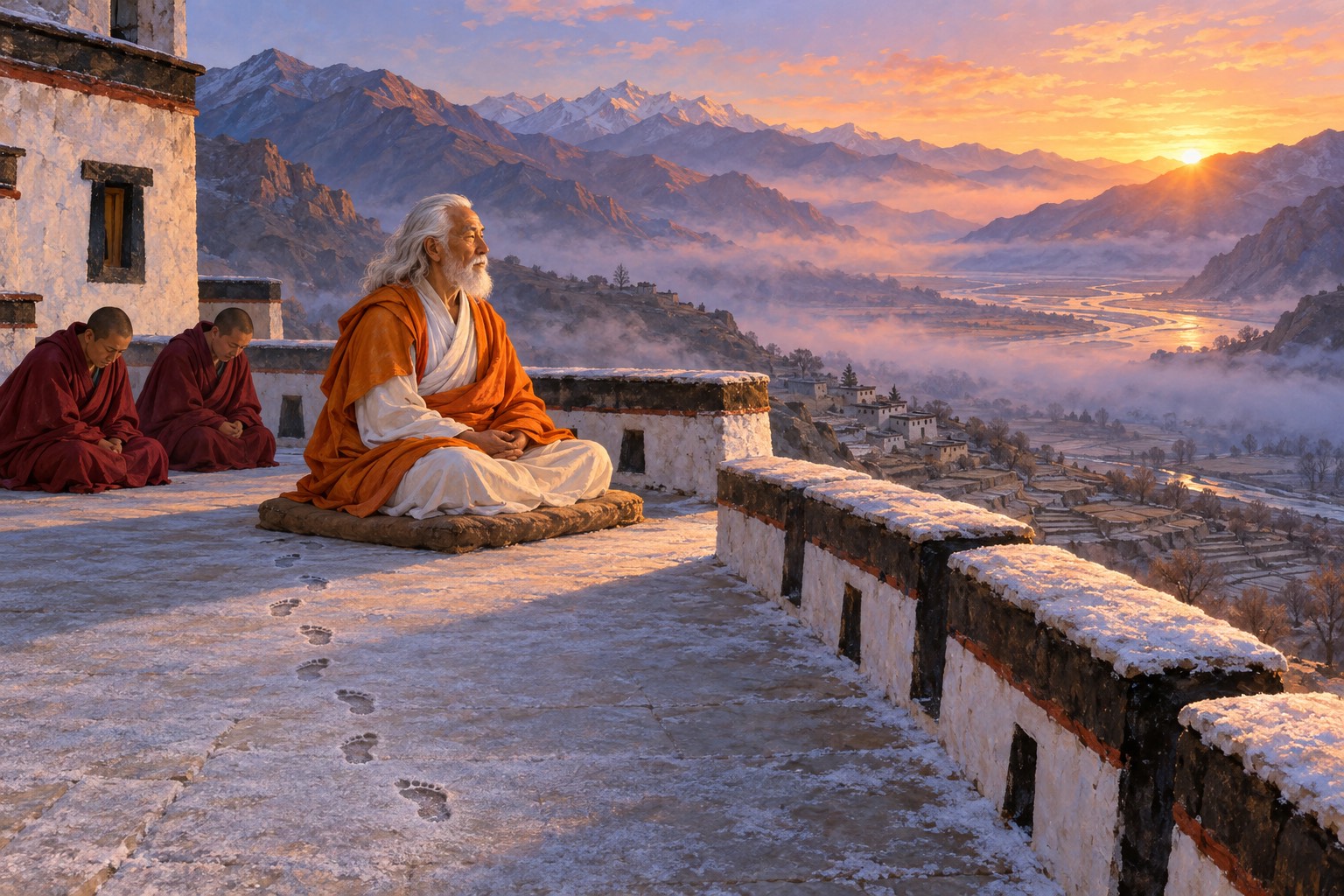
That testament is only four lines long. More than a century and a half later, the great master Jamyang Khyentse Wangpo is said to have recited it at his own passing.
After him
Three years after his death, Tibet was torn by war. Dzungar Mongol troops took Lhasa, and Mindrolling was badly damaged. Lochen Dharmashri and Terdak Lingpa's eldest son, Pema Gyurme Gyatso, were killed. The sources differ on whether they died at the monastery or in Lhasa, and on whether it was 1717 or 1718.
Story 28, "Jetsün Mingyur Paldrön of Mindrolling," tells how his daughter escaped and how she and her brother Rinchen Namgyal raised the monastery again. The teachings the two brothers had gathered survived. Mindrolling still stands in the Drachi valley, and a new Mindrolling has been built at Dehradun in India.
About the art
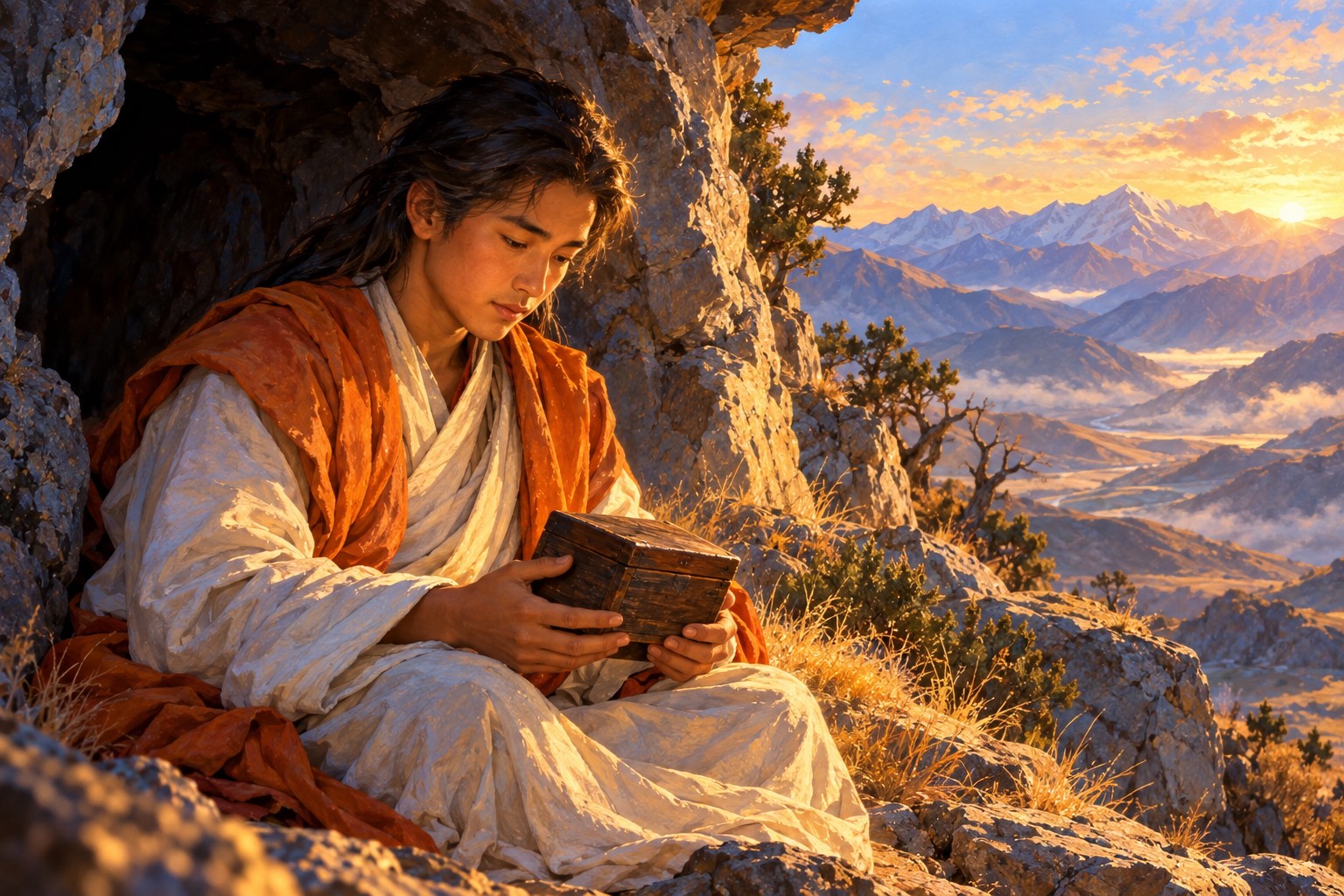
Terdak Lingpa is drawn after a seventeenth-century painting now in the Rubin Museum, shown on Himalayan Art Resources. He wears the white robes and orange cloak of a married lay master and a blue lotus-shaped hat topped with a small golden half-vajra, and he may hold a small square casket, the usual sign of a treasure revealer. His hat has no vulture feather, so it is not confused with Guru Rinpoche's. In the scenes of his youth he is drawn bareheaded, because no portrait shows him young.
Lochen Dharmashri appears in the same painting, below his brother: a round-faced, clean-shaven monk in red and golden-yellow monastic robes, wearing a red-orange petalled hat, with one hand raised in a teaching gesture and a long loose-leaf book in his lap. The Fifth Dalai Lama is drawn as in seventeenth-century portraits: a monk with a thin moustache and a yellow pandita hat, holding a lotus stem at his heart and a small long-life vase in his lap. These are pictures from tradition, not likenesses.
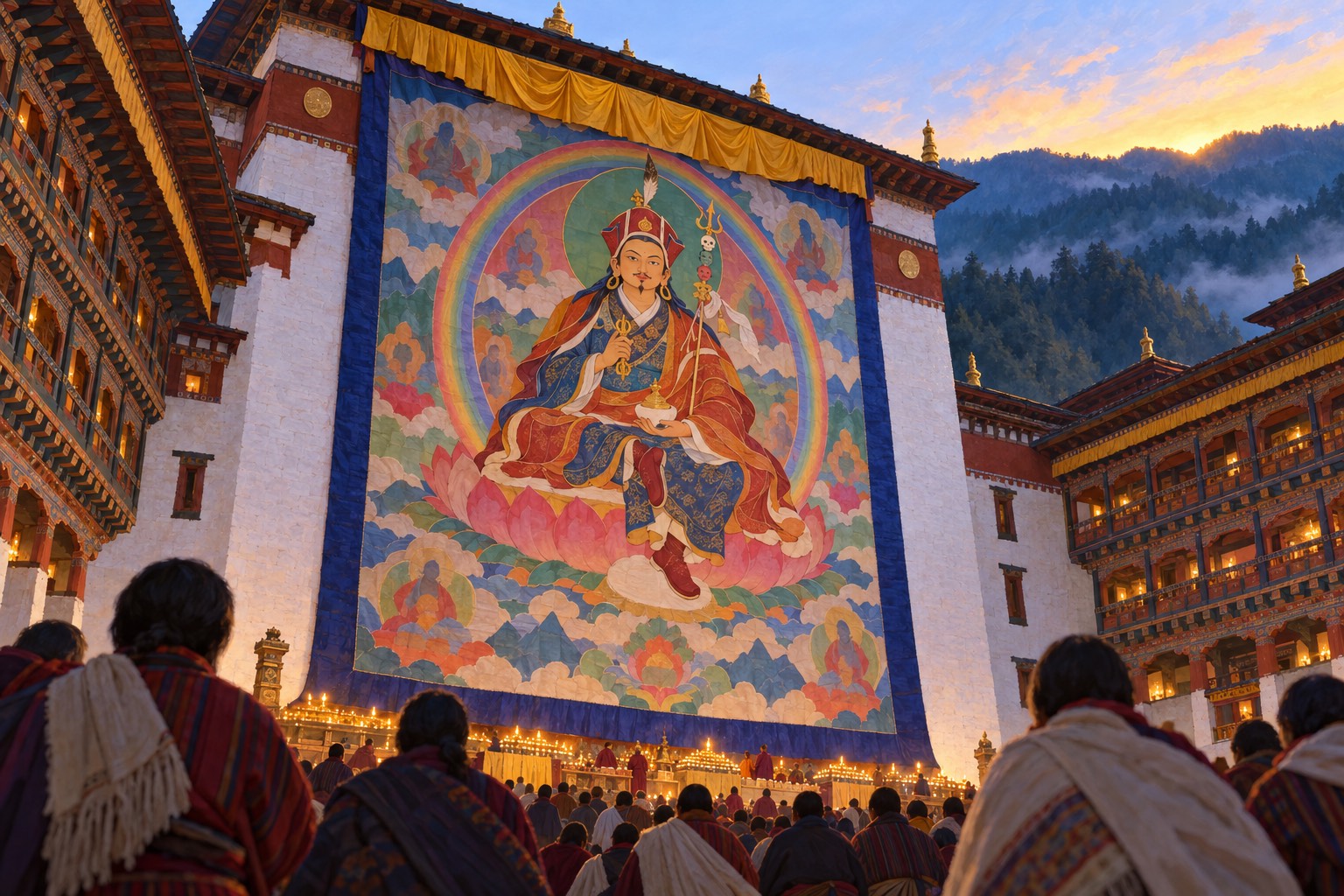
Guru Chöwang, who revealed the Lama Sangdü in the thirteenth century, appears once, as on his own page. Guru Rinpoche appears once in his best-known form: the lotus hat with a half-vajra and one vulture feather, a five-pronged vajra at his heart, a skull cup with a small long-life vase in his lap, and the slender staff called the khatvanga resting on his left shoulder.
Mindrolling's seventeenth-century buildings are not described in detail in the sources, so they are drawn simply from the general architecture of central Tibet in that period. The tenth-day gathering shows only what anyone could see from the back of the hall: monks chanting, butter lamps and offering cakes on the shrine.
Why this matters for practice
Terdak Lingpa and his brother spent their lives receiving, gathering and passing on what Guru Rinpoche's followers had handed down, which is what the sixth line of the prayer asks: to follow in his footsteps. They gave Mindrolling a tenth-day offering of the Lama Sangdü, the cycle that holds the Seven-Line Prayer. The full ritual belongs with a teacher, but the seven lines themselves are open to anyone, and one recitation on a tenth day, or any day, joins that same current.

If something in this story moved you, you might pause tonight and recite the prayer once, perhaps on a tenth day, joining the long line of voices that Terdak Lingpa and his brother worked so hard to keep.
Sources and further reading
- Lama Sangdü Series, Lotsawa House
- The Brilliant Essence: The Ritual Manual for the Secret Embodiment of the Guru (Lama Sangdü), by Minling Terchen Gyurme Dorje, trans. Ryan Jacobson, Tom Greensmith and Tenzin Choephel (2021), Lotsawa House
- Minling Terchen Gyurme Dorje (author page), Lotsawa House
- Minling Terchen Gyurme Dorje, Rigpa Wiki (Internet Archive snapshot, 2026)
- Lochen Dharmashri, Rigpa Wiki (Internet Archive snapshot, 2026)
- Nyingma Kama; Döjo Bumzang; Lama Sangdü; Mindroling Monastery, Rigpa Wiki (Internet Archive snapshots, 2025–26)
- Chögyal Terdag Lingpa (1646–1714), Mindrolling International
- Chögyal Terdag Lingpa, Mindrolling (mindrolling.org)
- Lochen Dharmashri, Mindrolling International and mindrolling.org
- Mindroling (institution page), Treasury of Lives (Internet Archive snapshot, 2026)
- The Fifth Dalai Lama, Ngawang Lobzang Gyatso, by Alexander Gardner (2009), Treasury of Lives (Internet Archive snapshot, 2014)
- Terdak Lingpa (person page) and Lochen Dharmaśrī (person page), Treasury of Lives (Internet Archive snapshots, 2019 and 2024)
- The Tibetan Nun Mingyur Peldrön: A Woman of Power and Privilege, by Alison Melnick Dyer (2022), Introduction and Chapter 1, University of Washington Press, open-access edition on Manifold
- Mindrolling Monastery, Wikipedia
- Terdak Lingpa with Lochen Dharmashri and Pema Gyurme Gyatso (item 65032); Lochen Dharmashri (item 66259); the Fifth Dalai Lama (item 506) and Dalai Lama iconography (set 5979), Himalayan Art Resources
This retelling is waiting to be read by a knowledgeable practitioner. Where the traditional accounts differ, the story says so; if you notice a mistake, please tell us through Share Your Story.