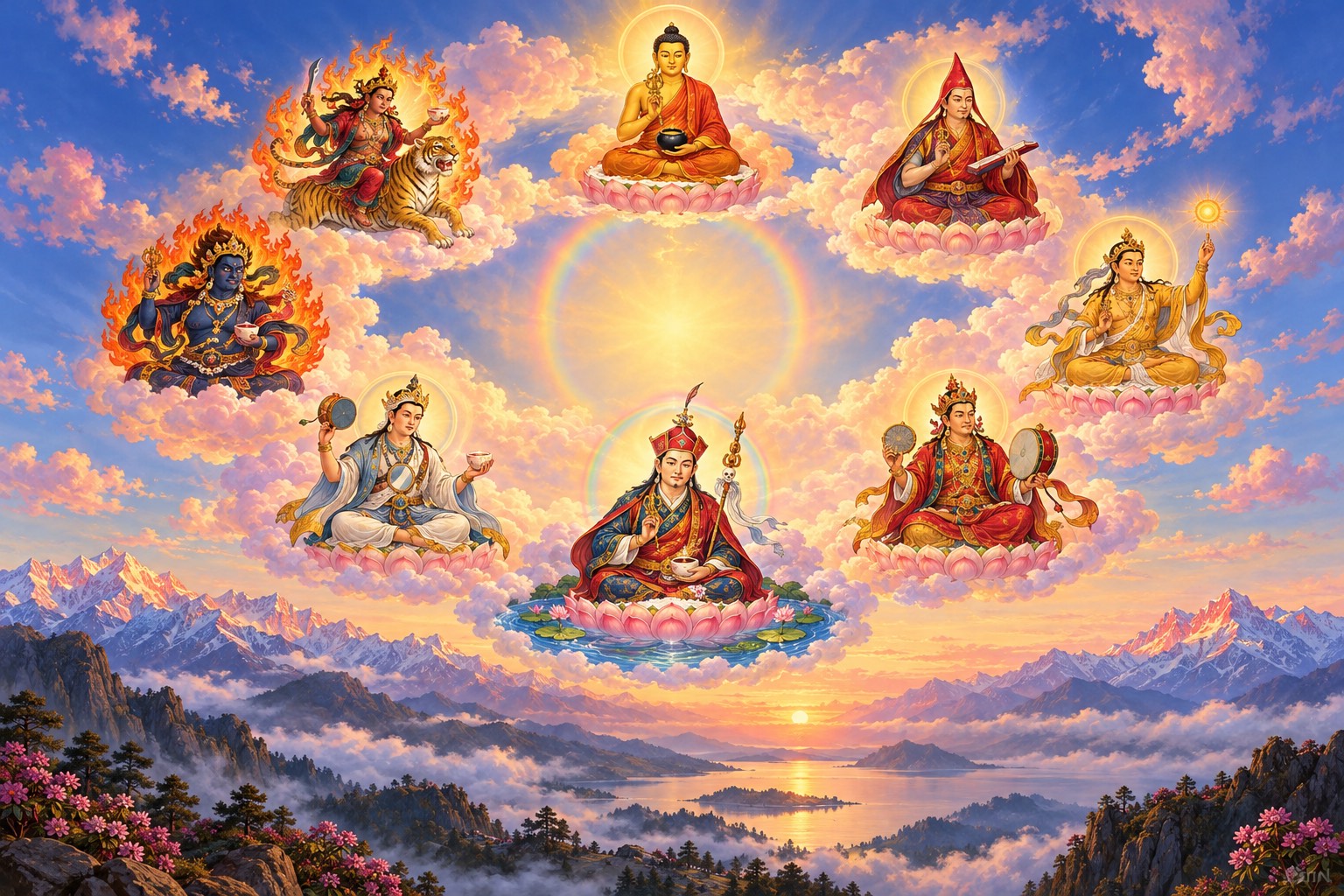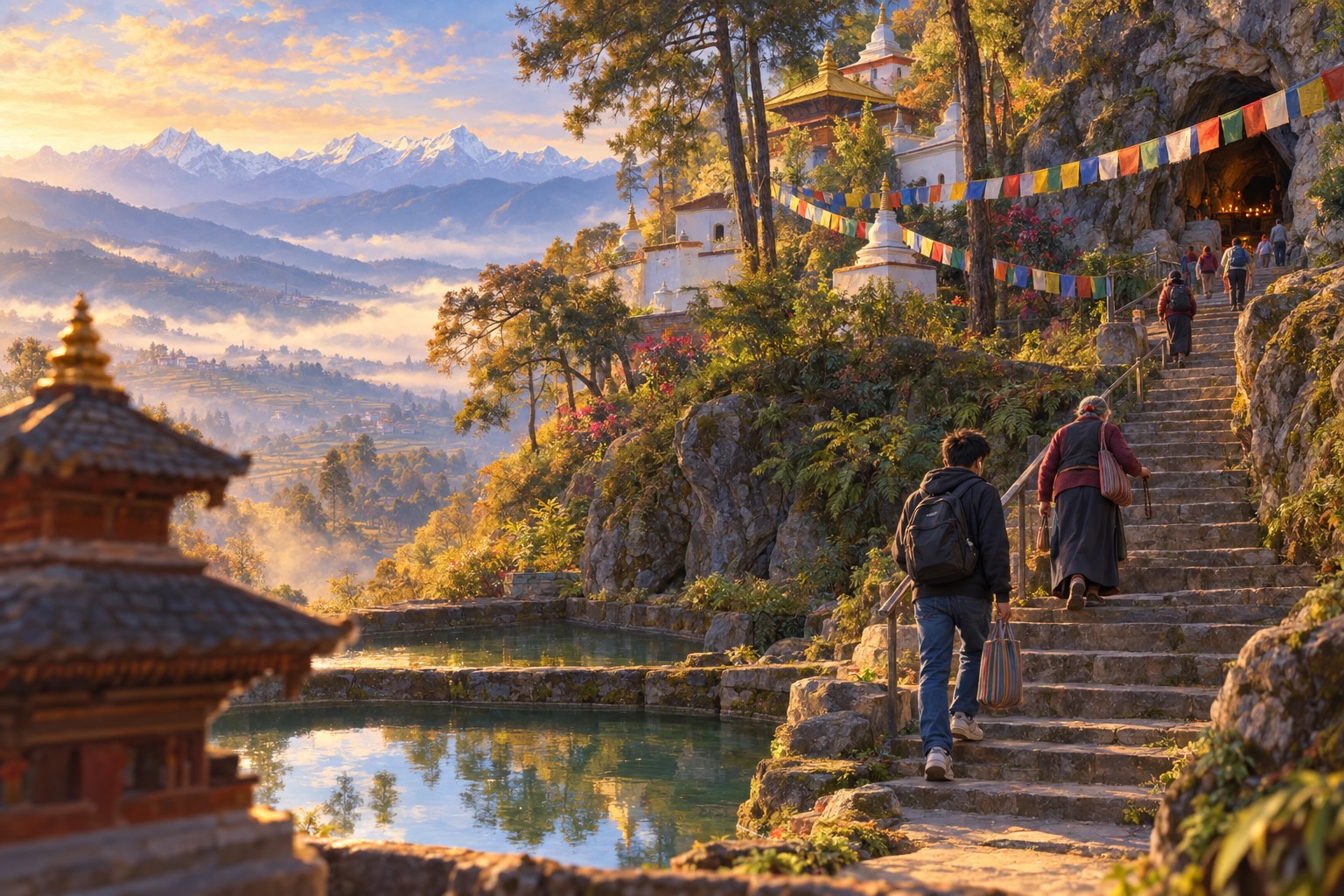
Every month, when the moon is a little past half full and still growing, comes a day that many Tibetan, Bhutanese and Himalayan Buddhists keep for Guru Rinpoche, the "Precious Teacher" Padmasambhava. It is the tenth day of the lunar month. In Tibetan it is called tsechu, which simply means "the tenth."
The Tibetan calendar follows the moon, so each month begins around the new moon and the tenth falls in the waxing half. Gönpo Tseten Rinpoche, in his explanation of the day, calls it the tenth day of the waxing moon.
Why should that day be his? The tradition gives two answers. He promised to come on it. And many of the great events of his life are said to have fallen on a tenth day.
A promise to come
The accounts of how he left Tibet are told on this site in "The Hiding of the Treasures." They say that at the Gungthang pass, before he turned toward the south-west, he made his disciples a promise. In The Wish-Fulfilling Tree, a treasure text (a teaching the tradition says he hid, to be found by a later master) revealed by Chokgyur Lingpa, he says he will return every month for the Tibetans' sake, and especially on the tenth day of the monkey month.
Other texts put it in other words. Gönpo Tseten Rinpoche gathers passages in which he says he will come morning and evening to anyone with faith, and on every tenth day of the waxing moon. Dudjom Rinpoche's short work on the festival quotes a treasure of Ratna Lingpa in which he swears to come in person.
The tradition holds these as his own words, and many people treasure them as a promise of presence to anyone who calls. The texts also speak of great blessings. This page passes those on as the tradition's words, not as a promise of any particular result.

Twelve months, twelve deeds
The second answer is a pattern. The tradition holds that in each month of the year, on its tenth day, Guru Rinpoche showed one of the great deeds of his life. In Mipham Rinpoche's short prayer for the tenth days, he says he displayed "one of my twelve great deeds" on the tenth of each month (Rigpa Translations).
The list below follows Dudjom Rinpoche's Concise Benefits of the Festival of the Tenth Day, also translated by Rigpa Translations. Each month carries the name of an animal from the twelve-year cycle, and the count begins with the hare month. The months follow the calendar, not his life, so his birth comes sixth.
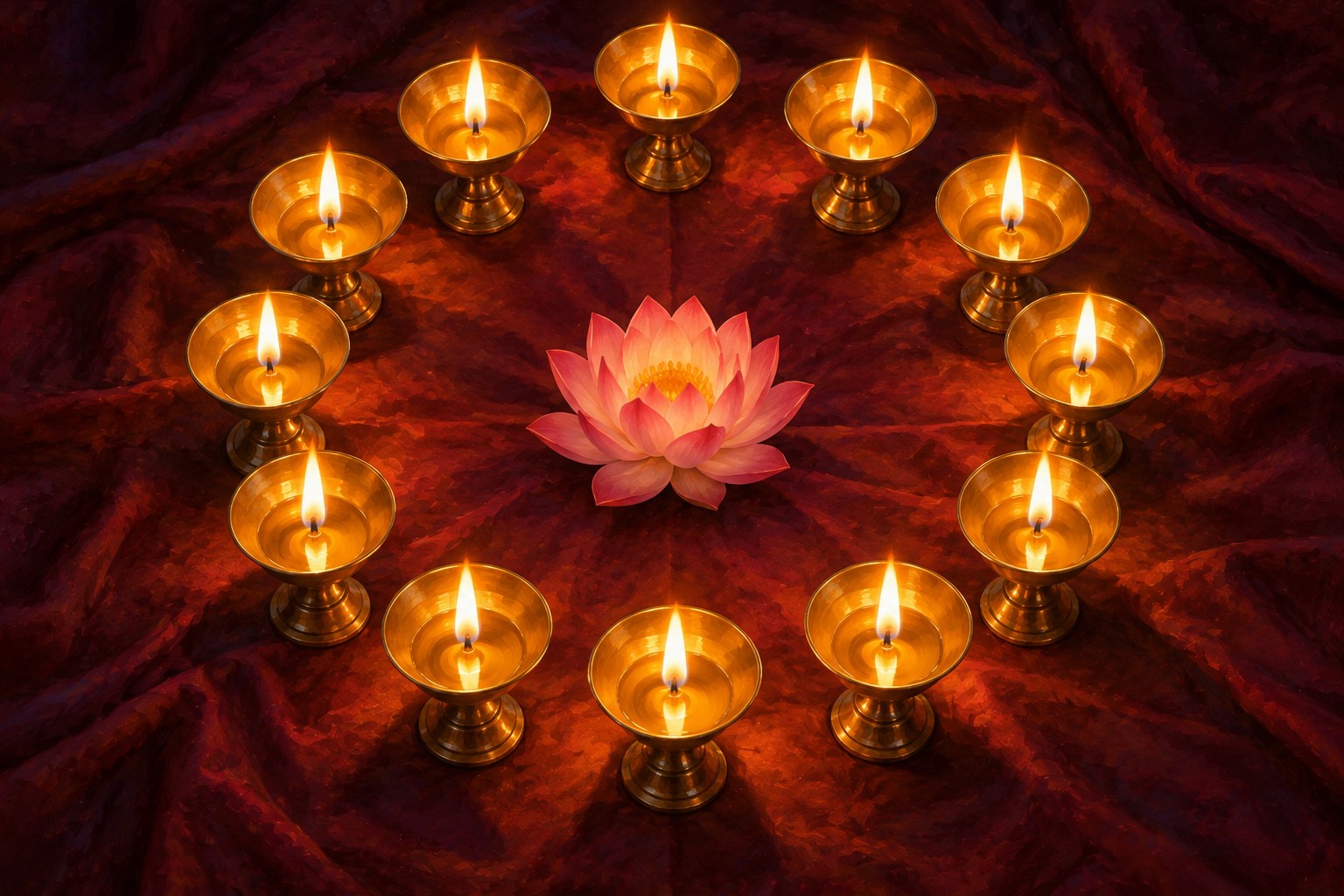
First month (hare). He gave up his kingdom to practise in the Cool Grove, a great cremation ground. Second month (dragon). He took the vows of a monk from Ananda, the Buddha's closest disciple, and studied widely.
Third month (snake). The king of Zahor tried to burn him on a pyre, and the fire became a lake, as "Mandarava and the Lotus Lake" tells. Fourth month (horse). The same wonder happened again in his homeland of Oddiyana.
Fifth month (sheep). In southern India he defeated teachers who opposed the Buddha's way. Sixth month (monkey). He was born from a lotus on Lake Dhanakosha, the story of "The Lotus-Born."
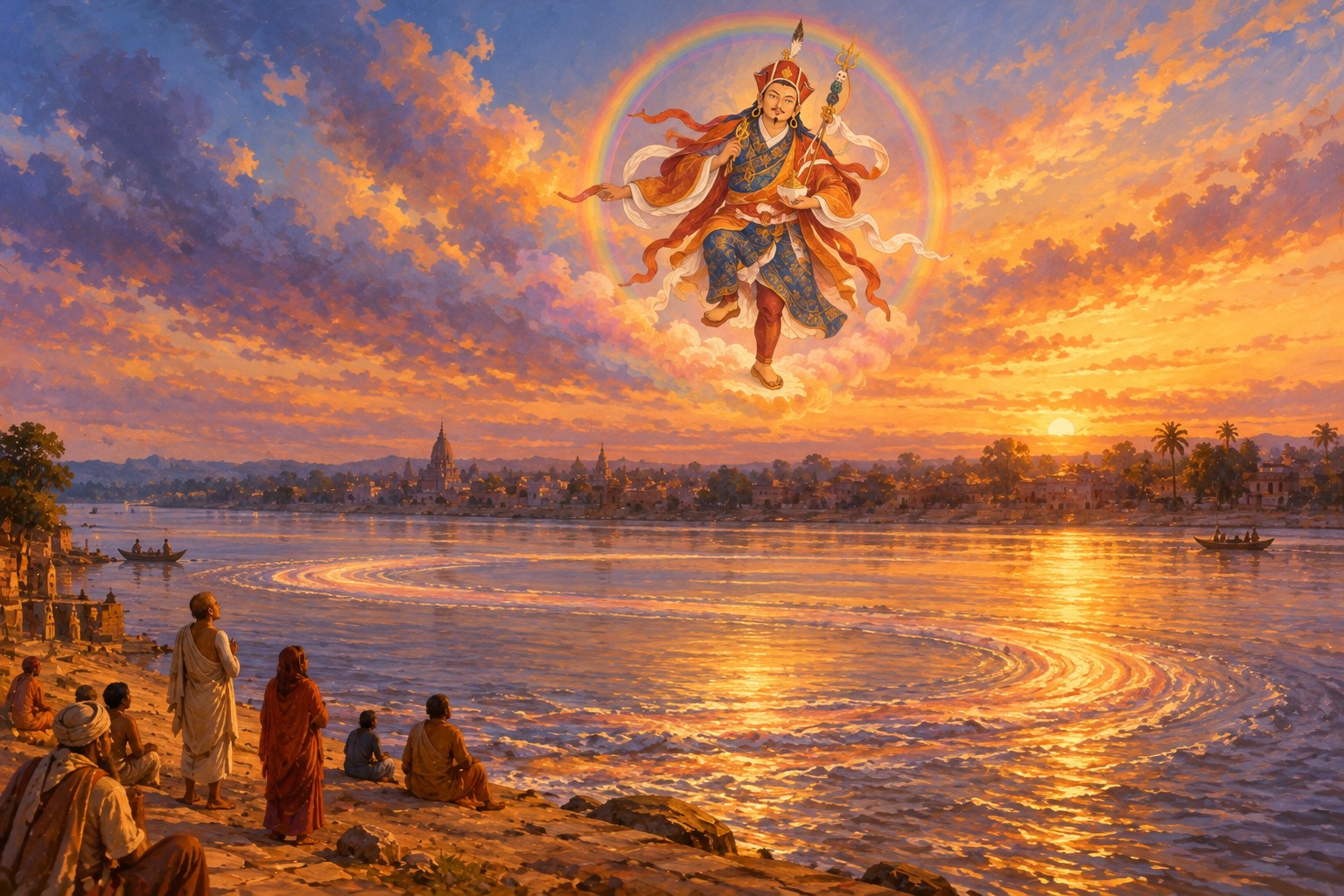
Seventh month (bird). The accounts say he danced in the sky and turned back the current of the Ganges.
Eighth month (dog). He was given poison, and turned it into nectar.
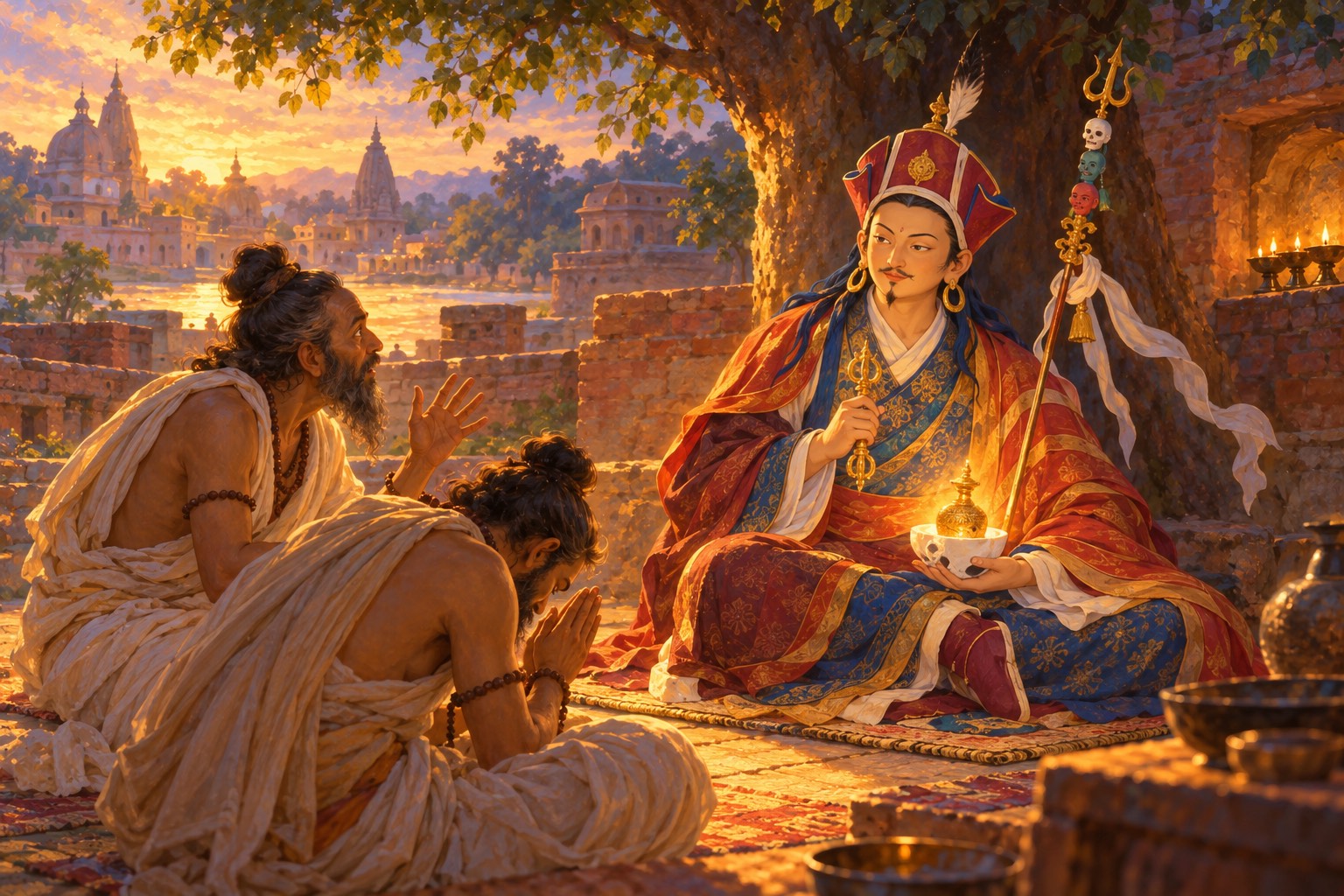
Ninth month (pig). At Yangleshö in Nepal he overcame obstructing forces and reached a great accomplishment ("The Caves of Yangleshö"). Tenth month (rat). He arrived in central Tibet and helped to found Samye, its first monastery.
Eleventh month (ox). In a fierce form at Paro Taktsang, the Tiger's Nest, he bound the guardians of the hidden treasure teachings to their oaths. Twelfth month (tiger). He became crown prince of Oddiyana and married the princess Prabhavati.
Where the lists differ
Not every list agrees, and it is worth saying so gently. Mipham's prayer keeps the same months but remembers some deeds differently. For the third month it recalls the teaching he established in Zahor and his meeting with Mandarava. For the eleventh, it recalls the treasures he hid across Tibet.
A tenth-day prayer that Lotsawa House lists under Jamgön Kongtrul, though its closing note names the treasure revealer Chimé Tennyi Yungdrung Lingpa, starts with the monkey month and the birth instead. Its deeds match closely, and it adds detail: in the Ganges month, his opponents had thrown him into the river, and in the poison month they took faith in his teaching.
Pema Lingpa's Guru's Jewel Ocean, quoted by Gönpo Tseten Rinpoche, links the months not to deeds but to stages of realisation and kinds of enlightened activity. Calendars differ, too, about where the year begins. A note to Dudjom Rinpoche's text says that one system puts the birth month fifth rather than sixth.
For a reader, the differences matter less than the shape they share. Every month has a tenth day, and every tenth day remembers something he did.
Some tenth days stand above the rest. Rigpa Wiki notes the tradition that he was born on the tenth day of the monkey month, and that on the tenth day of the monkey month he also left Tibet. In many places that day is kept as his birthday.
How the day is kept
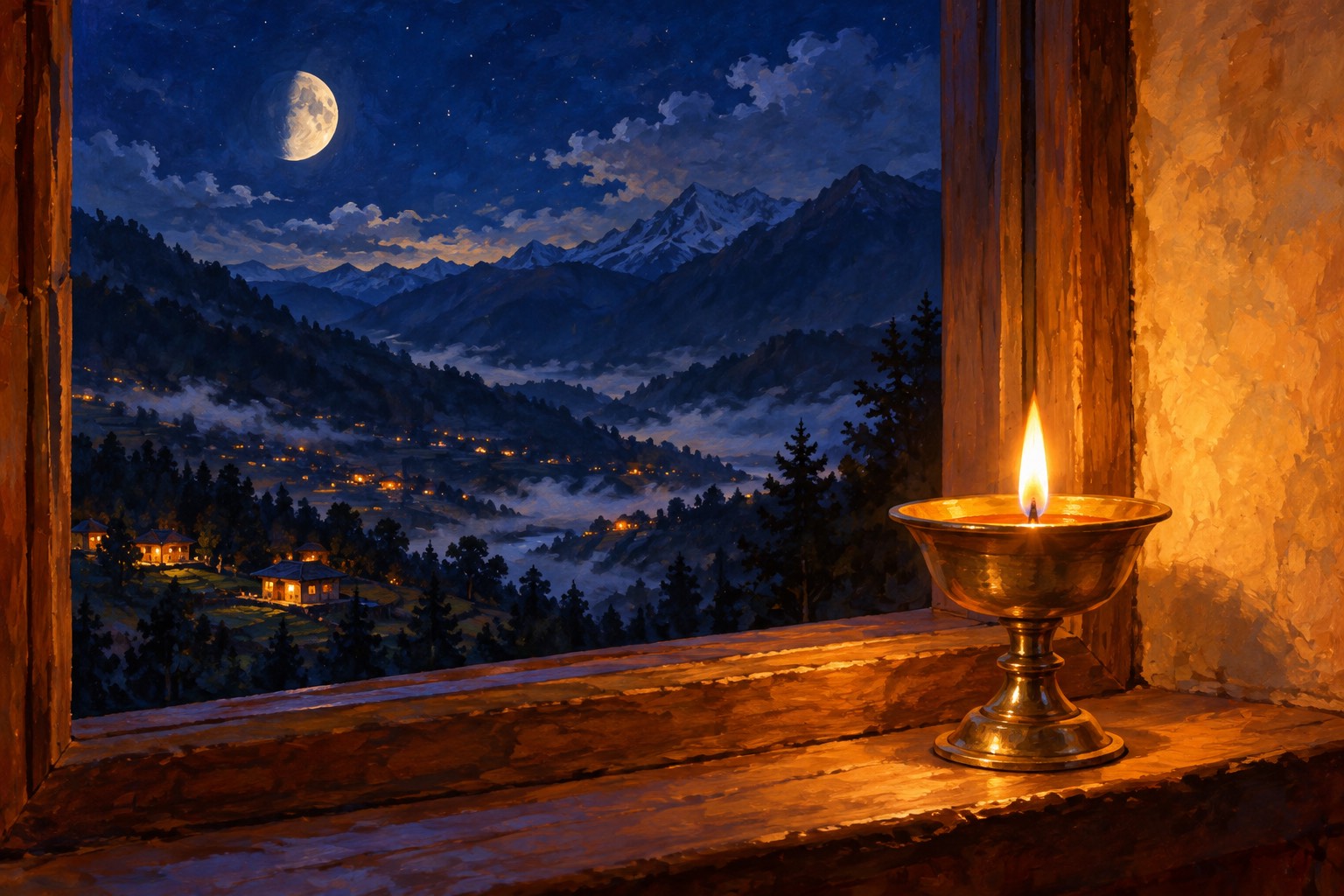
On an ordinary tenth day, little looks unusual from outside. At a home shrine a few more butter lamps are lit than usual. Fresh water and a plate of fruit are set out before a small image of Guru Rinpoche.
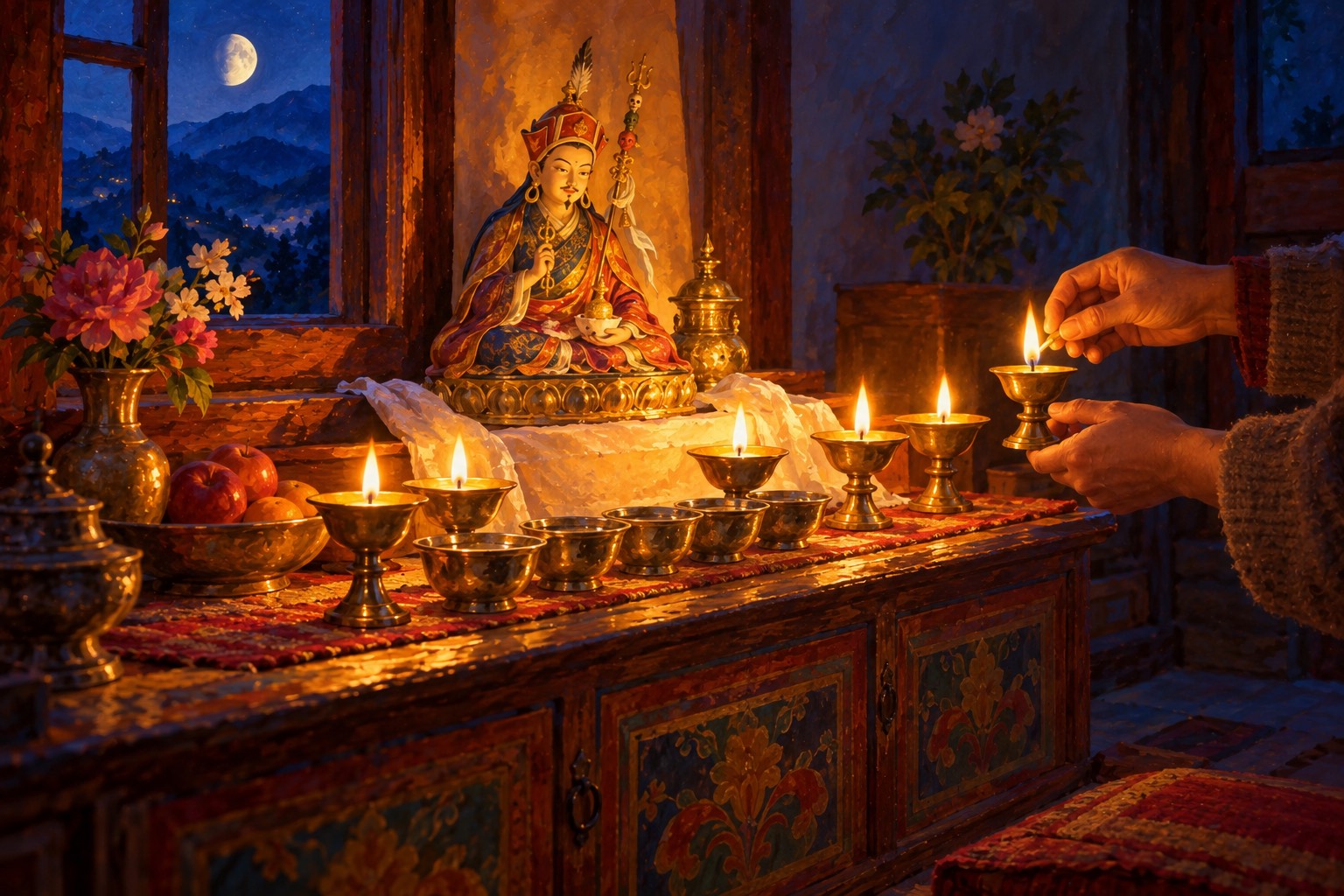
Many people recite the Seven-Line Prayer, the short prayer at the heart of this site, which calls him to come and bless. They follow it with the Vajra Guru mantra, a short chant of his name, which Lotsawa House calls his treasured root mantra. Some count on a mala, a string of 108 prayer beads.
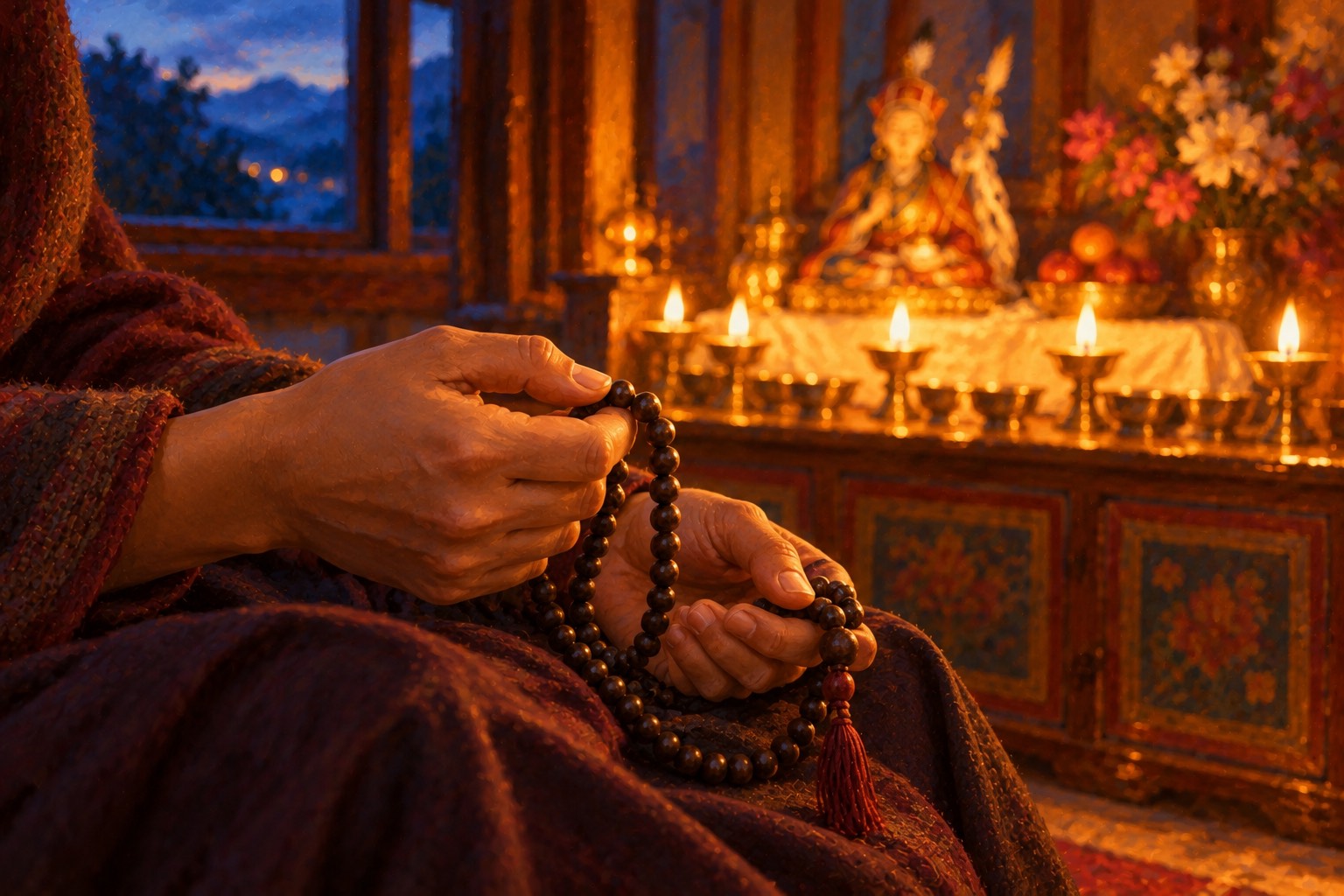
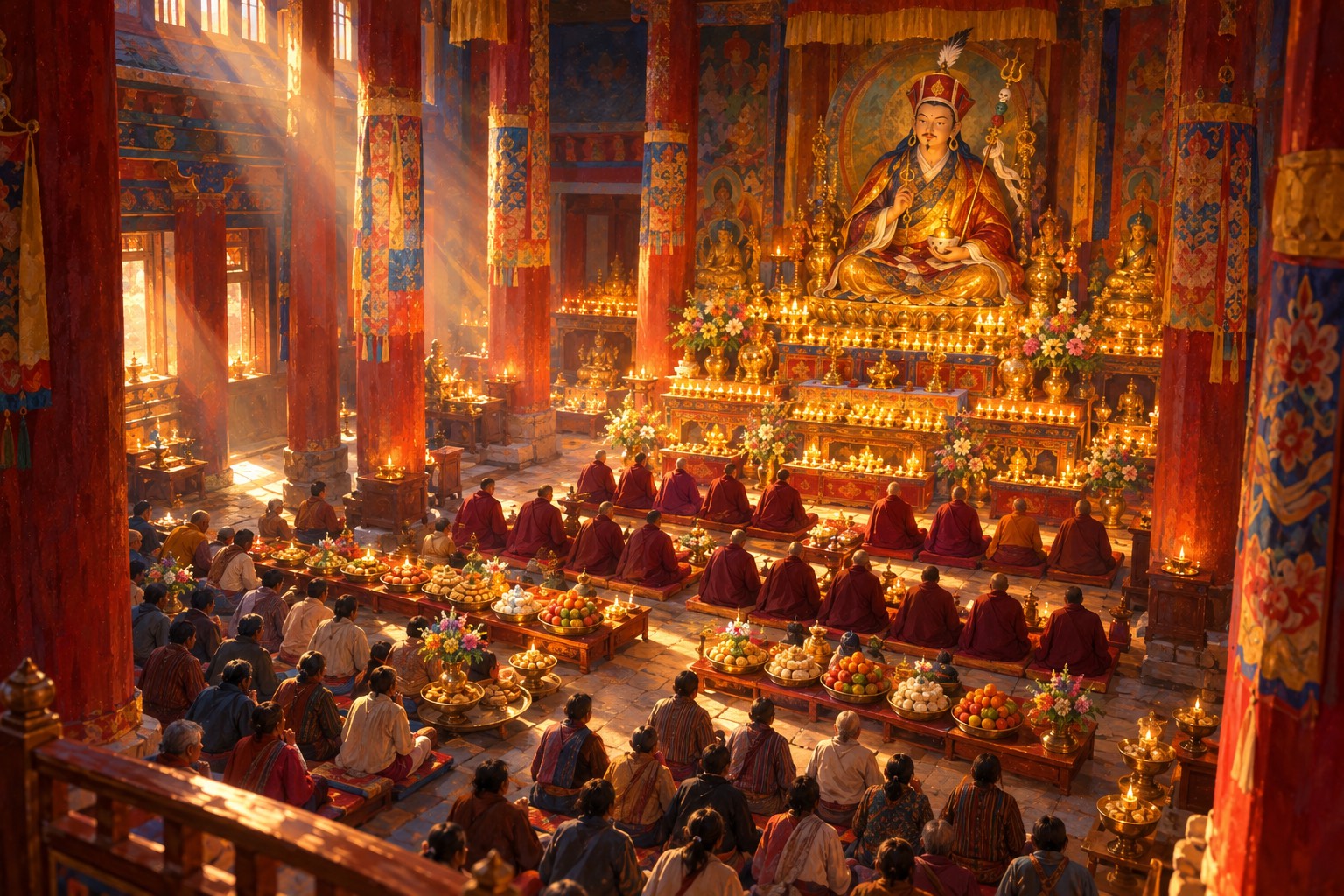
In temples and Dharma centres, people gather. Lotsawa House notes that the most common way to invoke his blessing on the day is a tsok, a feast offering made together. Gönpo Tseten Rinpoche adds plain goodness to the list: helping the poor, caring for animals, and harming no one.
Anything beyond reciting the prayer and the mantra is learned from a qualified teacher, and the tradition is clear about that.
The Tshechus of Bhutan
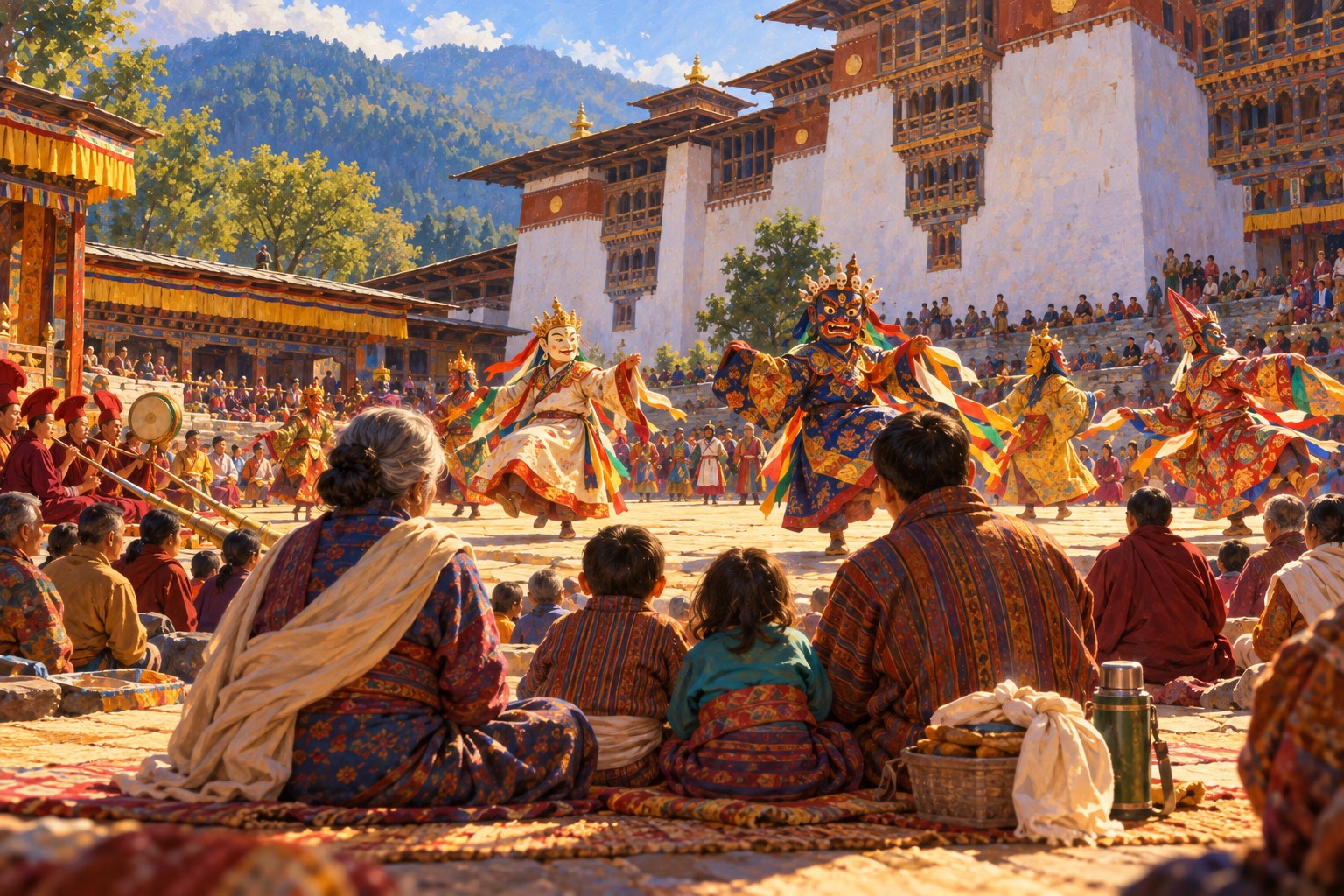
In Bhutan the tenth day has grown into great festivals. Bhutan's official tourism site explains that the word means "tenth," and that Guru Rinpoche promised to return on the tenth day of each month. Many districts hold a Tshechu at their dzong, a fortress that is also a monastery, often over several days, and people come from all around to celebrate together.
At the heart of each festival are masked dances, including the dance of his eight manifestations. They are described in "The Eight Names of Guru Rinpoche," so here it is enough to picture families gathered on the ground, watching his story danced.
The banner before dawn
On the last day of many Tshechus comes the moment people wait all year for. In the dark, around three in the morning, monks carry a great rolled banner out of the dzong in procession. Himalayan Art Resources describes this at Paro, on the festival's last day, the fifteenth of the second Bhutanese month.
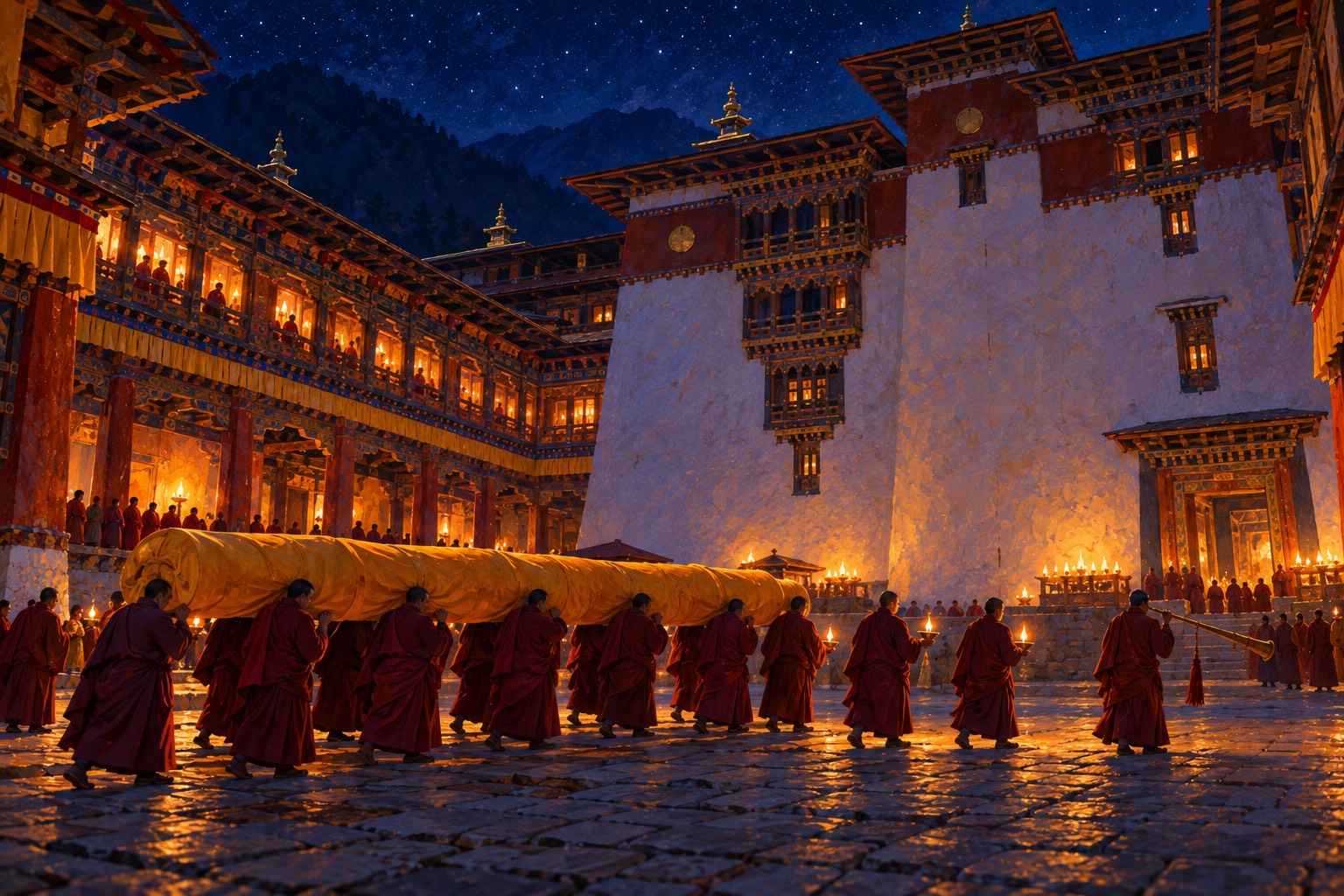
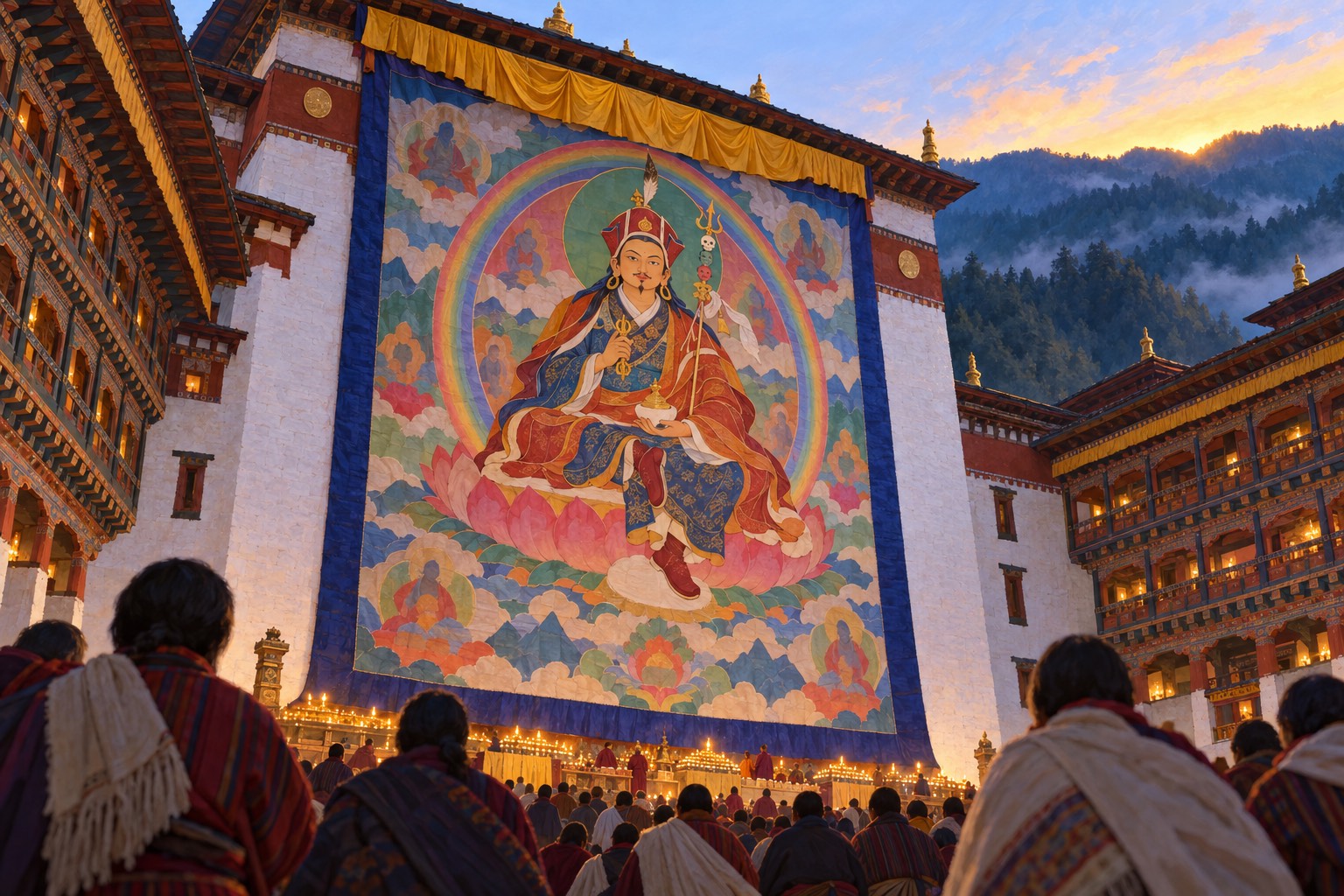
The banner is a thongdrel, an enormous image sewn from layers of silk appliqué. Himalayan Art Resources glosses the name as "liberation on sight." Usually it shows Guru Rinpoche seated at the centre among holy beings. Paro's shows him flanked by Mandarava and Yeshe Tsogyal, with his eight manifestations at the far edges.
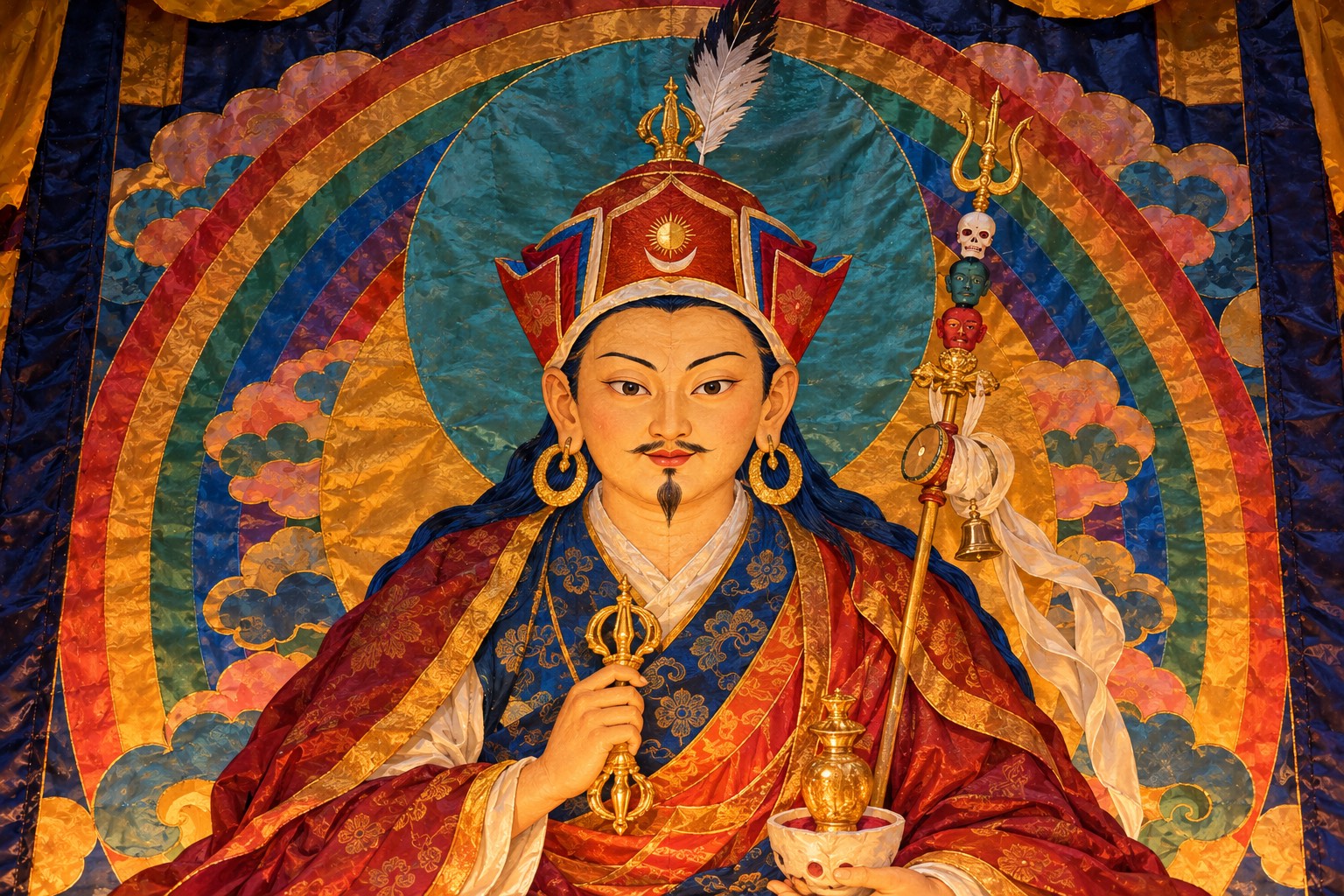
It hangs for only a few hours and is rolled up again by about half past seven, so that direct sunlight never touches it. Each is shown once a year, and not every district has one. People come forward in the early light to see it, and it is said that seeing it cleanses the viewer of negative karma, the results of past harmful actions.
So the tenth day reaches from a single lamp in a quiet room to a silk image the height of a building. Under both lies the same simple thing: someone remembering him, and calling.
About the art
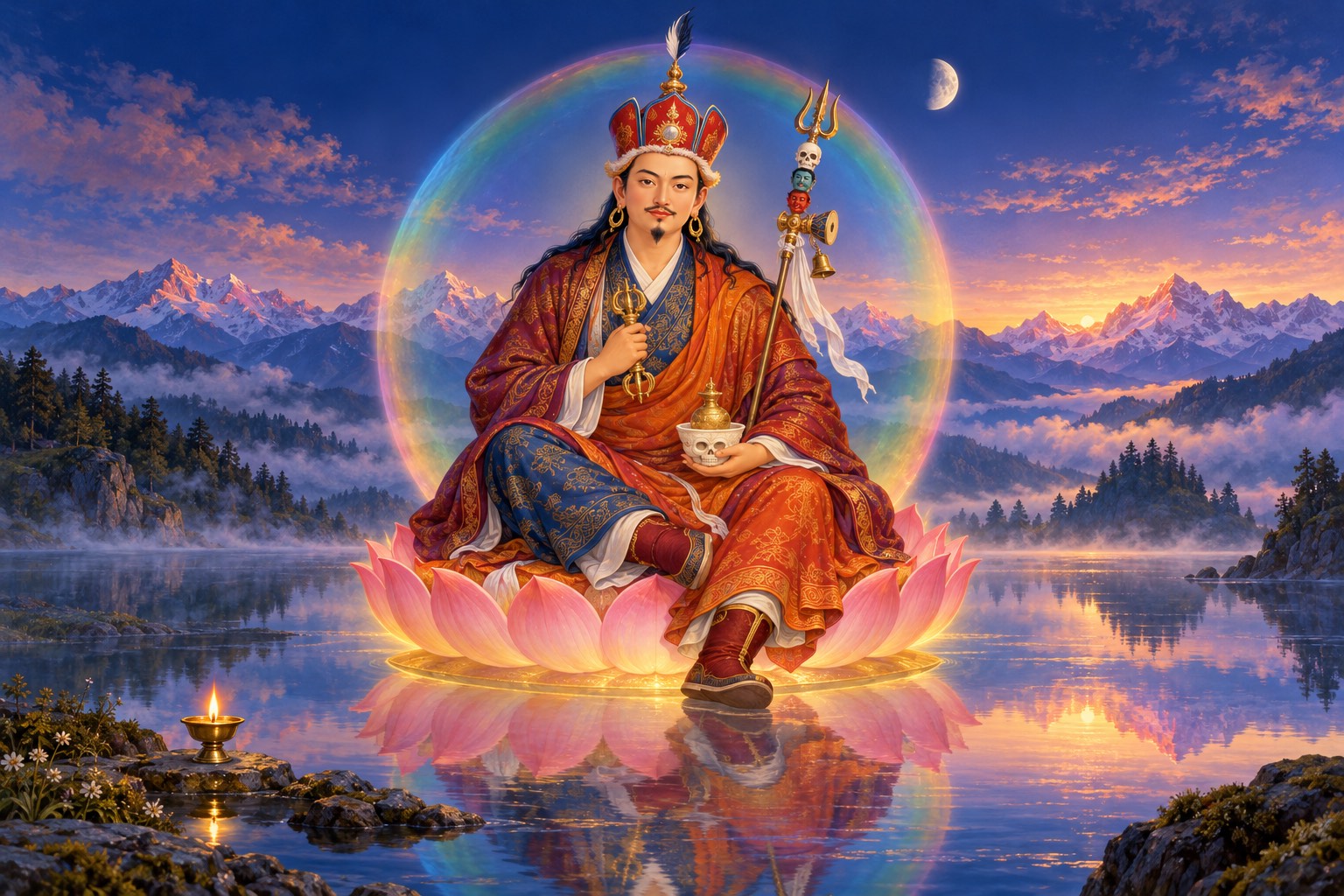
Guru Rinpoche appears on this page in his main form only: the five-petalled lotus hat with a half-vajra and a single feather, a golden five-pronged vajra at his heart, a white skull cup with a small long-life vase in his lap, and the slender staff (khatvanga) resting in the crook of his left arm. In the two deed scenes he keeps this form, small in the frame, so that the moment, not a new costume, carries the story. The rainbow sphere around him is the traditional sign of an enlightened presence.
The thongdrel images show him as stitched silk rather than paint, because that is what a thongdrel is: an appliqué of many layered pieces of silk, sewn and outlined, kept rolled under a yellow silk drape and shown once a year before the sun can reach it. The real banners also carry many other figures; here they are left soft and indistinct so that he stays central and nothing on the silk can be mistaken for writing.
The butter lamps are Tibetan and Himalayan chalice lamps, a wide shallow bowl on a slender stem, each with a single upright flame. The mala has 108 beads and a larger guru bead. The twelve lamps in a ring are an illustration of the twelve months, not a ritual arrangement. The masked dancers are shown only at a distance and with masks on, and present-day people never show their faces.
Why this matters for practice
The last line of the Seven-Line Prayer asks Guru Rinpoche to come and bless, and the tenth day is the tradition's answer in the calendar: a day each month on which he is remembered as having promised to come. Knowing the twelve deeds turns the date into a small pilgrimage through his life. And the practice the day asks of most people is simple enough for anyone: light a lamp if you like, call him with the prayer, and do some good.

If something in this story touched you, you need not wait for the next tenth day. You might pause now and recite the prayer once. In the tradition's own telling, calling him is what the day was always for.
Sources and further reading
- The Concise Benefits of the Festival of the Tenth Day, by Dudjom Rinpoche (trans. Rigpa Translations, 2013), Lotsawa House
- Recollecting the Deeds of the Tenth Days, by Mipham Rinpoche (trans. Rigpa Translations), Lotsawa House
- A Bouquet of Uḍumbara Flowers: An Explanation of the Tenth Day, by Gönpo Tseten Rinpoche (trans. Stefan Mang, Samye Translations, 2018), Lotsawa House
- The Nucleus of Blessings: a prayer for the tenth days (attributed to Jamgön Kongtrul; colophon names Chimé Tennyi Yungdrung Lingpa; trans. Rigpa Translations, 2013), Lotsawa House
- The Wish-Fulfilling Tree: The Life Story of the Master of Uḍḍiyāna, revealed by Chokgyur Dechen Lingpa, Lotsawa House
- Introduction to Guru Padmasambhava, by Stefan Mang, Lotsawa House
- Padmasambhava, Rigpa Wiki (Internet Archive snapshot)
- Bhutan: Paro Thongdrol (A. Maki Archive), set 2867, Himalayan Art Resources
- Thongdrel, Wikipedia
- Bhutan's astounding festivals, bhutan.travel (Department of Tourism, Bhutan)
- Dzong architecture, Wikipedia
This retelling is waiting to be read by a knowledgeable practitioner. Where the traditional accounts differ, the story says so; if you notice a mistake, please tell us through Share Your Story.