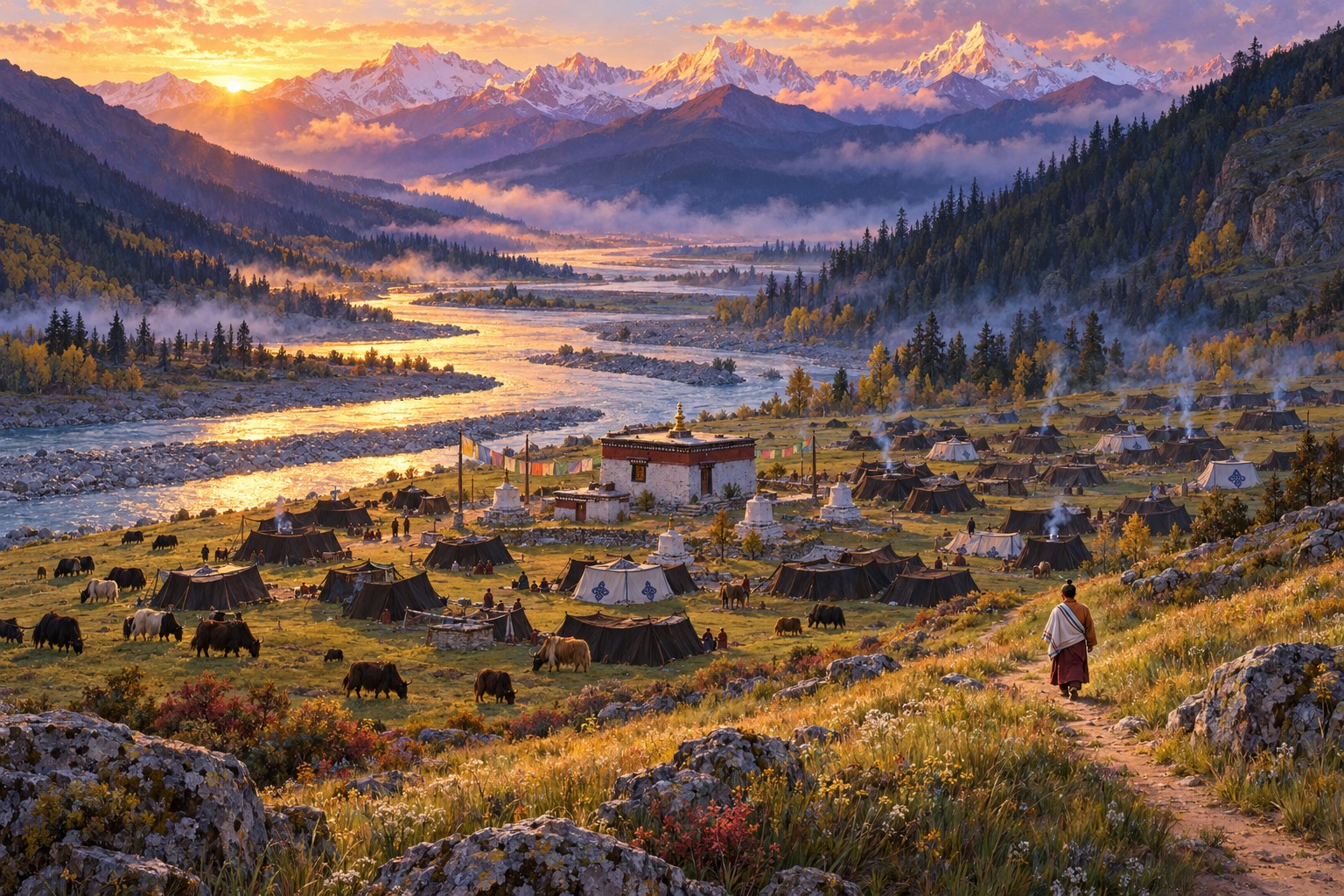
Beside the river
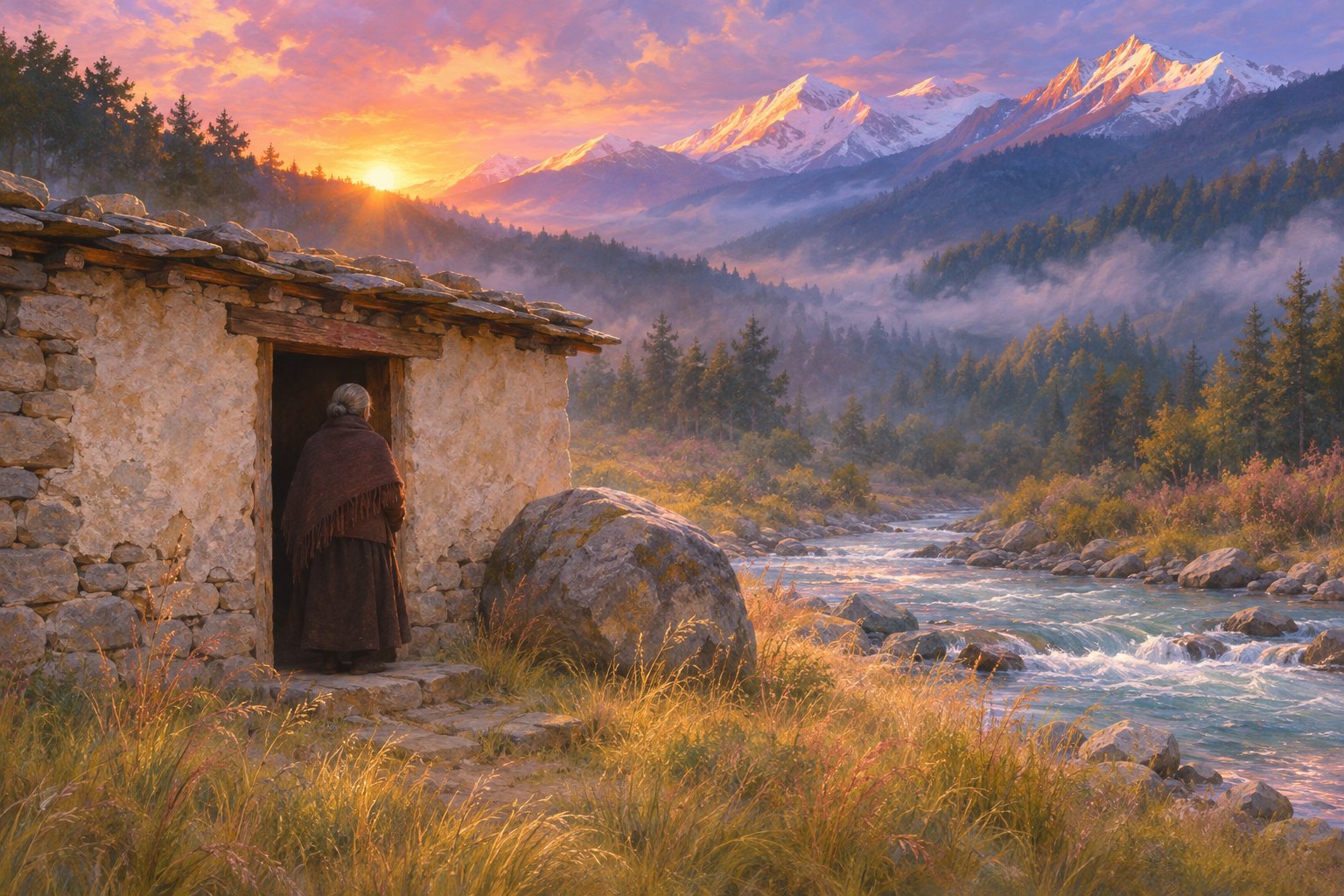
A small dwelling beside a river in eastern Tibet became the home of a woman who had travelled far. Ayu Khandro had crossed mountain country, visited teachers and pilgrimage places, and spent years on the road. Eventually she stayed.
The later record reaches that quiet dwelling through a visitor: the young Namkhai Norbu, who met her in 1951. His notes helped preserve her life story. The hut was small enough to pass without much notice. The life remembered within it was larger than an unfamiliar traveller could have guessed.
The aunt’s cave
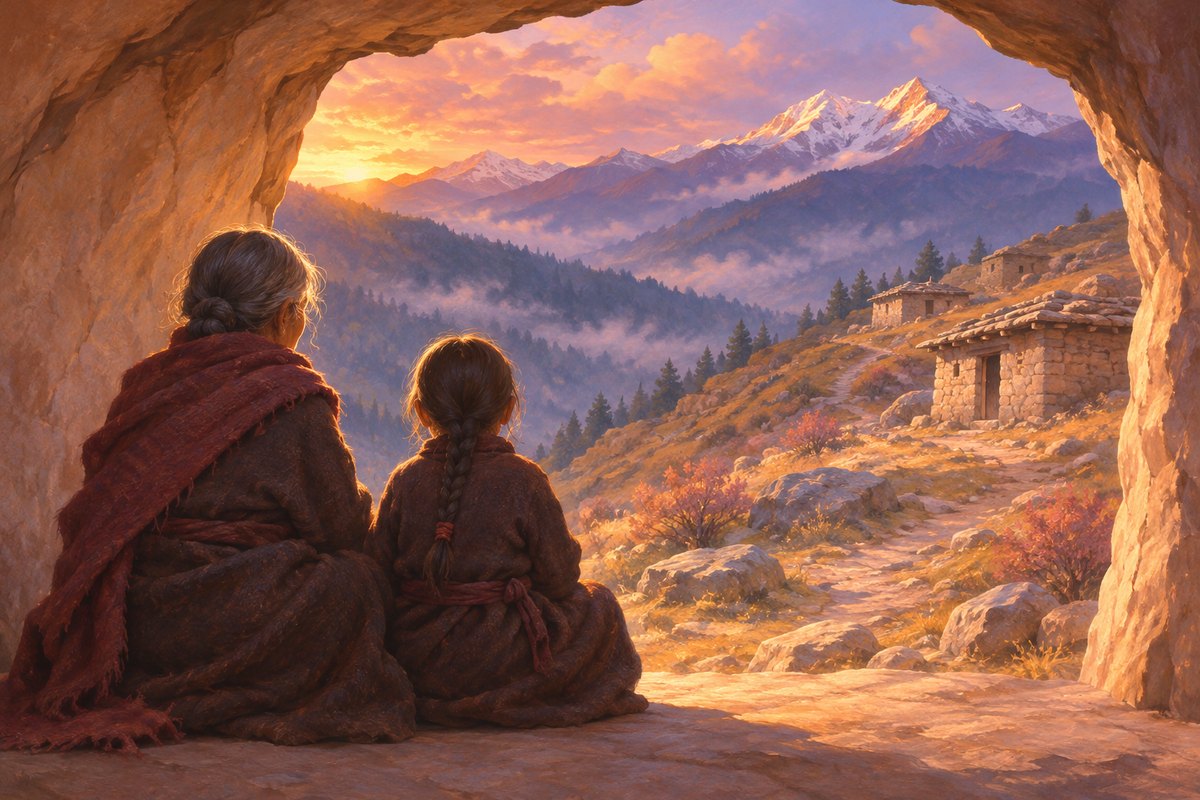
Born in Kham in 1839 according to the chronology followed here, she was known in youth as Dechen Khandro. The community biography remembers the influence of her aunt, a yogini living near the teacher Togden Rangrig. A cave and a teacher’s dwelling were part of her early world.
That beginning matters in a story about a woman later known for solitary retreat. She did not emerge from solitude without relationships. An older woman’s example helped make a life of practice imaginable. Before Ayu Khandro’s own long journeys, there was someone nearby whose way of living she could see.
Learning to receive
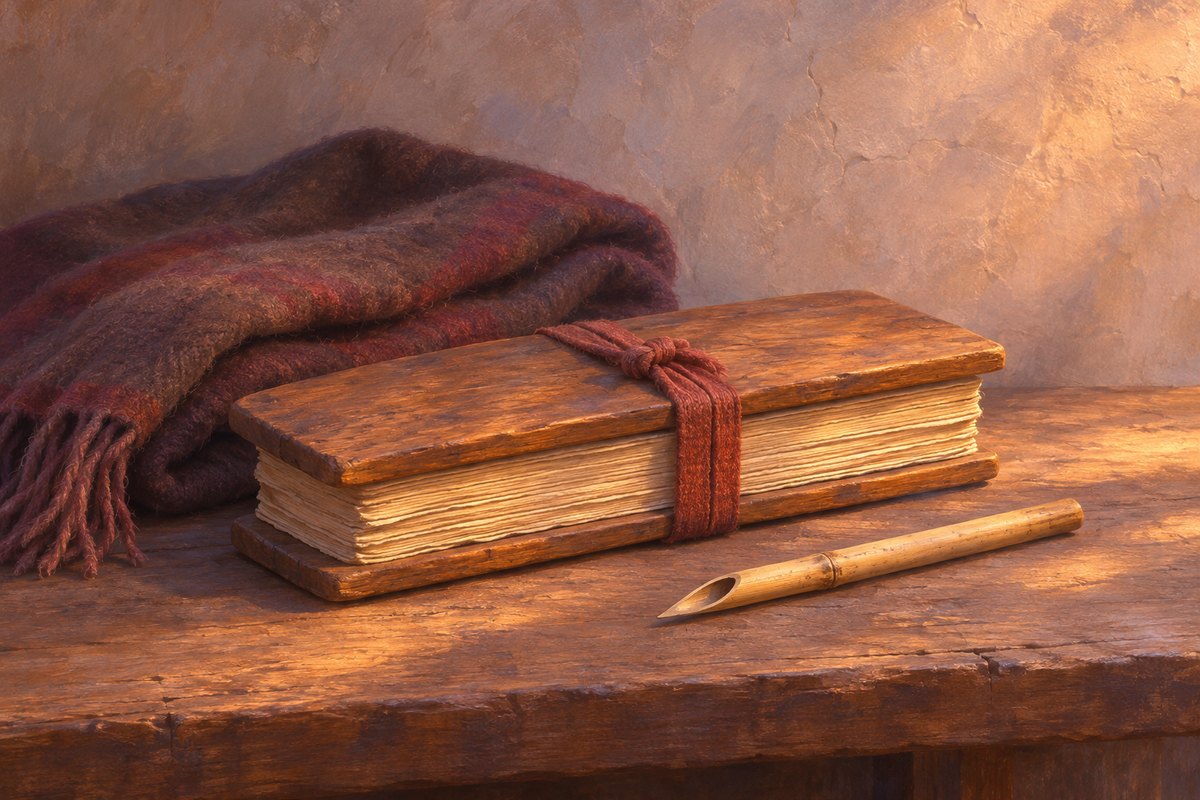
She learned to read and write and encountered the great teachers associated with the nineteenth-century renewal of Tibetan Buddhism. The records connect her with Jamyang Khyentse Wangpo, Jamgön Kongtrul and Chokgyur Lingpa, and later with Nyala Pema Dündul and Adzom Drukpa.
Her life belongs within the Nyingma tradition and a wider network of exchange between teachers. The picture of a book and a young listener represents learning without pretending to reconstruct a particular lesson. A remembered master was once someone who needed to receive, ask, listen and begin again.
Women on the road
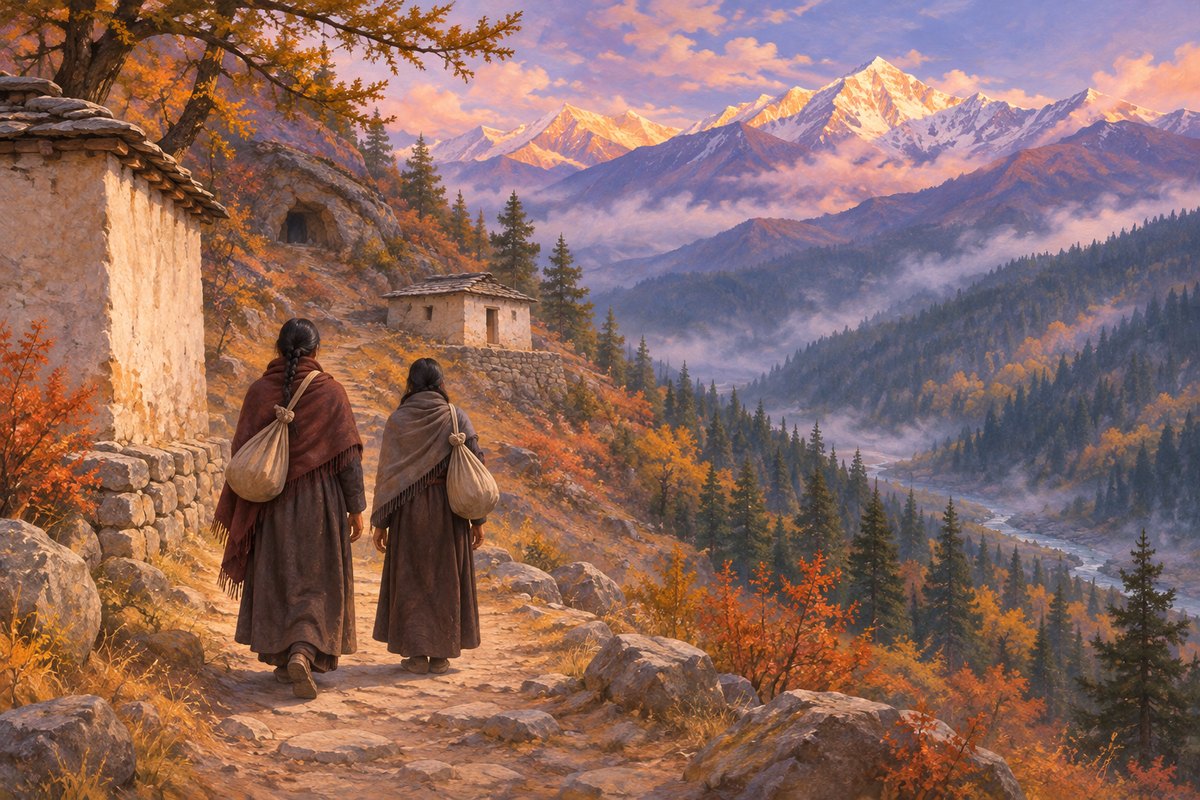
A marriage interrupted the direction she wished to follow. The account says that her husband eventually agreed to their separation and later supported her retreat. After years of practice and the loss of early guides, she began a wandering life.
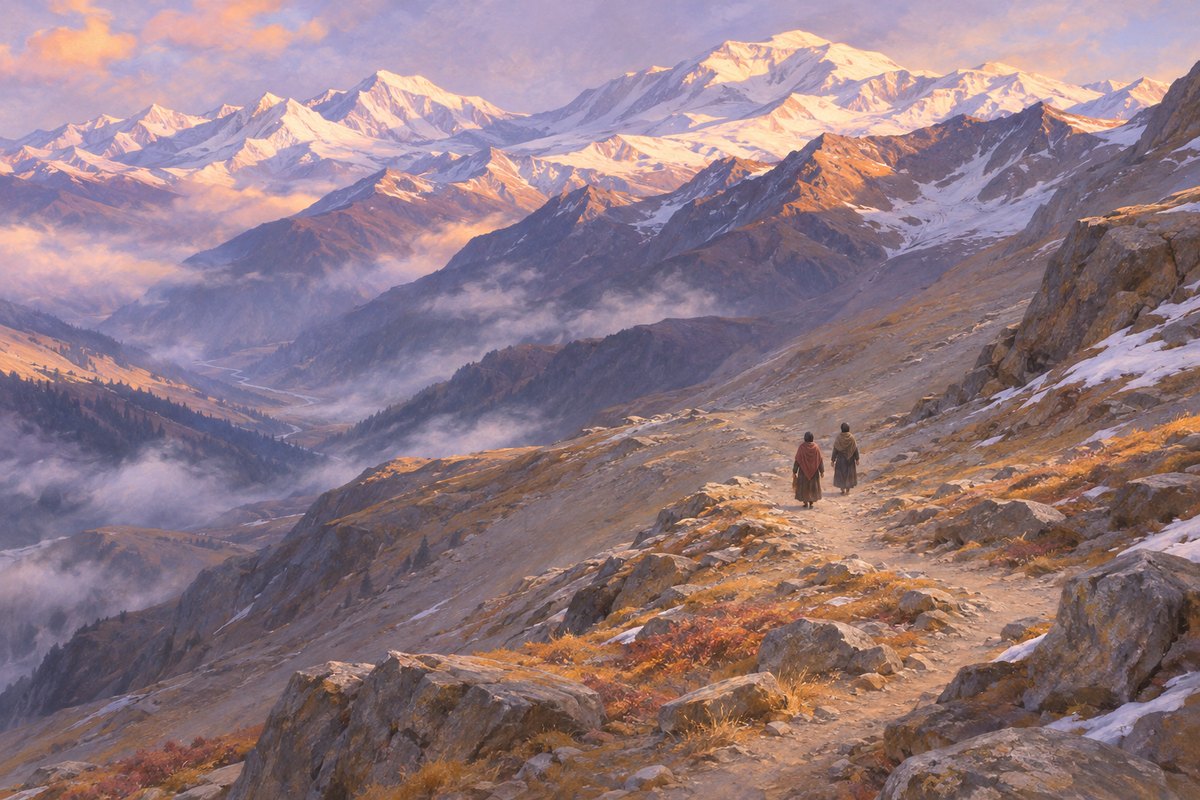
Among her travelling companions was Pema Yangkyi, another woman practitioner. Their companionship keeps the journeys from becoming a tale of an entirely solitary heroine. Roads are crossed with others as well as alone. The small figures in these paintings leave room for the practical scale of travel: a bundle, a path, another person continuing beside you.
Far from home
The biography remembers journeys through central Tibet and into Nepal, including pilgrimage places associated with Guru Rinpoche, and onward toward western Tibet. These were not destinations reached by stepping out of one comfortable room into another. Distance had to be crossed.
For later readers, the names can become a list. For the people travelling, each place required time and another departure. The illustrations do not supply a reconstructed itinerary. They hold the simpler fact that a life of learning could include a long absence from familiar ground, sustained by relationships and the wish to continue.
The place she returned to
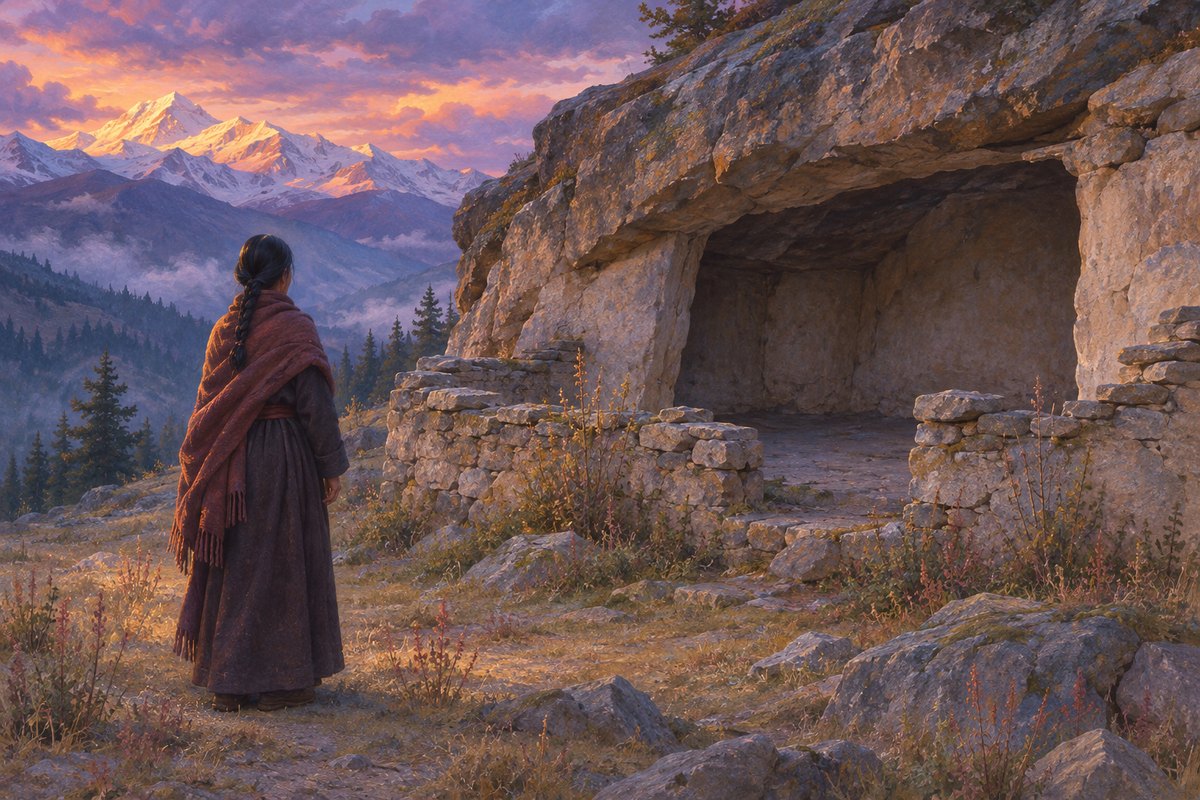
After years away, Ayu Khandro returned to the region of her earlier teachers. The community account remembers finding a former residence abandoned. A person can return to a valley without recovering the world that once filled it.
The shelter in the picture is therefore empty. Its emptiness is an illustration, not a record of an exact building. What the story preserves is a turning: the road did not bring her back to an unchanged beginning. The next part of her life would need a dwelling of its own.
The white bridge
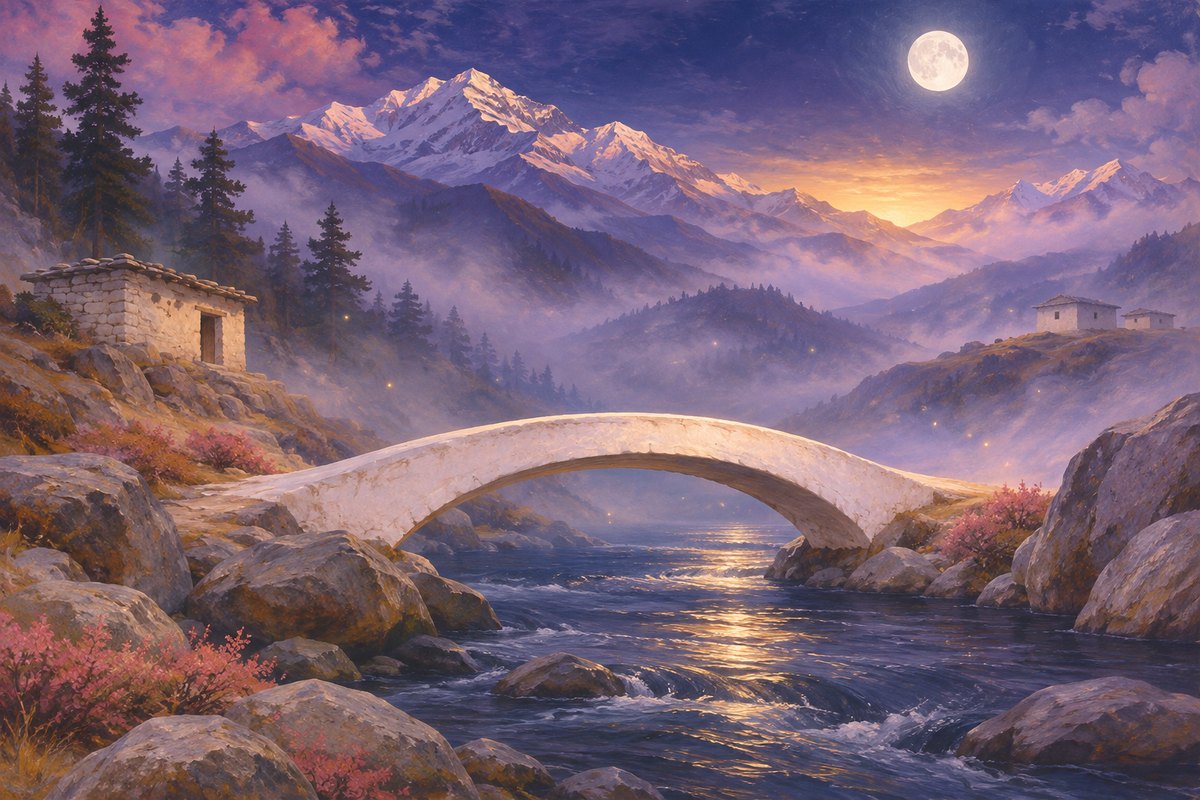
The traditional account places a striking dream at that turning. Across a river stood a distinctive rock. A dream of a white bridge is remembered in connection with her reaching the place where she would settle.
This belongs to the dream testimony of the lineage, rather than an independently verified account of a bridge appearing in the landscape. The pale bridge in the painting is explicitly symbolic. It gives the dream a place in the telling while leaving its nature clear. What follows in the remembered life is concrete: a small dwelling, support to build it, and many years spent there.
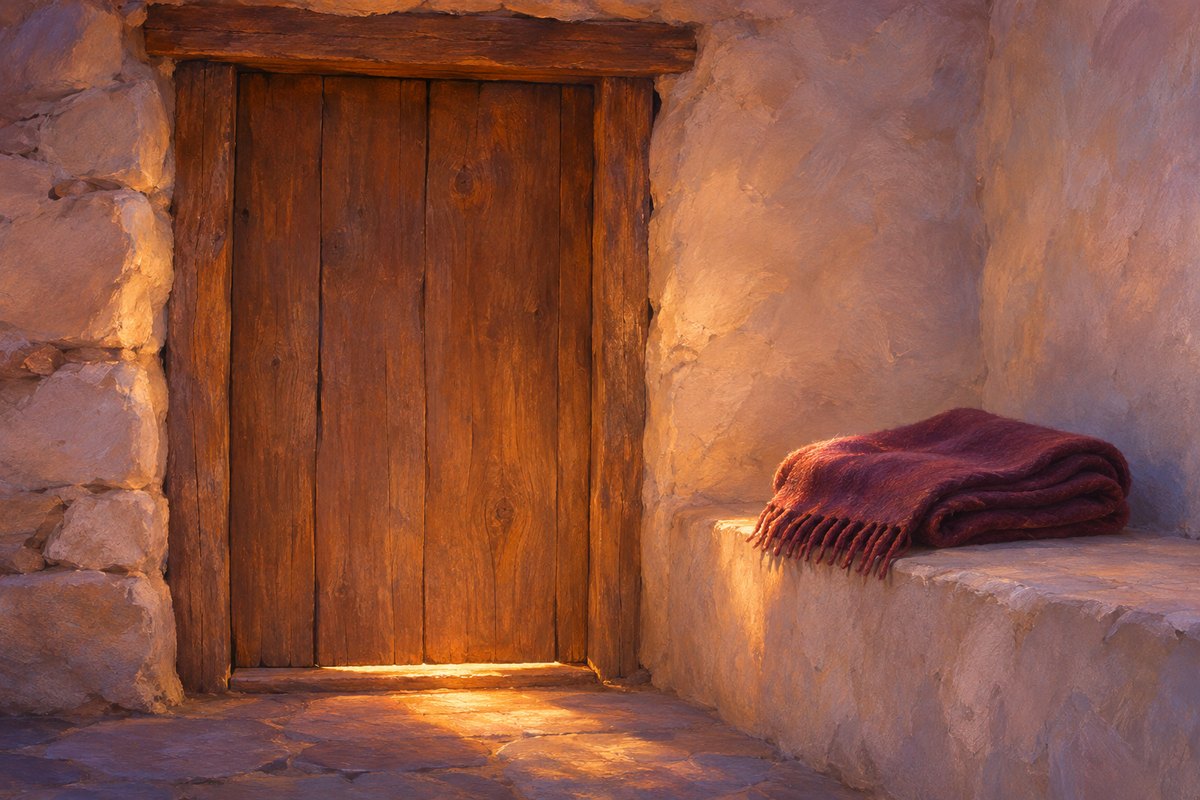
A door and many years
Her former husband helped provide the cabin. The biography describes a long period of retreat there, with few departures. The outer story grows quiet: the same river, the same shelter, seasons passing around a door.
No private method needs to be reconstructed to recognize the duration of that commitment. Nor does the story assign such a life to every reader. It remembers this woman’s circumstances and the support that made her dwelling possible. Even a solitary retreat stands within a web of help, generosity and earlier teaching.
The visitor in 1951
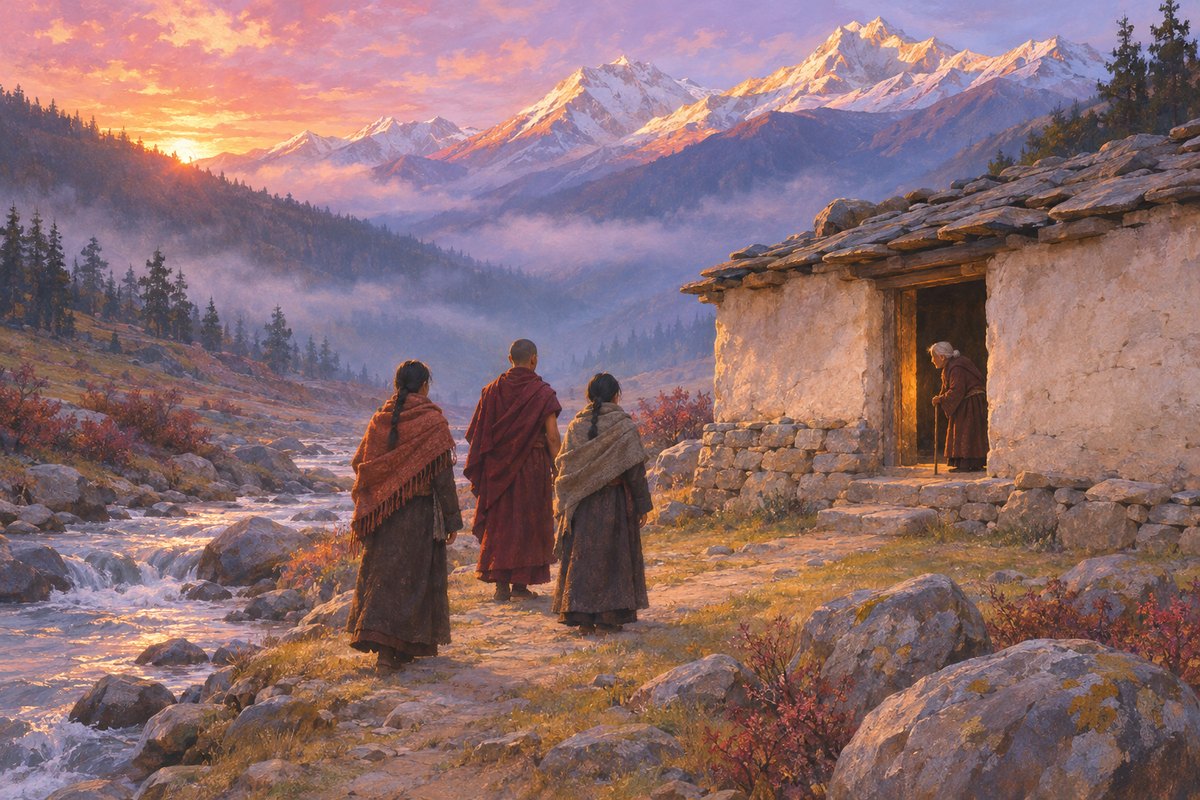
Merigar’s account confirms Namkhai Norbu’s visit in 1951 and the biographical notes he preserved. The community’s published recollection describes the young visitor arriving with family members and remaining to receive teachings.
The illustration keeps them distant and anonymous. It claims neither a recovered portrait nor the appearance of the actual room. A younger generation had reached the doorway. A life that might have remained known chiefly to a few people nearby could now be recorded and carried to readers far beyond that river.
What travelled onward
Ayu Khandro died in 1953. Accounts differ over the arithmetic of her very long life; this telling uses the dates 1839–1953 without turning reported ages into certainty. Her remembered teachers, journeys and relationship with Namkhai Norbu remain central.
The Seven-Line Prayer expresses the wish to follow Guru Rinpoche. Her story offers a setting in which to consider that wish through receiving guidance, perseverance and gratitude for support. It does not invent an occasion when she recited the prayer. The river hut remained in one place. The record of the life lived there travelled onward.
About the art
AI-painted illustrations use anonymous figures and atmospheric settings, not authenticated portraits or exact architectural reconstructions. Recent historical figures remain distant silhouettes.
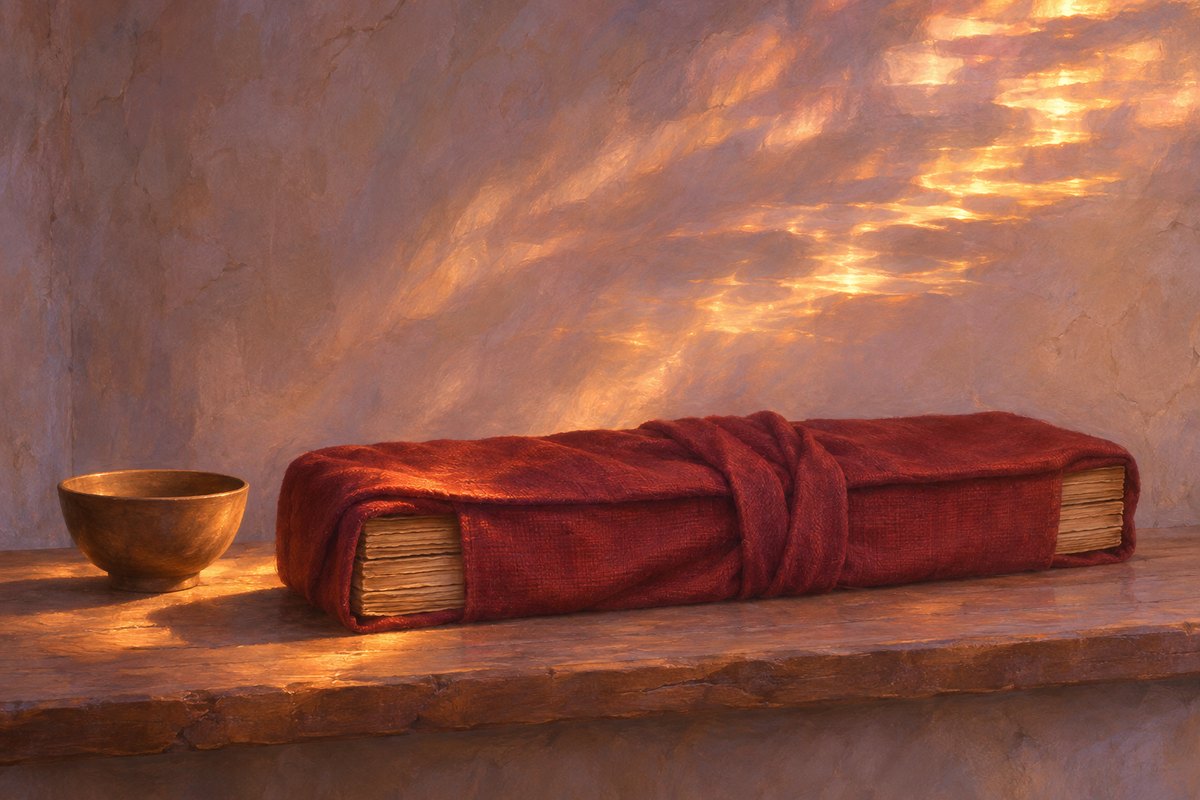
Objects and landscapes illustrate the narrative. The white dream bridge is symbolic; no visionary deity appearance or private practice sequence is reconstructed. Pecha volumes carry no invented legible scripture.
Why this matters for practice
The Seven-Line Prayer expresses the wish to follow Guru Rinpoche. This Nyingma lineage story offers a setting for considering guidance, gratitude and transmission. The connection is thematic, not an invented recitation episode.

If something in this story moved you, you might pause and recite the Seven-Line Prayer once.
Sources and further reading
- The Mirror — Khandro Dorje Paldrön, The Mirror
- Merigar — Namkhai Norbu timeline, Merigar
- Treasury of Lives — Ayu Khandro, Treasury of Lives
- The Mirror 52 — The Story of Ayu Khandro, The Mirror 52
This retelling is waiting to be read by a knowledgeable practitioner. Where the traditional accounts differ, the story says so; if you notice a mistake, please tell us through Share Your Story.