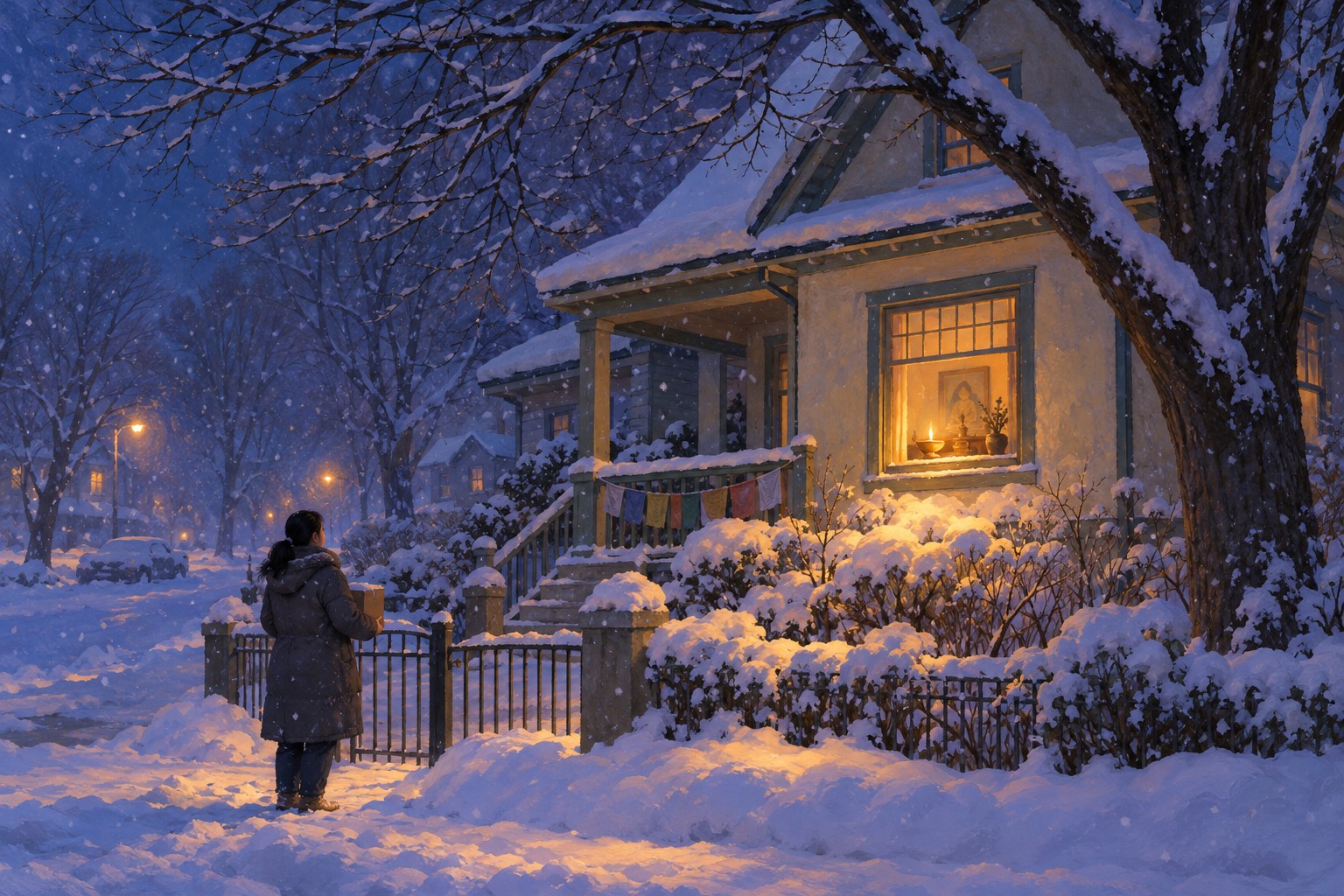
This is an original story, written for this site. It is fiction, not a teaching or a traditional account.
Once a month, on the tenth day of the Tibetan calendar, Sonam's grandmother went to Pharping. She had done it for as long as he could remember, and for most of that time he had paid it about as much attention as the weather.
The tenth day of each lunar month is Guru Rinpoche's day. Guru Rinpoche, the "Precious Teacher", is the eighth-century master Tibetans remember for helping to establish Buddhism in their country. Many of the great events of his life are said to have fallen on a tenth day, so on that day people who love him light lamps, make offerings and say his prayers.
Pharping is a small town on the southern rim of the Kathmandu valley. Above it are two caves where, the traditional accounts say, he once stayed in retreat. Tibetans often call the whole place Yangleshö.
A twisted ankle
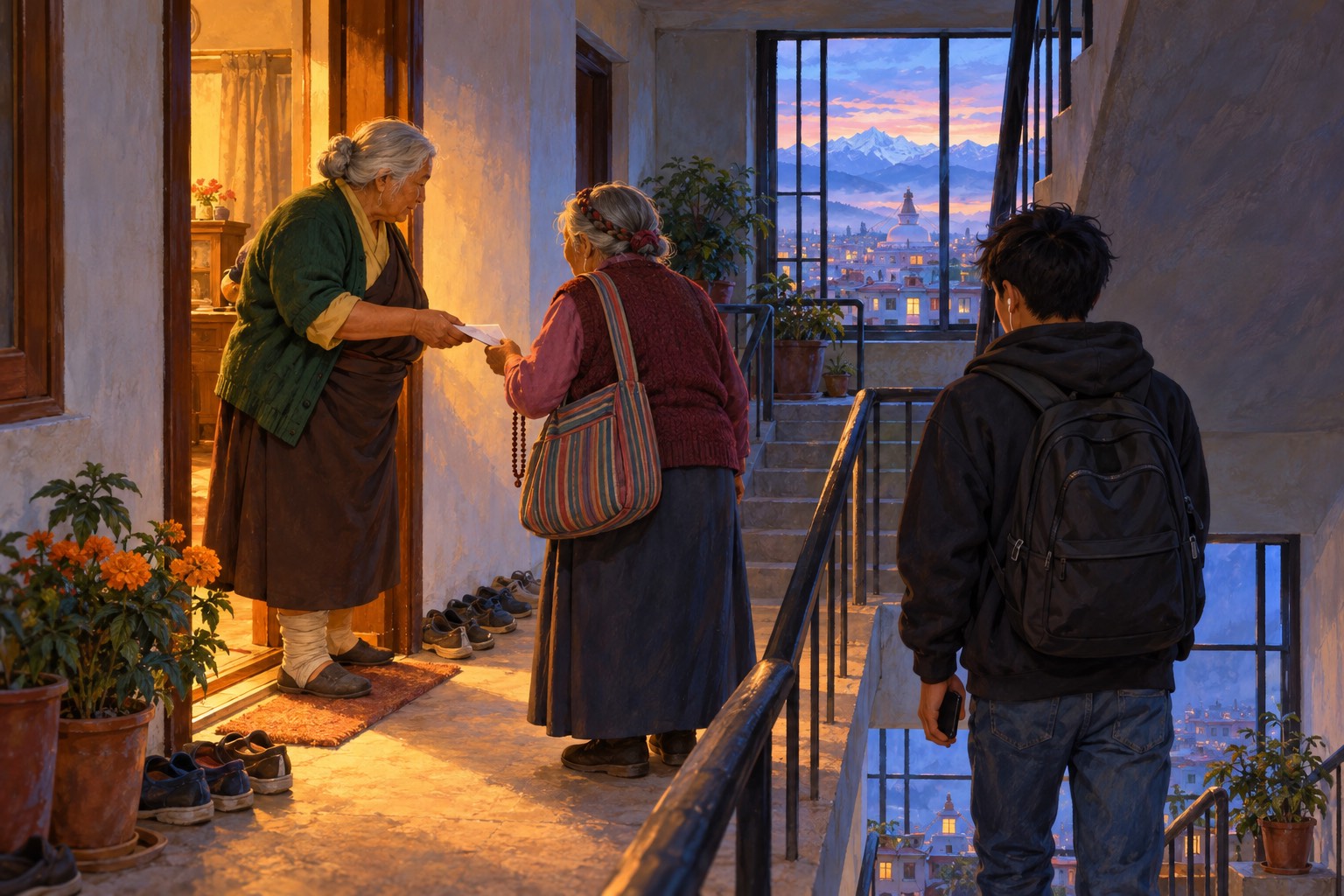
Mola, as Sonam called her, using the Tibetan word for grandmother, always went with Dolkar from the floor below. The two of them had come across the mountains as young women, a few years apart, and had been gently arguing about everything ever since.
This month Dolkar slipped on the wet stairs and twisted her ankle. Sonam's parents both worked. So on the evening before the tenth day Mola stood in his doorway and waited until he took one earbud out.
"Tomorrow," she said. "Only the lower cave. My knees won't do the upper one."
He was twenty, in his second year of engineering, with an exam in four days. He said so. She nodded as if that settled it in her favour and went off to wrap the lamps.
They left at six. Downstairs, Dolkar opened her door with her ankle in a crepe bandage and pressed a folded note into Mola's hand. "Five lamps for me," she said. "Good wicks." Then, to Sonam: "Don't let her carry anything."
The Pharping bus
The bus for Pharping left from Ratna Park in the middle of the city, and it left when it was full. They found it among a hundred others by asking, and waited while it filled with sacks of rice, schoolchildren, a man with a crate of eggs on his knees, and several old women carrying the same kind of striped cloth bag as Mola's.
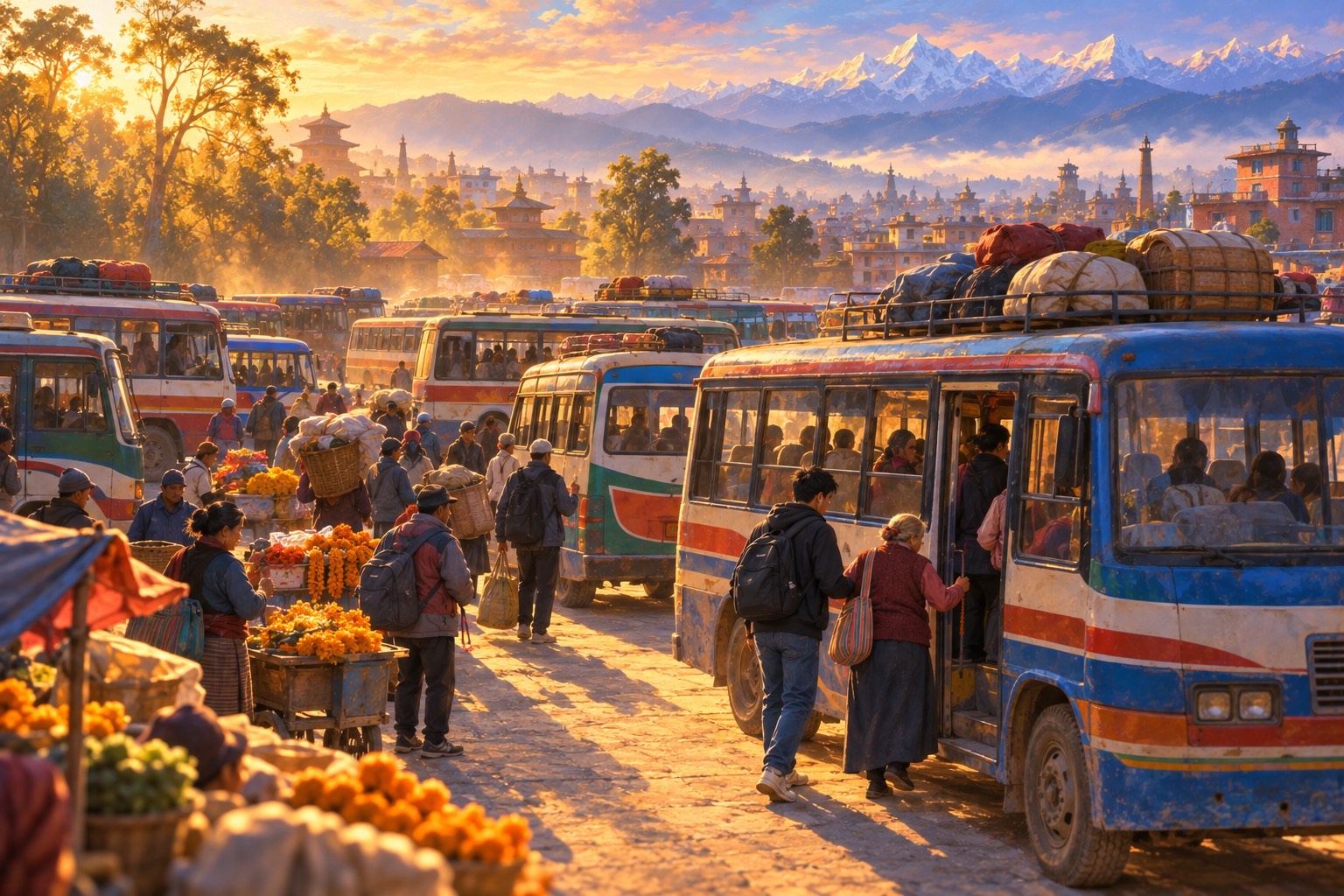
Mola took the window. Sonam took the aisle, his phone, and his notes, photographed page by page. For a while the city went by in horns and dust. Somewhere past the ring road his battery dropped to twenty percent, and he took the earbuds out to save it. That was when he heard her.
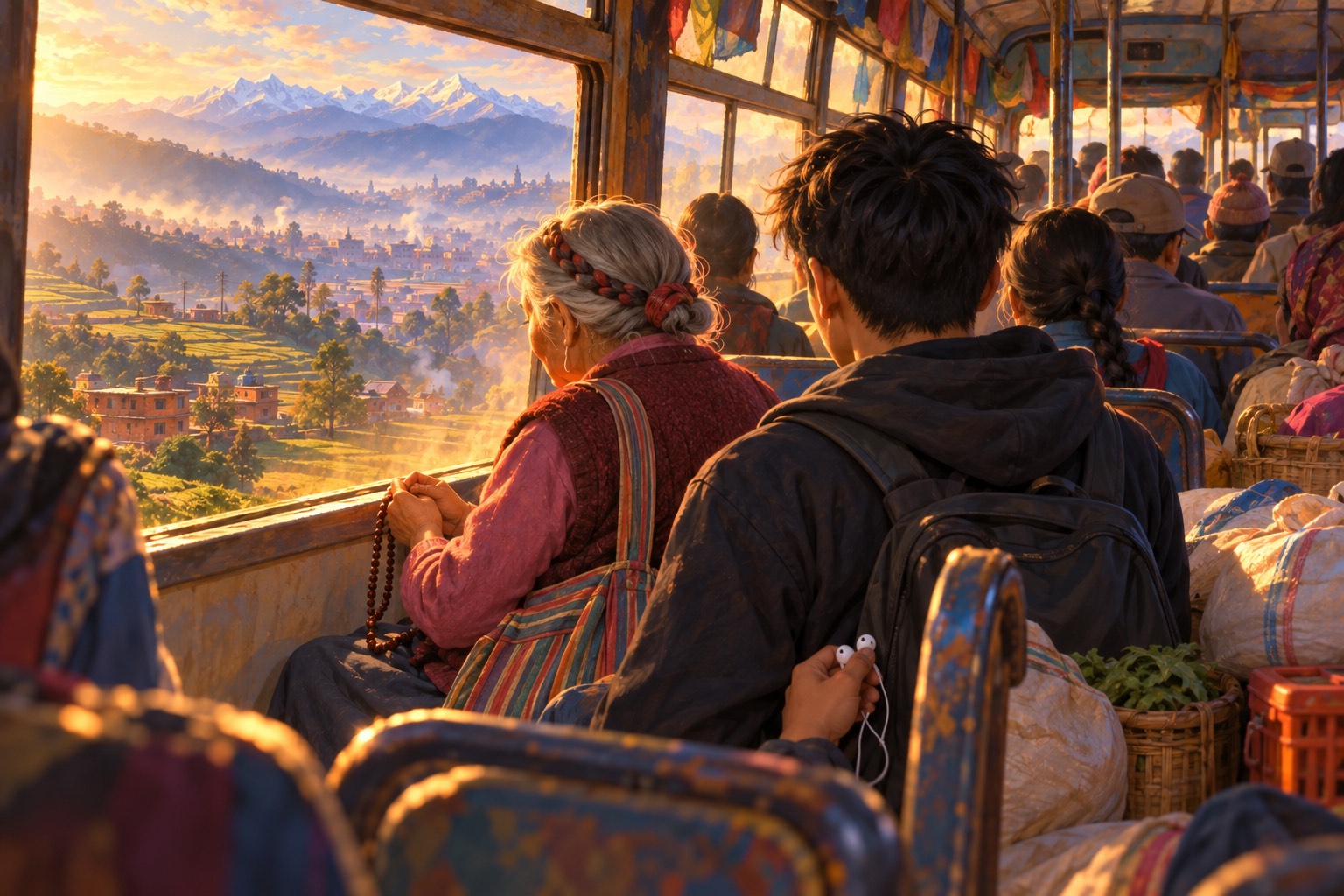
She was saying the Seven-Line Prayer under her breath. It is a short prayer that calls on Guru Rinpoche by remembering where he came from, how he was born and who he was, and then asks him to come and bless. Her lips hardly moved. Her mala, a string of prayer beads, lay on her knee, and her thumb moved one bead at a time.
He had not heard it in years. When he was small she used to say it over him at bedtime, and he fell asleep to it the way you fall asleep to rain on a roof. Then came school, then evening tuition classes, then a phone. Nobody ever told him to stop listening. He simply had.
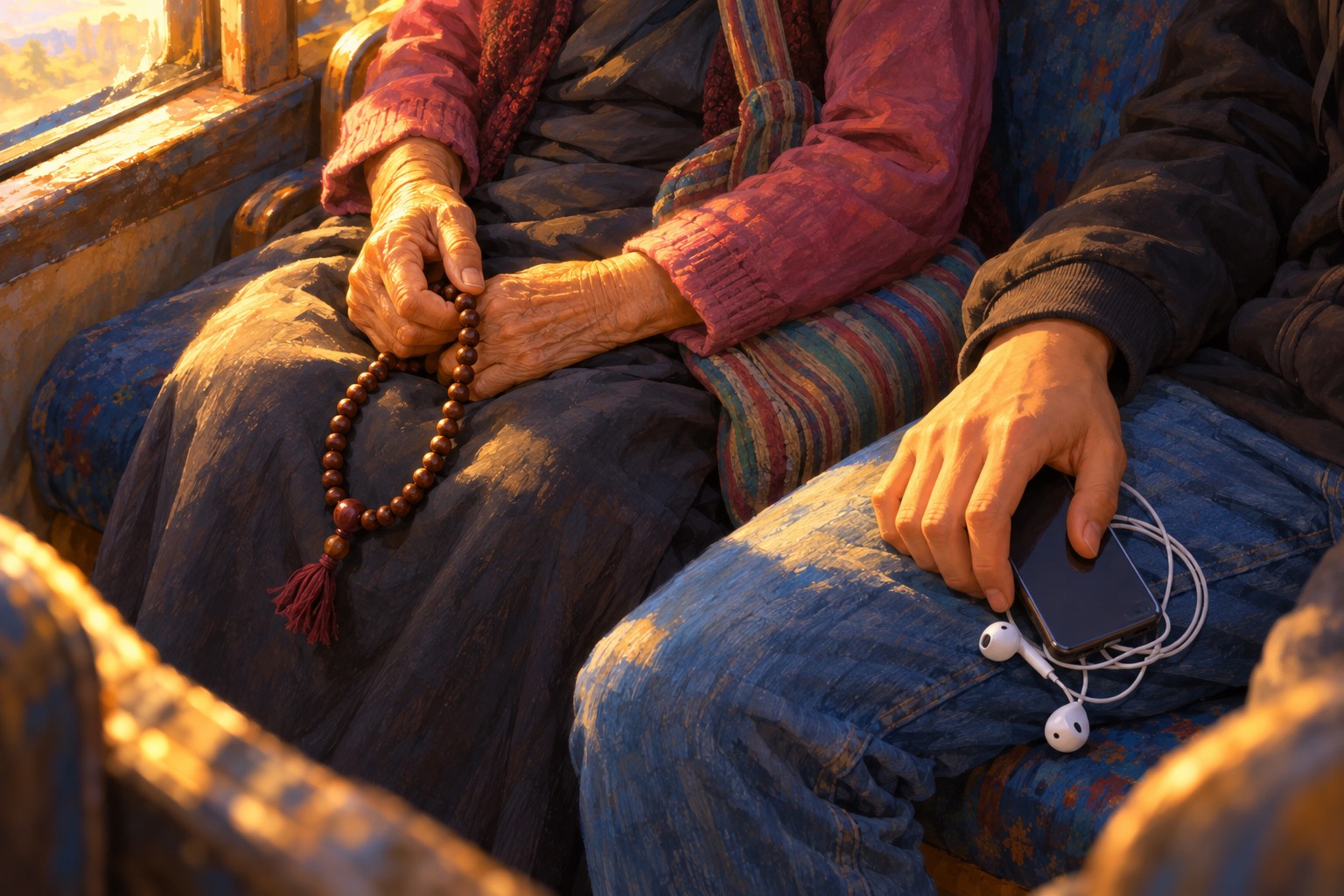
He did not put the earbuds back in. He looked out past her at the window instead, and told himself it was for the view.
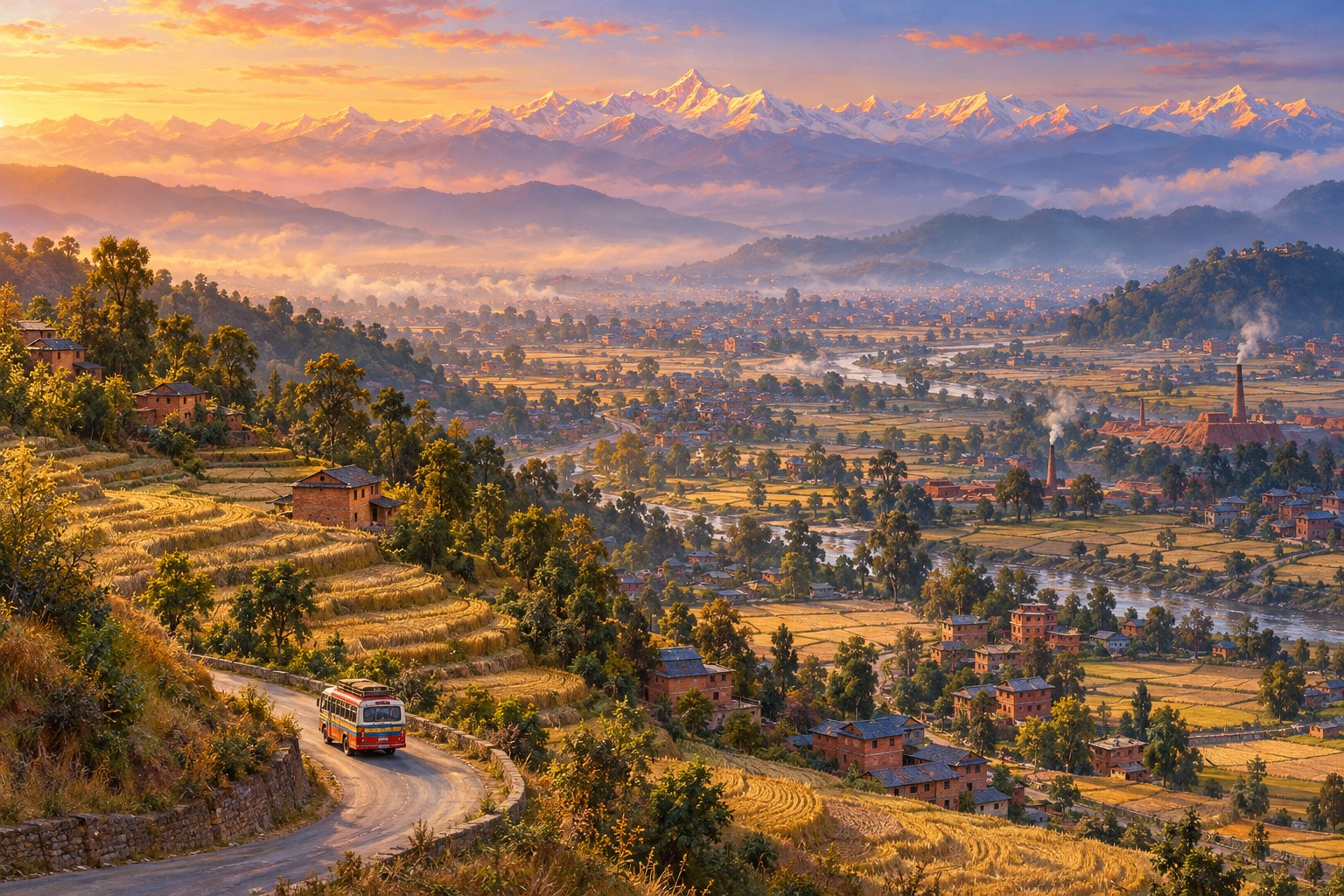
The city thinned into brick kilns, their tall chimneys smoking, and then into fields. The rice had just been cut, and the terraces stepped down the hillsides in rows of pale gold stubble. Once, as the road turned, the haze lifted off a long white line of mountains far to the north, and Mola stopped praying long enough to point.
The steps
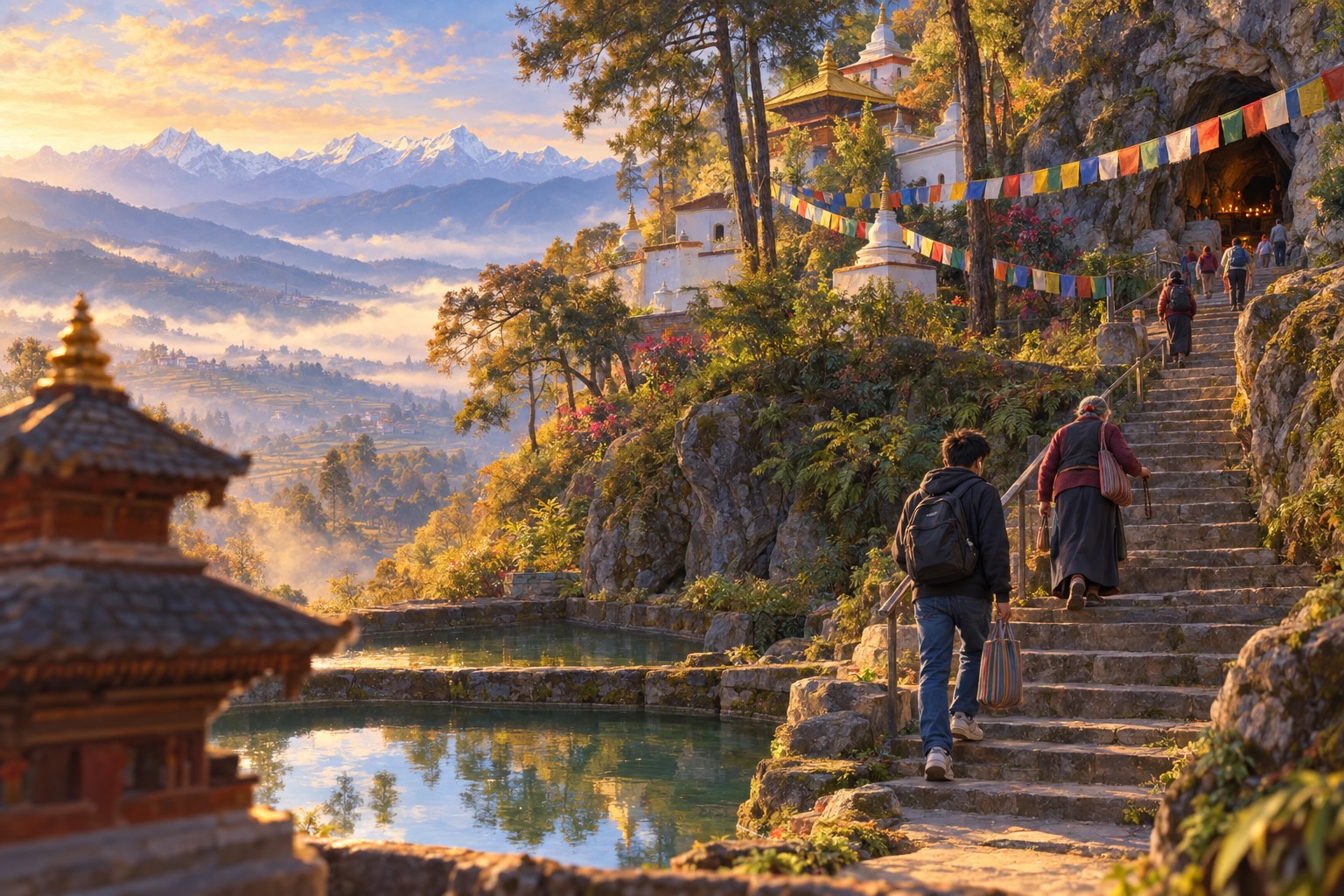
The bus let them down at the football ground at the edge of town, and they walked back along the road, slowly, the way Mola always did. Below the cave, beside the road, lie several large ponds and a shrine to the Hindu god Vishnu, which people there call Shesh Narayan. Fish moved under the green water.
Mola stopped at the edge and watched them for a while. "Every month," she said. "I say hello." Sonam could not tell whether she was joking, and suspected she couldn't either.
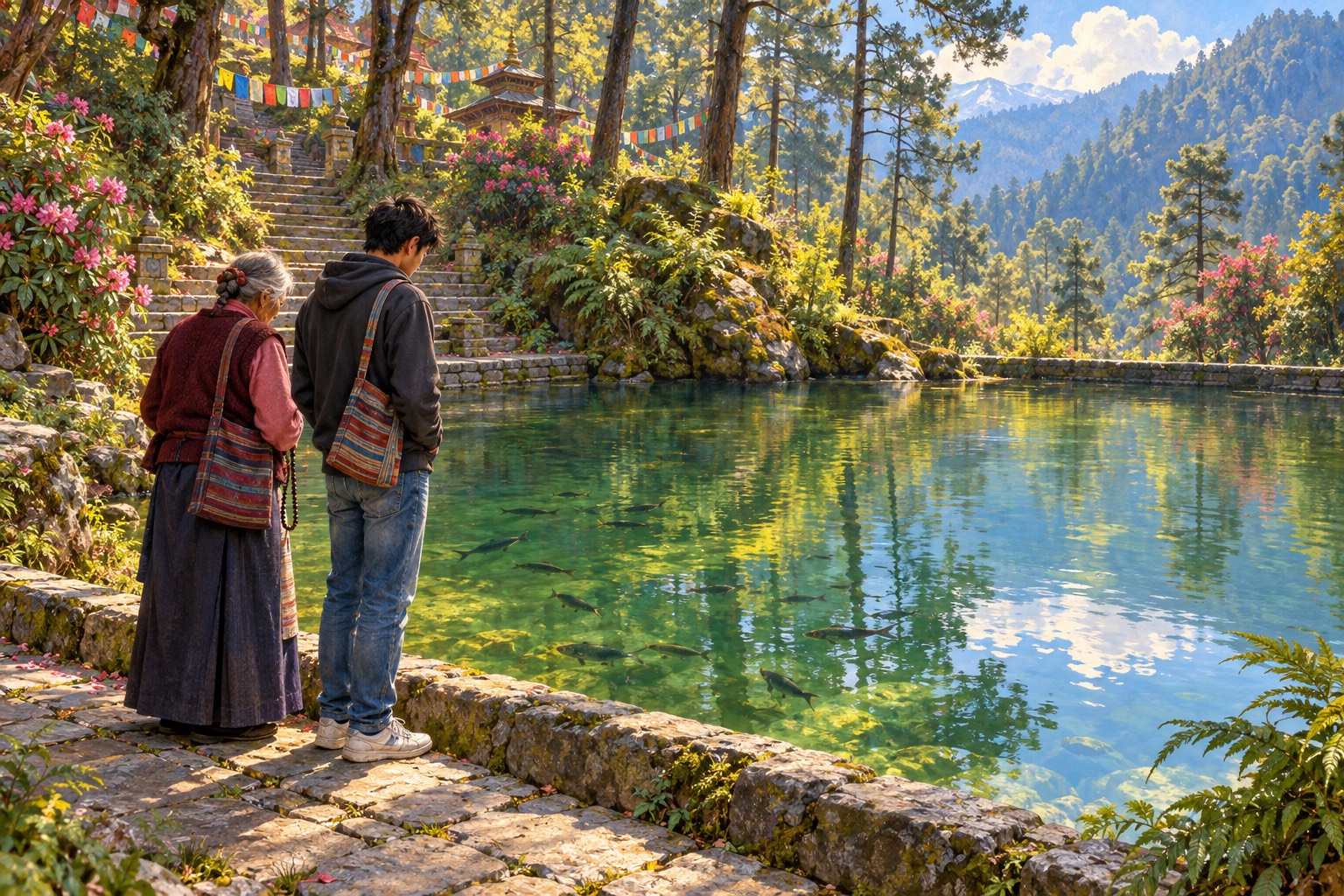
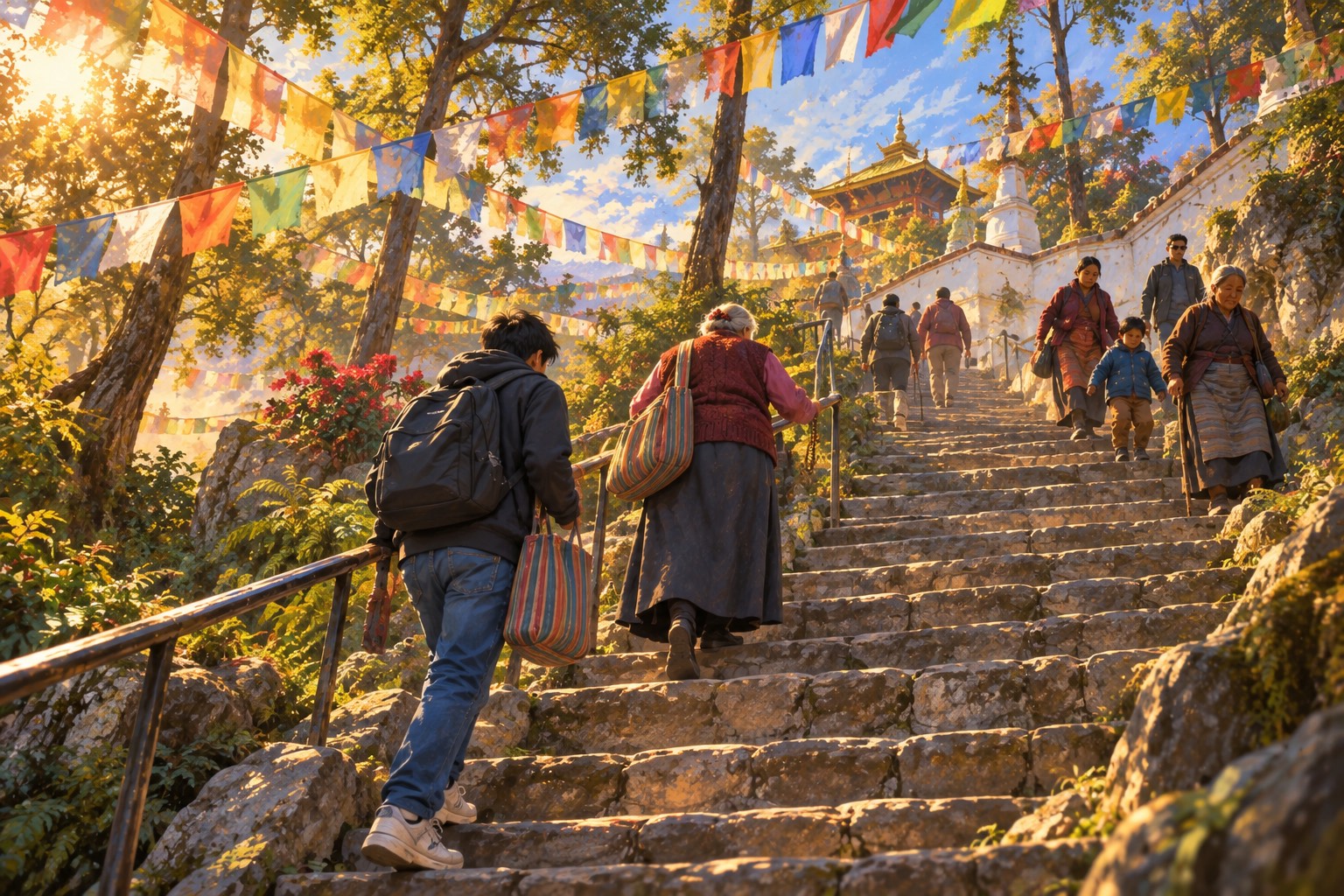
Then the steps. Sonam carried the bag. Mola took the rail and climbed one step at a time, pausing every few steps. At first he thought she was tired. Then he realised the pauses fell between the lines: she was still saying the prayer and had simply let her feet keep time with it.
Prayer flags were strung above the stairs, faded ones and new ones together, and the hillside around them was crowded with whitewashed walls and gilded roofs. There were more people than he expected: grandmothers like Mola, families with small children, a few foreign visitors, and young men his own age in jeans and sunglasses, waiting their turn like everyone else.
The lamps
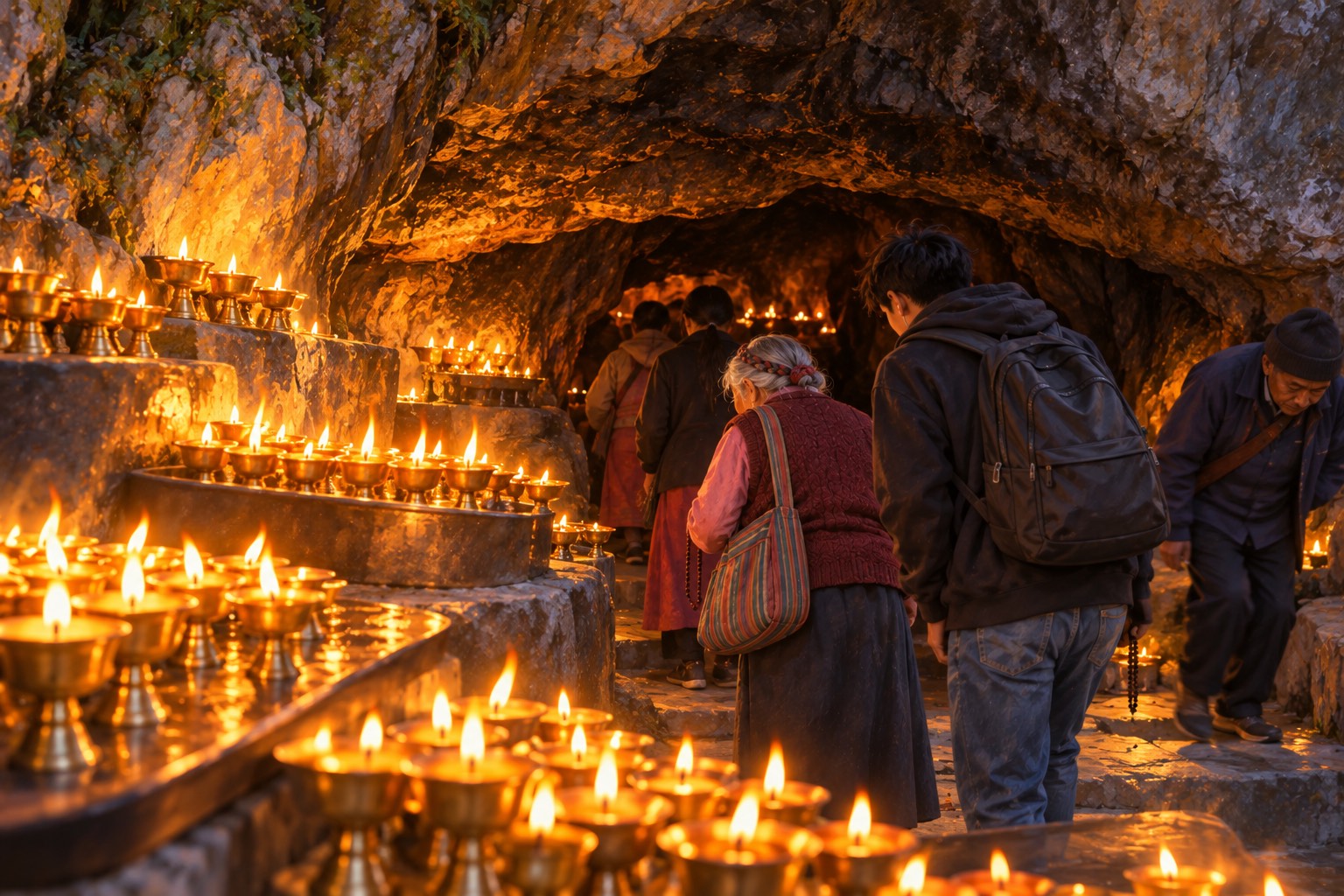
The cave was smaller than he had imagined: a low hollow in the grey rock, its roof darkened by years of lamp smoke. People bowed their heads to go in, stayed a moment, and came out again so the next person could pass. Outside, on the ledges and on metal trays, rows of butter lamps were already burning, hundreds of small flames leaning together in the moving air.
The traditional accounts say it was here, and in the upper cave behind the town, that Guru Rinpoche practised until he reached a wondrous accomplishment, the kind the prayer's third line remembers. Accounts differ a little, some placing that moment here and some at the upper cave. Mola did not seem to mind which.
She unwrapped her ten small brass lamps on the ledge, five for Dolkar and five for herself, and pinched each wick straight. Then she held out the matchbox.
He nearly said that he didn't really do this. Instead he struck a match. She lit the first wick from his flame and each of the others from the one before, and with every lamp she said a name under her breath: Dolkar, his mother, his father, the grandfather he had never met, someone in Tibet he had never heard of.
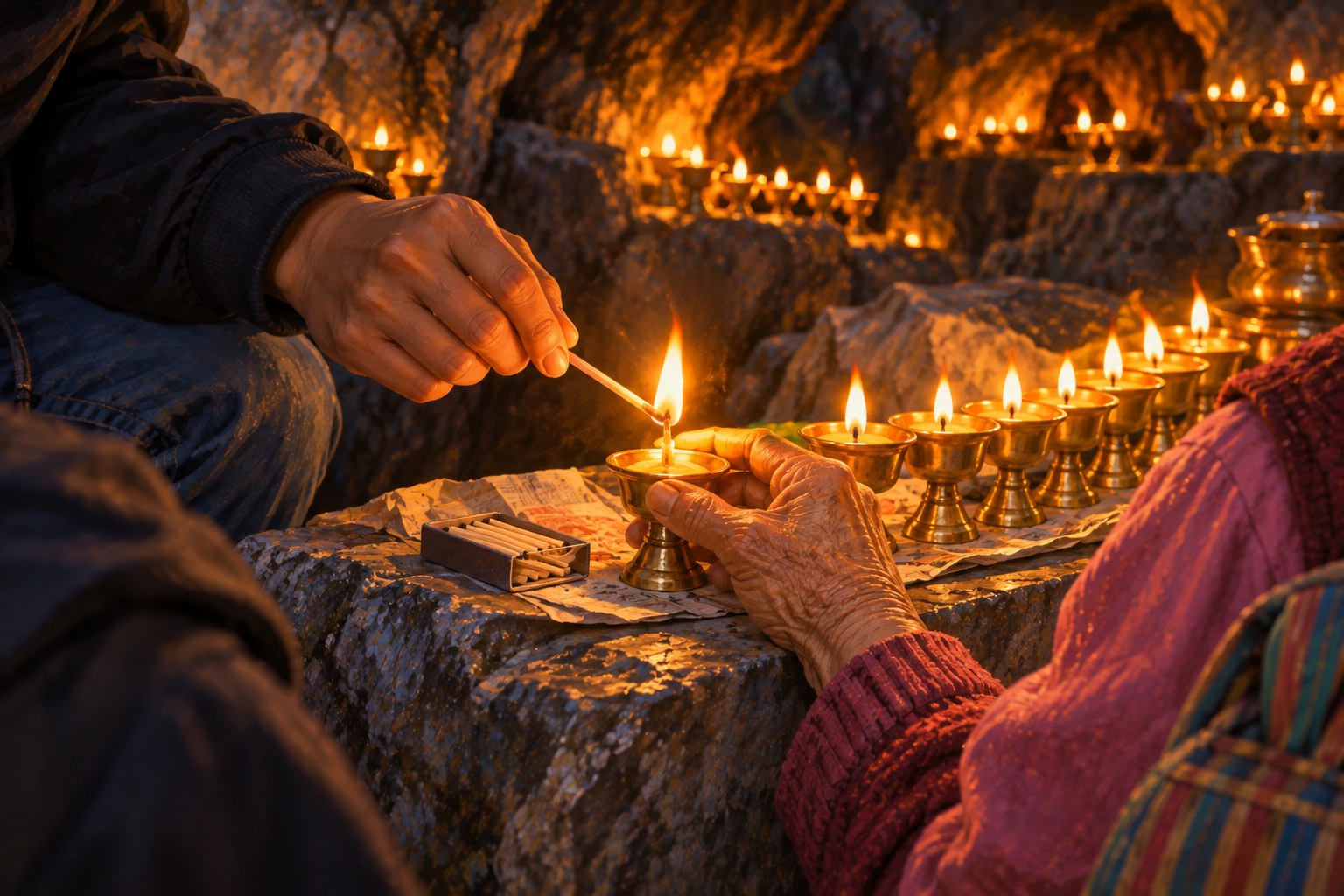
The last lamp she pushed toward him. "That one's for your exam," she said. "He won't mind."
Then she put her palms together and touched them to the top of her head, her throat and her heart, and joined the line. When her turn came she bent low under the rock, and Sonam saw her rest her forehead against the stone for a moment, the way she sometimes rested it against his when he was small.
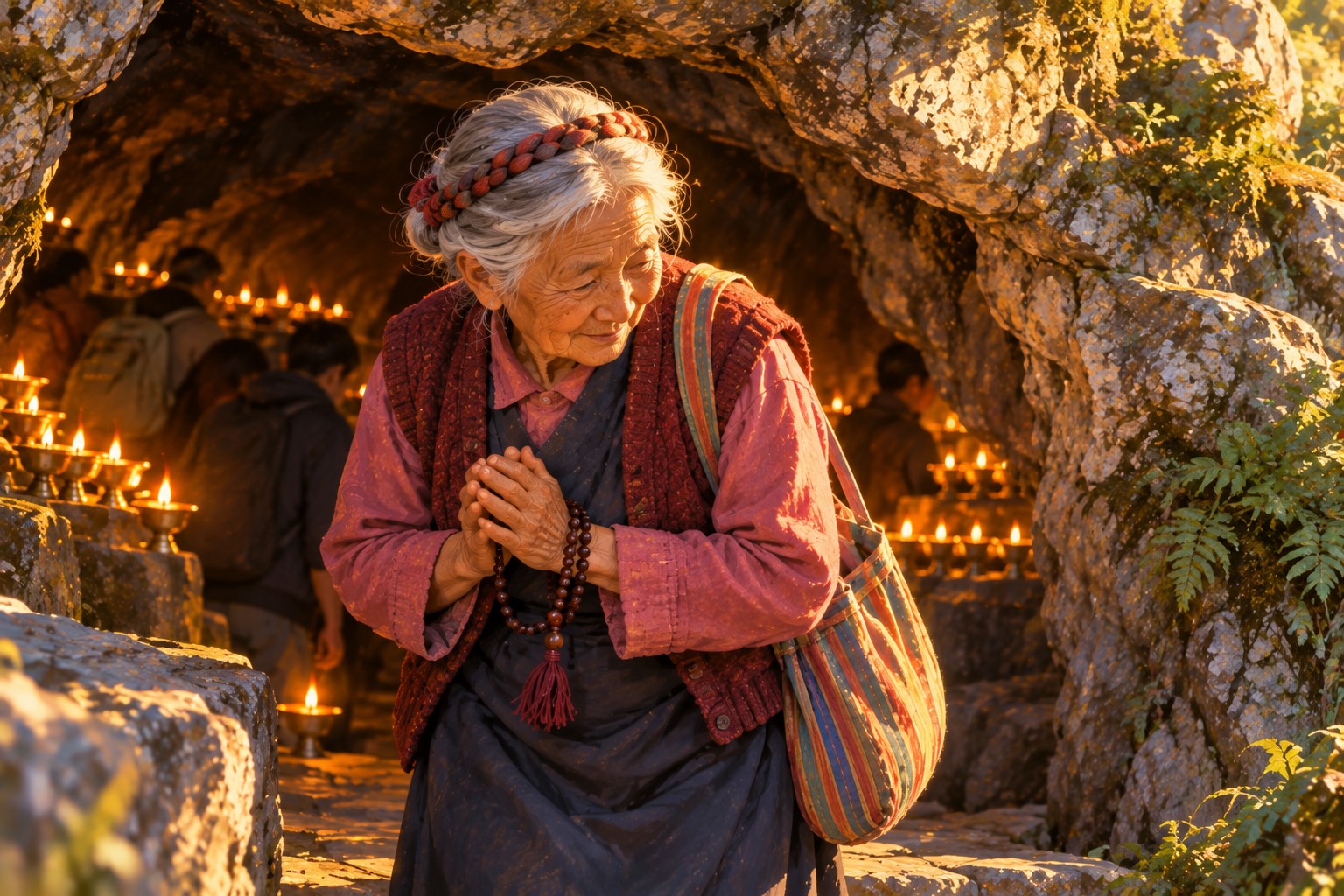
He took out his phone to photograph the lamps. On the screen he saw her coming back out of the dark, ducking under the rock and blinking at the light, smiling at nobody in particular. He lowered the phone without taking the picture.
He could not have said what he felt. It was nothing large. It was more like standing in a room where everyone has gone quiet for the same reason, and finding, to his surprise, that he did not mind being quiet too.
"Well?" said Mola. "Was it so terrible?"
"No," he said.
"Good. Then you can bring me next month." She laughed at his face, and took his arm for the steps down.
The bus home
They ate beaten rice and spiced potatoes from a stall by the road, and caught a bus back late in the afternoon. Mola fell asleep against his shoulder before they reached the brick kilns, her mala still looped around her wrist.
The valley filled with lights. His phone buzzed in his pocket: the class group, arguing about the syllabus. He let it buzz.
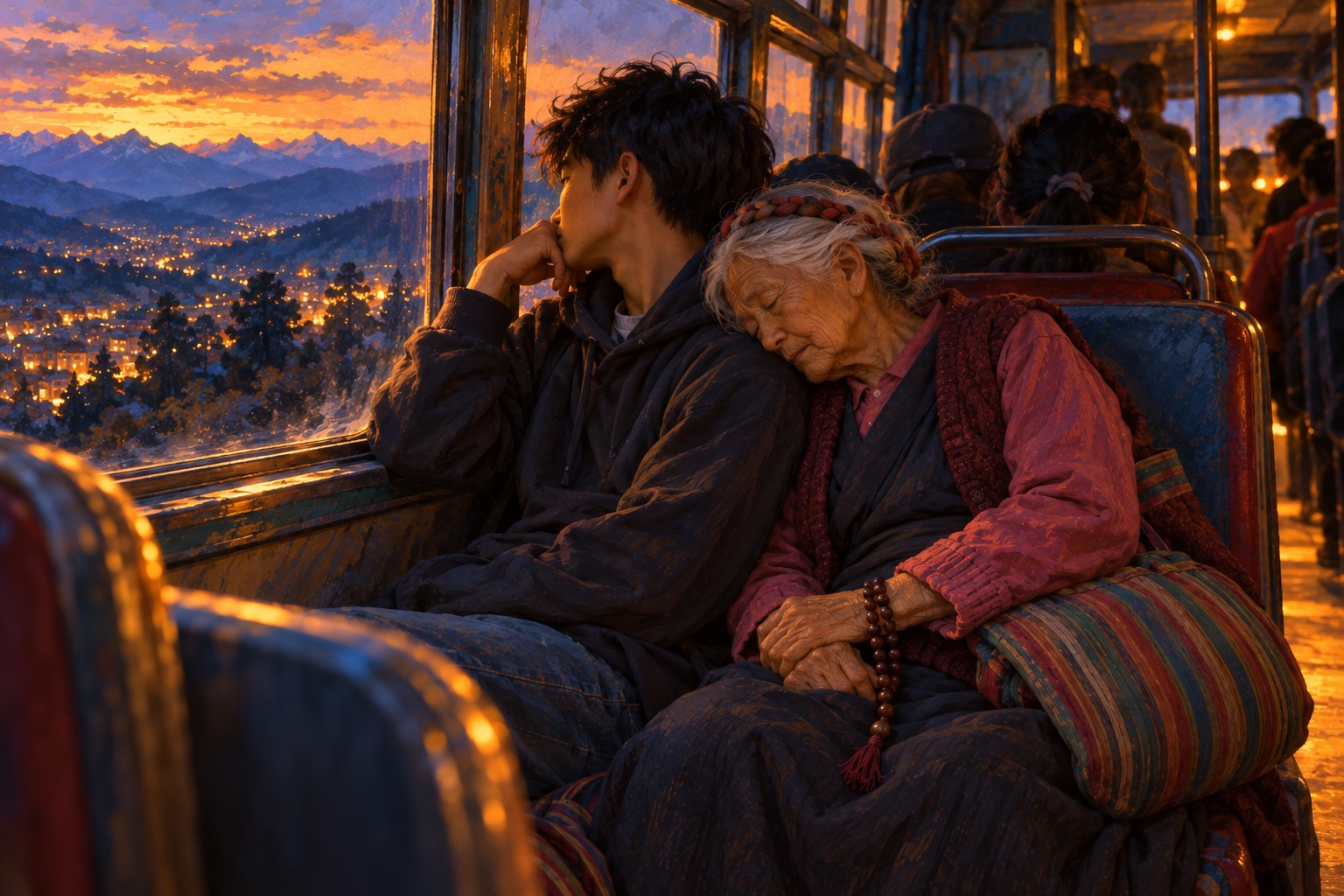
Somewhere on the long slow road into the city, with the window cool against his forehead, he found that the first line of the prayer was still there. It was the one that begins with the far country Guru Rinpoche came from, away in the north-west. He had not thought of it in ten years. He said it in his head, and then very quietly aloud, more in her voice than in his own.
The second line would not come. He did not try to force it. He could ask her tomorrow, or next month, on the bus.
About the art
This is an original story, so its pictures show invented people. Following the site's rule for present-day figures, Sonam, his grandmother and Dolkar are painted as gentle, slightly stylised figures, mostly from behind, in soft profile or as hands, and much of the story is told through steps, flags, beads and lamps.
The lower cave at Pharping is a real and much-loved pilgrimage place, so it is shown as it is today rather than as it was in Guru Rinpoche's time: stone steps rising from the ponds beside the road, strings of prayer flags, and the whitewashed walls and gilded roofs of the temples and retreat houses that now fill the hillside. The cave itself is shown simply, as a low smoke-darkened opening in the limestone. No image inside it is painted in detail.
The lamps are Tibetan butter lamps: small brass cups on a short stem with a single upright cotton wick, filled with butter or ghee. Lighting them is one of the most common offerings on Guru Rinpoche's day. The mala is a single loop of 108 wooden beads with one larger guru bead and a tassel, held in the left hand and moved one bead at a time with the thumb.
As everywhere on this site, the prayer flags in the pictures carry no printing, and no prayer words or script appear in any image. Guru Rinpoche does not appear on this page at all: nothing in it is a vision.
Why this matters for practice
The Seven-Line Prayer opens by remembering where Guru Rinpoche came from, a far country to the north-west, and for many people the first line is also where their own memory of the prayer begins, learned by ear from a parent or grandparent long ago. This story is fiction, but the day in it is real: on the tenth day of every lunar month people still climb to places like Yangleshö to light lamps and say the prayer. Sonam does not decide anything, and he remembers only one line. That is enough to start from.

If something in this story stayed with you, you might pause tonight, wherever your own road is taking you, and recite the prayer once.
Sources and further reading
- Asura Cave & Yangleshö, Nekhor
- Upon Arriving at Yangleshö (Khenpo Jigme Phuntsok), with translator's notes, Lotsawa House (trans. Peter Woods, Samye Translations, 2017)
- Introduction to Guru Padmasambhava, Lotsawa House (Stefan Mang)
- Pharping, Wikipedia
This retelling is waiting to be read by a knowledgeable practitioner. Where the traditional accounts differ, the story says so; if you notice a mistake, please tell us through Share Your Story.