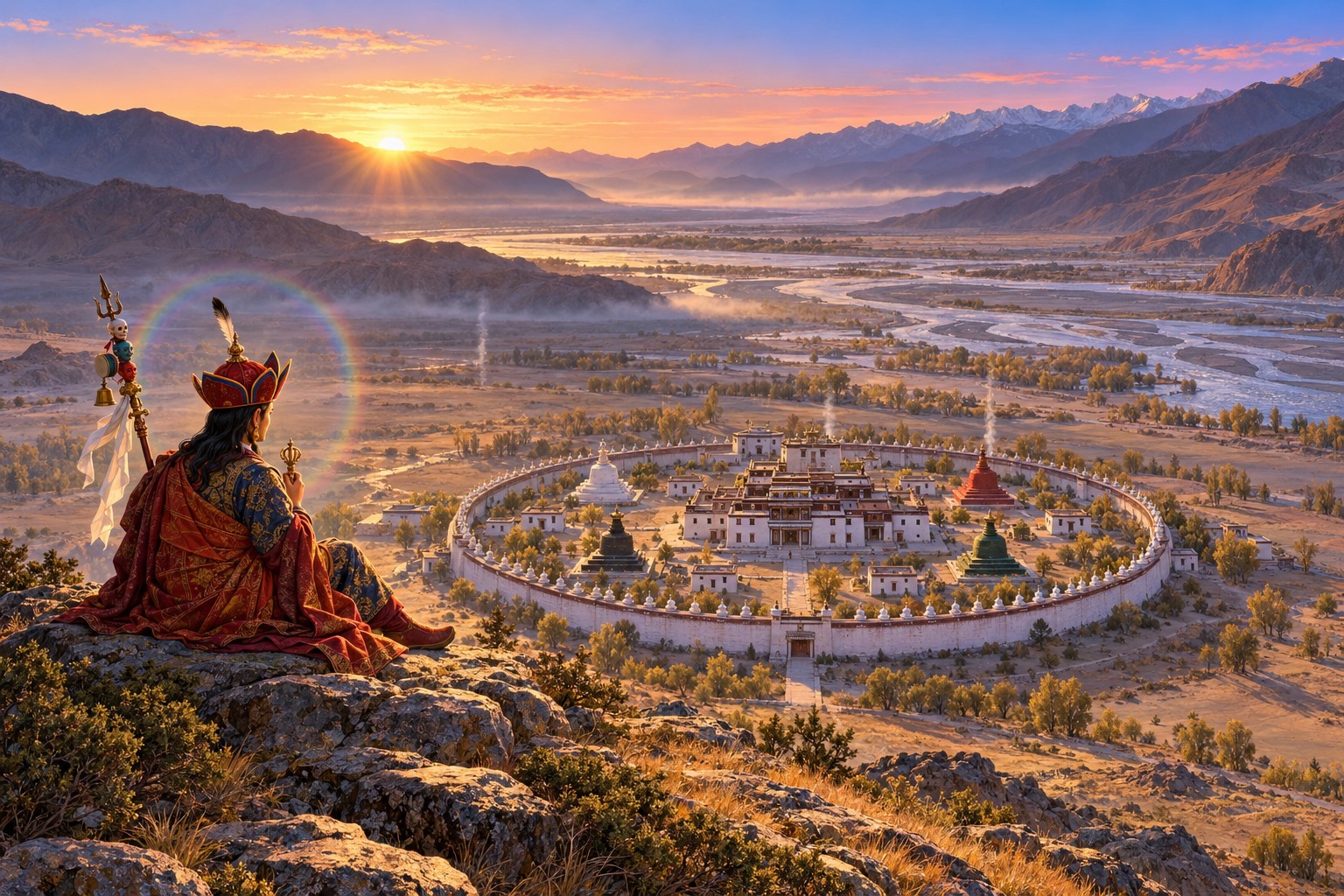
Of everyone who followed Guru Rinpoche, the tradition remembers one above the rest: a Tibetan woman named Yeshe Tsogyal. Her name is often translated "Wisdom Lake Queen."
Tibetans call her a dakini, a "sky-goer." It is the tradition's word for an awakened woman, one who moves as freely in the open space of mind as a bird in the sky.
Her life story is called a namtar, which means "complete liberation": a life told as a path to freedom. Hers tells of a girl who would not be married off, a queen who left the court, a student who outlasted every hardship, and a teacher who cared for whoever came to her.
It is told here gently, and honestly about what history can and cannot say.
A girl from Drak
The traditional accounts say she was born in a bird year of the eighth century, in the valley of Drak, on the north bank of the Tsangpo River, into the noble Kharchen clan. The sources do not agree on her parents' names.
The best-known life story names her father as Kharchen Pelgyi Wangchuk. The nineteenth-century master Jamgön Kongtrul, citing an older history, says Pelgyi Wangchuk was her brother instead.
The life story says that at her birth the earth trembled, flowers fell like rain, and a small lake nearby overflowed. That lake, it is said, gave her the second half of her name: Tsogyal, "queen of the lake." A pond in Drak called Tsogyal Latso is still honored as her life-lake.

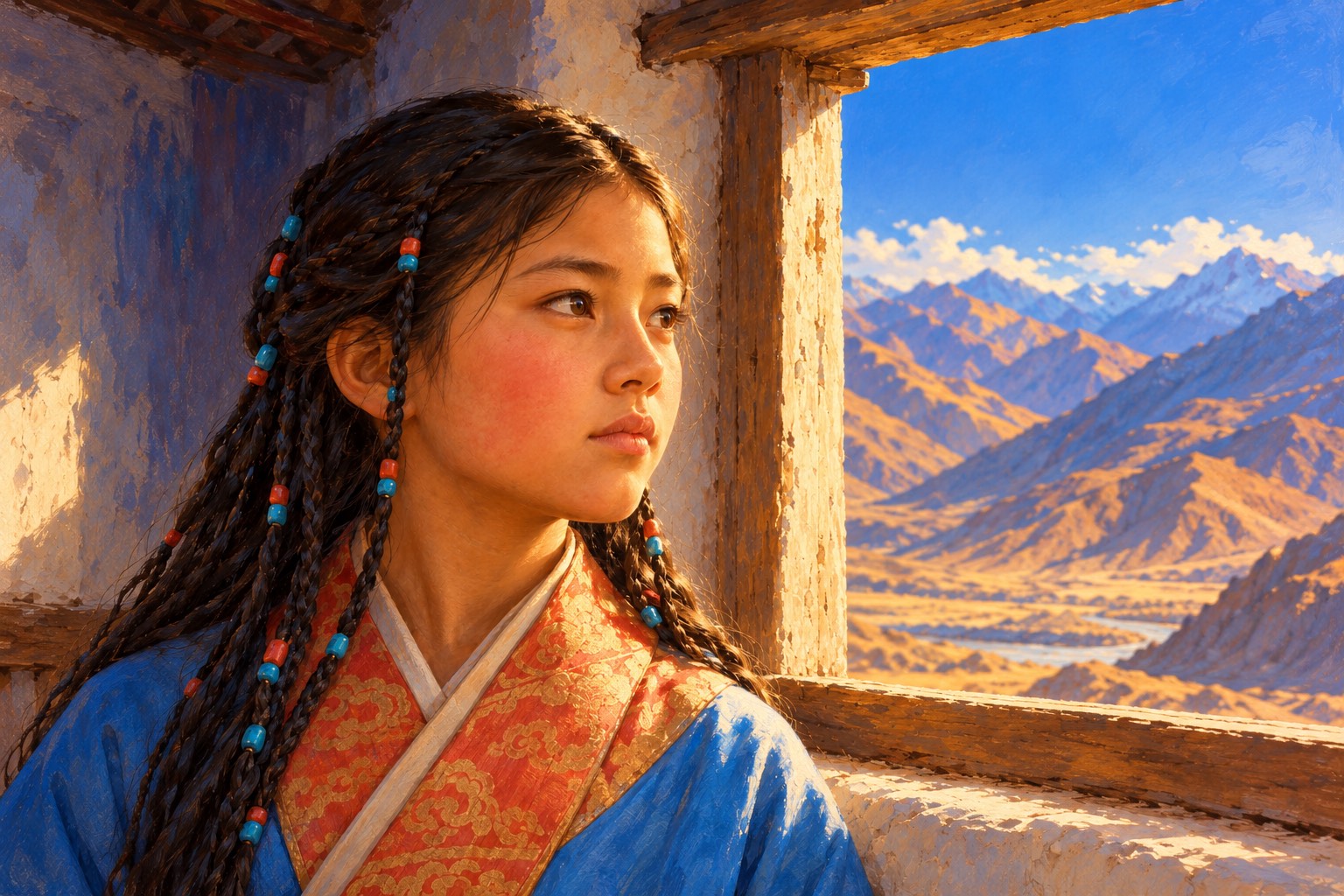
She grew quickly, the story goes, and learned with ease. From early on she wanted one thing more than any other: to give her life to the Dharma, the Buddha's teaching, rather than to a husband.
The marriage she refused
Her beauty was talked about, and two powerful suitors asked for her. Her parents, hoping to avoid a feud, agreed to let her go. In the seventeenth-century life story, one suitor's men carried her off against her will. She escaped, only to be seized by the other.
She did not go quietly. In the accounts she runs away and hides in the wild mountains, enduring cold and fear rather than consent. It is one of Tibet's oldest stories of a young woman saying no and meaning it.
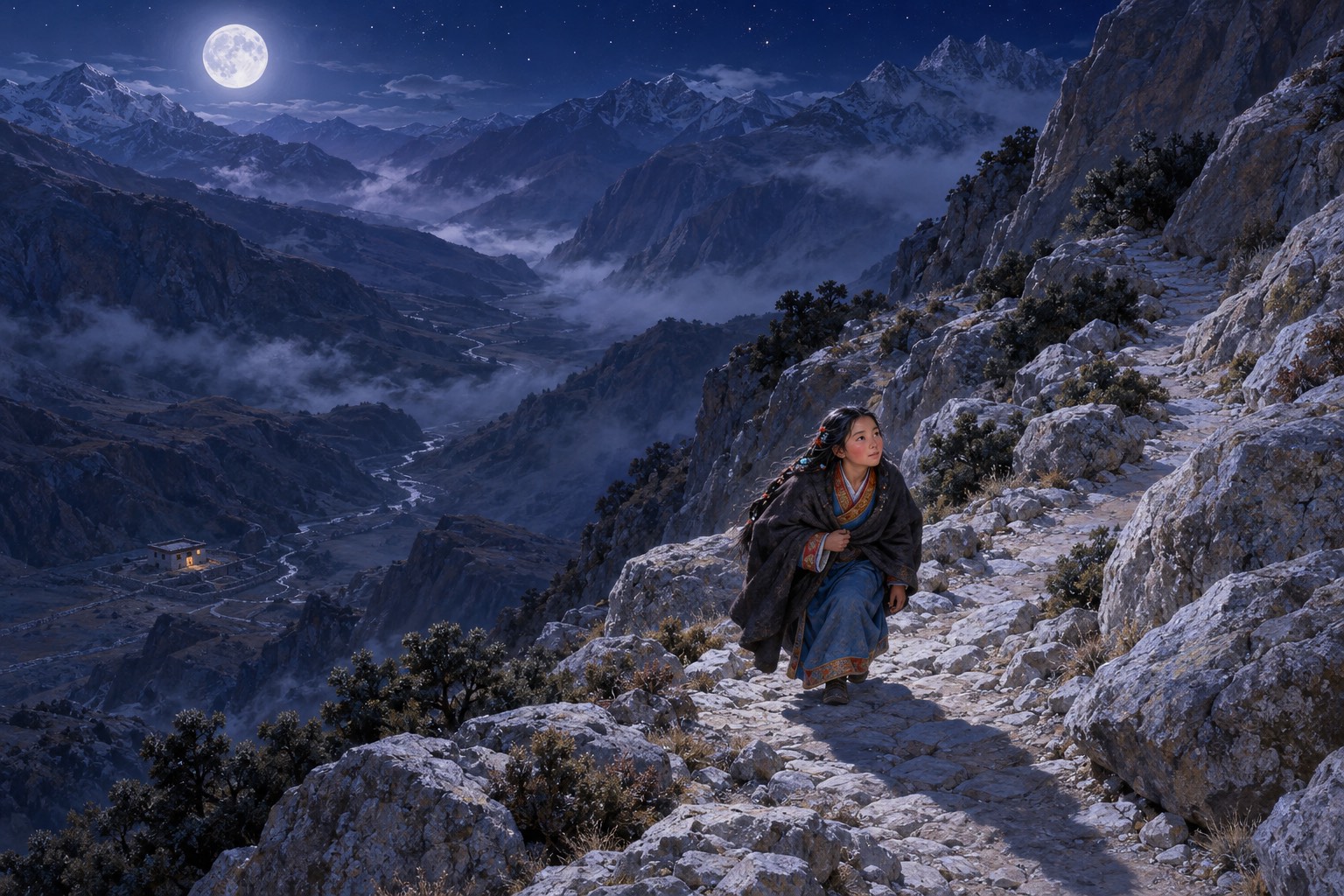
As the two families prepared to fight over her, word reached the king, Trisong Detsen, the Dharma King who was bringing Buddhism to Tibet. He ended the quarrel by bringing her to his own court as one of his queens.
At the court of the king
At court she studied reading, writing and the classical sciences. Kongtrul's prayer says she needed only a few hints from her teachers to understand, and that she became a spiritual adviser to the king.
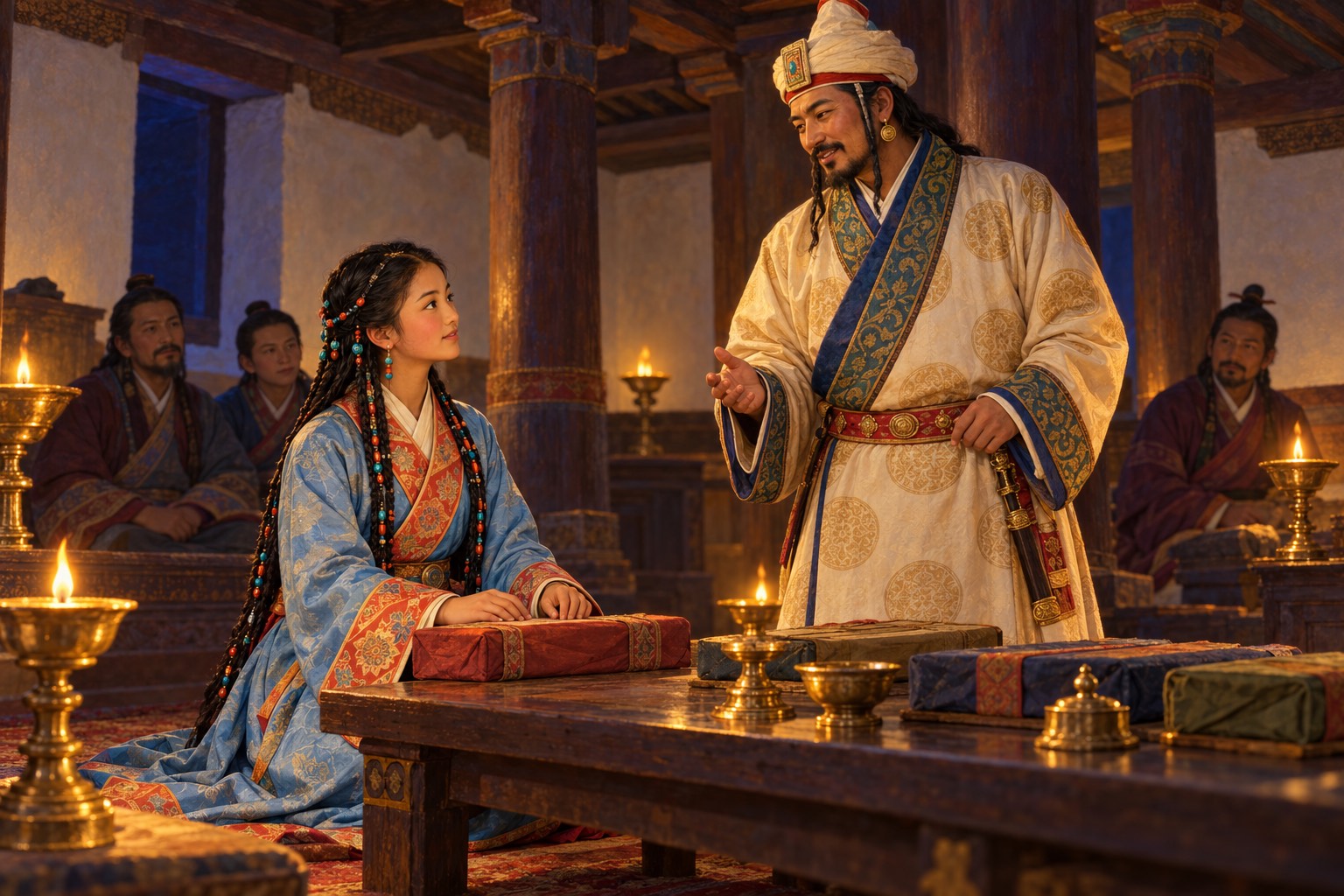
Then Guru Rinpoche came to Tibet. When the king asked him for the deepest teachings, he made a great offering in request: his kingdom, his treasures, and the young queen herself.
Modern readers may find this hard to hear. The tradition tells it as the moment Tsogyal was freed for the life she had always wanted.
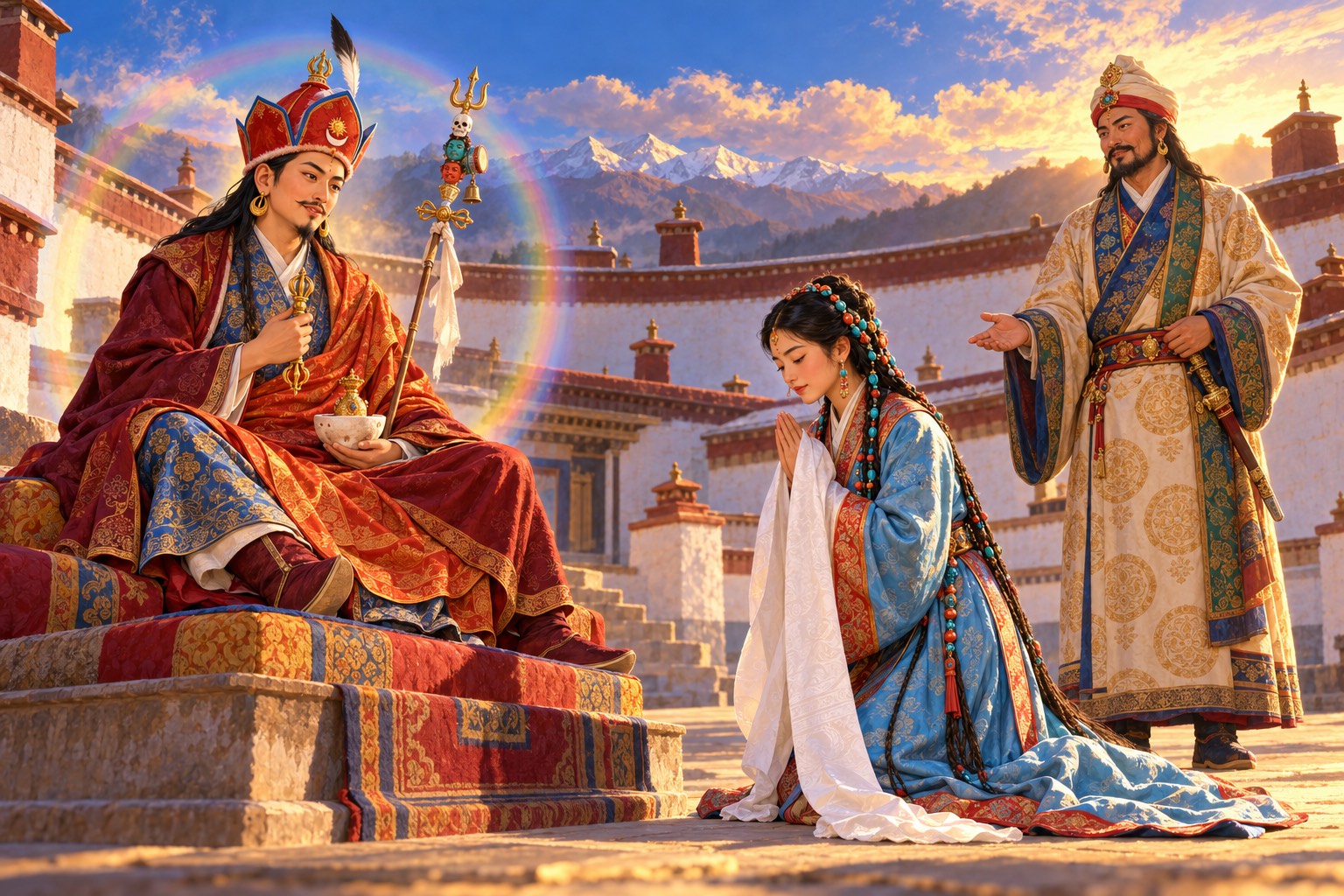
She became Guru Rinpoche's disciple and his consort. In the Vajrayana, the tantric Buddhism of Tibet, a consort is a partner in the most advanced practices, which the tradition keeps between a teacher and committed students.
What the stories stress is not romance but trust. She was the one who stayed closest, learned the most, and followed furthest.
Years in the caves
Some at court were alarmed, and the accounts say the king was pressed to send the pair away. Instead they went into retreat in the mountains: at Chimphu, in the hills above Samye, and at Tidro, a gorge of cliffs and hot springs far to the northeast.
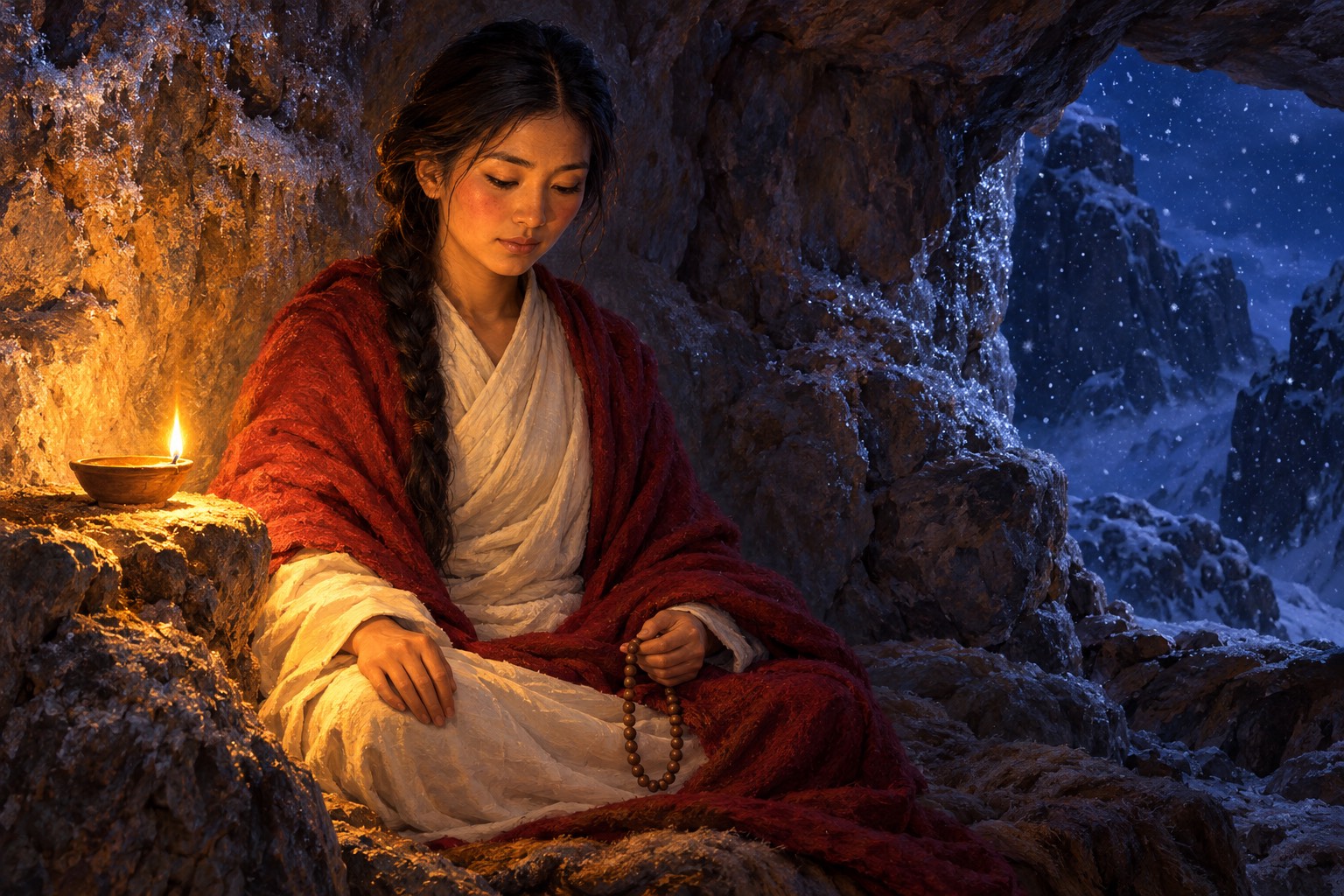
There her real training began. The accounts describe years of practice in cold caves and on bare mountainsides, with very little food and little more than a thin cloth against the snow.
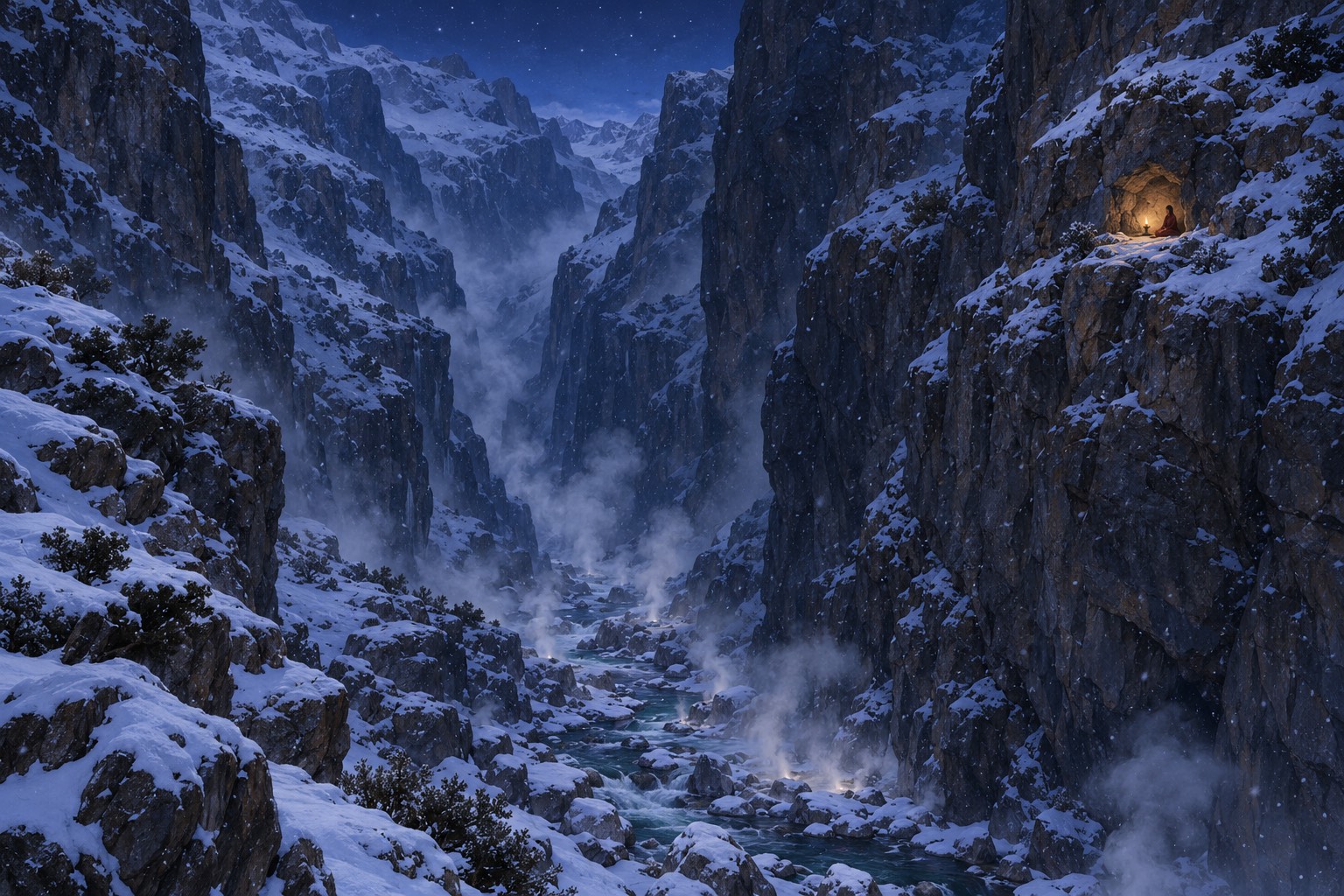
The life story does not pretend it was easy. As the scholar Holly Gayley summarizes it, she met scorn from villagers, terrifying visions and hunger, and turned each hardship into fuel for her practice.
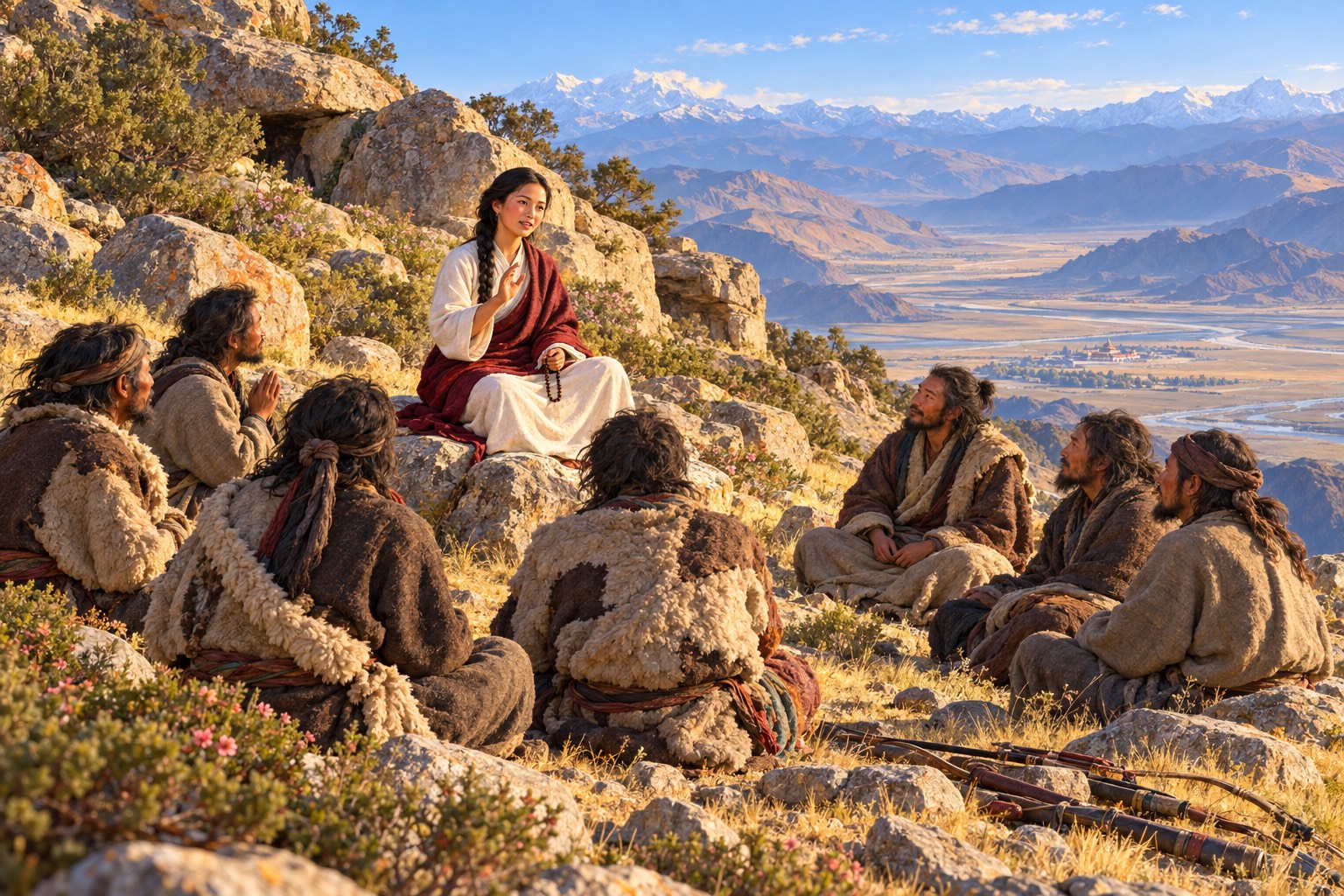
Once, the accounts say, seven bandits came upon her alone in the mountains, robbed her and treated her cruelly. She answered them not with curses but with teaching. She showed them the nature of their own minds, and they became practitioners themselves.
Kongtrul's prayer places this beneath the Shampo glacier; another telling sets it near Chimphu.
A master in her own right
Tsogyal once asked her teacher whether a woman's body was a hindrance on the path, as many then believed. In the life story his answer is plain: male or female makes no difference, and for one with a determined heart, "a female body is actually superior" (as translated on Himalayan Art Resources).
In Nepal, the story says, she paid the ransom of an enslaved young man named Atsara Salé and set him free. He became her companion in practice and her student. She went on to teach princes and nomads, monks and lay people, men and women, and she left a circle of close disciples who carried her lineage on.
The keeper of the teachings
The tradition credits her with a perfect memory. Rigpa Wiki says that through it she gathered all the teachings Guru Rinpoche gave in Tibet. Kongtrul's prayer adds that she set many of them down in symbolic script on small yellow scrolls.
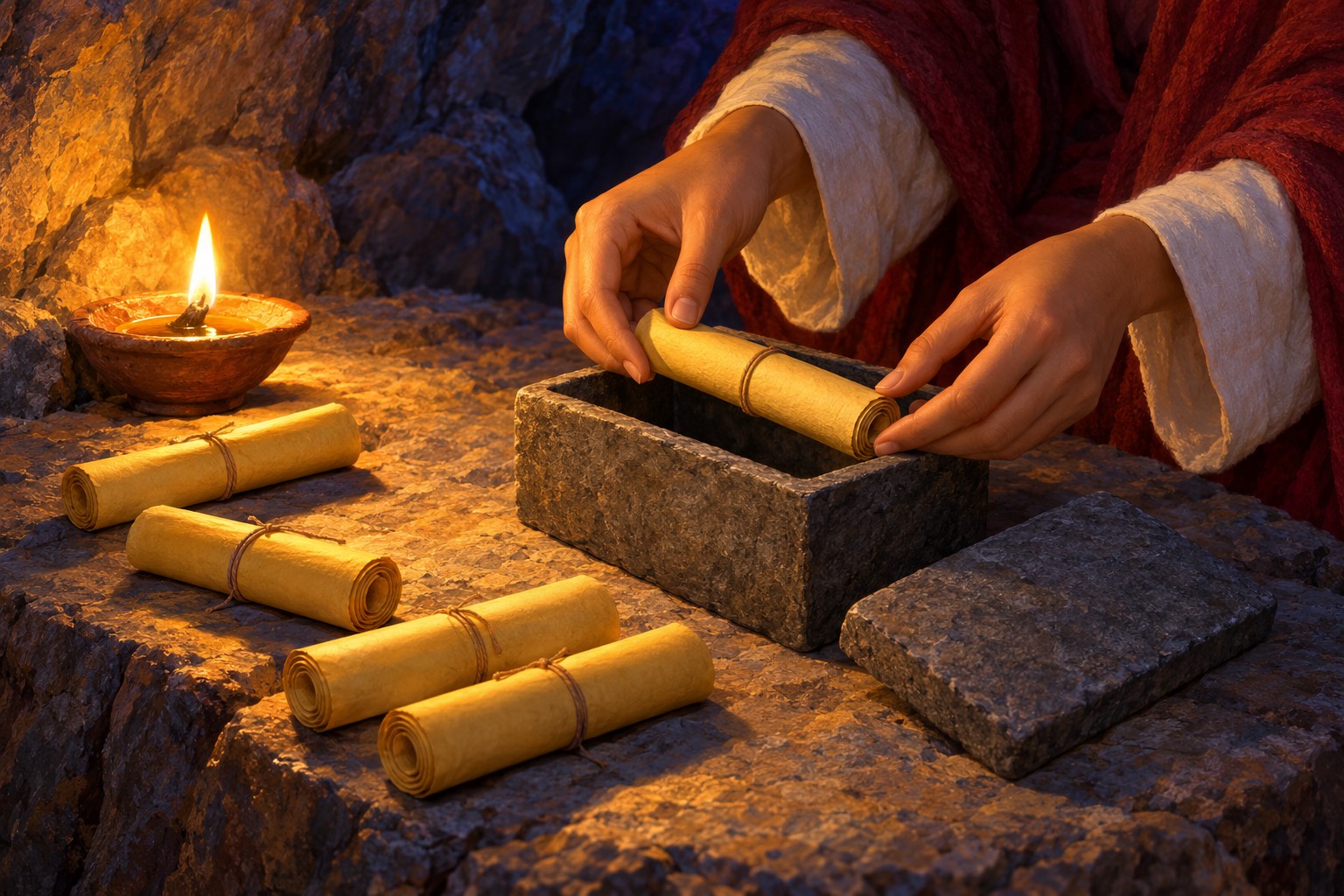
Then, with her teacher, she hid them in caves, cliffs and lakes across Tibet and the Himalayas, sealed for later times. These hidden teachings are called terma, "treasures," and the people who later found them are called tertöns, treasure revealers. That is a story of its own.

When Guru Rinpoche's work in Tibet was done, the accounts say, he left for the southwest, and Tsogyal went with him to the borderlands to receive his last advice. Then she turned back. Tibet, the tradition says, still needed her.

Care for all who came
The rest of her life is remembered as service. Kongtrul's prayer recalls her giving food, clothes and medicine to those in need, healing quarrels in the sangha, the community of practitioners, and putting others' suffering in the place of her own.
How long did she live? The accounts differ widely. Kongtrul's prayer, following the life story, says she stayed in Tibet for more than two hundred years; other summaries say about ninety-nine. All agree it was a long life, given to others.
Her departure
At the end, the traditional accounts say, she gathered her disciples in the valley of Zabbu in Shang, gave her last advice, and promised to come to anyone who calls on her with devotion.
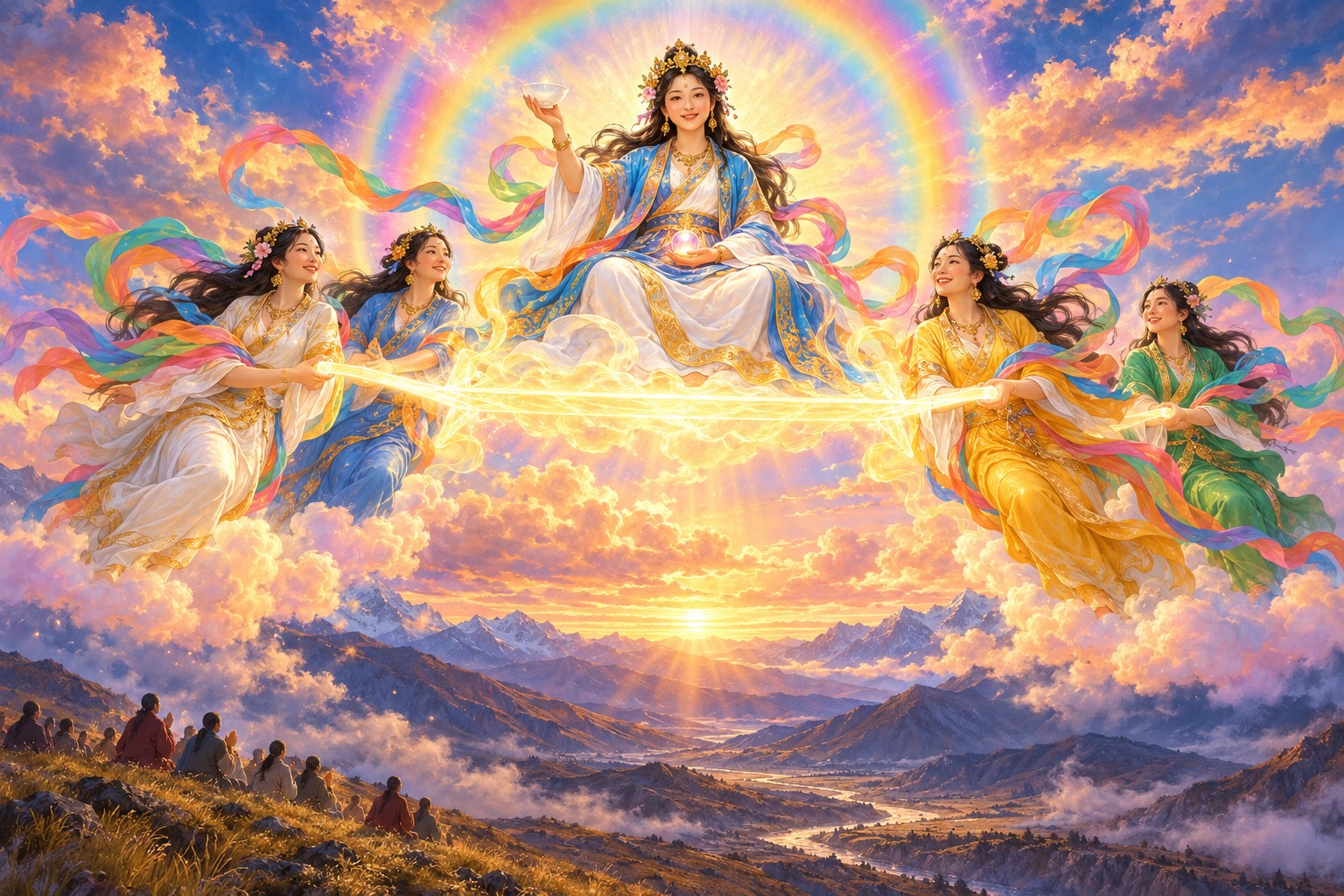
Then, they say, dakinis bore her up in a sphere of light, and she went to the Copper-Coloured Mountain, Guru Rinpoche's pure land, a realm of awakened presence, leaving no body behind.
What history can say
Scholars ask honest questions about her. The Treasury of Lives notes that no evidence has yet been found that a person named Yeshe Tsogyal lived, though a noblewoman of the Kharchen clan may well stand behind the legends. Stone inscriptions naming the king's queens do not include her.
Some copies of an early history, the Chronicle of Ba, do list a Kharchen lady named Tsogyal among the king's wives, explaining that she gave herself to meditation and left no children. That line may have been added later. By the twelfth century the treasure revealer Nyangrel Nyima Özer, in his life of Guru Rinpoche, presents her as his consort and the keeper of his teachings.
The best-known life story was revealed in the seventeenth century by the treasure revealer Taksham Nüden Dorje, born in 1655, some nine hundred years after her time, as the scholar Janet Gyatso points out. He presented it as a treasure written by two of her fellow disciples.
Gyatso has shown that it drew on an older life story by Drime Kunga, from the fourteenth century, in which King Trisong Detsen does not appear at all.
Holly Gayley calls the accounts "highly mythologized," and suggests that her importance lies in her living presence: in the prayers offered to her for centuries, and in the accomplished Tibetan women recognized as her emanations.
In the Seven-Line Prayer, one line asks that we may follow in Guru Rinpoche's footsteps. Yeshe Tsogyal is the tradition's picture of what that following can look like: steady, brave, and always turned toward others.
About the art
Yeshe Tsogyal appears in three forms on this page. As a girl and young queen she wears a long robe with wide contrasting lapels and fine braids hung with turquoise and coral, a careful reconstruction of eighth-century Tibetan court dress, since no portrait from her own time survives. As a yogini she wears a plain white robe and a dark red woollen shawl and holds a mala, a string of 108 prayer beads. In the last image she is shown as painters show her in devotion: a dakini crowned with golden flowers, lifting a skull cup of nectar as an offering and holding a wish-fulfilling jewel, the jewel that grants what is truly needed. Many paintings also give her a curved knife, the dakini's blade for cutting through clinging; it is left out here.
Guru Rinpoche is shown in his main form: the lotus hat with its vulture feather, a five-pronged vajra at his heart for unshakeable awareness, a skull cup in his lap holding a small vase of long-life nectar, and a khatvanga, a slender trident staff, resting against his left shoulder. King Trisong Detsen wears the tall turban and long lapelled robe seen in early Tibetan murals.
The yellow scrolls and the small casket stand for the treasure teachings; real treasure scrolls are written in a symbolic script, which is never drawn here. As everywhere on this site, the images contain no Tibetan script or mantras. The two consorts of Guru Rinpoche are kept distinct: Yeshe Tsogyal in Tibetan dress, blue, white and dark red, Mandarava on her own page in Indian dress.
Why this matters for practice
The sixth line of the Seven-Line Prayer expresses the wish to follow in Guru Rinpoche's footsteps, and Yeshe Tsogyal is the tradition's clearest picture of a person who did. She did not follow by imitation but by practice: through refusal, hardship, study and care for others, until, the tradition says, her realization equalled her teacher's. When we recite the prayer, we can remember that the path it points to has been walked before, by a woman, all the way.

If something in this story moved you, a girl who chose her own path, or a teacher who kept every word for those still to come, you might pause and recite the prayer once, and remember her as the first to follow.
Sources and further reading
- Teacher: Yeshe Tsogyal (Biography), by Alexander Gardner (Treasury of Lives, 2018), Himalayan Art Resources
- Yeshe Tsogyel (Alexander Gardner, 2018), The Treasury of Lives (archived snapshot)
- Yeshe Tsogyal, Rigpa Wiki (archived snapshot)
- The Tambura's Yearning Song of Devotion: A Prayer Summarizing Khandro Yeshé Tsogyal's Life and Liberation, by Jamgön Kongtrul Lodrö Tayé (tr. Stefan Mang, Samye Translations, 2017), Lotsawa House
- Tsogyal's Liberational Life in Brief, by Do Dasal Wangmo (tr. Adam Pearcey, 2023), Lotsawa House
- A Partial Genealogy of the Lifestory of Ye shes mtsho rgyal, by Janet Gyatso (JIATS 2, 2006), Tibetan Buddhist Encyclopedia (copy of the journal article)
- The Many Lives of Yeshe Tsogyal, by Holly Gayley (2007), Lion's Roar
- Yeshe Tsogyal, Wikipedia
- Samye Chimpu, Nekhor
- Zhotö Tidro, Nekhor
- Tsogyal Lhatso, Nekhor
- Lady of the Lotus-Born: The Life and Enlightenment of Yeshe Tsogyal, attributed to Gyalwa Changchub and Namkhai Nyingpo, revealed by Taksham Nüden Dorje, tr. Padmakara Translation Group (Shambhala, 1999), Book (consulted only through the summaries above)
- Sky Dancer: The Secret Life and Songs of the Lady Yeshe Tsogyel, tr. Keith Dowman (Snow Lion, 1996), Book (consulted only through the summaries above)
- The Life and Visions of Yeshé Tsogyal: The Autobiography of the Great Wisdom Queen, by Drime Kunga, tr. Chönyi Drolma (Snow Lion, 2017), Book (consulted only through the summaries above)
This retelling is waiting to be read by a knowledgeable practitioner. Where the traditional accounts differ, the story says so; if you notice a mistake, please tell us through Share Your Story.