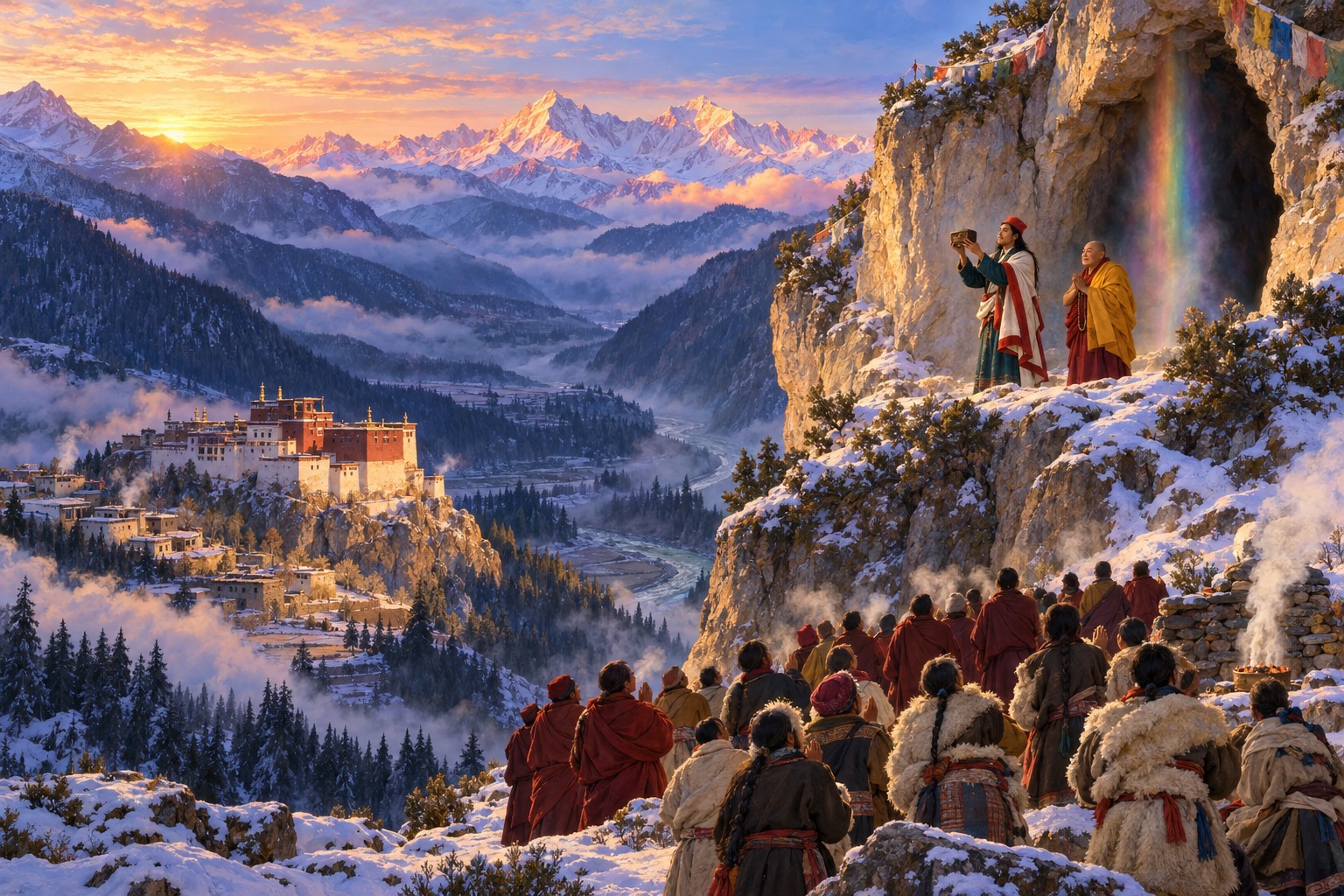
In nineteenth-century Kham, the far east of Tibet, three teachers became friends. Through their friendship a great deal of Guru Rinpoche's hidden blessing came into the open.
They were Jamyang Khyentse Wangpo, a monk of the Sakya school; Jamgön Kongtrul, a monk of the Karma Kagyü school; and Chokgyur Lingpa, a young treasure revealer of the Nyingma school. Tibetans still name them together as the Khyen-Kong-Chok, the three.
A treasure revealer, or tertön, is someone the tradition believes was born to find teachings and sacred objects that Guru Rinpoche hid in the eighth century for later ages. How they were hidden is told in The Hiding of the Treasures.
Two scholars in Derge
Khyentse Wangpo was born in 1820 in the Terlung valley of Derge, a small kingdom in Kham. At twelve he was recognized as the rebirth of a Sakya abbot. He went on to study with more than a hundred and fifty teachers from every school, Rigpa Wiki says.
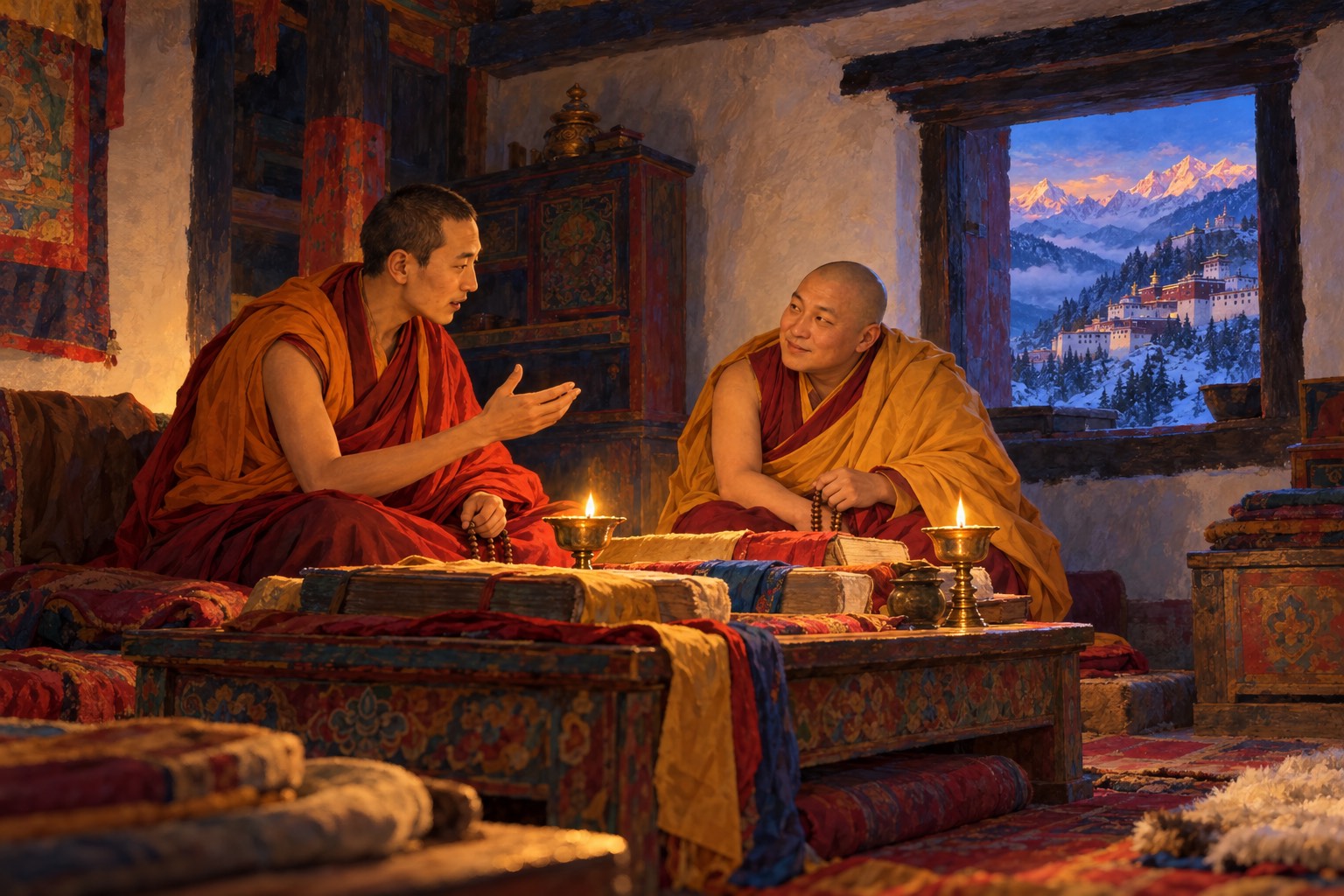
Kongtrul, seven years older, was a monk of Palpung, a Kagyü monastery half a day's walk from Khyentse's home at Dzongsar. They first met at the end of 1840, when Khyentse came to study Sanskrit grammar with him. Later, grieving for a beloved elder brother, Khyentse turned to Kongtrul for companionship, and the friendship deepened.
A boy with visions
Chokgyur Lingpa was born in 1829 at the foot of Namkha Dzö, "Sky Treasury," a sacred mountain in Nangchen, north of Derge. His father was an unconventional lay tantric practitioner. As a boy he became a monk and learned the ritual dances and chants.
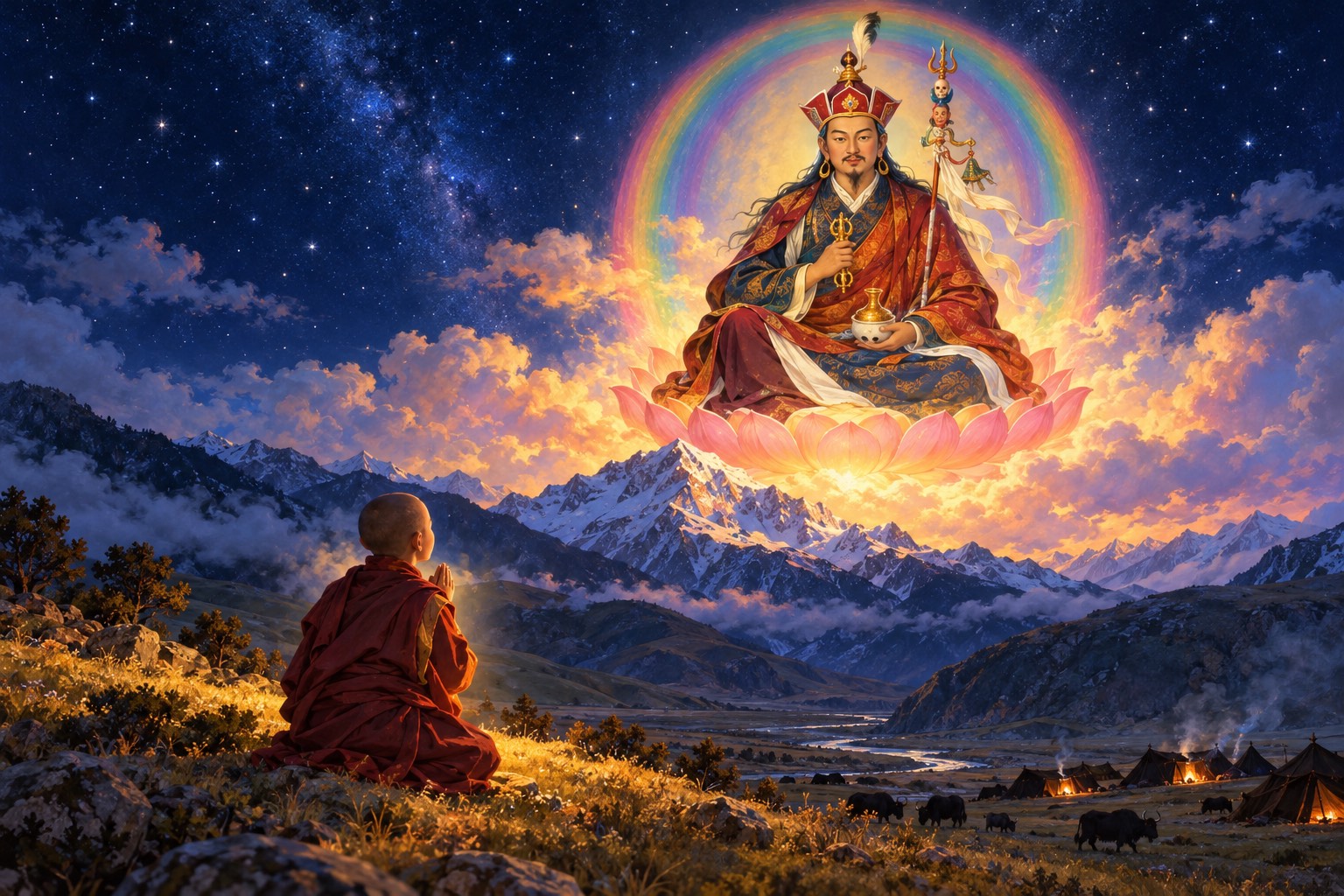
In his thirteenth year, he later wrote, he met Guru Rinpoche in a vision. He also admits, with disarming honesty, that many of his early visions were confusing and that most turned out to be obstacles rather than true signs.
In the autumn of 1848, at nineteen (twenty by Tibetan reckoning), he drew a treasure from a rock called Danyin Khala Rongo, in the upper valley of the Dza river. It would become his most famous revelation, but he kept it under a seal of secrecy for eight years. One later telling places the discovery a few years afterwards.

The so-called treasure revealer
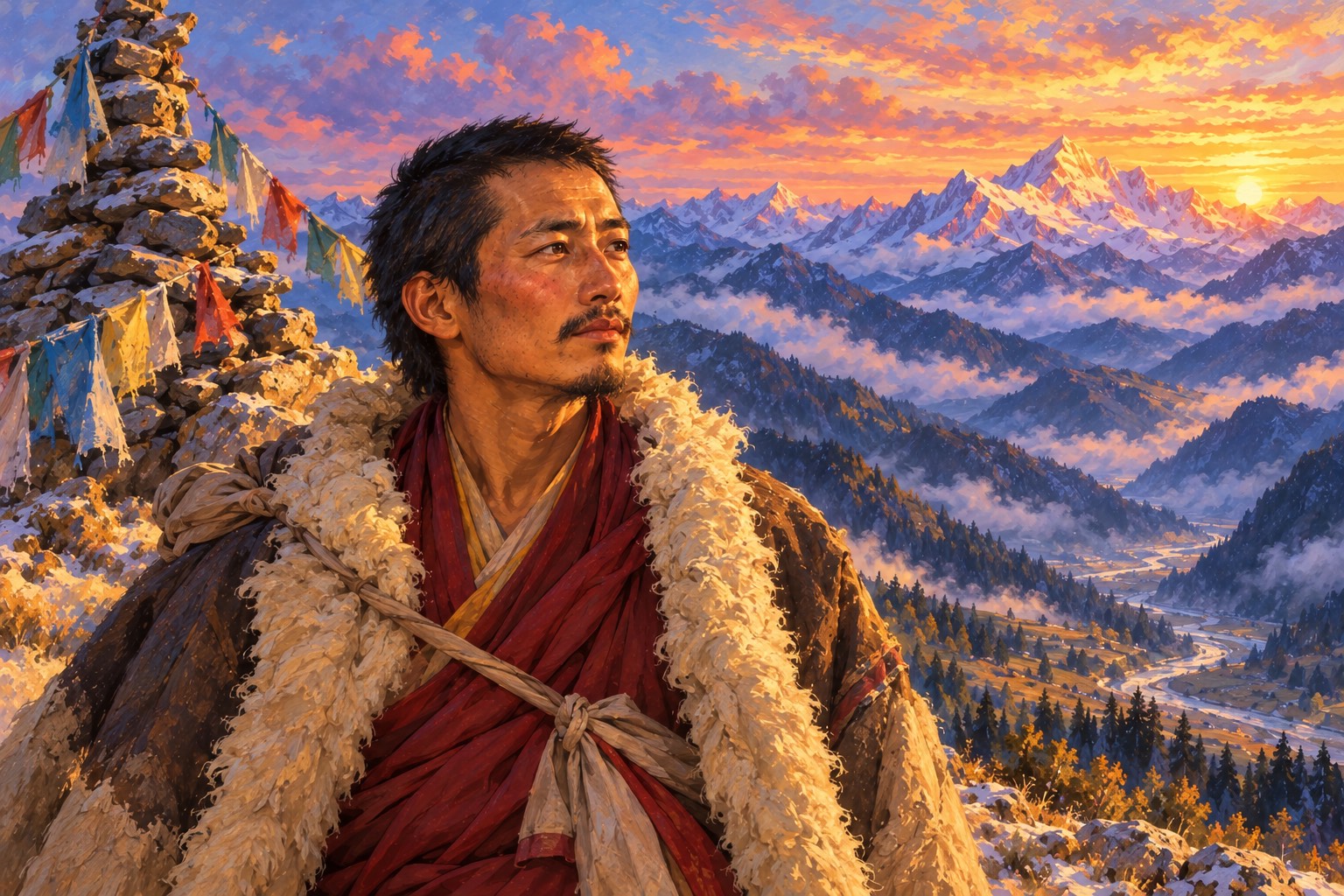
At home, few believed him. One of his teachers forbade him to reveal treasure, and people called him the Kyasu Tertön, which Treasury of Lives renders as "the so-called treasure revealer of the Kyasu clan."
In 1853, at twenty-five, he set out for Derge, hoping someone would recognize what he carried.
At Palpung the great Tai Situ declined to vouch for him but introduced him to Kongtrul. Kongtrul gave him vows, yet he too held back. Instead he sent the young man to Khyentse with a careful letter: here were the revelations, and Khyentse could judge whether they were genuine.
The meeting at Dzongsar
Over the next two years Chokgyur Lingpa met Khyentse three times at Dzongsar. The records are muddled, Treasury of Lives notes, but the outcome is clear. Khyentse gave him empowerments, ceremonies of blessing and authorization, and during them had visions, including a protector who foretold a treasure the two would reveal together. At the last meeting Khyentse gave him his treasure name, Chokgyur Dechen Shikpo Lingpa.
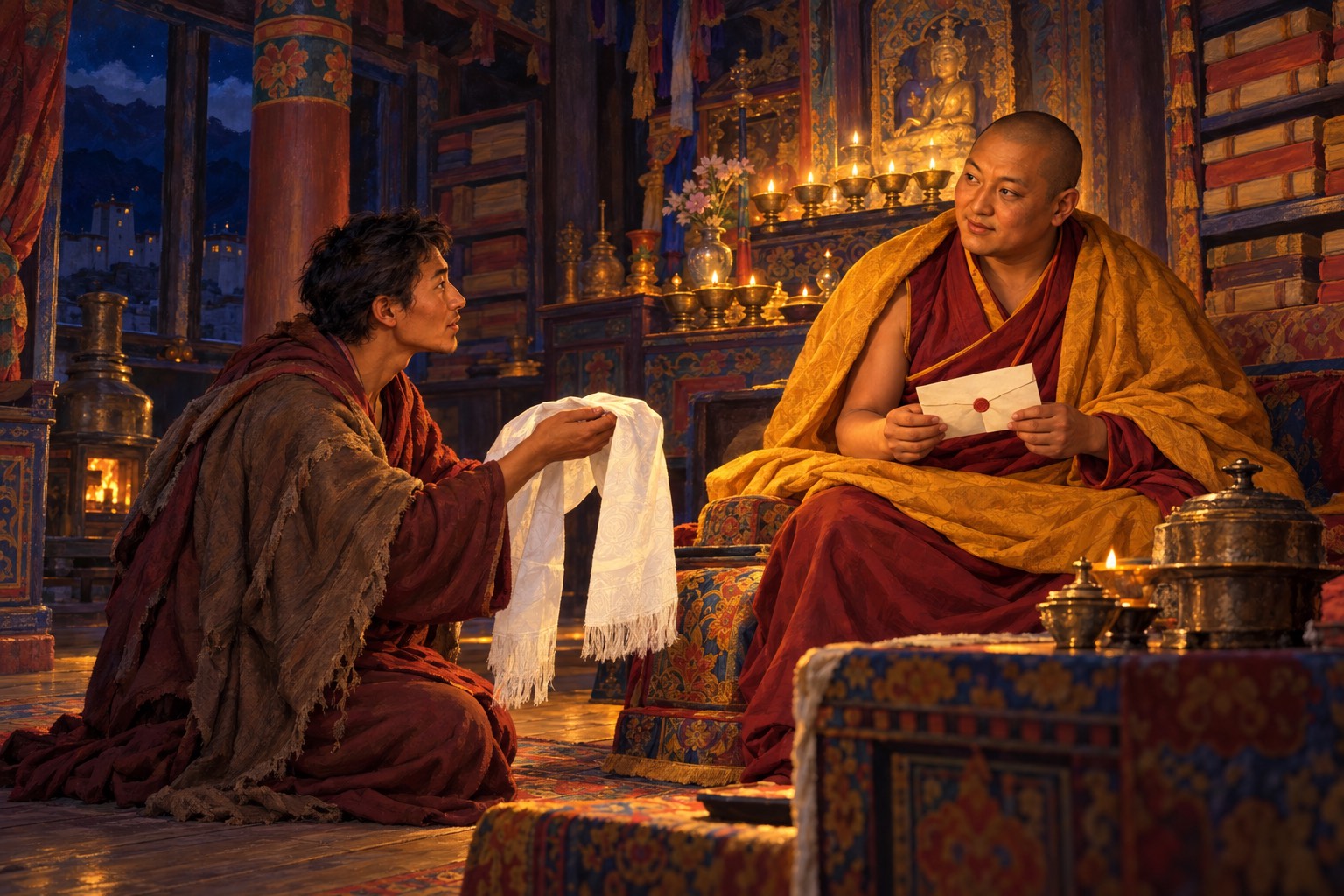
A respected Sakya scholar had little need of a doubted young Nyingma visionary. Yet from then on the two worked side by side, and Rigpa Wiki says the three masters became one another's teachers and students, each honoring the other two as guru.
The Dispeller of All Obstacles
The treasure from 1848 became the Lamé Tukdrub Barché Künsel, "The Guru's Heart Practice, Dispeller of All Obstacles." Tukdrub Barché Künsel is its usual short name, so "Lamé Tukdrub" and "Barché Künsel" are two halves of one title. It centers on Guru Rinpoche and fills about ten volumes.
As Orgyen Tobgyal Rinpoche tells its origin on Rigpa Wiki, Guru Rinpoche taught it at Samye when his disciples asked how to overcome obstacles. There is no greater method, he told them, than praying to the lama. Yeshe Tsogyal wrote it down, and it was hidden for a later age with a prophecy of the two friends.
In 1855 Khyentse and Chokgyur Lingpa deciphered it together. Khyentse and Kongtrul both describe this as two revelations merging into one, and tradition says many treasures destined for Khyentse were passed to his younger friend. Historians see this partly as Khyentse vouching for him. The cycle carries both their names, and its short prayer, the Barché Lamsel, is widely chanted.
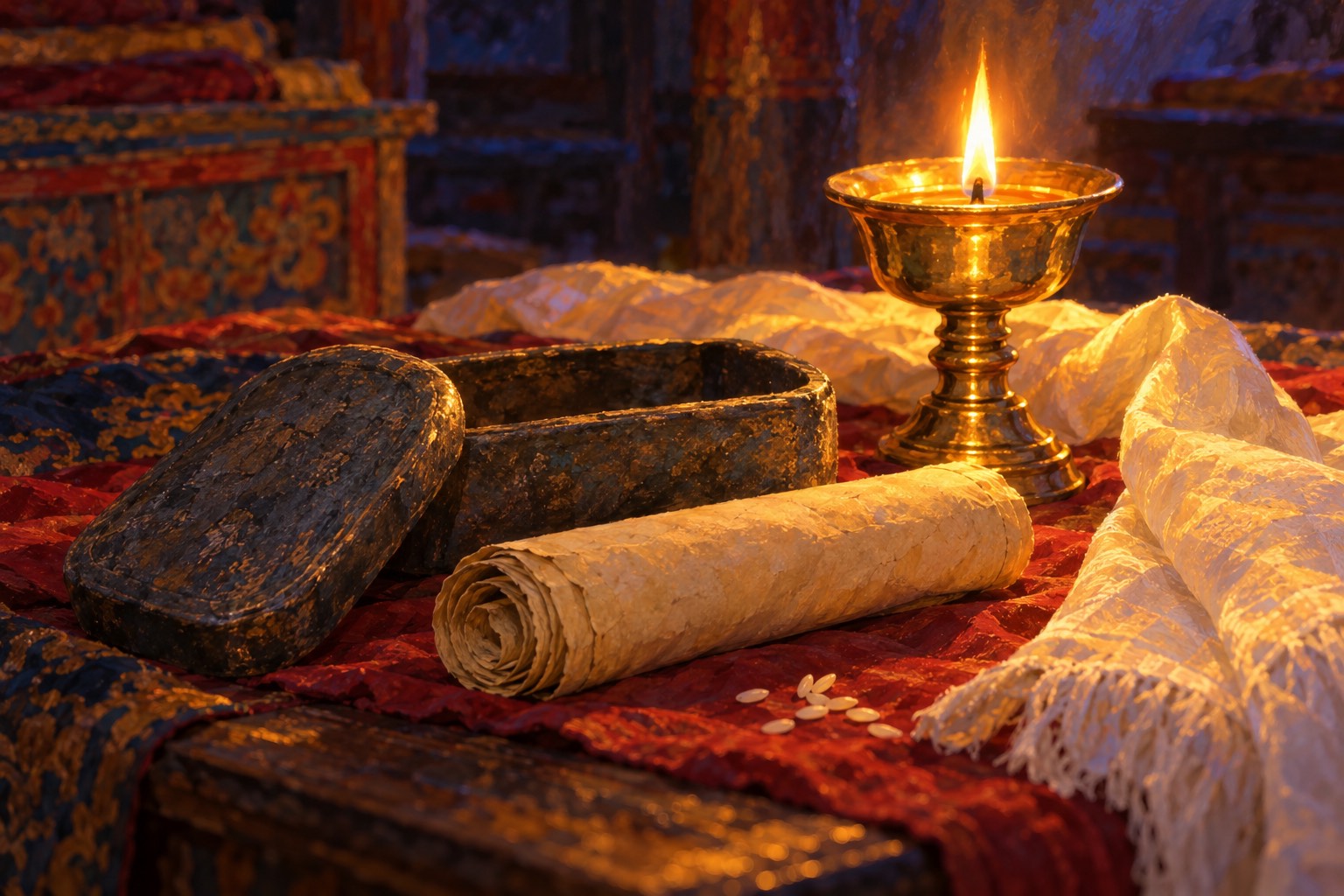
This page only names these practices. Anyone drawn to them should ask a qualified teacher.
Treasures in the sight of all
In 1856 Chokgyur Lingpa travelled to Karma Gön, the ancient seat of the Karmapas, and revealed treasure at the sacred site above it with the Fourteenth Karmapa among the witnesses. That year, at Sky Treasury, his own account says he brought out statues, including two kutsab, "representatives": images that stand in for Guru Rinpoche himself.

In January 1857, at Pema Shelpuk, the Lotus Crystal Cave near Dzongsar, the friends opened a new retreat place for Khyentse before a gathered crowd. There Chokgyur Lingpa drew out the Three Sections of the Great Perfection, the treasure foretold in Khyentse's vision. It was his first public revelation, made, in his words, "for all to see" (trans. Samye Translations).
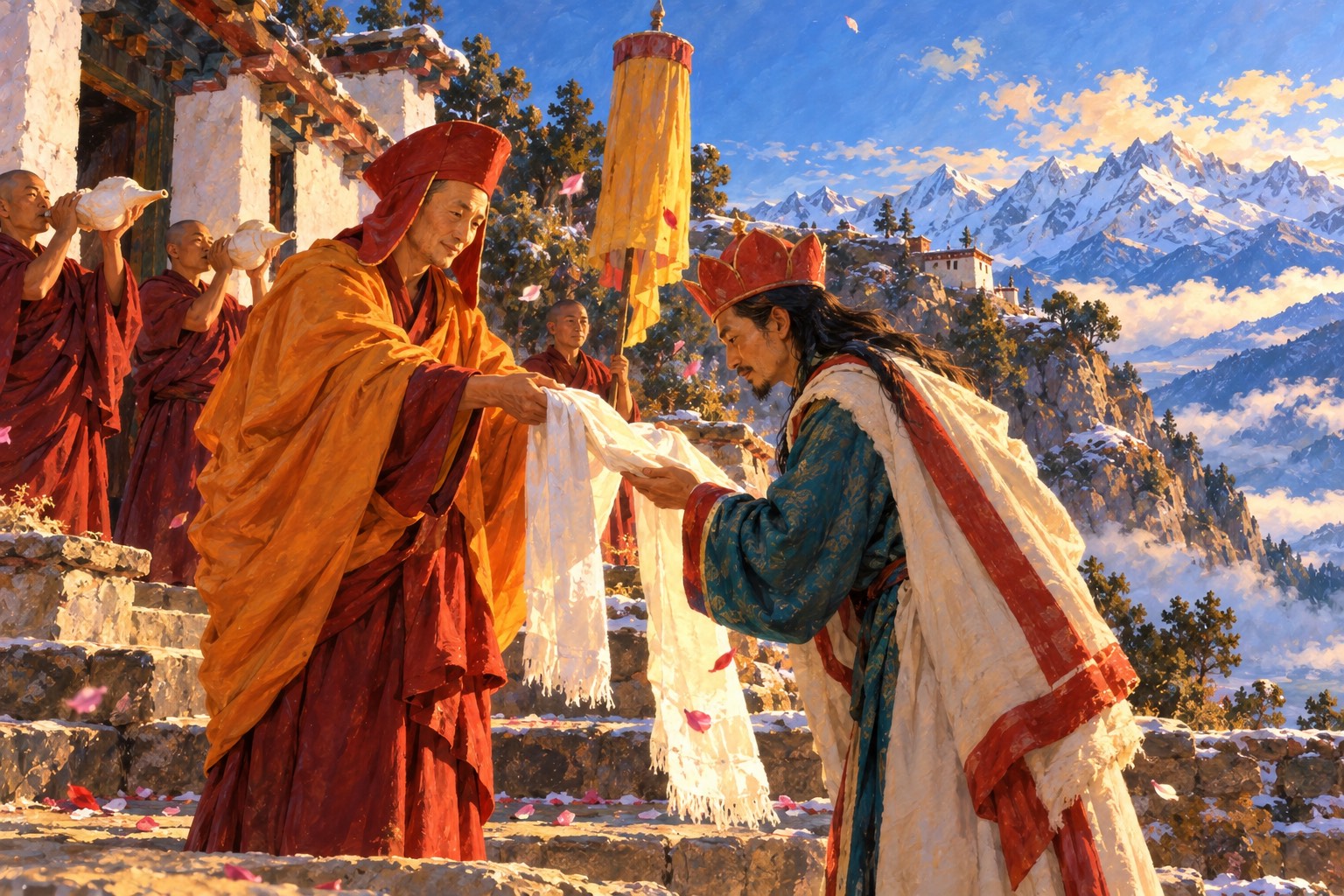
A month later he came to Tsadra Rinchen Drak, Kongtrul's hermitage above Palpung, where four years earlier he had arrived unnoticed. This time, Treasury of Lives relates, conches were blown and banners hung, and the accounts add that flowers fell from the sky. Now Kongtrul received empowerments from him.
Soon after, Chokgyur Lingpa revealed a list, attributed to Guru Rinpoche, of twenty-five great sacred sites of Kham, and Tsadra was among them. For years the friends went from site to site, often with crowds and sometimes the king of Derge, opening places of pilgrimage.
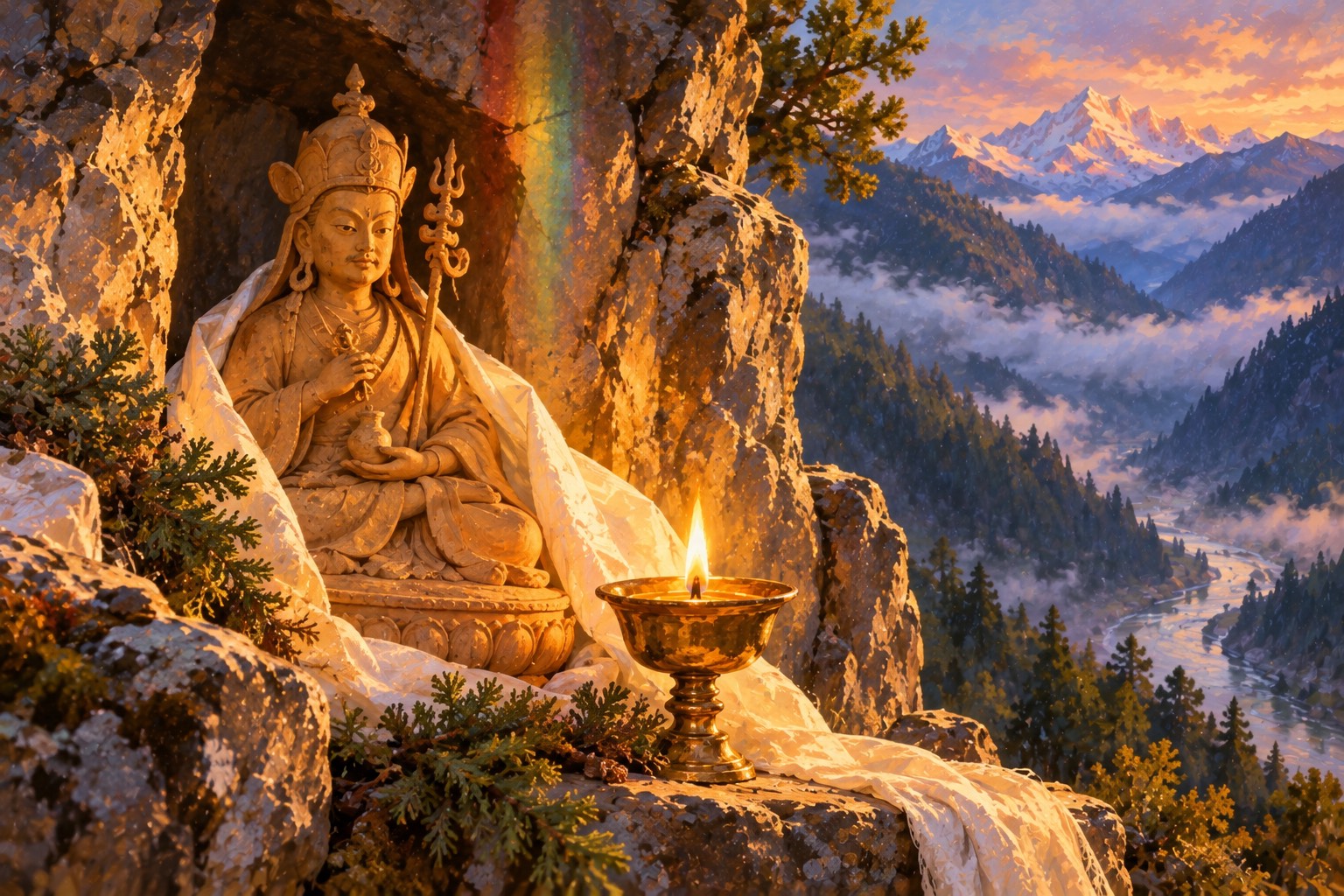
At one cliff, Chokgyur Lingpa's account says, he revealed medicinal water before everyone present, with robes said to be Guru Rinpoche's and a small statue of the Guru. From another, Öbar Drak, he brought out scrolls that Khyentse deciphered: the history of two kutsab statues. The text, in Yeshe Tsogyal's voice, says that seeing them is no different from meeting the Guru in person.
Stones at the lake
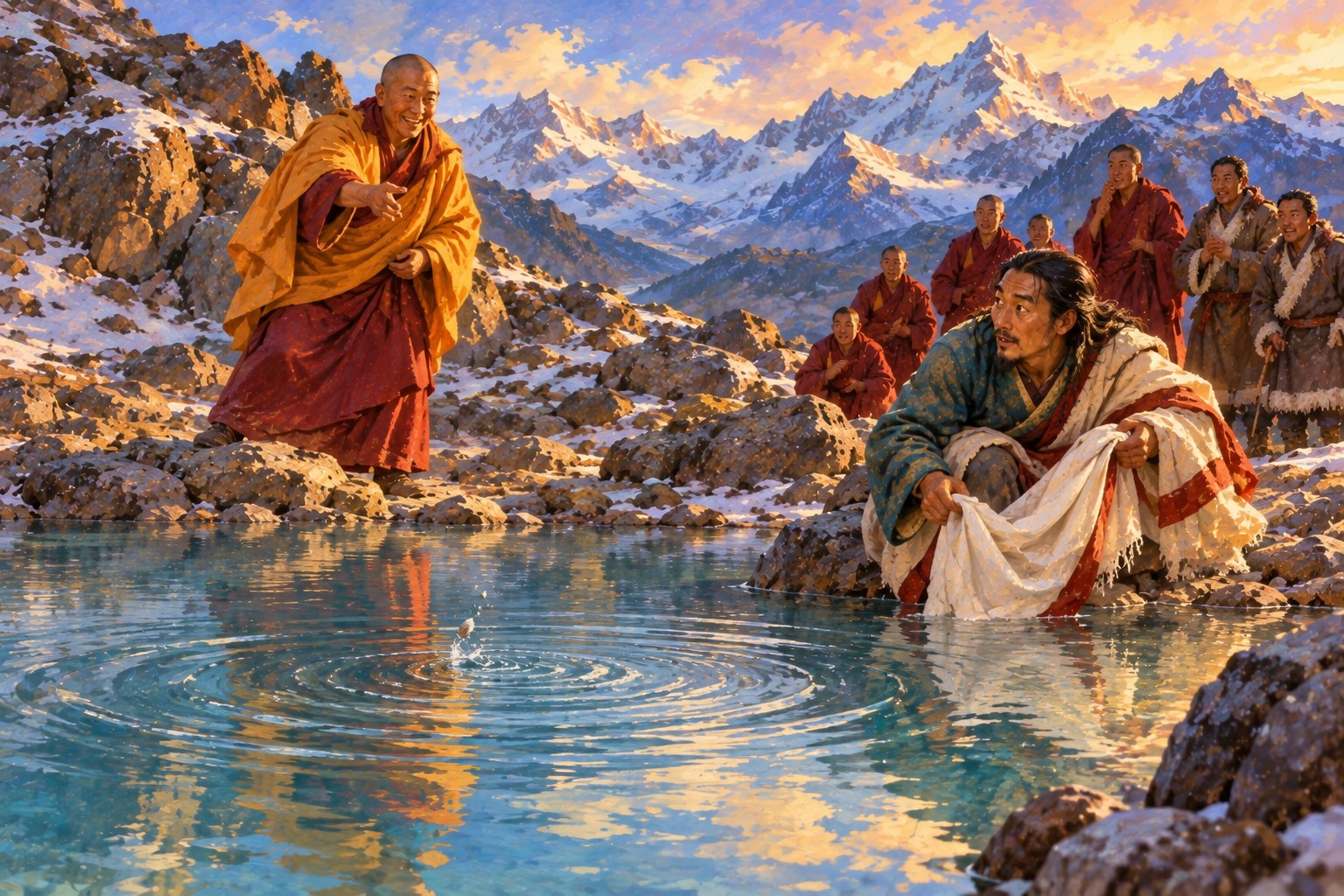
Not every story is solemn. In November 1866, after opening the cliff retreat of Karmo Taktsang, where Mipham would later live, the two climbed to a small lake high in the scree, where a naga, a water spirit, was said to guard a treasure.
The tellings differ, which still makes people smile. In one, Chokgyur Lingpa asked everyone to keep quiet so as not to offend the naga, while Khyentse called it a mere worm and threw stones into the water. When the lake churned, the younger man fell back and the elder scolded him. In Chokgyur Lingpa's own version, he drew the treasure out with a net made from his robe.
Without bias
The three are remembered at the heart of the Rimé movement. Rimé means "without bias": honoring and preserving the teachings of every school instead of favoring one's own. In 1867 Chokgyur Lingpa told his students that the schools differ only slightly and share one final goal.
Historians add a gentle caution: none of the three tried to merge the schools or found a new one (Treasury of Lives). Rimé was a way of seeing, not a new sect.
A treasury of treasures
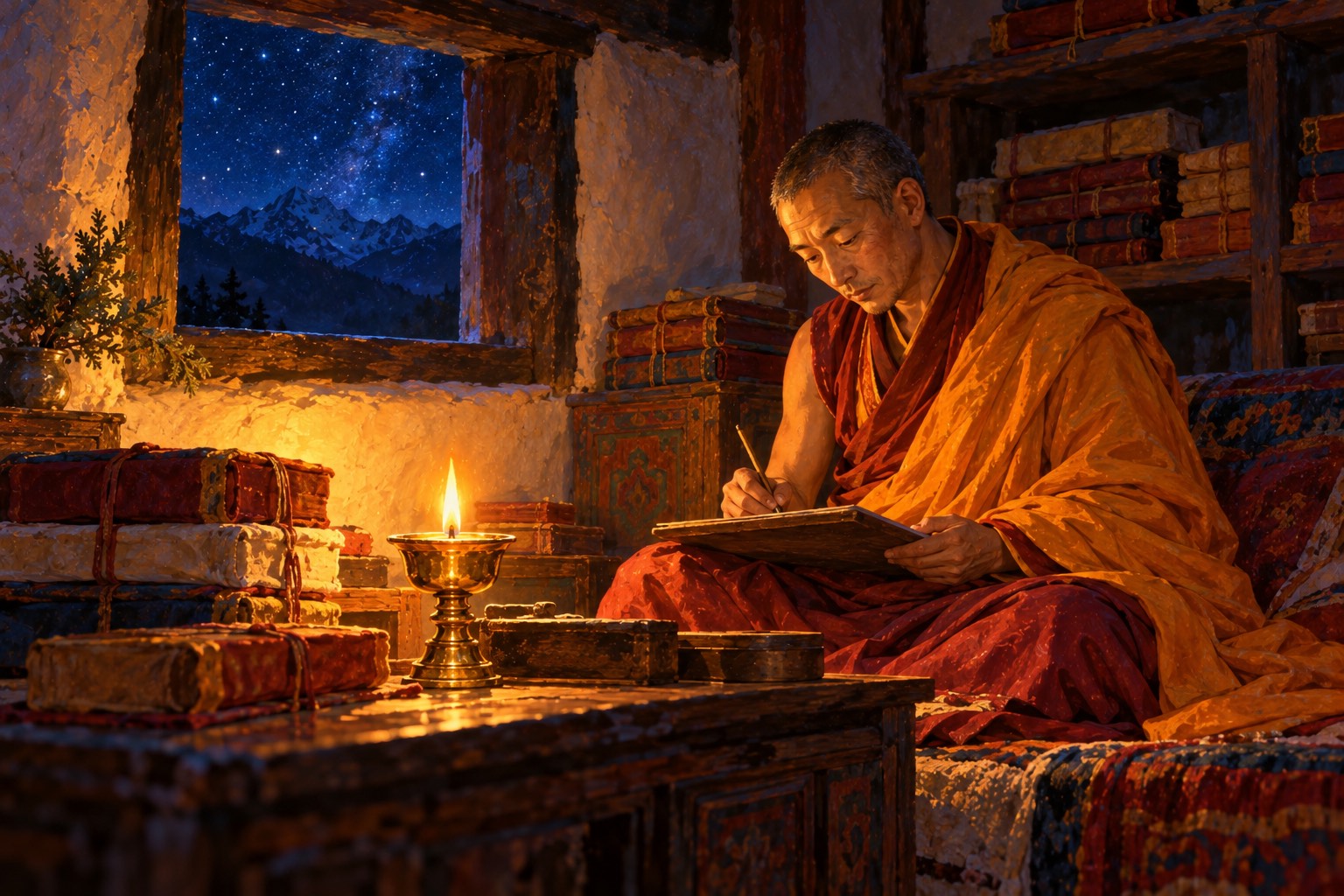
In 1855 Khyentse proposed a great collection of treasure teachings and advised which to include, and Kongtrul spent the next three decades compiling it at Tsadra. The Rinchen Terdzö, "Treasury of Precious Treasures," gathers revelations from many centuries, Chokgyur Lingpa's among them. It was completed in 1889. The story goes that Chokgyur Lingpa even asked Guru Rinpoche, in a vision, whether Kongtrul had chosen well. He had.
The Seven-Line Prayer
The Seven-Line Prayer is far older than these three; it came to light through Guru Chöwang in the thirteenth century, as told in Guru Chöwang and How the Prayer Spread. But it runs quietly through their work. Chöwang's Lama Sangdü, the cycle that contains the prayer, became the main guru practice of the Rinchen Terdzö, according to Rigpa Wiki.
In Khyentse's great Compendium of Sādhanas, a brief prayer to the lineages of earlier and later treasures opens with the seven lines themselves (Lotsawa House). And Rigpa Wiki cites a treasure revealed by Kongtrul in which Guru Rinpoche says the dakinis invited him into this world with the melody of these seven lines.
Their student Mipham later explained the prayer in White Lotus, told in Mipham and the White Lotus, and Khyentse wrote a prayer to Patrul Rinpoche, the wandering teacher.
Partings
Chokgyur Lingpa died in 1870 at Neten, his monastery near Sky Treasury, only forty-one years old. Khyentse wrote his life story and listed his treasures, and Rigpa Wiki relates that he later saw his friend in a vision, in a pure realm covered with lotuses.
Khyentse passed away in early 1892. Kongtrul, nearly eighty, washed his friend's body and led the funeral rites. He lived on until 1899.

Three men from three schools trusted one another. One saw something true in a doubted young man; the young man brought hidden things into the light; the scholar made sure they would not be lost.
About the art
Jamyang Khyentse Wangpo and Jamgön Kongtrul are shown as monks, as their nineteenth-century portraits show them: shaved or cropped heads, maroon, red and saffron robes and large shawls over both shoulders. In formal moments Kongtrul wears the tall red pandita hat with long side flaps. Himalayan Art Resources explains the three rings or lines on such hats as a sign of mastery of the three parts of the Buddhist canon.
Chokgyur Lingpa appears in two stages of life. As a boy and young man he was a monk, so he wears plain maroon robes and a shaved head. Later he is shown, as his portraits show him, as a lay tantric master: long black hair, colourful long-sleeved robes and a white lower robe, which Himalayan Art Resources links to hereditary lay mantra-holders. In ceremonial moments he wears a simple red Nyingma lotus hat, kept plainer than Guru Rinpoche's, and the small oblong box he carries is a treasure casket, the emblem of a treasure revealer.
Guru Rinpoche appears once, in the boy's vision, in his main form: lotus hat with a vulture feather, a five-pronged vajra at his heart, a skull cup with a long-life vase, and the khatvanga staff in the crook of his arm, inside a sphere of rainbow light. The small clay statue in scene 10 is a kutsab, a 'representative' image that, in the tradition, stands in for the Guru himself. White silk scarves (khatak) are offered in greeting, and white conch shells are blown to welcome an honoured guest.
Dzongsar, Palpung, Tsadra, Karma Gön and Nangchen are drawn from the general character of Kham: forested valleys, high grasslands, whitewashed and red-ochre walls, flat roofs and snow peaks. Most of these buildings were destroyed in the twentieth century and rebuilt, and no detailed picture of them as they were in the 1850s was found, so the scenes are careful reconstructions, not records.
Why this matters for practice
These three friends spent their lives making sure that what Guru Rinpoche left behind would reach people who needed it, and the Seven-Line Prayer runs quietly through their work, from Khyentse's lineage prayers to Kongtrul's great Treasury. The heart of the Barché Künsel, as the tradition tells it, is simple: there is no greater way through obstacles than praying to the lama. That is something anyone can begin with seven lines.

If something in this story moved you, you might pause and recite the prayer once, and ask, as these three friends did, for Guru Rinpoche to come.
Sources and further reading
- Jamyang Khyentse Wangpo, by Alexander Gardner, Treasury of Lives (Internet Archive snapshot, 2012)
- Chokgyur Lingpa, by Alexander Gardner (2009), Treasury of Lives (Internet Archive snapshot, 2012)
- Jamgön Kongtrul Lodrö Tayé, Treasury of Lives (Internet Archive snapshot, 2024)
- Tsadra Rinchen Drak, Pelpung, Karma Gon and Dzongsar (institution pages), Treasury of Lives (Internet Archive snapshots, 2015–2016)
- Jamyang Khyentse Wangpo, Rigpa Wiki (Internet Archive snapshot)
- Chokgyur Dechen Lingpa, Rigpa Wiki (Internet Archive snapshot)
- Jamgön Kongtrul the Great, Rigpa Wiki (Internet Archive snapshot)
- Tukdrup Barché Kunsel, Rigpa Wiki (Internet Archive snapshot)
- Rinchen Terdzö, Rimé, Lama Sangdü and Seven Line Prayer, Rigpa Wiki (Internet Archive snapshots)
- Tsadra Rinchen Drak, Palpung and Karma Gön, Rigpa Wiki (Internet Archive snapshots)
- Melody to Delight the Fortunate, by Chokgyur Lingpa (Samye Translations, 2023), Lotsawa House
- Radiant Sunlight of the Victors' Teachings and Advice on Nonsectarianism, by Chokgyur Lingpa (Samye Translations), Lotsawa House
- A History of the Samaya Substances and the Two 'Representative' Statues, revealed by Jamyang Khyentse Wangpo (Samye Translations, 2020), Lotsawa House
- Brief Prayer to the Earlier and Later Terma Lineages, from the Compendium of Sādhanas (Rigpa Translations, 2022), Lotsawa House
- The Melody of the Auspicious Spiralled Conch, by Jamgön Kongtrul; and A Brief Biography of Kongtrul Yönten Gyatso, by Alak Zenkar Rinpoche, Lotsawa House
- The Prayer Which Removes All Obstacles from the Path (Barché Lamsel), Lotsawa House
- Author pages: Jamyang Khyentse Wangpo and Chokgyur Dechen Lingpa, Lotsawa House
- Jamyang Khyentse Wangpo, Jamgön Kongtrul and Chokgyur Lingpa: a three-painting set with hand and foot prints (items 73404, 73405, 73406), Himalayan Art Resources
- Tibetan Treasure Literature: Revelation, Tradition, and Accomplishment in Visionary Buddhism, by Andreas Doctor (Snow Lion, 2005), Book (used only through publisher and catalogue summaries)
This retelling is waiting to be read by a knowledgeable practitioner. Where the traditional accounts differ, the story says so; if you notice a mistake, please tell us through Share Your Story.