Two things to carry
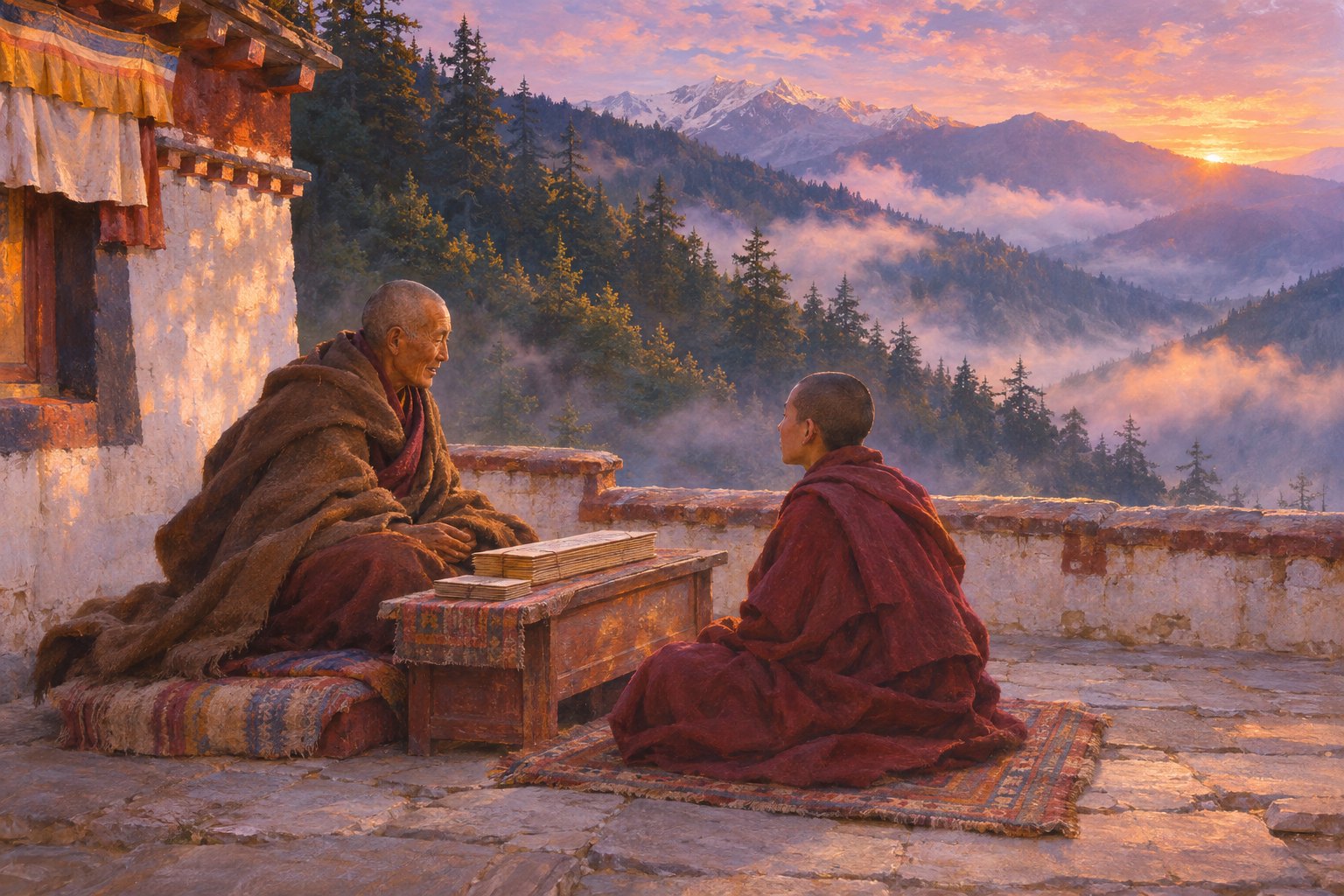
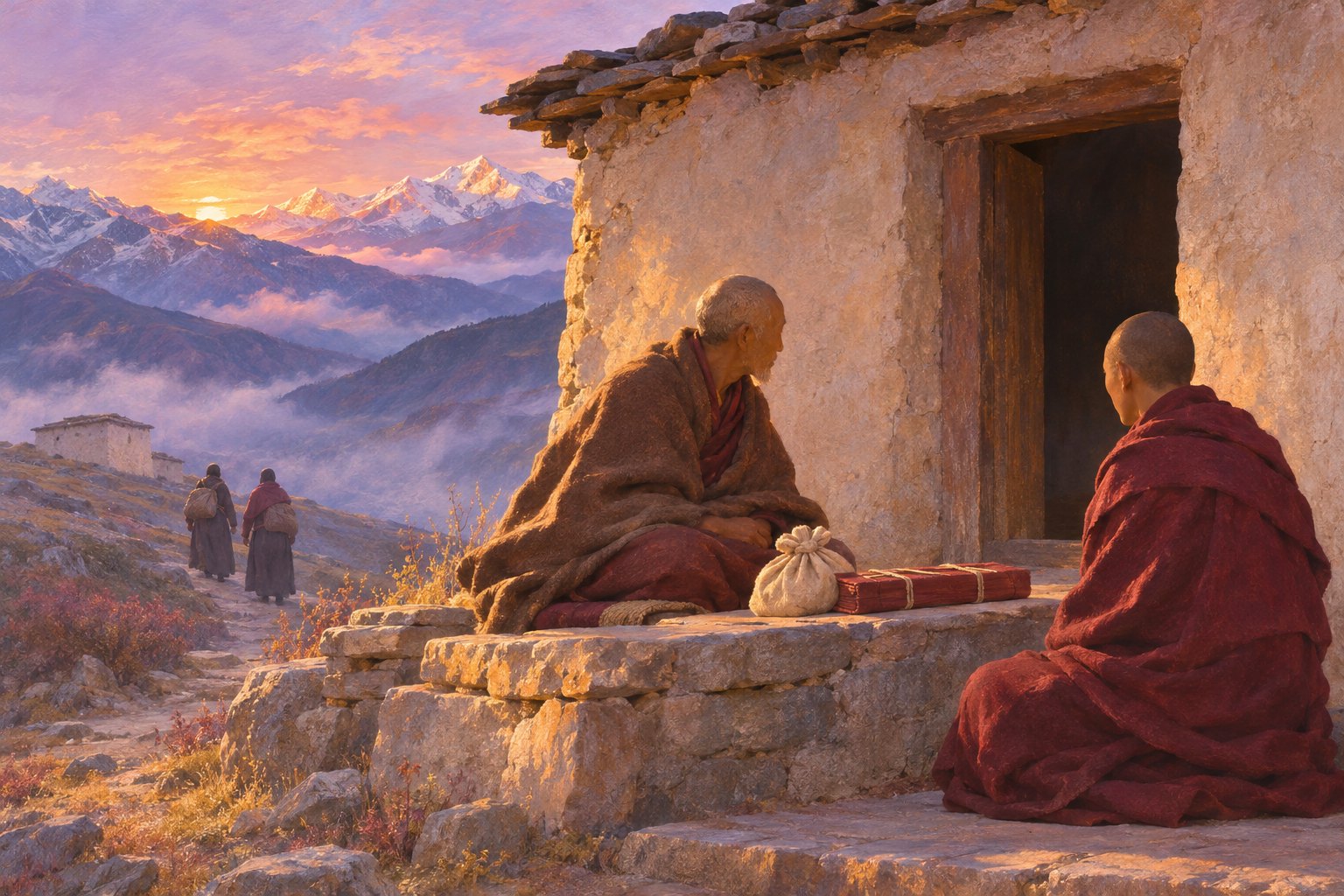
When Minyak Kunzang Sönam parted from Patrul Rinpoche, his teacher gave him a copy of the Bodhicaryāvatāra and a brick of tea. The episode is remembered in an oral account of Dilgo Khyentse Rinpoche and in the disciple’s biography.
A book and tea were things a traveller could carry. One could be opened and studied; the other could be brewed and shared. The later story turns on the disciple’s response to these ordinary gifts. He kept them as reminders of the person from whom he had received so much.
The brick of tea
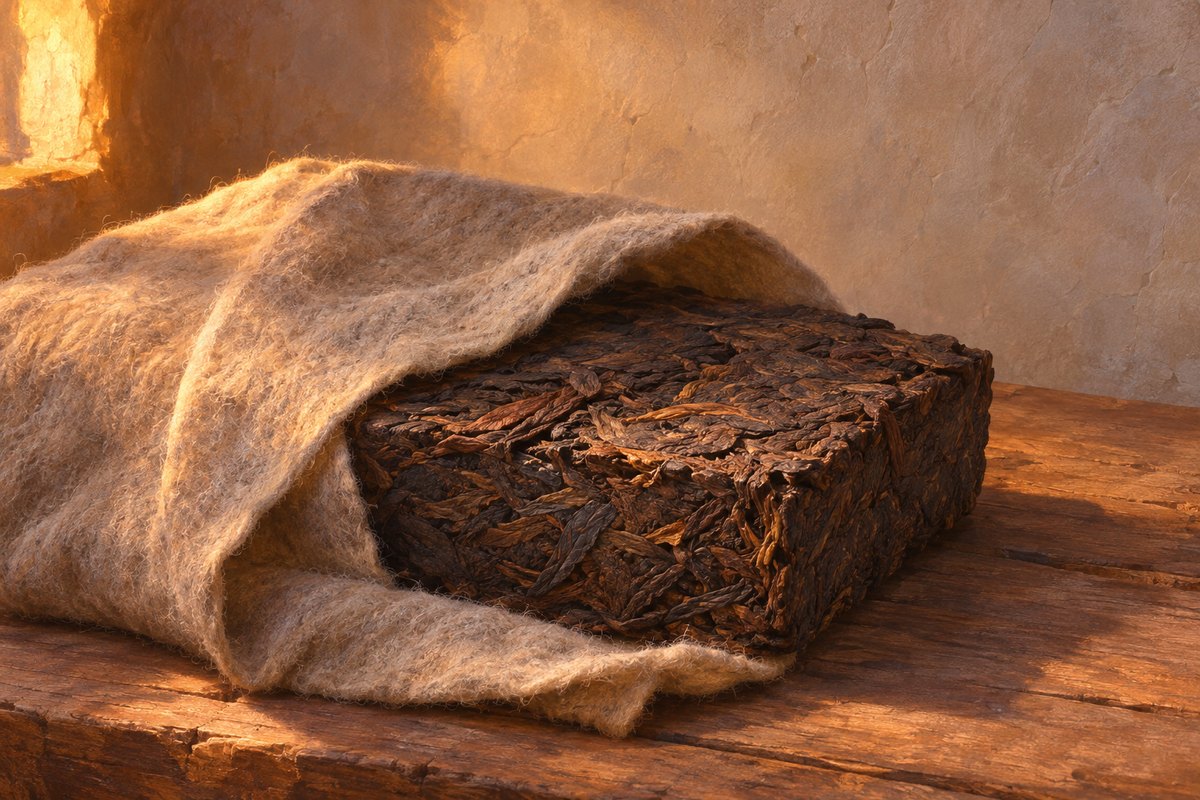
Compressed tea was not a jewel or an elaborate ceremonial object. Its usefulness belonged to daily life. Water could be heated, a little tea prepared, a guest offered a bowl. In this story its value also came from the hands that had given it.
The painting lingers on the wrapped brick without turning it into an object of magical power. A gift may carry a history that cannot be seen from its material alone. Someone unfamiliar with the relationship would see tea. The disciple remembered his teacher.
Years of learning
Minyak Kunzang Sönam, usually dated 1823–1905, had a substantial education that included Geluk institutions as well as close relationships with Nyingma masters. Patrul became a central teacher in his life. His learning crossed institutional boundaries without making those traditions indistinguishable.
The illustrated lesson is an atmospheric reconstruction, not a record of a specific gathering. It gives room to the years behind the parting gift. Gratitude did not begin when the tea changed hands. The small present could hold so much because the relationship had already been formed through teaching, attention and time.

The book beside it
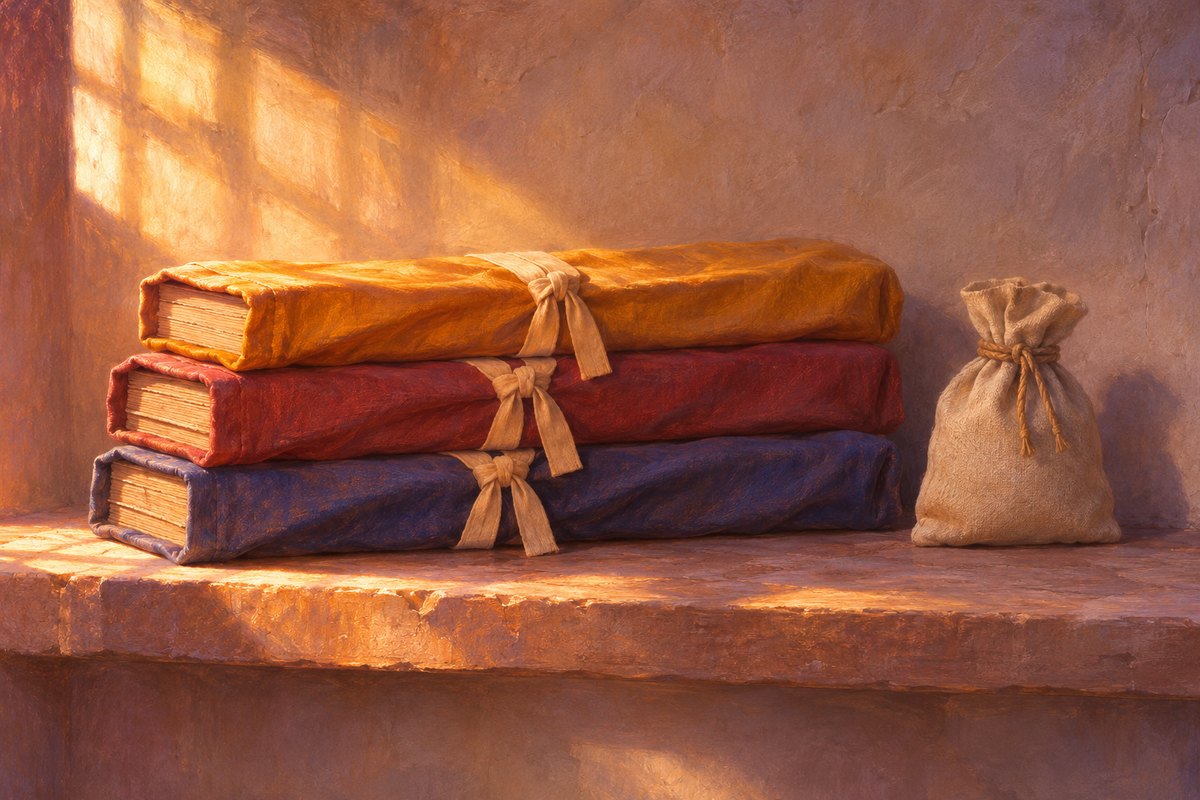
The Bodhicaryāvatāra is Śāntideva’s guide to the bodhisattva’s way of life. Patrul’s explanations of it shaped generations of students. Minyak Kunzang Sönam became one of the scholars through whom that teaching remained available.
The book and tea therefore belong together without having to mean exactly the same thing. One connects directly with a great work of study; the other with daily nourishment. Both came from the teacher. Their companionship in the story lets learning and remembered kindness occupy the same table.
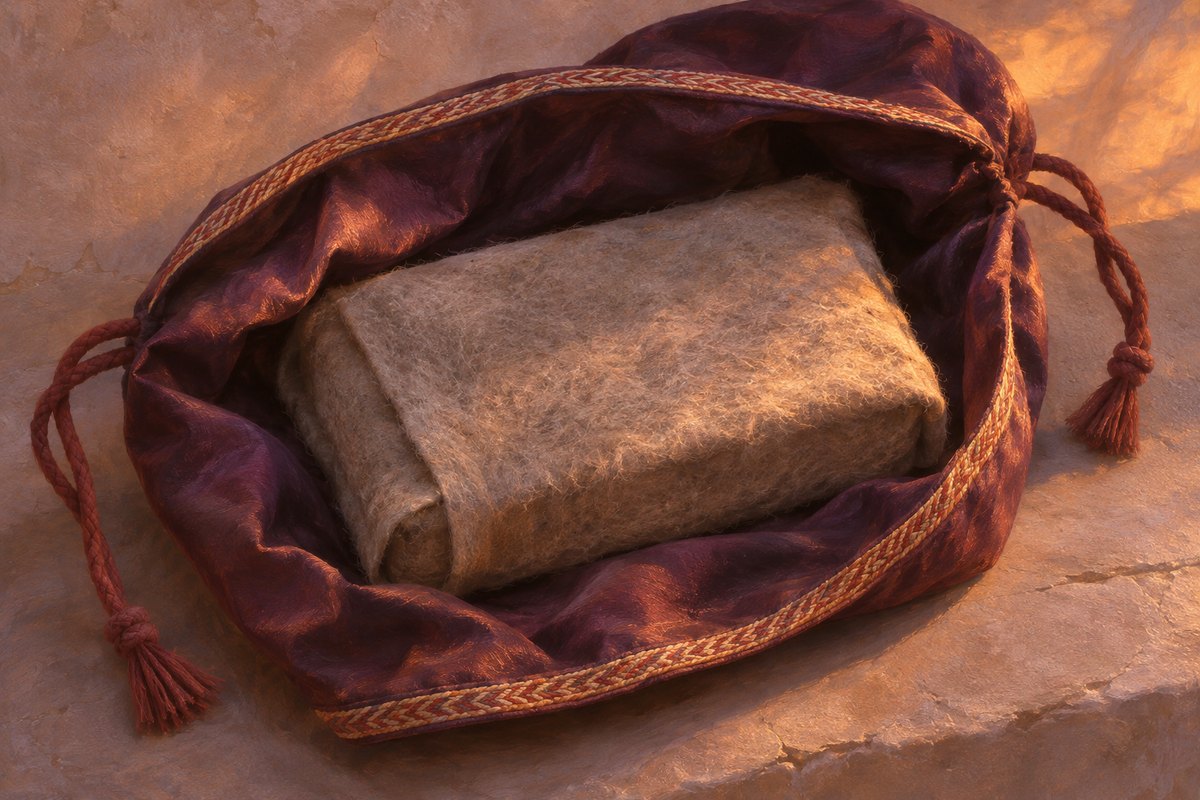
A cloth around the gift
The remembered account describes tea carefully wrapped and kept close. The felt and outer pouch in the illustration follow that tradition without claiming the exact colour, weave or appearance of the original wrapping.
Care changes how an object is handled. Something easily used and forgotten is protected; something small enough to lose is given a place. That does not require an elaborate explanation of the disciple’s inner life. The actions themselves tell us that the present mattered, and that he wanted its connection with his teacher to remain near.
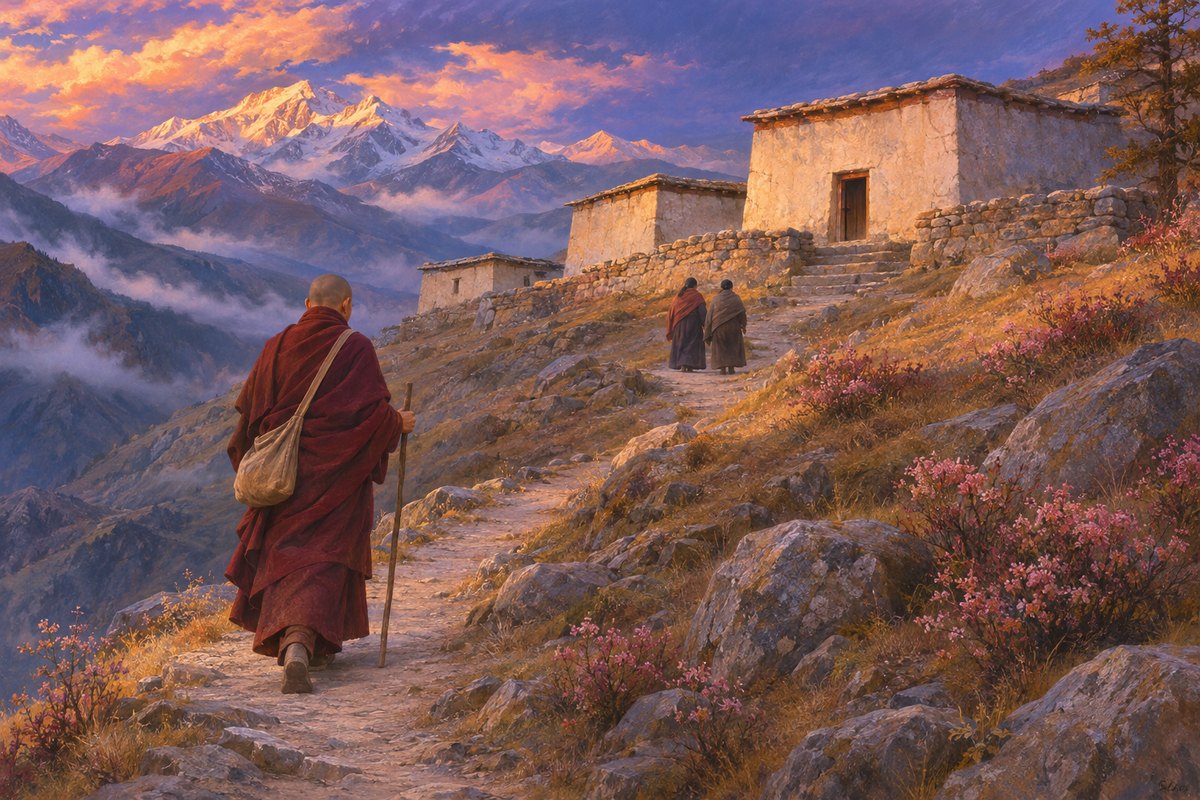
Onward with the traveller
His life continued among teachers, students and places of practice. The tea went with him. The small bundle in the road scene is a way of following that continuity without inventing a particular day’s journey.
Parting from a teacher does not make every later moment a grand occasion. There are roads, weather, belongings to gather and a place to sleep. An object kept through those ordinary changes can become a steady reminder. The gift did not have to become larger to accompany the years.
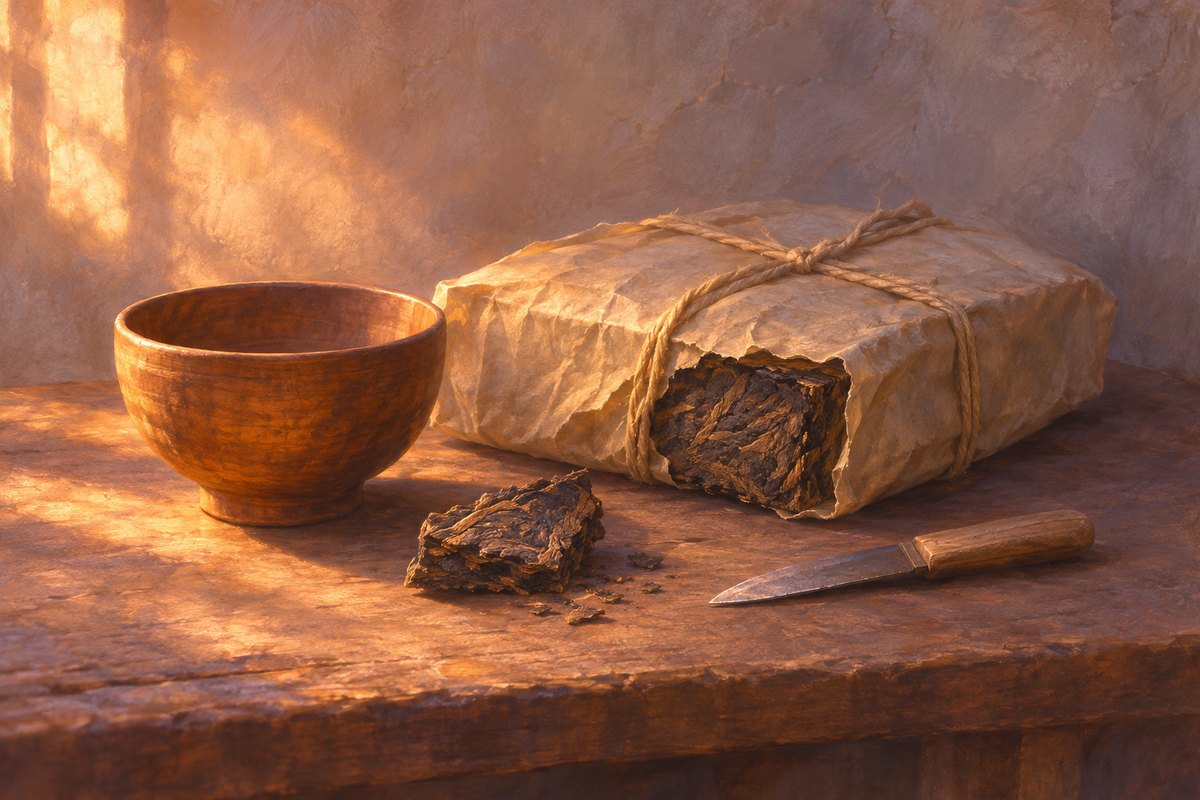
A little at New Year
The biographical telling remembers him preparing a little of the tea at New Year. He did not need to consume the whole gift at once. A small portion could bring the relationship into another year of his life.
There is no healing claim or promised result here. The story concerns remembrance and gratitude. The painted bowl is ordinary tea in an ordinary vessel. Its place in a devotional life comes from the relationship remembered as it is prepared, rather than from a property an illustration could prove.
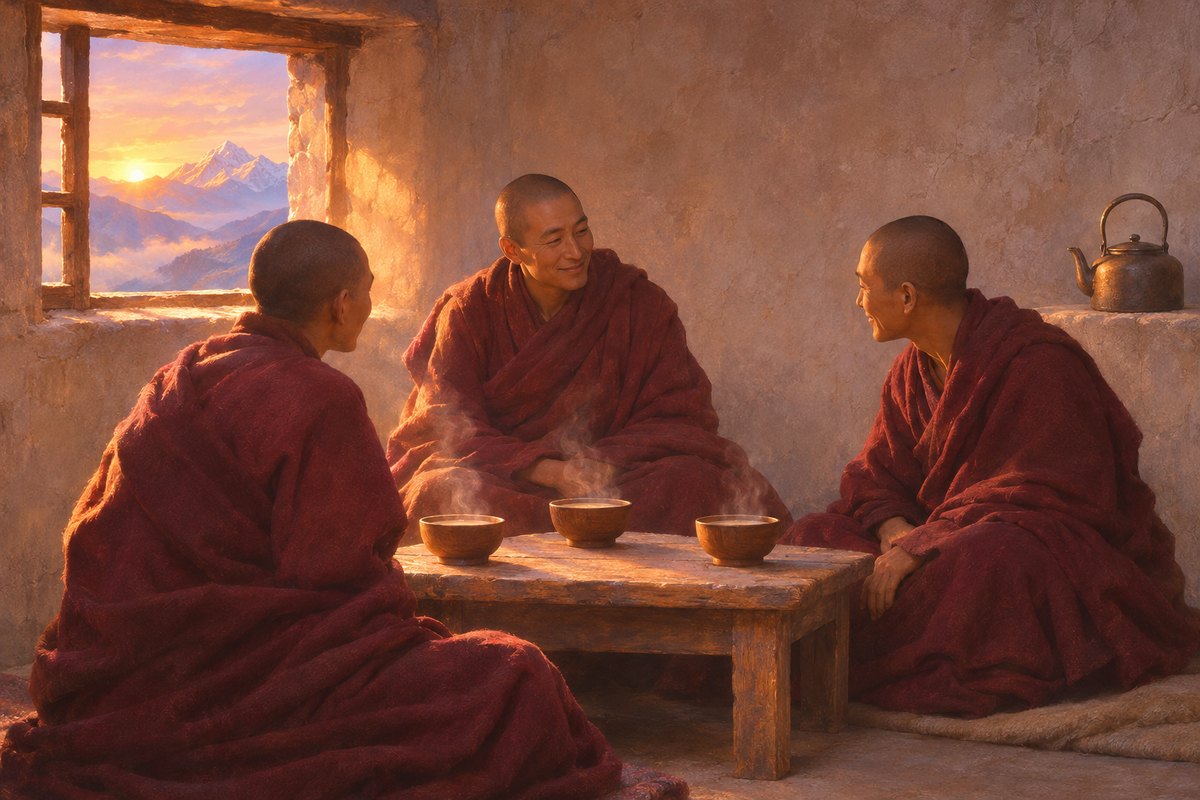
The students’ bowls
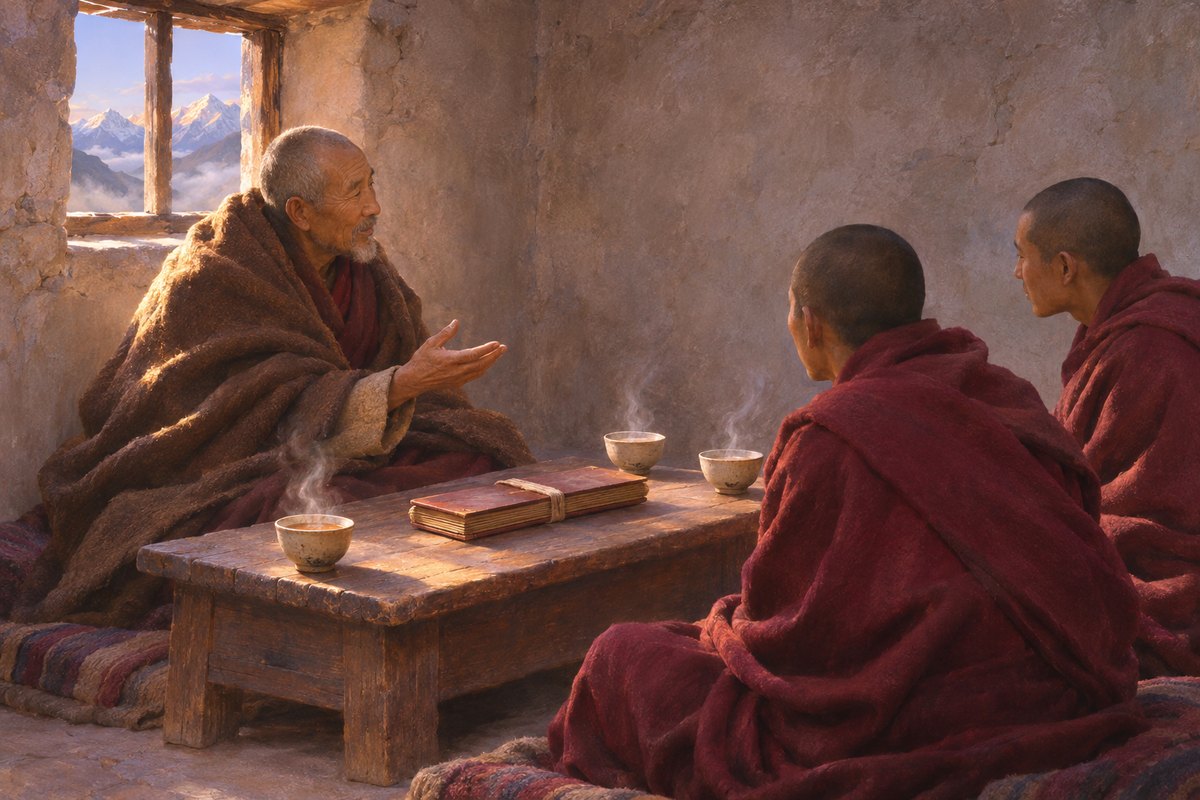
He shared the tea with students. That detail gives the story its outward turn. A present received from his teacher became something offered to other people, while its origin was still remembered.
The painting shows a modest gathering rather than a precisely documented group. The act it stands for is simple enough: other bowls are filled. Gratitude need not remain an inward feeling held away from everyone else. In the remembered episode it takes the form of a little tea that someone else can receive.
The scholar and the gift
Minyak Kunzang Sönam’s writings preserve explanations associated with Patrul. His public overview of the Bodhicaryāvatāra carefully considers how its chapters fit together. The scholar who kept a small gift also worked with substantial questions of interpretation.
That combination helps the story avoid reducing him to a charming anecdote. The tea belonged to a learned practitioner’s life, alongside books, teachers and students. Nor should he be confused with Khenpo Kunzang Palden, another important keeper of Patrul’s explanations. Similar names belong to distinct people and distinct histories.

Remembered kindness
The source index for Enlightened Vagabond attributes this episode to Dilgo Khyentse’s oral account. It is told here in new prose, with its provenance kept visible and without invented dialogue. The final two bowls stand for the kindness received and the kindness passed onward.
The wish to follow Guru Rinpoche in the Seven-Line Prayer offers a thematic connection: learning, remembering and allowing gratitude to become generosity. No special recitation event is claimed for this episode. The tea was a small gift. The way it was treasured allows a later reader to recognize the relationship it carried.
About the art
AI-painted illustrations use anonymous figures and atmospheric settings, not authenticated portraits or exact architectural reconstructions. Recent historical figures remain distant silhouettes.
Objects and landscapes illustrate the narrative. The white dream bridge is symbolic; no visionary deity appearance or private practice sequence is reconstructed. Pecha volumes carry no invented legible scripture.
Why this matters for practice
The Seven-Line Prayer expresses the wish to follow Guru Rinpoche. This Nyingma lineage story offers a setting for considering guidance, gratitude and transmission. The connection is thematic, not an invented recitation episode.

If something in this story moved you, you might pause and recite the Seven-Line Prayer once.
Sources and further reading
- Treasury of Lives — Minyak Kunzang Sönam, Treasury of Lives
- Lotsawa House — Minyak Kunzang Sönam, Lotsawa House
- Lotsawa House — Bodhicaryāvatāra overview, Lotsawa House
- Tsadra — Enlightened Vagabond source index, Tsadra
This retelling is waiting to be read by a knowledgeable practitioner. Where the traditional accounts differ, the story says so; if you notice a mistake, please tell us through Share Your Story.