A beginning on paper
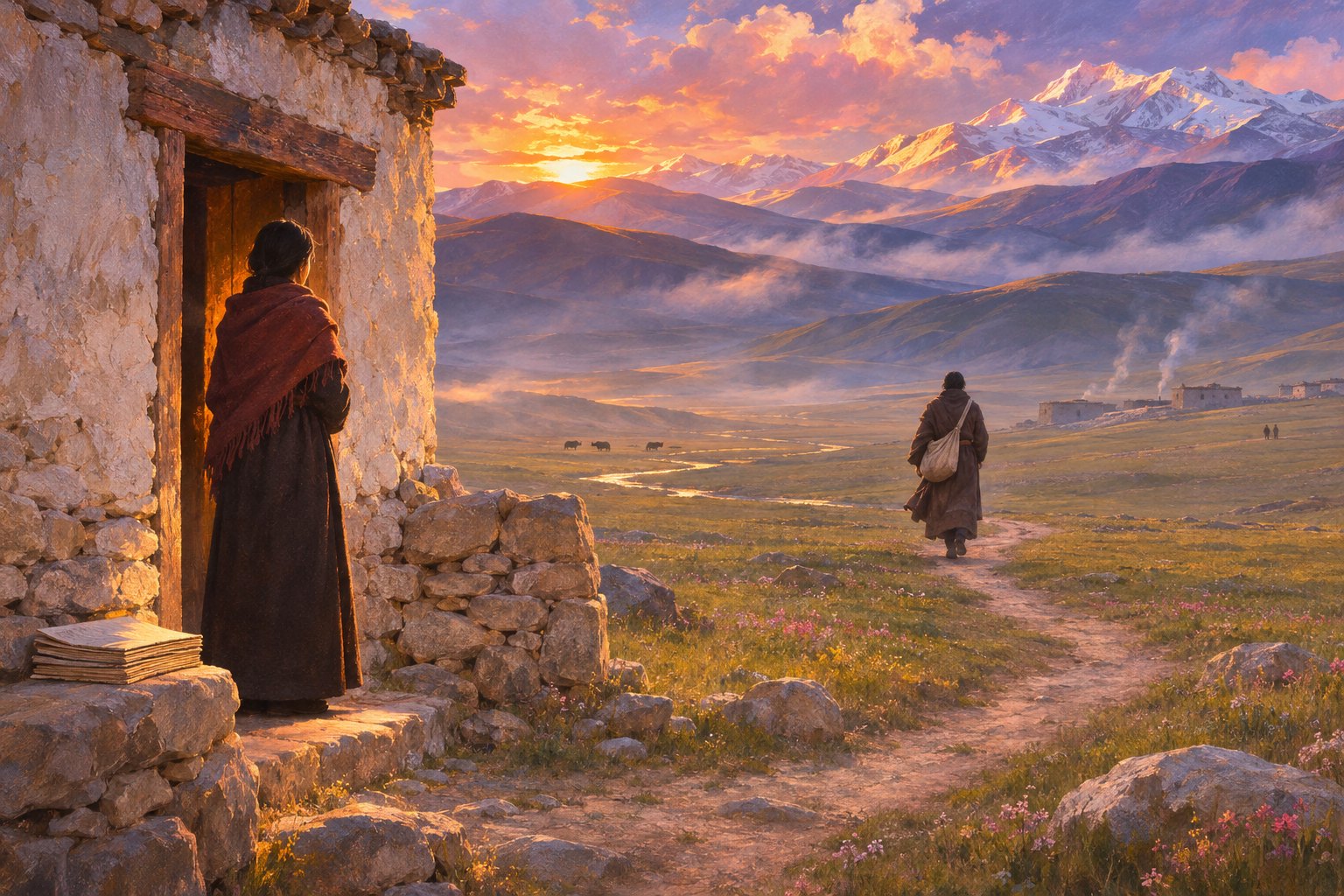
In 1978, Tāre Lhamo began writing to Namtrul Rinpoche. The two Nyingma visionaries lived in different parts of eastern Tibet. Between them lay mountain country and restrictions on travel. A letter could go where its sender could not freely follow.
What began was both a courtship and a conversation about the future of Buddhist life. Their affection was personal. The work they imagined together reached beyond the two of them.

The country between them
Her home was in the region of Golok, in what is now Padma County, Qinghai. He lived in Serta, Sichuan. Names on a map can make those places look close; a journey through high country and across administrative boundaries was another matter.
The landscape remained part of the correspondence. Distance gave each message a practical importance. The person waiting at the other end had to hear through words what could not yet be said in daily company.
A voice and a scribe
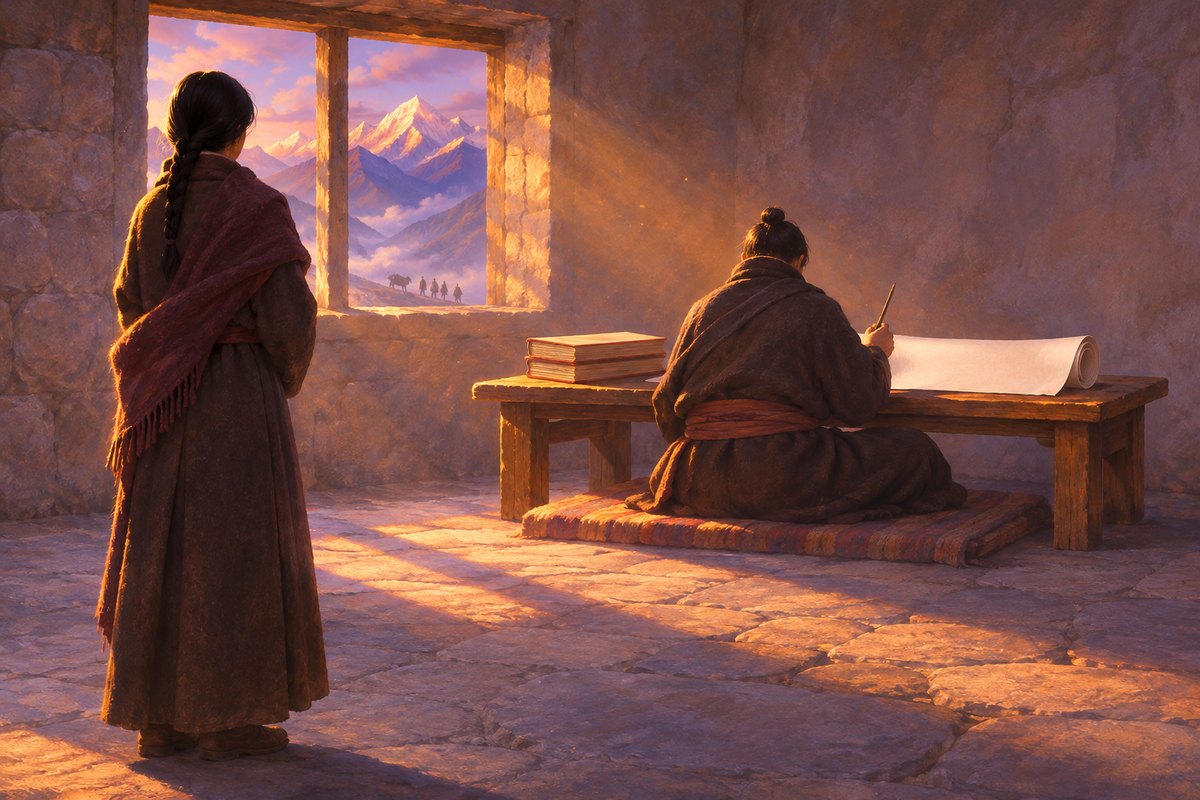
Tāre Lhamo could read but used a scribe to put her letters into writing, as Holly Gayley’s research records. Her voice reached the page through another person’s hand. The arrangement did not make the initiative less hers. She had begun the exchange.
It is a detail easily missed when a later reader sees only a printed translation. A letter has a material history as well as an author: words given, someone writing, a sheet prepared to travel.
The messenger’s part
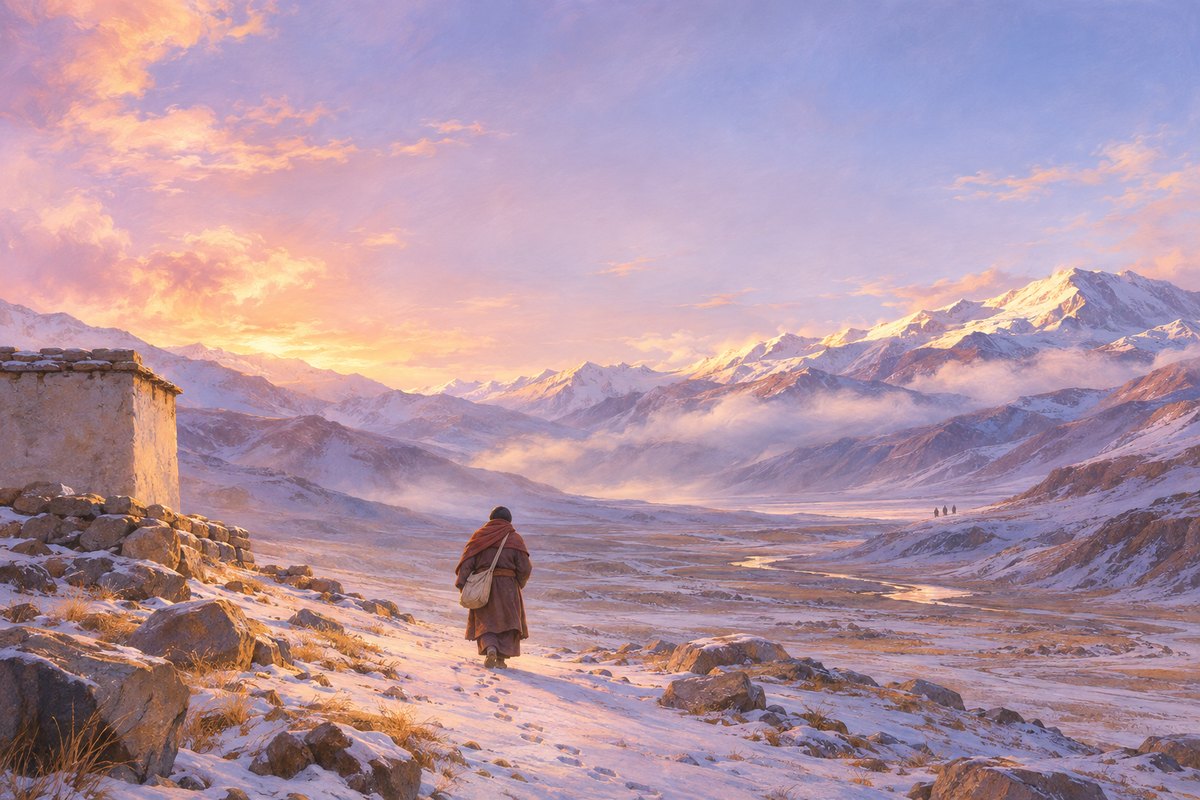
Messengers carried the letters. A private exchange depended on other people’s willingness to cross the country between the two homes. The messages were sent in batches, so the conversation had the rhythm of waiting and arrival.
No particular messenger’s journey is reconstructed here. The mountain path stands for the distance actually described in the research. Paper was light enough to carry, but the effort that brought it to another person was real.
Fifty-six letters
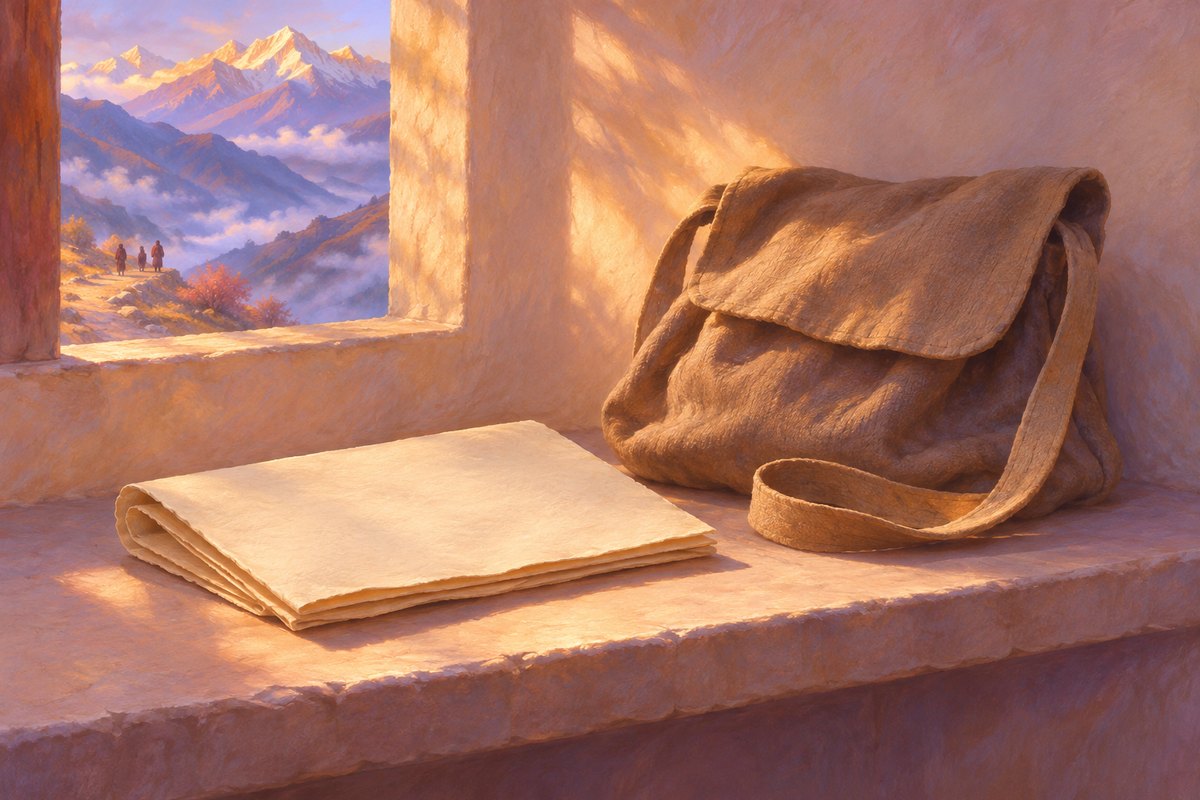
Between 1978 and 1980 they exchanged fifty-six letters. The number gives a sense of persistence: a first message was answered, and the conversation continued. Neither a single declaration nor an isolated reply had to carry everything.
Each could respond to the other’s words. Affection and intention acquired a shared history, page by page. A future life together was still uncertain, but it could be imagined and discussed rather than left entirely unspoken.

The sound of song
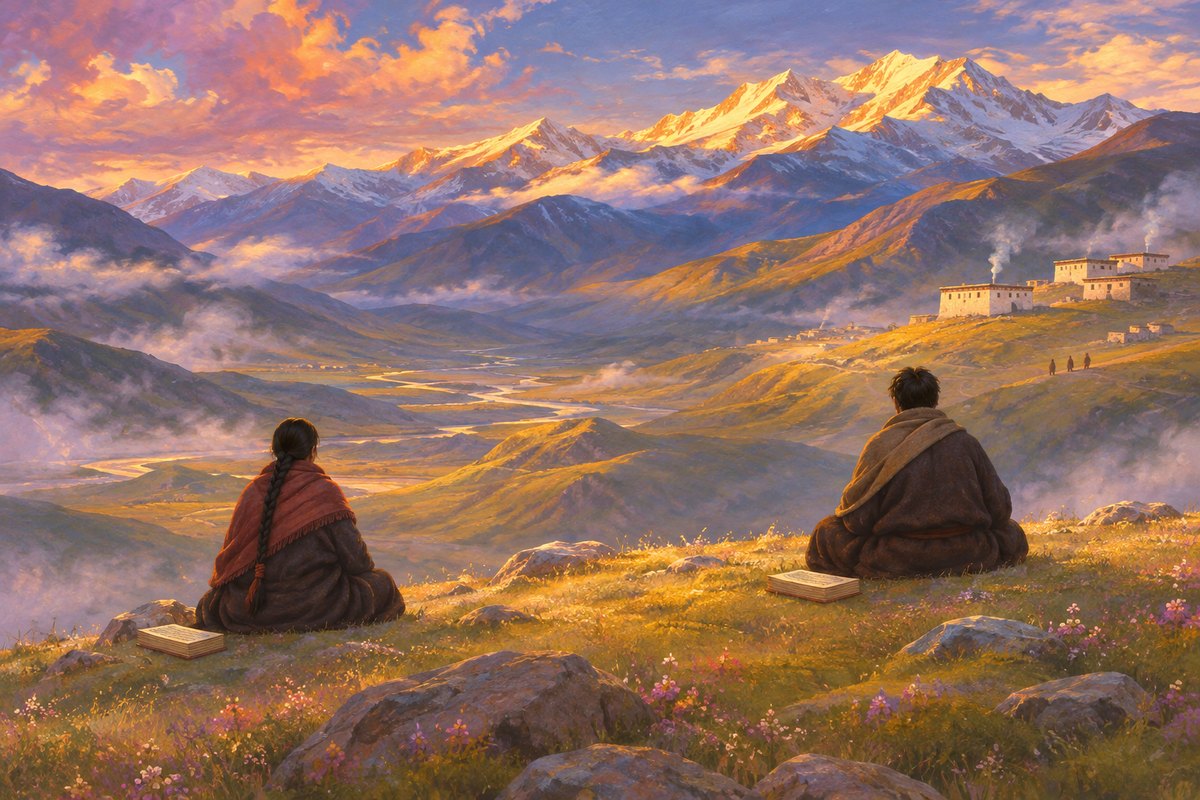
Much of the correspondence was in verse, drawing on poetic and folk-song forms. Gayley describes its warmth, playfulness and images of regeneration. These were religious masters speaking with a living language of affection.
The spring scene in the illustration is symbolic; it does not translate a particular verse into a supposed historical event. No lines from the letters are copied here. Their place in the story is as voices reaching toward each other, with the wish to begin something after years of loss.
A larger intention
The Cultural Revolution had devastated Buddhist institutions and communities. Their letters looked toward a renewal of teaching and practice. Sacred recollections and predictions belong to their own visionary understanding of that shared purpose.
The historical telling can acknowledge those convictions without presenting them as independently verified memories of earlier lives. What becomes visible in the later record is the work they undertook: a relationship expressed through rebuilding, teaching and travelling together.
The journey in 1980
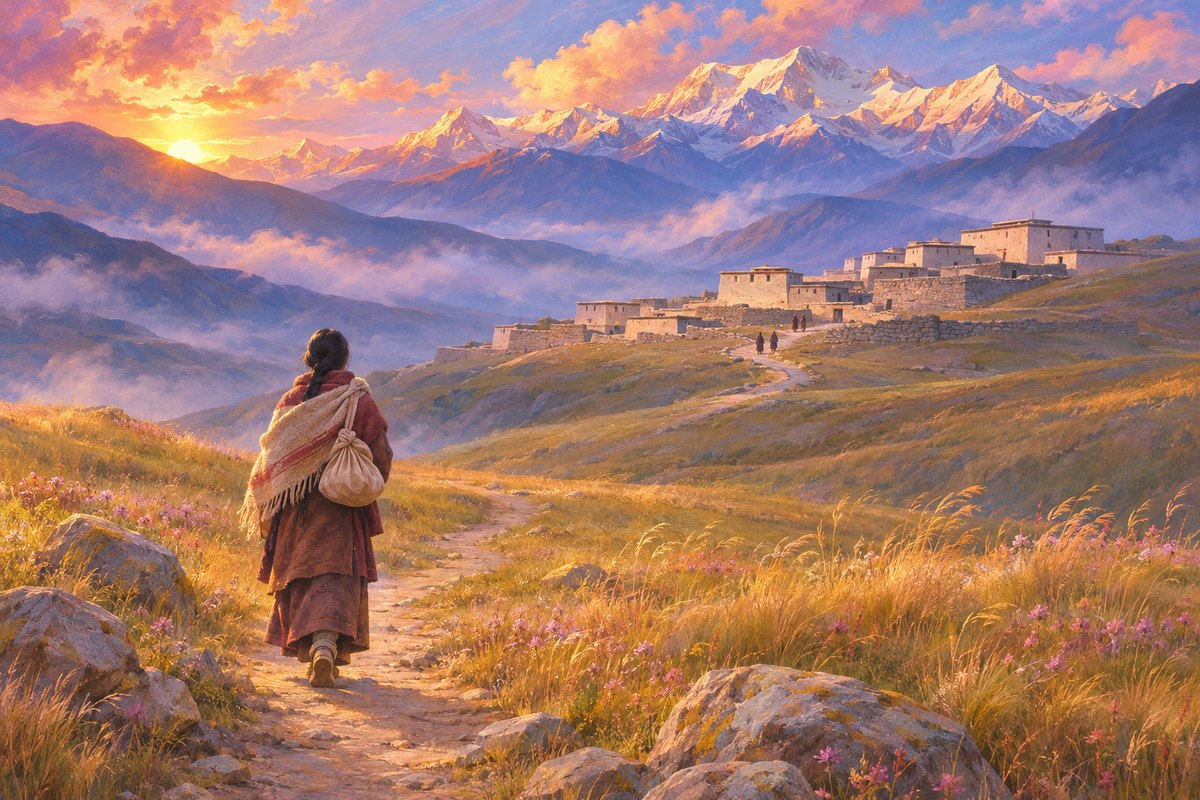
In 1980 Tāre Lhamo joined Namtrul Rinpoche in Serta. The correspondence had reached a turning. The person addressed across distance was now a companion in daily life and religious work.
Leaving a homeland is more than the end of a wait. It brings a person into new responsibilities and new relationships. Their story does not stop at reunion. The intentions that could be expressed on paper now had to find their place among other people.
Work beyond the letters
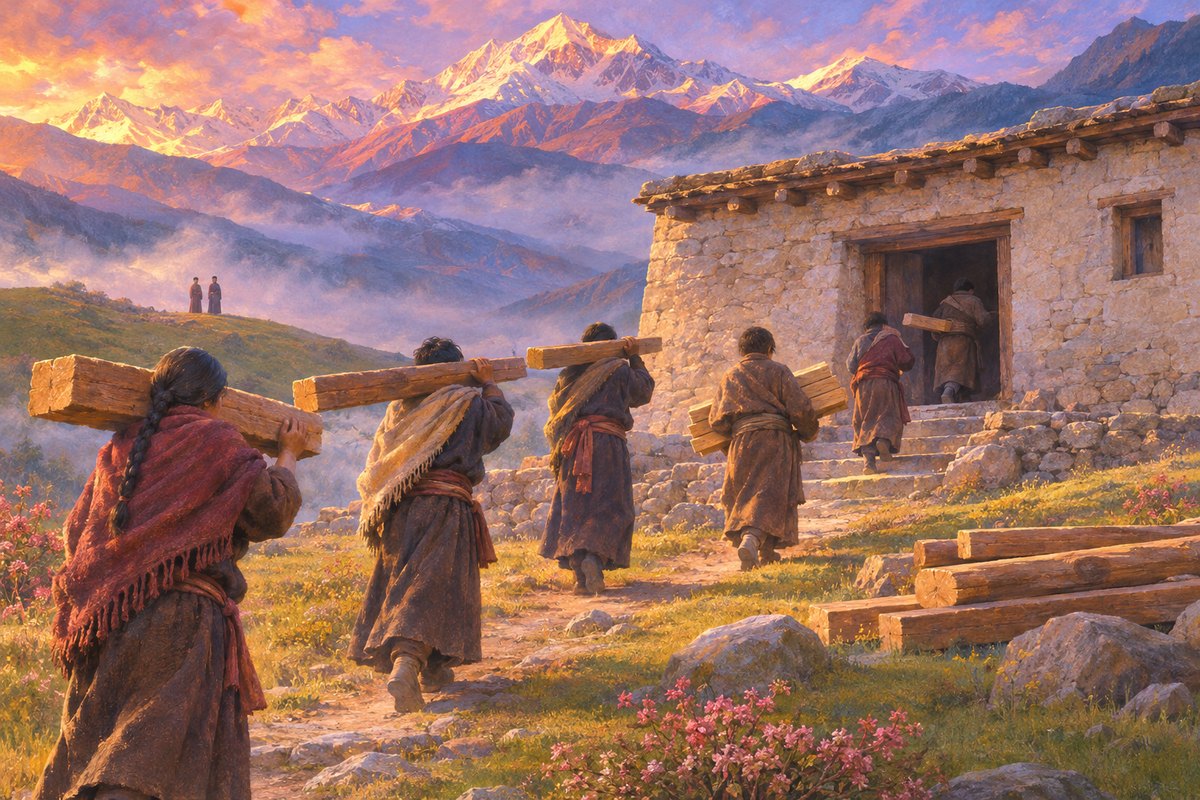
The published account remembers their help in rebuilding Nyenlung Monastery and their later teaching activity. They travelled together and helped renew Buddhist communities in the region. Tāre Lhamo’s role is remembered alongside Namtrul’s, rather than disappearing into his biography.
The workers in the painting are anonymous and the building is an atmospheric reconstruction. Their task makes a simple point visible: restoration requires people to do things together. An intention becomes a place in which others can gather.
What the pages preserve
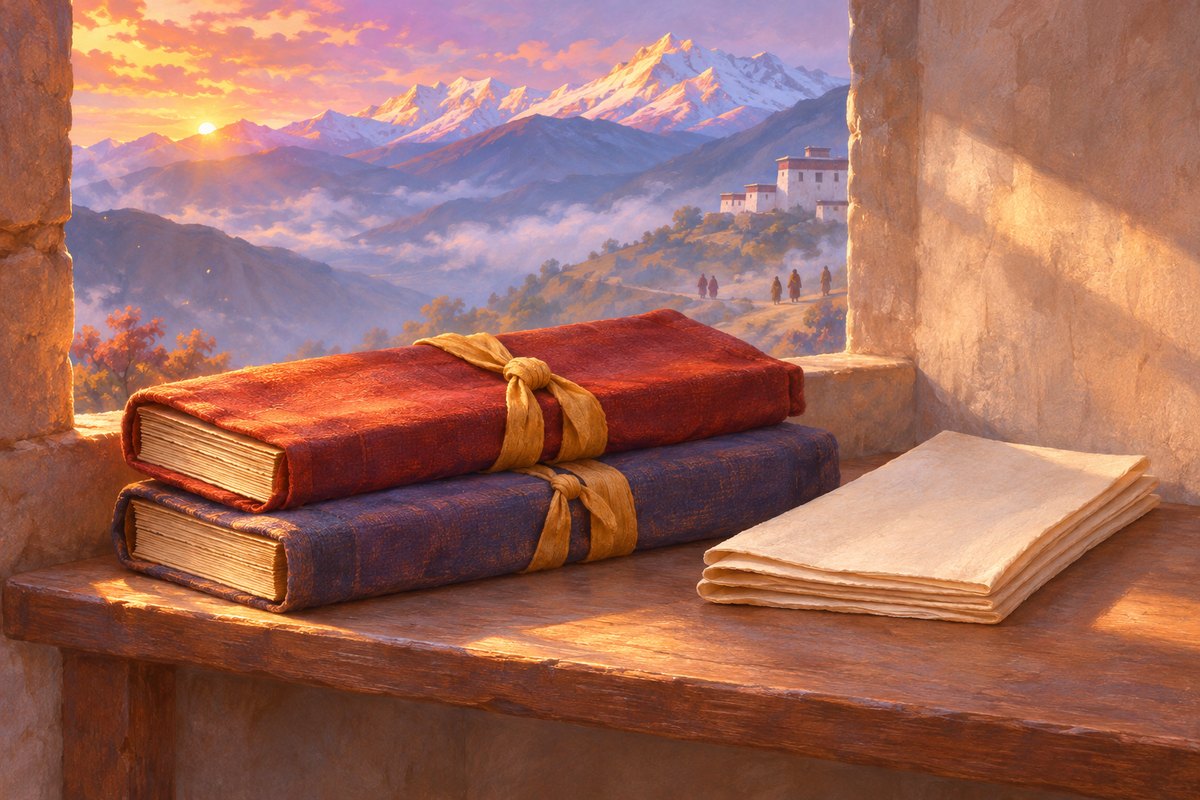
Tāre Lhamo died in 2002 and Namtrul Rinpoche in 2011. Their preserved letters let later readers encounter affection and religious purpose in the same exchange. Holly Gayley’s research and translations have made those voices available more widely.
The Seven-Line Prayer’s wish to follow Guru Rinpoche connects thematically with their commitment to renewing Buddhist life. No prayer-recitation occasion is invented here. A message once carried across mountains can still remind a reader that hope becomes stronger when someone answers, and a shared purpose calls for work.
About the art
AI-painted atmospheric scenes use anonymous distant figures, not authenticated portraits or exact sites. Letters show blank backs; no Tibetan scripture or private correspondence is invented.
Mountain routes, rooms and object arrangements illustrate the public narrative. No intimate scene, private practice method or visionary sequence is reconstructed.
Why this matters for practice
The wish to follow Guru Rinpoche is considered through guidance, commitment and care for others in these Nyingma lives. The connection is thematic; no recitation event or promised result is invented.

If something in this story moved you, you might pause and recite the Seven-Line Prayer once.
Sources and further reading
- University of Colorado — Love Letters from Golok, University of Colorado
- Holly Gayley — Inseparable across Lifetimes, Holly Gayley
- Holly Gayley — Revisiting the Secret Consort, Holly Gayley
- Holly Gayley — Research biography, Holly Gayley
- WorldCat — Inseparable across Lifetimes, WorldCat
This retelling is waiting to be read by a knowledgeable practitioner. Where the traditional accounts differ, the story says so; if you notice a mistake, please tell us through Share Your Story.