The huts in the mist
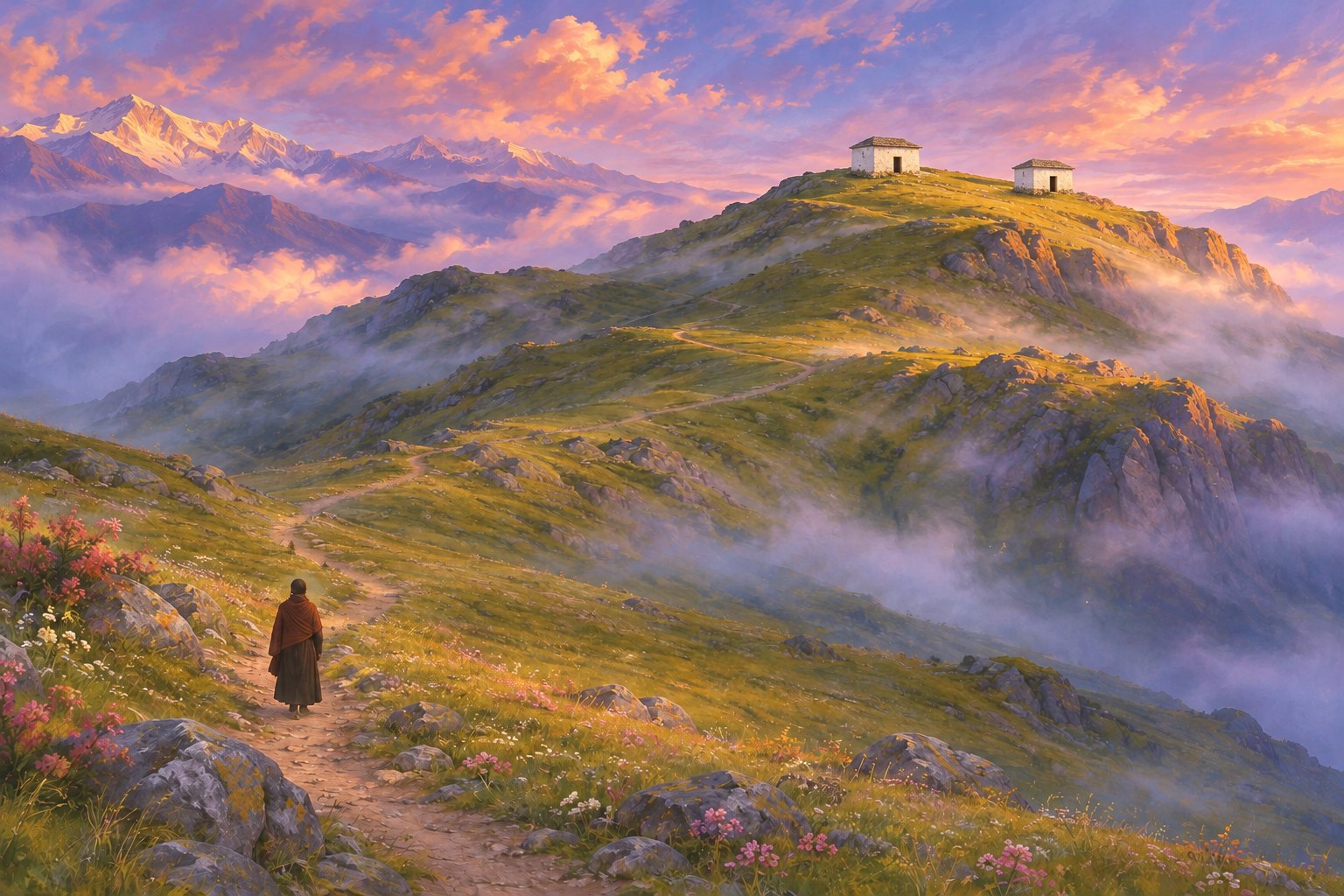
On his way home after an evening gathering, Kunga Palden saw a mountain with mist moving around it. Two small white retreat houses stood above the grassy slopes. According to the biography written by his student Dilgo Khyentse, the sight stirred a wish to live that way himself.
The houses were small in the landscape. What they opened in the young man’s mind would give his life a different direction.
The life before the turning
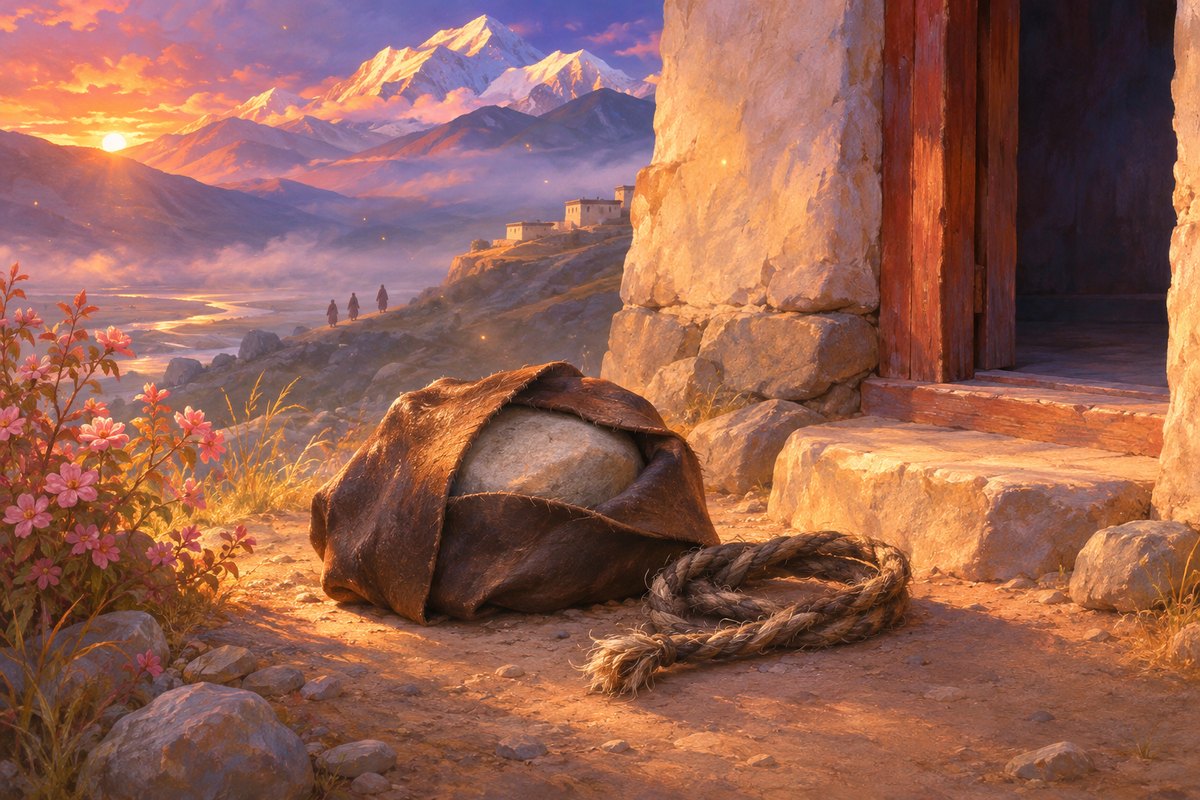
The biography does not begin with a perfectly gentle child. It remembers a rough young practitioner who fought and carried a hide-wrapped stone on a rope. The recollection leaves room for change.
A later reputation can make a person’s life seem inevitable from the beginning. Here it was not. The two white huts mattered because they stood before someone who had another way of living to leave behind. A different possibility had become visible.
A book he kept reading
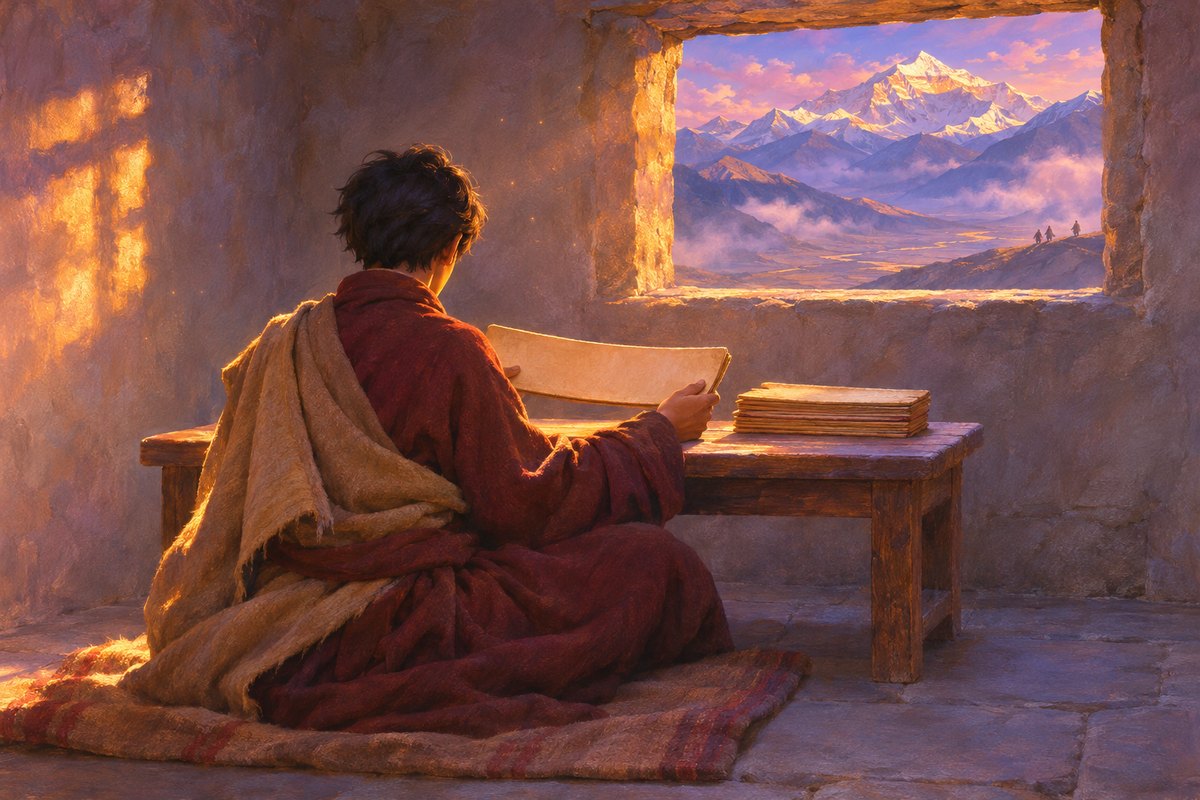
He learned to read and returned to the life of Milarepa. The great Tibetan yogin’s story strengthened his wish to find a qualified teacher. A book could show the shape of a path without itself replacing the person from whom he needed to learn.
The young reader had not yet reached a mountain dwelling of his own. He was still searching. What he read gave that search a direction beyond the wish to be somewhere quiet.
Leaving home
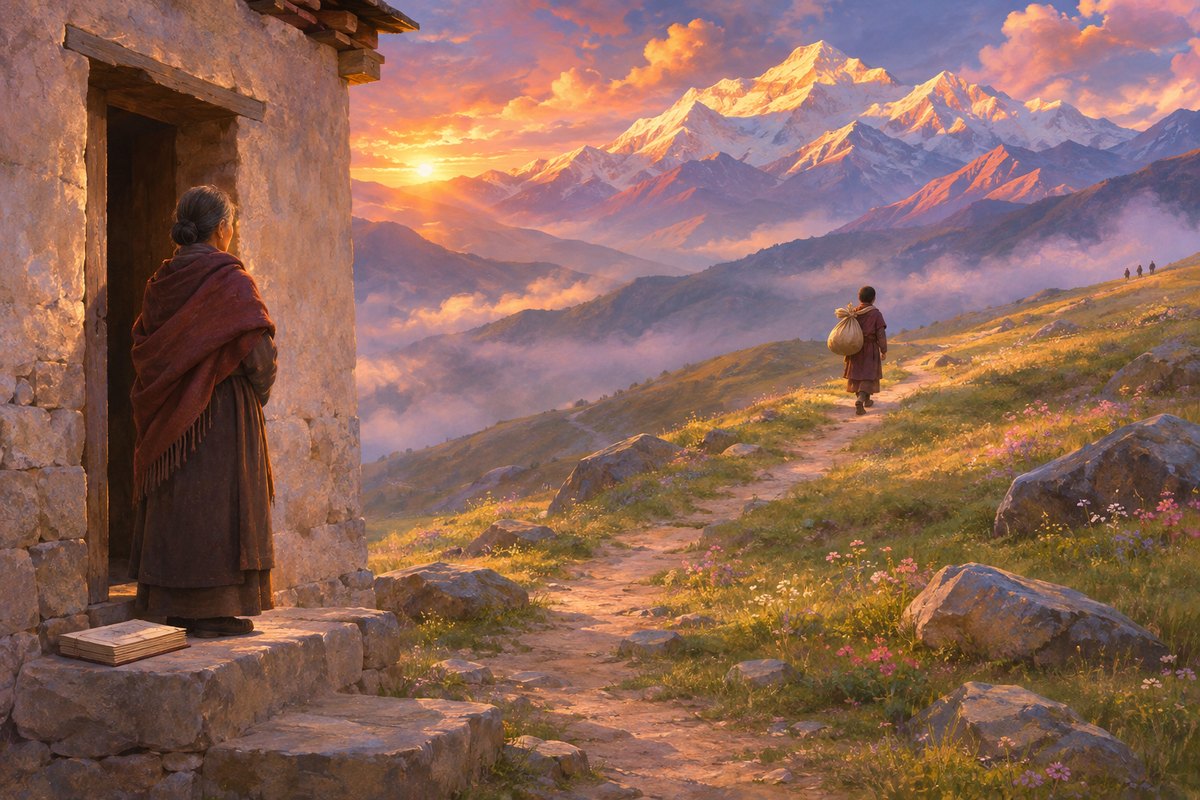
He told his mother that he intended to go to Dzachukha to seek Patrul Rinpoche. Dilgo Khyentse’s account remembers her tears as he departed. The journey began within a human relationship that did not become painless because its purpose was religious.
The story keeps that cost in sight. A person setting out sees the road ahead; someone remaining at the doorway sees the departure. Both belong to the remembered beginning.
The last chapter
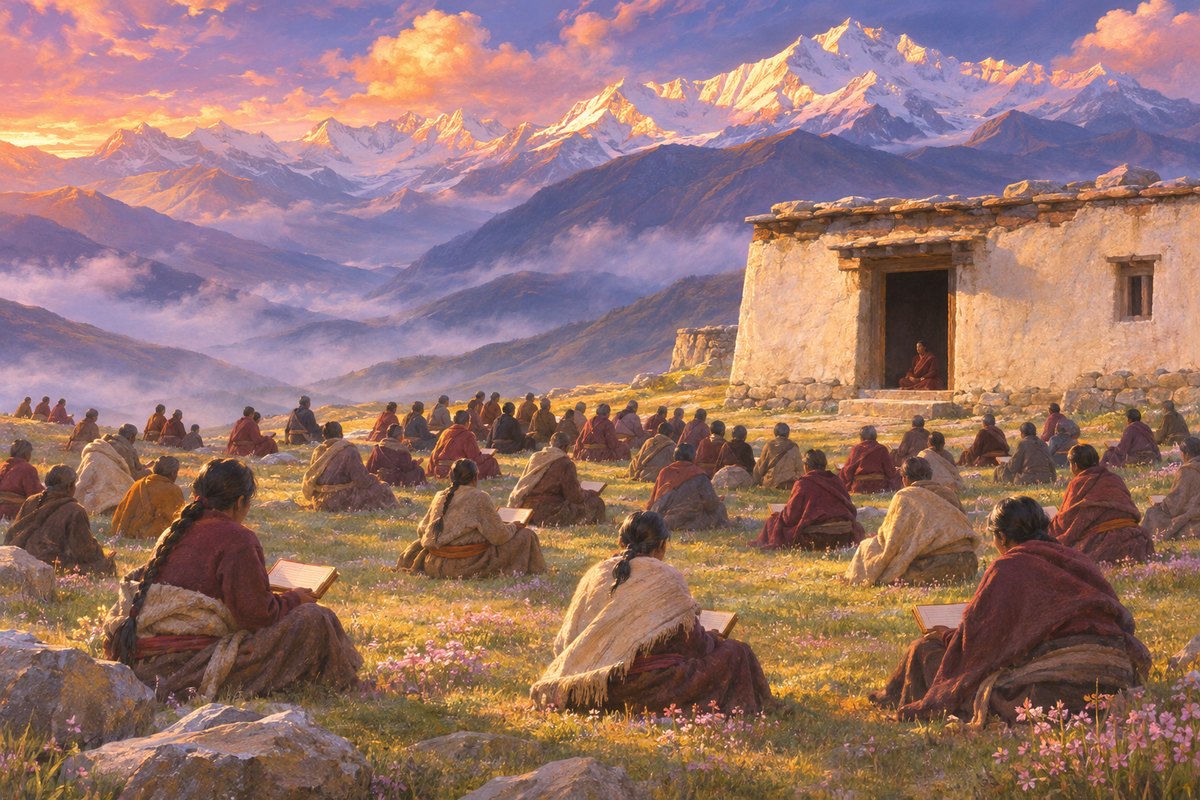
He reached Patrul while the Bodhicaryāvatāra was being taught and received the final chapter, on dedication. He had made the journey, but arrival did not give him everything at once. His education continued with other teachers.
There is a patient lesson in the order of events. The wish to reach a famous master is not the end of learning. The traveller still has to find understanding, and understanding may require more than the meeting he first imagined.
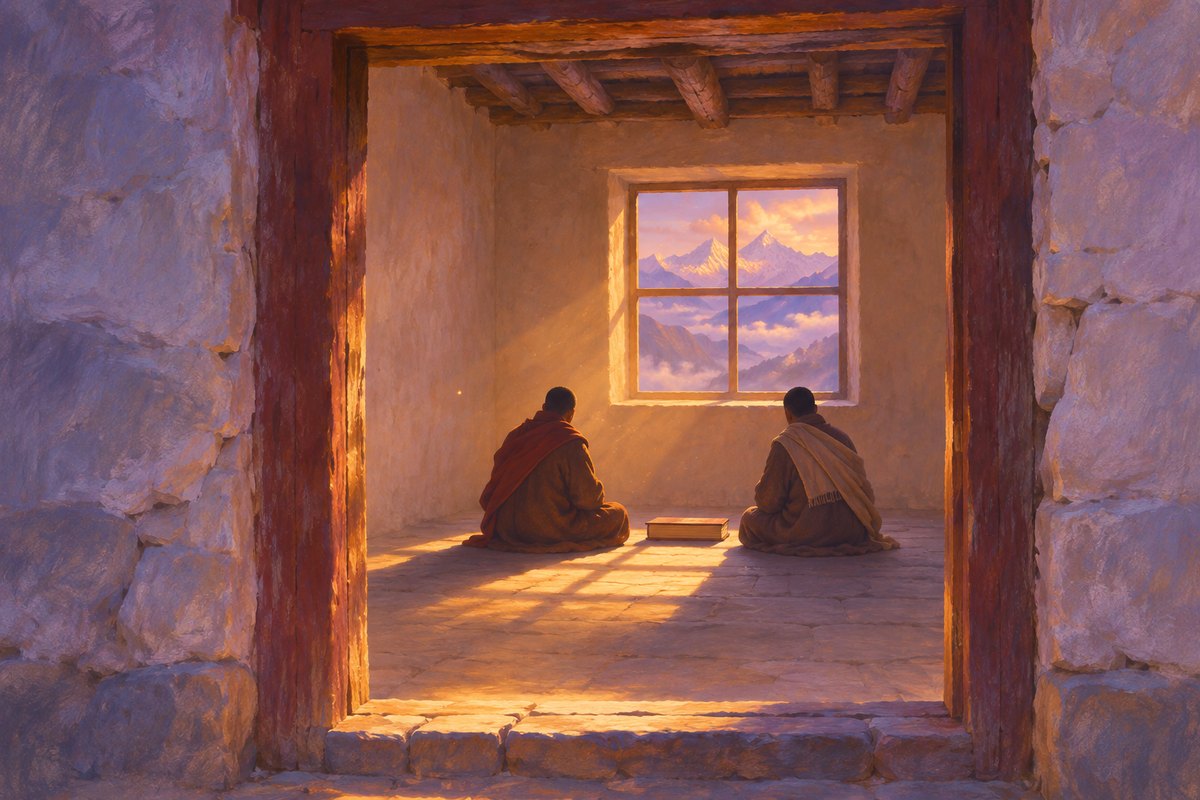
Orgyen Tendzin Norbu
Orgyen Tendzin Norbu became his principal teacher. The biography remembers study as an important beginning even though Kunga Palden longed for meditation. The mountain life would rest on learning and guidance rather than on eagerness alone.
This was not a choice between books and practice as enemies. A student needed preparation for what he hoped to undertake. The teacher’s attention helped give a more enduring form to the wish first awakened by two distant huts.
The mountain life
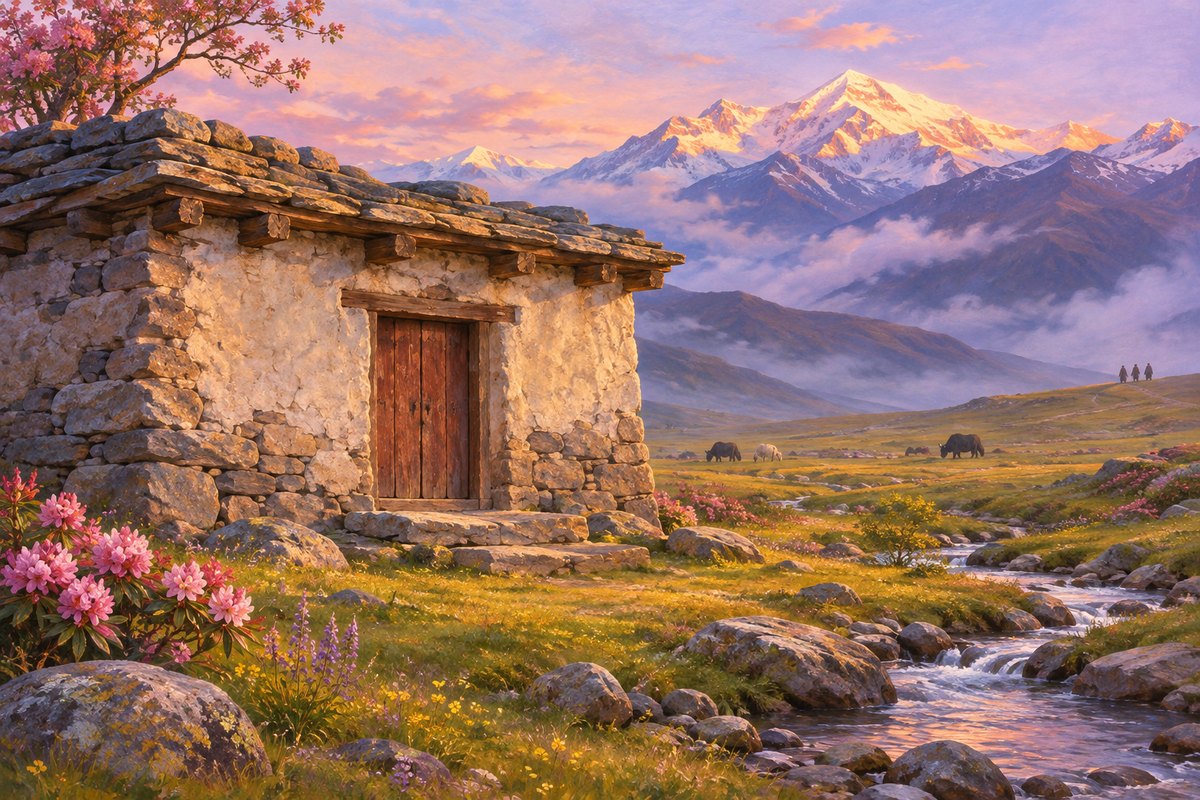
Eventually he lived in retreat. His later students and visitors knew him as a teacher, but the life remembered by Dilgo Khyentse retained the direction of that early mountain scene.
The closed door in the illustration leaves the interior unpictured. No private instructions are reconstructed. The public story follows the outward shape: a wish arose, a search followed, a teacher was found, and years were given to putting what had been received into practice.
The animals on the slopes
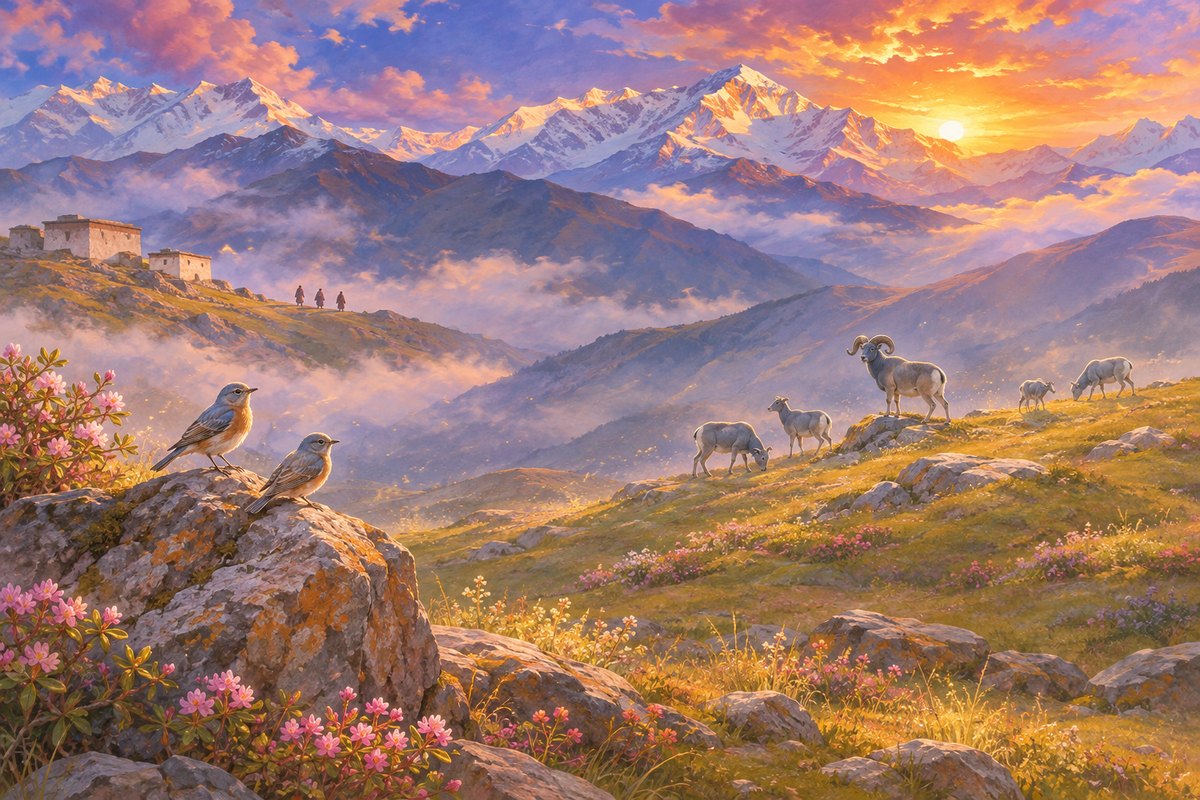
The biography also remembers his protection of wild animals and birds. Solitude did not mean that the lives around his dwelling were of no concern. The mountain was inhabited by beings other than the people who came to learn.
The sheep and birds in the illustration give those lives a place in the story. The teacher’s care reached beyond his own students, toward creatures with no book to carry and no human words in which to ask.
What offerings became
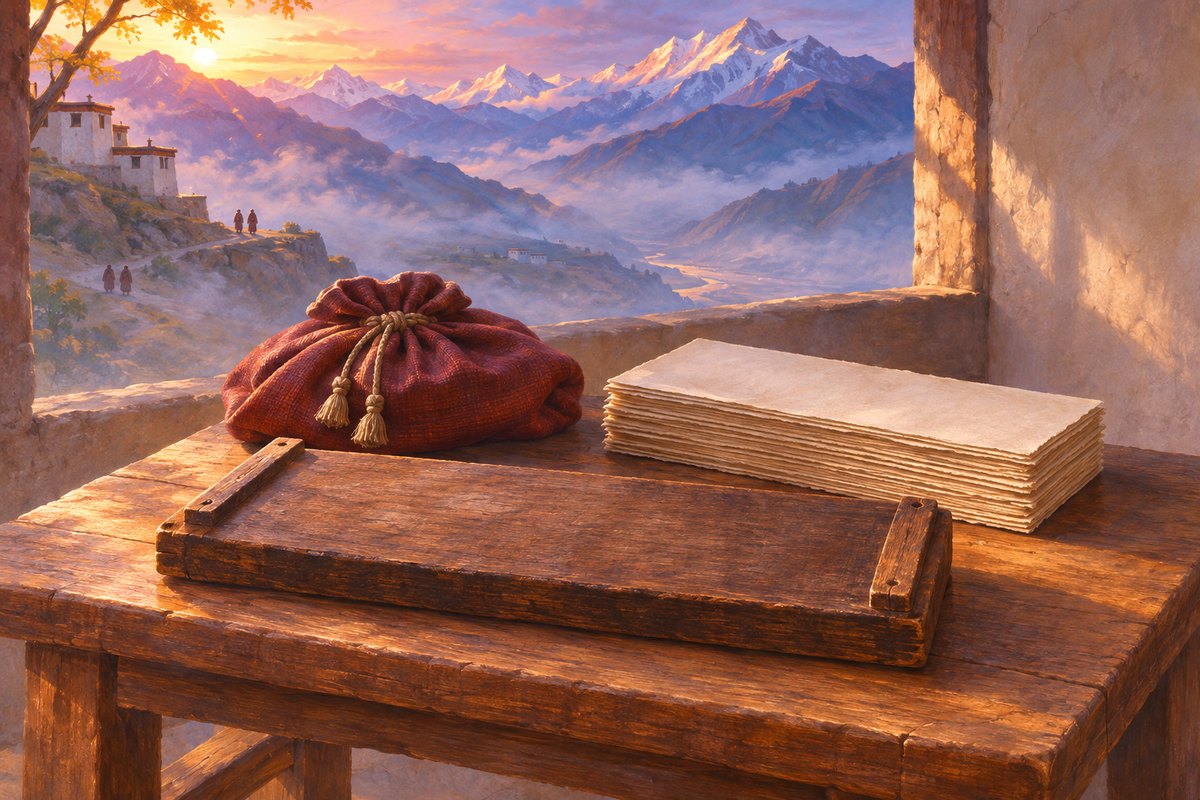
Offerings were used to support woodblocks for Buddhist story collections. Resources brought to the teacher could therefore become books through which other people might learn.
The gift did not have to remain gathered around the person who received it. It could be put to work beyond his dwelling. The face-down block and blank-backed paper in the painting represent that process without inventing scripture. A life that began by reading another practitioner’s story helped preserve stories for future readers.
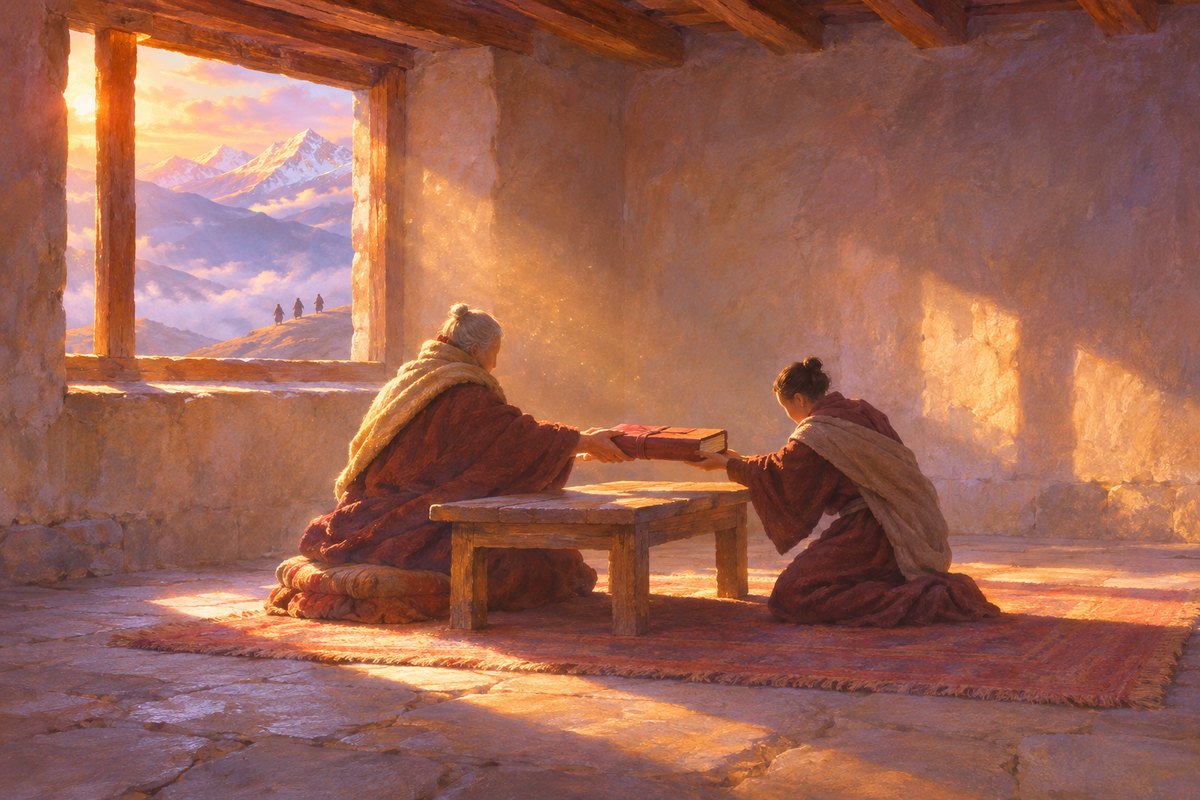
Books given onward
Dilgo Khyentse remembered his teacher’s kindness and the personal books entrusted to him. The biography itself became one way to honour what he had received. Its account contains both the rough beginning and the later care.
The Seven-Line Prayer expresses a wish to follow Guru Rinpoche. Kunga Palden’s story offers a thematic connection through seeking guidance and allowing a life to change. No special recitation episode is claimed. Two huts first appeared far away in the mist; the work of reaching that different life took years.
About the art
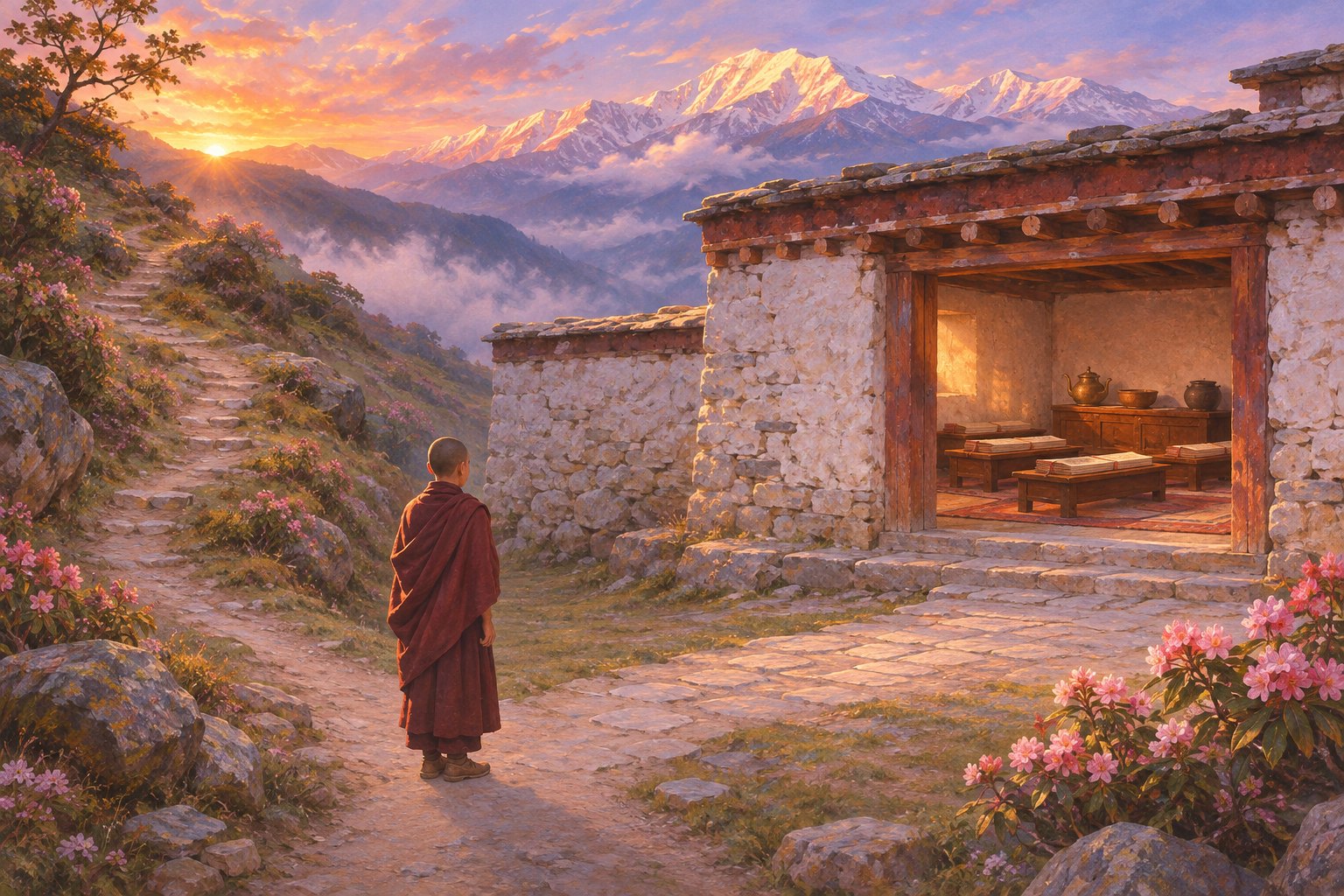
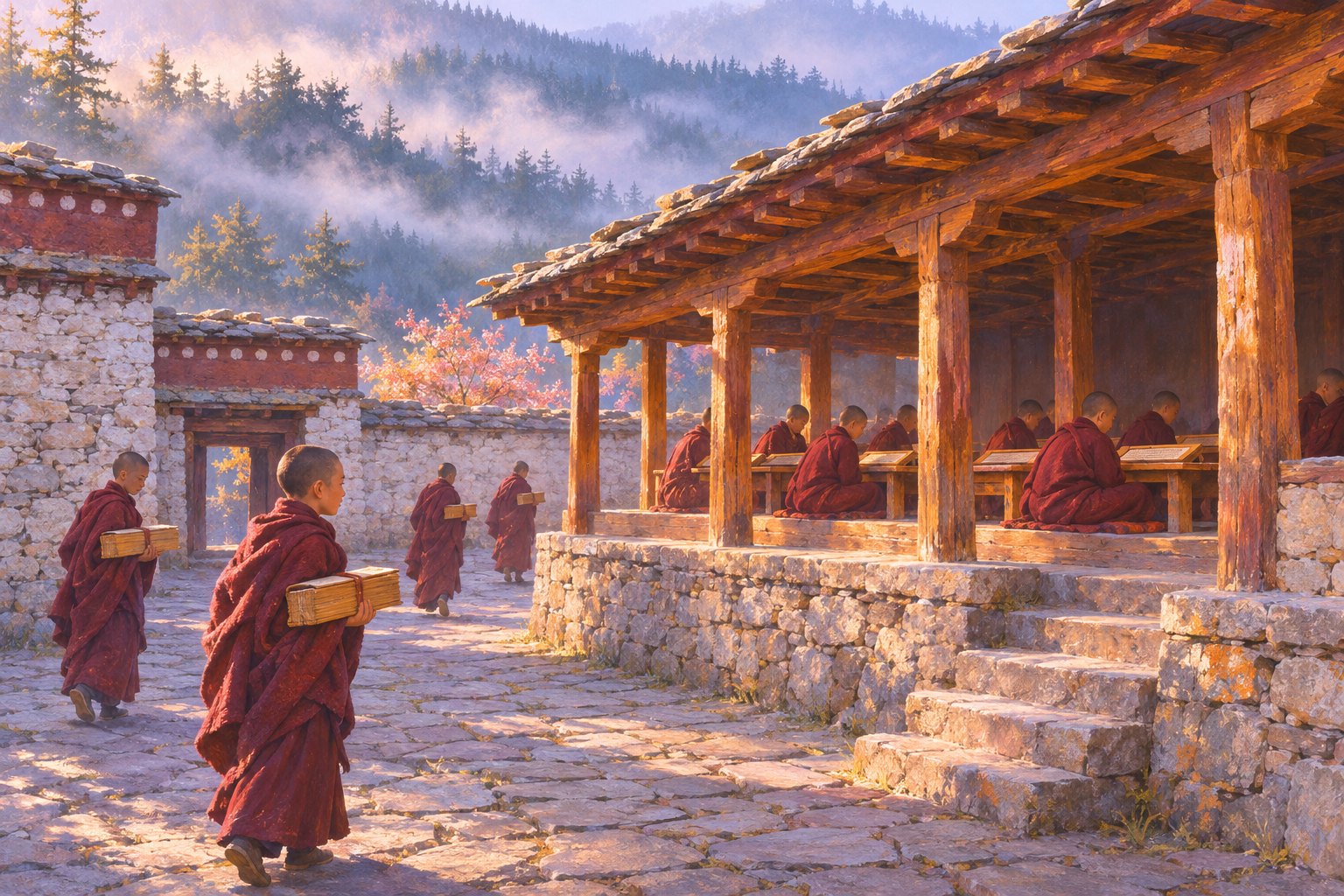
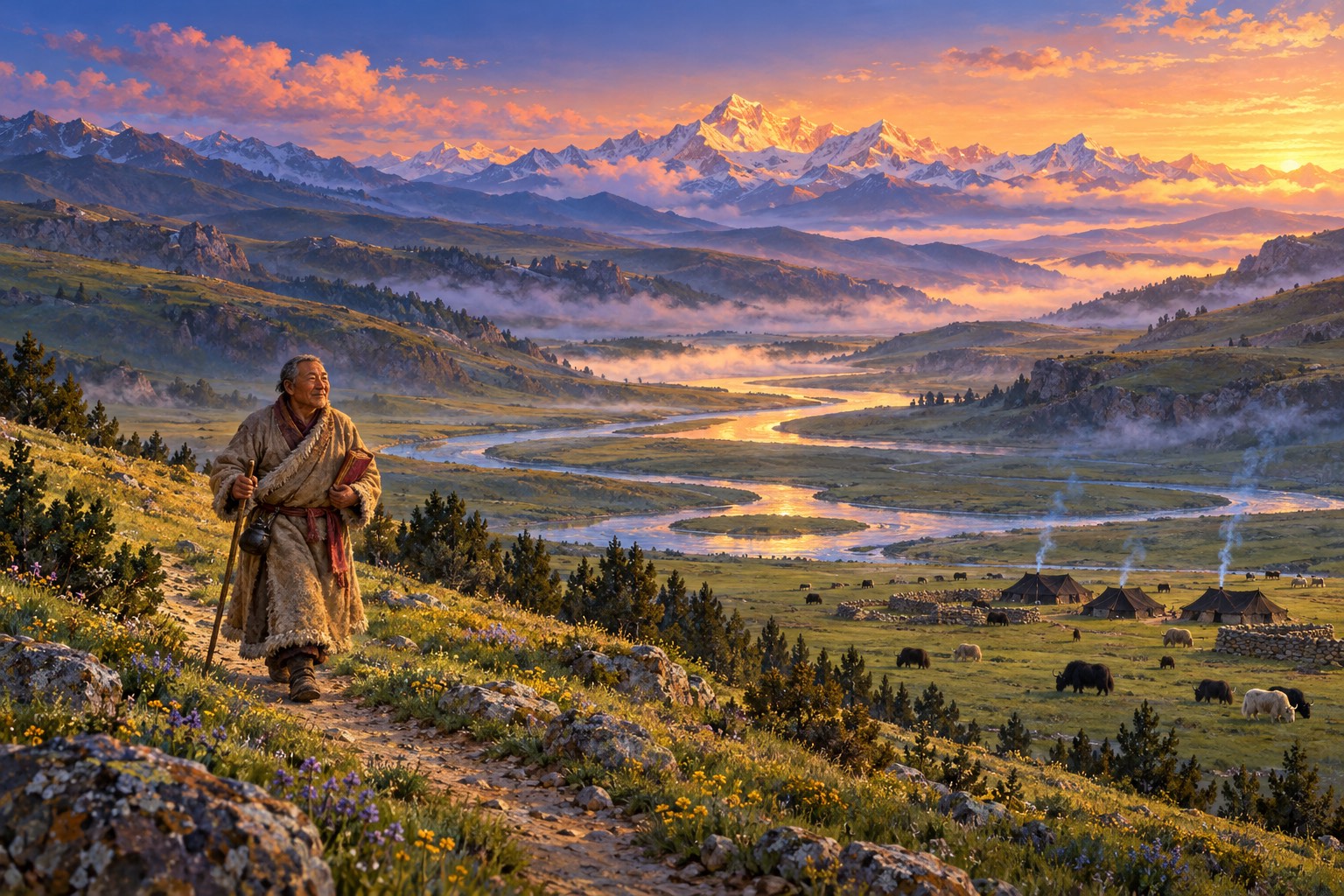
AI-painted atmospheric scenes use anonymous distant figures, not authenticated portraits or exact sites. Letters show blank backs; no Tibetan scripture or private correspondence is invented.
Mountain routes, rooms and object arrangements illustrate the public narrative. No intimate scene, private practice method or visionary sequence is reconstructed.
Why this matters for practice
The wish to follow Guru Rinpoche is considered through guidance, commitment and care for others in these Nyingma lives. The connection is thematic; no recitation event or promised result is invented.

If something in this story moved you, you might pause and recite the Seven-Line Prayer once.
Sources and further reading
- Lotsawa House — Biography of Kunga Palden, Lotsawa House
- Lotsawa House — Kunga Palden, Lotsawa House
- Lotsawa House — Orgyen Tendzin Norbu, Lotsawa House
- Tsadra — Introduction to Dilgo Khyentse Tashi Paljor, Tsadra
This retelling is waiting to be read by a knowledgeable practitioner. Where the traditional accounts differ, the story says so; if you notice a mistake, please tell us through Share Your Story.